

 Pregledaj u prostoru
 Podeli
 Podeli
 Detalji
 Vodič
Vodič

 Preuzmi sliku
 Slični predmeti
 Rendgenski snimak
 Automatska prezentacija
 Statistika
The Charity


 Pročitaj više
Giclee štampa / Umetnički otisak
Giclée štampa ili print na platnu muzejskog kvaliteta uz brzu izradu i raznovrsne opcije završne obrade. ( Naručite ručno oslikano reprodukciju Pređi na prodaju digitalnih slika)




P118B дин10

P118H дин10

P118W дин10

P438Z дин10

P508JH дин12

P508YH дин12

P805H дин10

P805Z дин10

P919BZ дин10

P919G дин10

P919XJ дин10

P959ZH дин10

P968JZ дин12

W106C дин8

W218G дин10

W218JH дин8

W218Y дин10

W307PJ дин10

W316G дин10

W316PJ дин8

W316Y дин10

W398PJ дин8

W4111J дин10

W500HY дин15

W500JH дин15

W692G дин12

W849H дин8

W940BG дин15

W953PJ дин8




Izaberite jednu od naših unapred definisanih veličina koje odgovaraju originalnim proporcijama umetničkog dela.

Unesite širinu i visinu koja vam je potrebna, kako bi se uklopili u vaš ram ili na vaš zid. Štampa se može samo iseći, nikada ne može biti veća od originalne slike, stoga format sa drugačijim proporcijama gubi deo slike. Poslaćemo vam digitalni prikaz radi potvrde pre nego što započnemo štampu. Slika prikazana na ovoj stranici ne pokazuje stvarni rez — to pokazuje samo digitalni prikaz.
Dostava širom sveta () za 2 nedelje umesto uobičajenih 4/5 nedelja. (27 октобар)

Besplatna ekspresna dostava širom sveta

Visokokvalitetno laneno platno

Sveobuhvatno osiguranje transporta

Garancija povraćaja carine i uvoznih dažbina

Garancija vernosti boja i autentičnosti pri reprodukciji

Politika povraćaja u roku od 100 dana (samo u slučaju nedostataka)

Garancija povrata 100% novca

Popust pri većoj količini
 Opcija sa staklom dostupna je samo za dimenzije manje od 110 cm

The Charity
Giclee štampa / Umetnički otisak
Veličina reprodukcije
-


Ukupna cena
дин 8249
Bartolomeo Schedoni’s ‘The Charity’: A Baroque Meditation on Compassion
Bartolomeo Schedoni's “The Charity,” painted in 1611, is more than just a depiction of an act of generosity; it’s a profound meditation on human compassion rendered with the dramatic intensity characteristic of the Parma Baroque. This work, currently residing within the Museo Nazionale di Capodimonte in Naples, offers a captivating glimpse into the artistic sensibilities of a young master grappling with the burgeoning stylistic currents of his time. Schedoni, born in Modena in 1578, benefited from an unusual upbringing – his father’s involvement in mask-making instilled a deep understanding of theatricality and visual spectacle, skills that would undoubtedly inform his later work. His early training included a brief but significant apprenticeship with Federico Zuccari in Rome, securing the patronage of Ranuccio I Farnese, Duke of Parma, a connection that firmly established him within the influential Famese court – a crucible for artistic innovation.
- Subject and Composition: The scene unfolds with meticulous detail, focusing on five figures arranged around an act of giving. A central figure, robed in red and white, extends a loaf of bread to a child clad in blue and white stripes – the recipient of this charitable offering. Surrounding them are three additional individuals: a contemplative woman observing from the left, a woman assisting with a basket on the right, and a distant child adding to the scene’s depth.
- Baroque Technique: Schedoni masterfully employs the hallmarks of the Baroque style – dramatic chiaroscuro, utilizing strong contrasts between light and shadow to heighten emotional impact and create a sense of movement within the composition. The use of rich pigments and meticulous detail in rendering fabrics and textures further enhances the painting’s visual richness.
- Historical Context: Painted in 1611, “The Charity” reflects the religious and social anxieties of the early 17th century. The Catholic Church was actively promoting charitable works as a means of combating the spread of Protestantism, and Schedoni's depiction aligns with this broader societal imperative.
Symbolic Layers: Faith, Humanity, and Divine Grace
Beyond its surface narrative, “The Charity” is laden with symbolic meaning. The act of giving bread itself represents sustenance – both physical and spiritual – a core tenet of Christian faith. The central figure’s red robe, often associated with Christ's sacrifice, elevates the scene to a higher plane, suggesting divine grace at work through human action. The contemplative woman, holding a staff, embodies wisdom and reflection, while the children represent innocence and vulnerability – figures frequently depicted in religious art as emblems of purity and hope. The carefully orchestrated spatial arrangement contributes to the painting’s overall sense of harmony and balance, reflecting a desire for order within a world often characterized by chaos.
The Artist's Vision: Schedoni's Place in Parma Baroque
Bartolomeo Schedoni’s artistic trajectory was tragically cut short; he succumbed to illness in 1615 at the young age of thirty-seven. Despite his brief career, Schedoni left a significant mark on the artistic landscape of Parma. His work demonstrates a remarkable ability to synthesize influences from Roman classicism and the more emotionally charged style of the Famese court. While overshadowed by some of his contemporaries, Schedoni’s “The Charity” stands as a testament to his talent and vision – a poignant reminder of a master whose brief but brilliant career illuminated the Baroque period.
Recreating ‘The Charity’: A Hand-Painted Reproduction
OriginalUniqueArt.com offers meticulously crafted hand-painted reproductions of Bartolomeo Schedoni’s “The Charity,” capturing the essence and emotional power of this iconic Baroque masterpiece. Each reproduction is created by skilled artisans, employing traditional techniques to faithfully recreate Schedoni's original composition and color palette. Whether for a grand salon or a smaller interior space, a hand-painted reproduction of "The Charity" will bring a touch of timeless beauty and profound meaning to your surroundings.
Pitanja i odgovori
U kojoj periodu karijere umetnika Bartolomeo Schedoni pripada delo "The Charity"?
„The Charity“ pripada Early Baroque u karijeri umetnika Bartolomeo Schedoni. Ova klasifikacija povezuje delo sa razvojem samog umetnika.
Da li autorska prava za „The Charity”, Bartolomeo Schedoni dozvoljavaju reprodukciju?
Originalno delo "The Charity" nalazi se u muzeju Palace of Capodimonte, a rad je u javnom vlasništvu – autorska prava su istekla.
Kako mogu da pregledam „The Charity”, Bartolomeo Schedoni u obliku prezentacije?
Dostupna je i prezentacija slika: stranica Diaporama za delo „The Charity”, Bartolomeo Schedoni.
Biografija umetnika
The Visionary of Parma: The Life and Legacy of Bartolomeo Schedoni
Bartolomeo Schedoni remains one of the most compelling, yet enigmatic, figures of the early Italian Baroque. Born in Modena in 1578, his journey into the world of fine art began not with a brush, but through the intricate craftsmanship of his father’s mask-making trade. This early immersion in the theatrical and the ornamental provided him with a unique perspective on spectacle and character, a foundation that would later manifest in the dramatic intensity of his paintings. His talent quickly propelled him toward the heart of the Italian Renaissance's twilight, leading him to Rome in 1595. It was here, under the tutelage of Federico Zuccari, that Schedoni began to refine his technical prowess, eventually securing the prestigious patronage of Ranuccio I Farnese, Duke of Parma. This connection to the Farnese court would become the cornerstone of his professional identity, anchoring his career within the most influential artistic circles of the era.A Mastery of Light and Shadow
The evolution of Schedoni’s style is a testament to his profound engagement with the masters who preceded him. While historical accounts occasionally debate his exact training, there is a palpable connection to the revolutionary techniques of Annibale Carracci and the luminous grace of Correggio. His work serves as a bridge between the soft, ethereal qualities of the late Renaissance and the burgeoning, high-contrast drama of the Baroque. Schedoni became a master of chiaroscuro, utilizing stark, theatrical contrasts between light and dark to sculpt forms and evoke deep emotional responses. This technique allowed him to imbue his figures with a sense of weight and presence, often characterized by angular drapery and a somber, contemplative atmosphere. His ability to manipulate light was not merely a technical feat but a narrative tool, used to guide the viewer's eye through complex compositions and toward the spiritual heart of his subjects.Monumental Achievements and Artistic Impact
Throughout his brief but impactful career, Schedoni left behind works that continue to resonate with their emotional depth and structural grandeur. One of his most significant achievements was his collaboration with Ercole dell’Abate on the monumental ceiling fresco for the Sala del Consiglio Vecchio in Parma’s Palazzo Comunale, a project that solidified his reputation as a premier decorator of civic and religious spaces. His individual masterpieces, such as the 1607 commission “La Speranza” (The Charity), demonstrate his ability to weave complex theological narratives into visually arresting compositions. Through these works, Schedoni contributed to a pivotal moment in art history where the stability of the Renaissance gave way to the movement and tension of the Baroque. Though his life was tragically cut short by illness in 1615, his influence endured, leaving an indelible mark on the artistic landscape of Parma and the broader trajectory of Italian painting.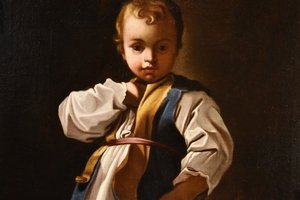
Bartolomeo Schedoni
1578 - 1615 , Italy
Brzi pregled
- Full Name: Bartolomeo Schedoni
- Nationality: Italian
- Date Of Birth: 1578
- Date Of Death: 1615
- Place Of Birth: Modena, Italy
- Notable Artworks:
- Holy Family in Glory worshipped by ss John the Baptists
- The Charity
- The Two Marys at the Tomb
- Artistic Movement Or Style: Early Baroque
- Artists Who Influenced This Artist:
- Federico Zuccari
- Ludovico Carracci
- Correggio
- Artists Or Movements Influenced By This Artist: ['Caravaggio']
Srodni članci

Slate Blue Masterpieces: 10 Iconic Paintings & Timeless Home Decor Ideas
Immerse yourself in the captivating world of slate blue! Explore 10 iconic paintings by Monet, Van Gogh & Renoir. Discover their stories, techniques & find museum-quality art reproductions for your home at .

Drama and Light: A Definitive Guide to the Italian Baroque Masterpieces and the Revolution of Chiaroscuro
Explore the dramatic world of Italian Baroque art. Discover how masters like Caravaggio used chiaroscuro and tenebrism to revolutionize painting through light, shadow, and profound realism. A definitive guide for history lovers and art collectors.

Serene Blue Backgrounds: Discover Soulful Art to Transform Your Space with Timeless Elegance
Transform your home with soulful blue art. From serene Monet impressions to modern textured sculptures, discover curated masterpieces designed to inspire calm. Explore expert art consultations and bespoke hand-painted reproductions to create your personal sanctuary.
The Allure of Azure: Exploring the Symbolic & Aesthetic Depths of Blue in Art History
Explore the rich history of blue in art! Discover its symbolism, from ancient pigments to modern masterpieces by Kandinsky & Seurat. Uncover the psychological impact and cultural meanings behind this captivating hue.

White on Canvas: 10 Masterpieces & Timeless Elegance for Your Home Decor
Explore 10 iconic white paintings by Monet, Whistler & Rothko! Discover the stories behind these serene masterpieces and their impact on art history. Find museum-quality reproductions for your home decor at .