

 Pregledaj u prostoru
 Podeli
 Podeli
 Detalji
 Vodič
Vodič

 Preuzmi sliku
 Slični predmeti
 Rendgenski snimak
 Automatska prezentacija
 Statistika
Critic I
 Oil On Panel
- Expressionism
 1910
1910- 19th Century
 31.0 x 45.0 cm
 Arnold Schönberg Center
 Pročitaj više
Giclee štampa / Umetnički otisak
Giclée štampa ili print na platnu muzejskog kvaliteta uz brzu izradu i raznovrsne opcije završne obrade. ( Naručite ručno oslikano reprodukciju Pređi na prodaju digitalnih slika)




P118B дин10

P118H дин10

P118W дин10

P438Z дин10

P508JH дин12

P508YH дин12

P805H дин10

P805Z дин10

P919BZ дин10

P919G дин10

P919XJ дин10

P959ZH дин10

P968JZ дин12

W106C дин8

W218G дин10

W218JH дин8

W218Y дин10

W307PJ дин10

W316G дин10

W316PJ дин8

W316Y дин10

W398PJ дин8

W4111J дин10

W500HY дин15

W500JH дин15

W692G дин12

W849H дин8

W940BG дин15

W953PJ дин8




Izaberite jednu od naših unapred definisanih veličina koje odgovaraju originalnim proporcijama umetničkog dela.

Unesite širinu i visinu koja vam je potrebna, kako bi se uklopili u vaš ram ili na vaš zid. Štampa se može samo iseći, nikada ne može biti veća od originalne slike, stoga format sa drugačijim proporcijama gubi deo slike. Poslaćemo vam digitalni prikaz radi potvrde pre nego što započnemo štampu. Slika prikazana na ovoj stranici ne pokazuje stvarni rez — to pokazuje samo digitalni prikaz.
Dostava širom sveta () za 2 nedelje umesto uobičajenih 4/5 nedelja. (21 октобар)

Besplatna ekspresna dostava širom sveta

Visokokvalitetno laneno platno

Sveobuhvatno osiguranje transporta

Garancija povraćaja carine i uvoznih dažbina

Garancija vernosti boja i autentičnosti pri reprodukciji

Politika povraćaja u roku od 100 dana (samo u slučaju nedostataka)

Garancija povrata 100% novca

Popust pri većoj količini
 Opcija sa staklom dostupna je samo za dimenzije manje od 110 cm

Critic I
Giclee štampa / Umetnički otisak
Veličina reprodukcije
-


Ukupna cena
дин 8200
A Portrait of Disquiet: Examining Schoenberg’s “Critic I”
Arnold Schoenberg's "Critic I," painted in 1910, is not merely a portrait; it’s a visceral embodiment of the anxieties and intellectual rigor that defined one of music’s most revolutionary figures. Measuring a modest 31 x 45 cm on oil panel, this arresting image – often dubbed “Critic I” due to its unsettling depiction – transcends simple representation, offering a glimpse into the mind grappling with the very nature of artistic interpretation and judgment. The painting depicts a strikingly rendered face, dominated by a dense beard and an expression that oscillates between contemplation and something akin to demonic intensity. This deliberate distortion, far from being a stylistic flourish, speaks directly to Schönberg’s own philosophical concerns articulated in his essay, “About Music Criticism,” where he argues that artistic perception is fundamentally subjective, shaped by the listener's unconscious biases and imaginative capacity.
- The Artist’s Intention: Schoenberg, a pivotal figure in the development of atonality and serialism, was deeply invested in questioning established aesthetic norms. “Critic I” can be interpreted as a self-portrait reflecting this intellectual struggle – a confrontation with the limitations of conventional judgment and the inherent subjectivity of artistic experience.
- Technical Mastery: Executed in oil on panel, the painting demonstrates Schoenberg’s meticulous attention to detail and his command of chiaroscuro. The dramatic lighting emphasizes the contours of the face, intensifying the sense of unease and highlighting the subject's perceived scrutiny.
A Window into Viennese Modernism
"Critic I" was created during a period of immense artistic ferment in Vienna – the early 20th century. Schoenberg’s work aligned with the broader currents of Expressionism and Cubism, movements that challenged traditional representational forms and sought to convey inner emotional states through fragmented imagery and distorted perspectives. The painting's unsettling quality reflects the intellectual turbulence of the time, a period marked by rapid scientific advancements, social upheaval, and a growing questioning of established values. The work’s creation coincided with Schoenberg’s pivotal compositional achievements – including “Verklärte Nacht” and “Erwartung” – solidifying his position as a leading voice in the Second Viennese School alongside Alban Berg and Anton Webern.
Symbolism and Emotional Resonance
The painting's symbolism is deliberately ambiguous, contributing to its enduring power. The beard, often associated with wisdom and authority, here seems to mask rather than reveal. The intense gaze suggests a critical eye, perhaps reflecting Schoenberg’s own rigorous self-examination of musical theory and composition. Schönberg himself described the artwork as “dispensing warmth,” suggesting an attempt to imbue his work with emotional resonance despite its challenging nature. The overall effect is one of profound introspection – a portrait not just of a man, but of a mind wrestling with complex ideas about art, perception, and judgment.
Provenance and Significance
"Critic I" currently resides at the Arnold Schönberg Center in Vienna, Austria, a testament to its historical significance. Its creation in 1910, just as Schoenberg was establishing his revolutionary musical theories, underscores its importance within the trajectory of modern music. This hand-painted reproduction offers an unparalleled opportunity to own a piece of art history – a tangible connection to one of the most influential composers of the 20th century and a powerful meditation on the very nature of artistic interpretation.
Pitanja i odgovori
Koja upotreba i prostor se preporučuju za „Critic I”, Arnold Šonberg?
Upotreba (Statement) i prostor (Office) su dve preporučene opcije za „Critic I”, Arnold Šonberg.
Koja je tehnika korišćena za "Critic I" i kada je delo nastalo?
Delo "Critic I" nastalo je 1910. godine korišćenjem tehnike Oil On Panel. Materijal i datum opisuju način i vreme kada je originalstvo izrađeno.
Koja veličina i orijentacija se preporučuju za štampu dela „Critic I”, Arnold Šonberg?
Za "Critic I", preporučena postavka štampe je dimenzija Large i Portrait orijentacija.
Biografija umetnika
Rano doba i muzički počeci
Arnold Šonberg, austrijsko-američki kompozitor, rođen je 13. septembra 1874. godine u Beču, u Austriji. Njegovo rano detinjstvo obeležili su skromni počeci, jer je njegov otac bio vlasnik prodavnice obuće. Uprkos tome, Šonbergova urođena strast prema muzici navela ga je da se u toj oblasti uglavnom samobrazuje.Muzička evolucija i značajna dela
Šonbergova rana dela, poput kompozicije Verklärte Nacht (1899), pokazivala su sintezu Brahmsovog i Wagnerovog stila. Kako je napredovao, postao je centralna figura Druge bečke škole, zajedno sa Anton Webernom i Alban Bergom. Njegove kompozicije, uključujući Gudački kvartet br. 2 (1907–1908), Erwartung (1909) i Pierrot Lunaire (1912), predstavljale su njegov inovativni pristup atonality.Podučavanje, emigracija i kasniji život
Šonberg je podneo ostavku iz Pruske akademije umetnosti 1933. godine zbog uspona nacista na vlast, koji su njegovu muziku označili kao „degenerisanu“. Nakon toga je predavao u SAD, uključujući Univerzitet Kalifornije u Los Anđelesu (1936–1944), gde su mnogi objekti nazvani po njemu u znak počasti. [https://OriginalUniqueArt.com/@/arnold-sacijaenberg](otkrijte više o Šonbergovom životu i delima na OriginalUniqueArt).- Šonberg je istraživao filmsku muziku i pisao tonalniju muziku, završivši svoju kamernu simfoniju br. 2 u 1939. godini.
- Satiričario je fašističke tirane u delu Oda Napoleonu (1942), inspirisan Bajronom.
- Posleratni Beč ponudio mu je počasno građanstvo, ali bio je bolestan, što je prikazano u njegovom gudačkom trio (1946).
Nasleđe i uticaj
Dok je svet saznavao za Holokaust, Šonberg je ovekovečio njegove žrtve u delu Preživeli iz Varšave (1947). Izraelska konzervatorijum i akademija muzike izabrali su ga za počasnog predsednika 1951. godine. [https://OriginalUniqueArt.com/@@/a@d3bqc7-the-museum-destroyed-by-fire-(united-states)](saznajte više o uticaju njegovog rada na OriginalUniqueArt). Ključne tačke:- Šonbergova inovativna muzika bila je među najuticajnijim i najkontroverznijim delima klasične muzike 20. veka.
- Najmanje tri generacije kompozitora proširilo je njene formalne principe.
- Njegovi estetski i muziko-istorijski stavovi uticali su na muzikologe Teodora W. Adorna i Karla Dahlhausa.

Arnold Šonberg
1874 - 1951 , Austrija
Brzi pregled
- Artistic Movement Or Style: Dvanaestotonna tehnika; Ekspresionizam
- Artists Or Movements Influenced By This Artist:
- Anton Vebern
- Alban Berg
- Artists Who Influenced This Artist:
- Johannes Brahms
- Richard Wagner
- Date Of Birth: 13. septembar 1874.
- Date Of Death: 1951.
- Full Name: Arnold Šonberg
- Nationality: Austroamerički
- Notable Artworks:
- Svita, op. 29
- Muzička pisaća mašina
- Staffliner
- Place Of Birth: Beč, Austrija
Srodni članci
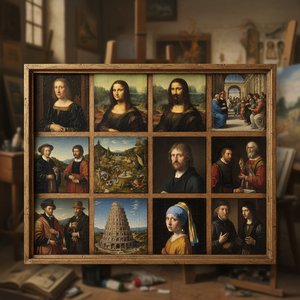
Oil on Panel Masters: 10 Paintings That Revolutionized Art |
Journey through 10 legendary 'Oil on Panel' masterpieces by Van Eyck, Bosch & Bruegel. Explore the stories behind these iconic Renaissance & Baroque paintings and find museum-quality art reproductions to elevate your home decor. Discover all masterpieces on !

Mastering the Surface: The Timeless Elegance and Technical Brilliance of Oil on Panel Painting
Discover the enduring allure of oil on panel painting. Explore the technical mastery, historical significance, and luminous depth that define this prestigious medium, from Renaissance masters to modern fine art reproductions for discerning collectors.
Mastering the Surface: A Historical and Technical Guide to the Art of Oil on Panel Painting
Explore the profound history and technical brilliance of oil on panel painting. From Renaissance masters to modern techniques, discover why this rigid support offers unparalleled precision and permanence for fine art lovers and collectors.
Oil on Panel: A Historical Survey of Technique, Support & Aesthetic Evolution
Explore the rich history of oil on panel painting! Discover Renaissance techniques, support structures & aesthetic evolution. Expert insights for art collectors and enthusiasts.
Oil on Panel: A Historical Survey of Technique, Support, and Aesthetic Impact
Explore the rich history of oil on panel painting! Discover Renaissance techniques, support construction, & the enduring legacy of this masterful art form. Expert insights for collectors and enthusiasts.


