Pređi na štampu
 Pročitaj više







































 Za umetnička dela ili reprodukcije čija je bilo koja strana veća od 105 cm (približno 41 inč), okvir će biti isporučen u obliku rastavljenog seta za sklapanje. Ovaj metod osigurava bezbednu dostavu i sprečava oštećenja tokom transporta.


A Symphony of Nature and Connection
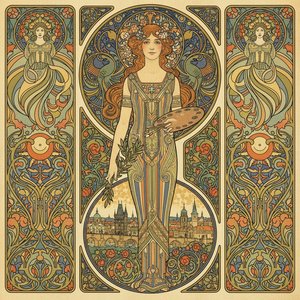
In the delicate tapestry of the Art Nouveau movement, few works capture the rhythmic pulse of life as tenderly as Alphonse Maria Mucha’s Manhood Calendar. Created in 1897, this masterpiece serves as more than a mere decorative print; it is an evocative tableau that invites the viewer into a serene, pastoral sanctuary. The composition centers on a man and a woman seated in quiet intimacy beneath the sheltering canopy of an apple tree. Their presence is not merely romantic but deeply symbolic, embodying a profound harmony between humanity and the natural world. As they share this peaceful moment, the surrounding landscape breathes with a sense of vitality, drawing the observer into a world where time seems to slow, allowing for a deep contemplation of connection and existence.
The artistic vision behind this work is a masterclass in the organic fluidity that defined Mucha’s legendary style. Eschewing the rigid constraints of academic tradition, he employed expressive, undulating lines that mimic the natural curves of branches laden with fruit. This deliberate use of asymmetrical composition guides the eye through a dynamic journey across the canvas, creating a sense of movement that feels as spontaneous as a summer breeze. The color palette is a sophisticated arrangement of muted greens and earthy browns, which provide a grounded foundation for the vibrant splashes of crimson found in the scattered apples. These bursts of color represent ripeness and life force, punctuating the scene with a rhythmic energy that mirrors the regenerative power of nature itself.
Symbolism and the Eternal Cycle
Every element within the Manhood Calendar is imbued with layers of meaning, rooted in the cyclical rhythms of the earth. The apple tree, with its heavy boughs and scattered fruit, acts as a potent symbol of abundance, wisdom, and the bountiful rewards of life. Mucha’s meticulous attention to detail—from the subtle shading on the rugged tree trunk to the delicate rendering of individual petals—underscores his commitment to capturing the essence of growth and decay. The interplay between the figures and the fruit-laden branches suggests a mirroring of human experience with the seasonal transitions of the natural world, creating an emotional resonance that is both nostalgic and hopeful.
For the discerning collector or interior designer, this artwork offers a unique opportunity to introduce a sense of timeless elegance and tranquility into a space. The piece possesses a rare ability to transform an environment, providing a focal point that is both intellectually stimulating and visually soothing. Whether placed in a sunlit study or a sophisticated living area, the Manhood Calendar brings with it the enchanting spirit of the late 19th century, offering a window into a period where art sought to dissolve the boundaries between the beautiful and the everyday. It remains a testament to Mucha’s enduring legacy, capturing a fleeting moment of peace that feels eternally present.
Pitanja i odgovori
Koja veličina i orijentacija se preporučuju za štampu dela „Manhood calendar”, autor Алфонс Муха?
Veličina Small, Portrait orijentacija: ovo je preporučena postavka za štampu za „Manhood calendar”, autor Алфонс Муха.
Kako se umetnički pravac i epoha susreću u delu „Manhood calendar”, autor Алфонс Муха?
„Manhood calendar“ pripada pravcu Art Nouveau, a njen autor je stvarao u periodu 19. vek.
Ko je kreirao "Manhood calendar" i u kojoj godini?
Алфонс Муха je napravio/la "Manhood calendar" u 1897. godini.
 Pregledaj u prostoru
 Pošalji
 Podeli
 Detalji o delu
 Vodič
Vodič

 Preuzmi
 Slični predmeti
 Rendgenski snimak
 Automatska prezentacija
 Q&A
Q&A Statistika