Pređi na štampu
 Pročitaj više







































 Za umetnička dela ili reprodukcije čija je bilo koja strana veća od 105 cm (približno 41 inč), okvir će biti isporučen u obliku rastavljenog seta za sklapanje. Ovaj metod osigurava bezbednu dostavu i sprečava oštećenja tokom transporta.


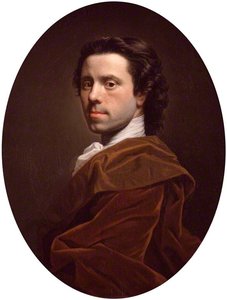
A Portrait of Nobility: Allan Ramsay’s David Wemyss, Lord Elcho
Allan Ramsay's “David Wemyss, Lord Elcho” is more than just a painted likeness; it’s a carefully constructed tableau of 18th-century Scottish aristocracy, imbued with the formality and restrained emotion characteristic of his era. Completed around 1775, this oil on canvas portrait captures David Wemyss, Lord Elcho, a prominent figure in Jacobite circles and a man defined by both privilege and turbulent history. The painting immediately draws the eye with its rich palette – deep reds and browns dominate, offset by creamy whites and subtle golds – creating an atmosphere of dignified opulence that speaks to the subject’s status and wealth.
Ramsay's skill lies not merely in replicating appearance but in conveying character. Lord Elcho is presented in a three-quarter pose, his gaze direct and unwavering, establishing an immediate connection with the viewer. His posture exudes confidence, yet there’s also a hint of melancholy in his expression, perhaps reflecting the political turmoil that defined his life. The artist masterfully employs soft lines to define the contours of the face and clothing, avoiding harsh outlines and instead creating a sense of gentle realism. Notice how the folds of his coat and cravat aren't simply rendered; they’re sculpted with subtle shading, adding depth and texture that bring the portrait to life.
The Context of Power and Rebellion
To fully appreciate “David Wemyss, Lord Elcho,” it’s crucial to understand its historical context. The late 18th century in Scotland was a period of intense political unrest, fueled by aspirations for restoring the Stuart monarchy. Lord Elcho, as a Jacobite supporter, played a significant role in this movement, raising his own troop of cavalry – the “Lifeguards” – which became renowned for their bravery and effectiveness during the 1745 Rising. The portrait itself is therefore inextricably linked to this era of rebellion and loyalty, serving as a visual testament to a man caught between duty and ambition.
Further research reveals that Lord Elcho’s life was marked by both success and tragedy. He initially rose through the ranks of the army, earning recognition for his military prowess. However, following the disastrous defeat at Culloden in 1746, he fled to Europe and faced imprisonment and exile. The painting, therefore, can be viewed as a poignant reminder of a life cut short by political upheaval – a man whose legacy is intertwined with both glory and loss.
Symbolism and Artistic Technique
Ramsay’s technique is rooted in the traditions of 18th-century portraiture, yet he infuses it with his own distinctive style. The lighting, diffused and soft, illuminates Lord Elcho's face and upper body while leaving the background shrouded in shadow, creating a dramatic focal point and emphasizing the subject’s presence. The use of color is particularly noteworthy; the rich reds and browns evoke notions of power, wealth, and nobility, while the lighter tones suggest refinement and elegance.
Beyond mere representation, Ramsay employs subtle symbolism to enhance the portrait's meaning. The elaborate attire – the richly colored coat, the ornate cravat, and the powdered wig – are all indicators of Lord Elcho’s social standing and status within Scottish society. The composition itself, with its balanced arrangement and direct gaze, reinforces his authority and confidence. It is a carefully considered image designed to project an aura of power and dignity.
A Timeless Masterpiece for the Home
“David Wemyss, Lord Elcho” remains a captivating work of art, offering a glimpse into a pivotal moment in Scottish history and showcasing the exceptional talent of Allan Ramsay. Reproductions of this portrait are highly sought after by collectors and interior designers alike, providing a touch of elegance and historical gravitas to any space. Its rich colors, masterful composition, and evocative subject matter make it a truly timeless masterpiece – a testament to the enduring power of art to capture both the outward appearance and inner character of its subjects.
Pitanja i odgovori
Koje su teme prikazane u delu „DAVID WEMYSS, LORD ELCHO”, autor Alan Ramsaj?
Teme prisutne u delu „DAVID WEMYSS, LORD ELCHO”, autor Alan Ramsaj obuhvataju portraiture, nobility, 18th century, scotland, aristocracy, formal, dignified, što zajedno sažima suštinu ovog umetničkog dela.
Koju temu i atmosferu spaja „DAVID WEMYSS, LORD ELCHO”, autor Alan Ramsaj?
„DAVID WEMYSS, LORD ELCHO“ prikazuje portraiture, nobility, 18th century, scotland, aristocracy, formal, dignified, a njegovo dočarano raspoloženje je Elegant.
Kakav osećaj prenosi „DAVID WEMYSS, LORD ELCHO”, autor Alan Ramsaj?
U delu "DAVID WEMYSS, LORD ELCHO", Elegant raspoloženje prati Nostalgic emocija.
 Pregledaj u prostoru
 Pošalji
 Podeli
 Detalji o delu
 Vodič
Vodič

 Preuzmi
 Slični predmeti
 Rendgenski snimak
 Automatska prezentacija
 Pitanja i odgovori
 Statistika