
 Pregledaj u prostoru
 Pošalji
 Podeli
 Detalji o delu
 Vodič
Vodič

 Preuzmi
 Slični predmeti
 Rendgenski snimak
 Automatska prezentacija
 Q&A
Q&A Statistika
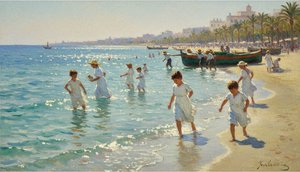
Joaquín Sorolla

- 5.0 x 8.0 cm


 Pročitaj više
Umetničko delo prikazano na ovoj stranici zaštićeno je autorskim pravima, što znači da zakonski nismo u mogućnosti da kreiramo niti prodajemo identičnu reprodukciju. Ova zaštita se sprovodi u skladu sa međunarodnim sporazumima kao što su Bernska konvencija i nacionalnim zakonima, uključujući i one koji su definisani u Američki zakon o autorskom pravu – Naslov 17.
Ovaj metod je u potpunosti usklađen sa regulativama o autorskim pravima jer ne podrazumeva kopiranje ili dupliranje zaštićenih umetničkih dela. Umesto toga, reč je o kreativnoj reinterpretaciji – novom slikarskom delu koje je inspirisano originalom, ali nije identično njemu.
Giclee štampa / Umetnički otisak
Giclée štampa ili print na platnu muzejskog kvaliteta uz brzu izradu i raznovrsne opcije završne obrade. ( Kupite ručno oslikano delo Pređi na digitalnu sliku)




































Izaberite jednu od naših unapred definisanih veličina koje odgovaraju originalnim proporcijama umetničkog dela.

Unesite željenu širinu i visinu kako bi se štampa uklopila u vaš ram ili zid. Štampu je moguće samo iseći, ali nikada povećati iznad dimenzija originalne slike, stoga format sa drugačijim proporcijama uzrokuje gubitak dela slike. Pre početka štampe, poslaćemo vam digitalni prikaz radi potvrde. Slika prikazana na ovoj stranici ne predstavlja stvarni isrez — to pokazuje samo digitalni prikaz.
Dostava širom sveta () za 2 nedelje umesto uobičajenih 4/5 nedelja. (2 новембар)

Besplatna ekspresna dostava širom sveta

Visokokvalitetno laneno platno

Potpuno osiguranje transporta

Garancija povraćaja carine i uvoznih dažbina

Garancija vernosti boja

Politika povraćaja u roku od 100 dana (samo u slučaju nedostataka)

Garancija povrata 100% novca

Popust na više proizvoda
 Opcija sa staklom dostupna je samo za dimenzije manje od 110 cm

Joaquín Sorolla
Giclee štampa / Umetnički otisak
Dimenzije reprodukcije
-


Ukupna cena
дин 8334
Biografija umetnika
A Prolific Visionary: The Cinematic World of Alberto Franco Manera
Alberto Franco Manera, more widely known as Jesús Franco, was a truly singular figure in the landscape of 20th-century cinema. Born in Madrid in 1930 and passing away in 2013, his career spanned an astonishing six decades, yielding approximately 173 feature films – a testament to relentless creativity and a unique, often unconventional approach to filmmaking. While frequently categorized within the realms of exploitation and B-movies, reducing Franco solely to these labels overlooks the complex artistry and enduring cult following that defined his work. He wasn’t merely a director; he was a composer, actor, writer, producer – a one-man film factory who operated on the fringes of mainstream cinema, yet left an indelible mark on its history. His journey took him across Europe, from Spain to France, Germany, Switzerland, Portugal, Brazil and even Turkey, reflecting both a desire for creative freedom and the practicalities of low-budget production.Early Life and Diverse Beginnings
Franco’s upbringing was steeped in culture, hailing from a prominent family with Cuban and Mexican roots. His brother held a position within the Albéniz Foundation, and his sister's marriage connected him to the influential philosopher Julián Marías. This environment fostered an early appreciation for the arts, leading Franco to study music at the Madrid Royal Conservatory and the Instituto Ramiro de Maeztu. He was a dedicated jazz enthusiast and skilled pianist, talents he would later integrate directly into his films, composing scores for many of his productions. Before turning to directing, Franco honed his skills through various roles in the Spanish film industry – assisting directors like Joaquín Luis Romero Marchent and León Klimovsky, while simultaneously writing pulp novels under the pseudonym David Khune. This period was crucial in developing his multifaceted skillset and establishing a foundation for his future independent endeavors. He also directed stage plays, further broadening his artistic experience.The Rise of a Cult Director: Genre Exploration and Distinctive Style
Franco’s directorial debut came in 1959 with a handful of musicals and a crime drama titled *Red Lips*. However, it was the horror film *The Awful Dr. Orloff* (1962) that propelled him into prominence, gaining significant distribution in both the United States and the United Kingdom. This success sparked a prolific period of genre exploration. He fearlessly navigated diverse territories – from gothic horror to spy thrillers reminiscent of James Bond, and provocative erotic films often inspired by the works of the Marquis de Sade. What truly set Franco apart was his distinctive visual style. His films are characterized by atmospheric lighting, surrealist elements, and a willingness to push boundaries, even within the constraints of low budgets. He frequently directed multiple films concurrently, demonstrating an extraordinary capacity for multitasking and a singular vision that permeated all aspects of production.Influences and Artistic Legacy
Franco’s cinematic influences were remarkably broad, encompassing masters like Luis Buñuel, Stanley Donen, Vincente Minnelli, and Orson Welles. This eclectic mix is evident in his work, blending elements of surrealism, musicality, and stylistic flair. Despite often receiving mixed critical reception during his lifetime, Franco cultivated a dedicated cult following that continues to grow today. He’s now recognized as a significant figure in the history of exploitation cinema, celebrated for his idiosyncratic approach to filmmaking and his unwavering commitment to artistic expression. In 2009, he received an Honorary Goya Award from the Academy of Cinematographic Arts and Sciences of Spain, acknowledging his substantial contributions to Spanish cinema.Beyond Exploitation: A Unique Cinematic Voice
To categorize Franco solely as a director of exploitation films is to overlook the depth and complexity of his work. He was a true auteur, imbuing each film with his personal vision and challenging conventional cinematic norms. His films often explored themes of sexuality, power, and societal transgression, albeit through a distinctly unconventional lens. While his low-budget productions sometimes lacked polish, they were always brimming with creativity, atmosphere, and a unique sensibility that set him apart from his contemporaries. Alberto Franco Manera’s legacy extends far beyond the B-movie circuit; he was a prolific visionary who carved out his own niche in cinematic history, leaving behind a body of work that continues to fascinate and provoke audiences today.
Alberto Franco Manera
1930 - 2013 , Spain
Osnovne informacije
- Full Name: Alberto Franco Manera
- Nationality: Spanish
- Date Of Birth: 1930
- Date Of Death: 2013
- Place Of Birth: Madrid, Spain
- Notable Artworks: ['Joaquín Sorolla']
- Artistic Movement Or Style: Exploitation & B-movies
- Artists Who Influenced This Artist:
- Luis Buñuel
- Stanley Donen
Povezani članci
Joaquín Sorolla: Capturing Spanish Light & Life – A Legacy of Impressionism
Explore the luminous world of Joaquín Sorolla, Spanish master of Impressionism. Discover his life, techniques & legacy – a guide for art collectors and enthusiasts. Invest in timeless beauty.

White on Canvas: 10 Masterpieces & Timeless Elegance for Your Home Decor
Explore 10 iconic white paintings by Monet, Whistler & Rothko! Discover the stories behind these serene masterpieces and their impact on art history. Find museum-quality reproductions for your home decor at .

Monochrome Visions: Exploring the Aesthetic & Historical Significance of Black & White Photography
Explore the rich history & artistic power of black and white photography. From early techniques to iconic masters like Ansel Adams, discover why monochrome continues to captivate art lovers today. Expert insights for collectors.

Dark Masterpieces: 10 Iconic Paintings Dominated by Black Tones |
Explore 10 iconic paintings dominated by black tones, from Rembrandt’s chiaroscuro to Goya's dark expressions. Discover the stories behind these masterpieces & find museum-quality art reproductions for your home at .

Shadow & Soul: Why Black & White Photography Remains the Ultimate Power Move in Modern Art
Discover why black & white photography remains a powerful force in contemporary art. Explore the impact of light, shadow, and texture through a visual journey of monochrome mastery and learn how to elevate your space with timeless grayscale aesthetics.