

 Pregledaj u prostoru
 Pošalji
 Podeli
 Detalji o delu

 Преузми
 Slični predmeti
 Rendgenski snimak
 Slajdovi
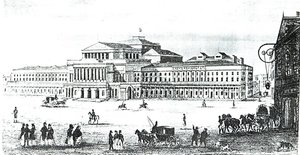
Copernicus House / Maison de Copernic


 Pročitaj više
Ručno rađena uljana reprodukcija
Ručno oslikano uljanim bojama na platnu u dimenzijama i okviru po vašem izboru, izrađeno po porudžbini od strane naših umetnika. ( Kupi print Kupi digitalnu sliku)




































Izaberite jednu od naših unapred definisanih veličina koje odgovaraju originalnim proporcijama umetničkog dela.

Можете унети сопствене димензије како бисте прилагодили дело одређеном оквиру или простору. Ако одабрана величина не одговара пропорцијама оригинала, слика ће бити исечена или проширена додатним елементима који се ручно насликавају. Дигитални prikaz ће вам бити послат на одобрење пре почетка производње.
Имајте на уму да преглед на екрану не одражава стварно исецање или проширење. Само приказ (mockup) ће тачно приказати коначну композицију.
Иако су доступне прилагођене величине, препоручујемо да одаберете димензију из дефинисане листе како бисте сачували оригиналне пропорције.
Nakon narudžbine, tim OriginalUniqueArt.com će klijentu putem e-pošte poslati uputstva i dostaviti prikaz predloženog rešenja
Isporuka širom sveta () za 3/4 nedelje umesto uobičajenih 5 nedelja. (20 август). Bez kompromisa po pitanju kvaliteta.

Besplatna ekspresna dostava širom sveta

Visokokvalitetno laneno platno

Kompletno osiguranje transporta

Garancija povraćaja carine i uvoznih dažbina

Garancija vernosti boja

Politika povrata u roku od 60 dana (samo u slučaju nedostataka)

Garancija povrata novca od 100%

Popust pri grupnoj kupovini
 Opcija sa staklom dostupna je samo za dimenzije manje od 110 cm

Copernicus House / Maison de Copernic
Tehnika reprodukcije
Dimenzije reprodukcije
-


Konačna cena
$ 300
Opis umetničkog dela
Biografija umetnika
The Soul of the Line: The Life and Legacy of Adam Józef Piliński
In the turbulent landscape of nineteenth-century Europe, where national identities were forged in the fires of uprising and resistance, the work of Adam Józef Piliński emerged as a profound testament to Polish resilience. Born on November 22, 1810, in Maciejowice, Poland, Piliński was more than a mere practitioner of the graphic arts; he was a scholar, an activist, and a guardian of cultural memory. His life, which spanned from the height of Polish romanticism to his final days in Paris in 1887, was inextricably linked to the heartbeat of his nation. As a student at the University of Warsaw's School of Fine Arts, he did not merely learn the mechanics of lithography and engraving; he learned how to use the precision of the burin and the softness of the stone to document a heritage that was under constant threat of erasure.
The formative years of Piliński’s career were shadowed by the smoke of conflict, most notably during the November Uprising of 1830-1831. This period of intense political upheaval deeply influenced his artistic consciousness, instilling in him a sense of duty that would define his professional trajectory. He did not view art as an isolated pursuit of beauty, but as a vital tool for preservation and political expression. His mastery over various mediums—ranging from the delicate nuances of paleography to the technical rigors of lithography—allowed him to bridge the gap between historical reconstruction and contemporary activism.
A Master of Reconstruction and Design
Piliński’s true genius lay in his ability to breathe life into the past through his revolutionary approach to historical documents. He became renowned for his exceptional skill in reproducing manuscripts and printed works from diverse eras, a feat that required not only artistic dexterity but also the meticulous eye of a paleographer. Perhaps his most significant technical contribution was the development of homography, a sophisticated technique designed for the reconstruction of ancient documents. Through this method, he could replicate the essence of historical scripts, ensuring that the fragile threads of Polish cultural heritage remained visible to future generations even as original manuscripts succumbed to time.
This dedication to functional and symbolic art reached a pinnacle during the January Uprising of 1863-1864. As Poland struggled for sovereignty, Piliński applied his graphic talents to the service of the National Polish Monetary Fund. His work on banknotes and coins was far more than mere currency production; it was an act of defiance. By creating intricate, high-quality designs for the nation's financial instruments, he helped assert a sense of economic and cultural autonomy. Each engraving and lithograph served as a miniature monument to the Polish cause, blending the precision of a master engraver with the passion of a patriot.
An Enduring Artistic Heritage
The significance of Adam Józef Piliński extends far beyond the borders of Poland, reaching into the broader history of nineteenth-century graphic arts. His ability to adapt his style across various mediums—from the sharp, definitive lines of engraving to the tonal richness of lithography—demonstrates a versatility that few of his contemporaries could match. His legacy is not found merely in museums, but in the very survival of the historical narratives he worked so tirelessly to protect.
Today, the works of Piliński continue to captivate scholars and art enthusiasts alike. His contributions can be explored through various prestigious collections, including those featured on OriginalUniqueArt, where his meticulous reproductions serve as a window into a vanished era. To study Piliński is to witness the intersection of art and history, where every stroke of the engraver's tool was an act of devotion to a culture, a people, and a dream of independence.
adam józef piliński
1810 - 1887 , Poland
Osnovne informacije
- Artistic Movement Or Style: Graphic art, lithography, and engraving
- Date Of Birth: November 22, 1810
- Date Of Death: January 23, 1887
- Full Name: Adam Józef Piliński
- Nationality: Polish
- Notable Artworks: ['Banknotes and coins for National Monetary Fund']
- Place Of Birth: Maciejowice, Poland

