Portret Пјеро ди Козимо

82 najpoznatijih slika umetnika Пјеро ди Козимо, izbor iz galerije

Ažurirano: новембар 2026 · rangirano prema našem koeficijentu popularnosti (pretrage, posete i porudžbine za svako delo) · 84 dela Пјеро ди Козимо u našem katalogu

Ukratko

Od svih originala koje je Пјеро ди Козимо ostavio, najpoznatiji je Portret žene, za koju se veruje da je Simoneta Vespuči (1490), koji se nalazi u kolekciji Musée Condé, Šantiji. Odmah za njima slede Andromeda freed by Perseus (1515) i Allegory (1500). Naš katalog sadrži 84 dela umetnika Пјеро ди Козимо; galerija je čuvala 82 dela koja svet najviše admira, od kojih je svako prikazano sa svojim datumom, muzejom i pričom.

1462 – 1522, Фиренца Renaissance Najviše dela: Galerija Ufizi

Top 10 slika umetnika Пјеро ди Козимо: izbor galerije

1
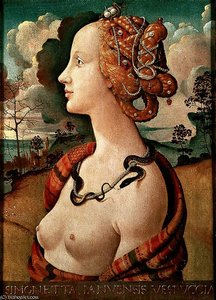
Portret žene, za koju se veruje da je Simoneta Vespuči (1490) čiji je Пјеро ди Козимо

Portret žene, za koju se veruje da je Simoneta Vespuči

1490 · Ulje na platnu · Musée Condé, Šantiji

Ovo remek-delo prikazuje Simonetu Vespuči (rođenu Cattaneo), genovensku plemkinju koja je slavljena kao oličenje lepote u Firenci—ženu čija je očaravavajuća privlačnost osvajala umetnike i intelektualce isto koliko i obične smrtnike. Cosimo-ovo izuzetan izbor da predstavi Vespuči kao Venus, boginju ljubavi i plodnosti, govori mnogo o umetničkim senzibilitetima Renesanse. Ovo namerno prizivanje klasične mitologije nije bilo samo dekorativno; ono je služilo kao moćno sredstvo za prenošenje ideala ženske gracioznosti, vrline i…

2
Andromeda freed by Perseus (1515) čiji je Пјеро ди Козимо

Andromeda freed by Perseus

1515 · Oil On Panel · Galerija Ufizi, Firenca

The oil on panel titled Andromeda freed by Perseus captures a moment of sudden, violent salvation. Created by Piero di Cosimo, the work emerged from the artist's late production period. It remains one of the most well-known works by the Florentine painter. The scene depicts the rescue of a young woman from a sea monster, a narrative that has long occupied the artist's imagination.

3
Allegory (1500) čiji je Пјеро ди Козимо

Allegory

1500 · Oil On Canvas · National Gallery of Art, Washington

Piero di Cosimo’s “Allegory,” painted around 1500, is not merely a depiction of a biblical scene; it's a meticulously crafted visual poem brimming with symbolic weight and rendered in the vibrant, emotionally charged style characteristic of Early Netherlandish painting. The artwork immediately commands attention with its dynamic composition – a powerful diagonal thrust driven by the angel’s forceful pull on the fallen warrior. This isn’t a static tableau but a…

4
Portrait of Simonetta Vespucci (1480) čiji je Пјеро ди Козимо

Portrait of Simonetta Vespucci

1480 · Oil On Panel · Musée Condé, Šantije

In the heart of the Florentine Renaissance, where the boundaries between reality and myth often blurred, Piero di Cosimo captured an image of eternal grace in his Portrait of Simonetta Vespucci. This captivating masterpiece does more than merely record the likeness of a noblewoman; it invites the viewer into a contemplative state of elegance. The subject, renowned throughout Florence for her incomparable beauty, gazame towards the observer with a serene…

5
Perseus Frees Andromeda (detail) (1513) čiji je Пјеро ди Козимо

Perseus Frees Andromeda (detail)

1513 · Oil On Canvas · Galerija Ufizi, Firenca

To gaze upon a detail from Piero di Cosimo’s Perseus Frees Andromeda is to step directly into the vibrant, dramatic heart of the Florentine Renaissance. This work is not merely a depiction of classical mythology; it is an immersive narrative, a moment suspended between terror and salvation. The scene pulses with untold drama—the exquisite vulnerability of Andromeda chained against the unforgiving rock, juxtaposed against the primal menace of the sea…

6
Perseus Frees Andromeda (detail) (8) (1515) čiji je Пјеро ди Козимо

Perseus Frees Andromeda (detail) (8)

1515 · Oil On Canvas · Galerija Ufizi, Firenca

Piero di Cosimo’s “Perseus Frees Andromeda” – a detail from the larger painting, currently housed in the Uffizi Gallery in Florence – is more than just a depiction of a classical myth; it's a vibrant testament to the burgeoning humanist spirit of 16th-century Italy. Completed around 1515, this oil on panel work encapsulates the era’s fascination with both the grandeur of antiquity and the innovative possibilities of artistic representation. The…

7
Incarnation of Jesus (1505) čiji je Пјеро ди Козимо

Incarnation of Jesus

1505 · Tempera On Panel · Galerija Ufizi, Firenca

Incarnation of Jesus is a painting by the Florentine Renaissance artist Piero di Cosimo. The work was executed in 1505. This piece is currently housed in the Uffizi Gallery in Florence, Italy. It is a significant example of the artist's output during the early sixteenth century.

8
The Death of Procris (detail) (1500) čiji je Пјеро ди Козимо

The Death of Procris (detail)

1500 · Oil On Panel · National Gallery, London

Piero di Cosimo’s “The Death of Procris,” a captivating panel painting from 1500, resides within the National Gallery in London as a poignant testament to the Florentine Renaissance's fascination with classical mythology and its ability to imbue timeless tales with deeply human emotion. More than simply a depiction of a tragic love story, this work is a masterclass in atmospheric storytelling, utilizing subtle color palettes, masterful rendering of texture, and…

9
A Young Man (1500) čiji je Пјеро ди Козимо

A Young Man

1500 · Oil On Panel · Dulwich Picture Gallery, London

A single figure occupies the frame, a young man turned slightly toward the left. His skin possesses a porcelain clarity, smoothed by delicate transitions of light and shadow. A warm red tunic covers his shoulders, a sharp contrast to the expansive, cool blue of the sky behind him. His dark, shoulder-length hair falls in soft, wavy lines, catching a glint of light that suggests a sun beating down from the…

10
The Myth of Prometheus (1515) čiji je Пјеро ди Козимо

The Myth of Prometheus

1515 · Oil On Panel · Alte Pinakothek, Minhen

The Myth of Prometheus is an oil on panel work by the Florentine painter Piero di Cosimo. Executed in 1515, the painting captures a specific episode from Greek mythology. The composition focuses on the central figure of the myth, rendered with the anatomical precision characteristic of the High Renaissance.

Izbor umetnika Пјеро ди Козимо se nastavlja, od 11 do 82

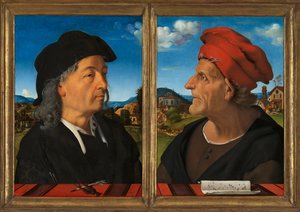
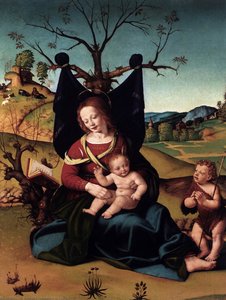
11Adoration of the Christ Child (1501) čiji je Пјеро ди КозимоAdoration of the Christ Child1501 · Ermitaž 12Virgin and Child with the Young Saint John the Baptist, Saint Cecilia, and Angels (1505) čiji je Пјеро ди КозимоVirgin and Child with the Young Saint John the Baptist, Saint Cecilia, and Angels1505 · Art Institute of Chicago 13Madonna and Child Enthroned with Sts. Peter, John the Baptist, Dominic and Nicholas of Bari (1483) čiji je Пјеро ди КозимоMadonna and Child Enthroned with Sts. Peter, John the Baptist, Dominic and Nicholas of Bari1483 · Saint Louis Art Museum 14Holy Family with Angels (1520) čiji je Пјеро ди КозимоHoly Family with Angels1520 · Ermitaž 15Sacra conversazione (1480) čiji je Пјеро ди КозимоSacra conversazione1480 · Musée des Beaux-Arts de Strasbourg 16Christ on the Cross ("Volto Santo") (1500) čiji je Пјеро ди КозимоChrist on the Cross ("Volto Santo")1500 · Szépművészeti Múzeum 17Holy Family (1495) čiji je Пјеро ди КозимоHoly Family1495 · Gemäldegalerie Alte Meister 18Virgin and Child with Young St. John the Baptist, and an Angel (1500) čiji je Пјеро ди КозимоVirgin and Child with Young St. John the Baptist, and an Angel1500 · Museu de Arte de São Paulo Assis Chateaubriand 19The Myth of Prometheus (1510) čiji je Пјеро ди КозимоThe Myth of Prometheus1510 · Musée des Beaux-Arts de Strasbourg 20The Myth of Prometheus (1515) čiji je Пјеро ди КозимоThe Myth of Prometheus1515 · Bavarske državne slikopisne kolekcije 21Madonna and Child with Saints and Angels (1510) čiji je Пјеро ди КозимоMadonna and Child with Saints and Angels1510 · Philbrook Museum of Art 22Two Angels (1512) čiji je Пјеро ди КозимоTwo Angels1512 · Muzej finih umetnosti u Bostonu 23Adoration of the Christ Child (1510) čiji je Пјеро ди КозимоAdoration of the Christ Child1510 · Gemäldegalerie 24Perseus Frees Andromeda (detail) (1510) čiji je Пјеро ди КозимоPerseus Frees Andromeda (detail)1510 · Galerija Ufizi 25Adoration of the Child (1510) čiji je Пјеро ди КозимоAdoration of the Child1510 · Museo di Palazzo Martelli 26Virgin and Child with Saints Vincent Ferrer and Jerome (1508) čiji je Пјеро ди КозимоVirgin and Child with Saints Vincent Ferrer and Jerome1508 · Yale University Art Gallery 27Venus, Mars, and Cupid (detail) (1490) čiji je Пјеро ди КозимоVenus, Mars, and Cupid (detail)1490 · Staatliche Museen zu Berlin 28Virgin and Child Enthroned with Saints (1493) čiji je Пјеро ди КозимоVirgin and Child Enthroned with Saints1493 · Spedale degli Innocenti 29Portraits of Giuliano and Francesco Giamberti da Sangallo, Piero di Cosimo, 1482 - 1485 (1485) čiji je Пјеро ди КозимоPortraits of Giuliano and Francesco Giamberti da Sangallo, Piero di Cosimo, 1482 - 14851485 30The Adoration of the Child (1500) čiji je Пјеро ди КозимоThe Adoration of the Child1500 · Toledo Museum of Art 31Forest Fire (detail) (1500) čiji je Пјеро ди КозимоForest Fire (detail)1500 · Ashmolean Museum 32The Nativity with the Infant Saint John (1505) čiji je Пјеро ди КозимоThe Nativity with the Infant Saint John1505 · National Gallery of Art 33Venus, Mars, and Cupid (detail) (1490) čiji je Пјеро ди КозимоVenus, Mars, and Cupid (detail)1490 · Staatliche Museen zu Berlin 34Perseus Frees Andromeda (detail) (10) (1513) čiji je Пјеро ди КозимоPerseus Frees Andromeda (detail) (10)1513 · Galerija Ufizi 35Portrait of a Woman (1500) čiji je Пјеро ди КозимоPortrait of a Woman1500 36The discovery of honey, Detalj 2, ca (1510) čiji je Пјеро ди КозимоThe discovery of honey, Detalj 2, ca1510 37The discovery of honey, Detalj 1, ca (1510) čiji je Пјеро ди КозимоThe discovery of honey, Detalj 1, ca1510 38Perseus Frees Andromeda (detail) (1510) čiji je Пјеро ди КозимоPerseus Frees Andromeda (detail)1510 · Galerija Ufizi 39Immaculate Conception with Saints (1510) čiji je Пјеро ди КозимоImmaculate Conception with Saints1510 · San Francesco 40Simonetta Vespucci (1480) čiji je Пјеро ди КозимоSimonetta Vespucci1480 · Château de Chantilly 41Madonna with Child and the Young St John (1505) čiji je Пјеро ди КозимоMadonna with Child and the Young St John1505 · Liechtenstein Museum 42Holy Family with the Young St John the Baptist (1520) čiji je Пјеро ди КозимоHoly Family with the Young St John the Baptist1520 · Collezione Vittorio Cini 43Incarnation of Jesus (detail) (1505) čiji je Пјеро ди КозимоIncarnation of Jesus (detail)1505 · Galerija Ufizi 44The Visitation with Sts Nicholas and Anthony (detail) (1489) čiji je Пјеро ди КозимоThe Visitation with Sts Nicholas and Anthony (detail)1489 · National Gallery of Art 45The Young Saint John the Baptist (1480) čiji je Пјеро ди КозимоThe Young Saint John the Baptist1480 · Metropoliten музеј у Њујорку 46The Adoration of the Christ Child (1505) čiji je Пјеро ди КозимоThe Adoration of the Christ Child1505 · Galleria Borghese 47The Return from the Hunt (1500) čiji je Пјеро ди КозимоThe Return from the Hunt1500 · Metropoliten музеј у Њујорку 48Building of a Palace čiji je Пјеро ди КозимоBuilding of a PalaceJohn and Mable Ringling Museum of Art 49Two Censing Angels Holding a Crown čiji je Пјеро ди КозимоTwo Censing Angels Holding a CrownScottish National Gallery 50Rest on the Flight into Egypt čiji je Пјеро ди КозимоRest on the Flight into Egypt 51Visitation čiji je Пјеро ди КозимоVisitation 52Giuliano da Sangallo (1500) čiji je Пјеро ди КозимоGiuliano da Sangallo1500 · Rijksmuseum 53The Building of a Palace (1515) čiji je Пјеро ди КозимоThe Building of a Palace1515 · Ringling Museum of Art 54Prometheus čiji je Пјеро ди КозимоPrometheus 55allegory - Forest Fire (detail) čiji je Пјеро ди Козимоallegory - Forest Fire (detail) 56Sermon on the Mount and Healing of the Leper čiji je Пјеро ди КозимоSermon on the Mount and Healing of the Leper 57allegory - Forest Fire čiji je Пјеро ди Козимоallegory - Forest Fire 58Portrait of a young woman, Musée Condé, Chan čiji je Пјеро ди КозимоPortrait of a young woman, Musée Condé, Chan 59allegory - The Death of Procris (detail) čiji je Пјеро ди Козимоallegory - The Death of Procris (detail) 60allegory - Venus, Mars, and Cupid (detail) čiji je Пјеро ди Козимоallegory - Venus, Mars, and Cupid (detail) 61Madonna and Sleeping Christ Child with the Infant St John the Baptist čiji je Пјеро ди КозимоMadonna and Sleeping Christ Child with the Infant St John the Baptist 62The Fight between the Lapiths and the Centaurs čiji je Пјеро ди КозимоThe Fight between the Lapiths and the Centaurs 63allegory - The Death of Procris čiji je Пјеро ди Козимоallegory - The Death of ProcrisNational Gallery 64allegory - Venus, Mars, and Cupid čiji je Пјеро ди Козимоallegory - Venus, Mars, and CupidGemäldegalerie 65The Immaculate Conception with Saints (1510) čiji je Пјеро ди КозимоThe Immaculate Conception with Saints1510 · Galerija Ufizi 66The Visitation with Sts Nicholas and Anthony (1489) čiji je Пјеро ди КозимоThe Visitation with Sts Nicholas and Anthony1489 · National Gallery of Art 67allegory - Perseus Frees Andromeda čiji je Пјеро ди Козимоallegory - Perseus Frees Andromeda 68The Discovery of Honey (1505) čiji je Пјеро ди КозимоThe Discovery of Honey1505 · Worcester Art Museum 69Portrait of Francesco Giamberti da Sangallo (1483) čiji je Пјеро ди КозимоPortrait of Francesco Giamberti da Sangallo1483 · Rijksmuseum 70Virgin and Child with a Dove (1490) čiji je Пјеро ди КозимоVirgin and Child with a Dove1490 · Luvr 71Saint Jerome in Meditation (1490) čiji je Пјеро ди КозимоSaint Jerome in Meditation1490 · Museo Horne 72St Mary Magdalene (1490) čiji je Пјеро ди КозимоSt Mary Magdalene1490 · Galleria Nazional d Art Antica 73Return from the Hunt by Piero di Cosimo (1500) čiji je Пјеро ди КозимоReturn from the Hunt by Piero di Cosimo1500 · Metropoliten музеј у Њујорку 74The forest fire čiji je Пјеро ди КозимоThe forest fireAshmolean Museum 75allegory - Hunting Scene čiji je Пјеро ди Козимоallegory - Hunting SceneMetropoliten музеј у Њујорку 76The Finding of Vulcan on Lemnos (1495) čiji je Пјеро ди КозимоThe Finding of Vulcan on Lemnos1495 · Wadsworth Atheneum 77The Misfortunes of Silenus (1505) čiji je Пјеро ди КозимоThe Misfortunes of Silenus1505 · Fogg Museum 78Vulcan and Aeolus (1495) čiji je Пјеро ди КозимоVulcan and Aeolus1495 · Nacionalna galerija Kanade 79allegory - Battle of Lapiths and Centaurs čiji je Пјеро ди Козимоallegory - Battle of Lapiths and CentaursNational Gallery 80Virgin and Child with Infant John the Baptist (1489) čiji je Пјеро ди КозимоVirgin and Child with Infant John the Baptist1489 · Musée des Beaux-Arts de Strasbourg 81Virgin and Child with Two Angels (1505) čiji je Пјеро ди КозимоVirgin and Child with Two Angels1505 · Collezione Vittorio Cini 82Allegory (1500) čiji je Пјеро ди КозимоAllegory1500 · National Gallery of Art

Čuvena dela Пјеро ди Козимо po periodima

Motivi koji su privlačili pažnju Пјеро ди Козимо

Četiri teme koje se najčešće ponavljaju u ovim originalima, svaka sa svojim vrhunskim primerom.

Muzeji u kojima se čuvaju originalna dela umetnika Пјеро ди Козимо

8 muzeja u kojima se nalazi najviše slika sa ove stranice.

Muzej Grad Radovi umetnika Пјеро ди Козимо Slike iz ovog spiska
Galerija Ufizi, FirencaGalerija Ufizi Firenca 9 Andromeda freed by Perseus, Perseus Frees Andromeda (detail), Perseus Frees Andromeda (detail) (8)
National Gallery of Art, WashingtonNational Gallery of Art Washington 5 Allegory, The Nativity with the Infant Saint John, The Visitation with Sts Nicholas and Anthony (detail)
Metropoliten музеј у Њујорку, ЊујоркMetropoliten музеј у Њујорку Њујорк 4 The Young Saint John the Baptist, The Return from the Hunt, Return from the Hunt by Piero di Cosimo
National Gallery, LondonNational Gallery London 3 The Death of Procris (detail), allegory - The Death of Procris, allegory - Battle of Lapiths and Centaurs
Musée des Beaux-Arts de Strasbourg, StrasburgMusée des Beaux-Arts de Strasbourg Strasburg 3 Sacra conversazione, The Myth of Prometheus, Virgin and Child with Infant John the Baptist
Ermitaž, Sankt PeterburgErmitaž Sankt Peterburg 2 Adoration of the Christ Child, Holy Family with Angels
Gemäldegalerie, BerlinGemäldegalerie Berlin 2 Adoration of the Christ Child, allegory - Venus, Mars, and Cupid
Staatliche Museen zu Berlin, BerlinStaatliche Museen zu Berlin Berlin 2 Venus, Mars, and Cupid (detail), Venus, Mars, and Cupid (detail)

Пјеро ди Козимо deceniju po deceniju: original koji definiše svaku od njih

Radovi po decenijama

Izaberite deceniju da biste videli original koji je definiše.

Pitanja kolekcionara o slikama umetnika Пјеро ди Козимо

Po kojem delu je Пјеро ди Козимо najpoznatiji/a?Otkrij odgovor

Portret žene, za koju se veruje da je Simoneta Vespuči (1490), Musée Condé, Šantiji. Slede Andromeda freed by Perseus (1515) i Allegory (1500).

Koliko je godina imao/la Пјеро ди Козимо kada je nastalo delo Portret žene, za koju se veruje da je Simoneta Vespuči?Otkrij odgovor

28 godina: Portret žene, za koju se veruje da je Simoneta Vespuči datira iz 1490, a Пјеро ди Козимо je rođen/a 1462.

Koja su deset najpoznatijih slika umetnika Пјеро ди Козимо?Otkrij odgovor

Portret žene, za koju se veruje da je Simoneta Vespuči, Andromeda freed by Perseus, Allegory, Portrait of Simonetta Vespucci, Perseus Frees Andromeda (detail), Perseus Frees Andromeda (detail) (8), Incarnation of Jesus, The Death of Procris (detail), A Young Man i The Myth of Prometheus. Gornji rang pokazuje godinu i muzej za svako od njih.

Koliko je slika ostavio Пјеро ди Козимо?Otkrij odgovor

Naš katalog sadrži 84 dela umetnika Пјеро ди Козимо, datiranih od 1480 do 1520.

U kojim muzejima se nalaze remek-dela umetnika Пјеро ди Козимо?Otkrij odgovor

Većinom u Galerija Ufizi (Firenca), National Gallery of Art (Washington) i Metropoliten музеј у Њујорку (Њујорк). Tabela muzeja iznad sadrži njih sve.

U kojim godinama je Пјеро ди Козимо naslikao svoja najpoznatija dela?Otkrij odgovor

U 1500s: 23 od 82 dela na ovoj stranici nastalo je tada, od čega je Allegory.

Koja su prva i poslednja čuvena originalna dela umetnika Пјеро ди Козимо?Otkrij odgovor

Na ovoj stranici, najstarije delo je iz Portrait of Simonetta Vespucci (1480), a najnovije iz Holy Family with Angels (1520).

Koje je motive Пјеро ди Козимо najčešće birao/la?Otkrij odgovor

Landscape (21), Mythology (12) i Child (11), kroz svih 82 dela na ovoj stranici.

Koju je tehniku najčešće koristio/la Пјеро ди Козимо?Otkrij odgovor

Oil On Panel, za 21 od 82 dela na ovoj stranici.

Kojem umetničkom pravcu pripada Пјеро ди Козимо?Otkrij odgovor

Renaissance, sudeći po originalima na ovoj stranici.

Čija se dela umetnika Пјеро ди Козимо nalaze u Galerija Ufizi?Otkrij odgovor

Andromeda freed by Perseus, Perseus Frees Andromeda (detail) i Perseus Frees Andromeda (detail) (8): Galerija Ufizi, Firenca čuva 9 dela sa ove stranice.

Пјеро ди Козимо: život i delo

Piero di Cosimo (1462-1522): Most između fantazije i realizma u slikarstvu florentinske renesanse

Piero di Cosimo, rođen kao Piero di Lorenzo Battista oko 1462. godine u Firenci, Italija, predstavlja jedinstvenu figuru unutar živopisnog tapiserije florentinske renesanse. Za razliku od mnogih svojih savremenika koji su se strogo pridržavali klasičnih ideala, Cosimo je posedovao imaginativnog duha koji je u njegovo umetničko delo utkao fantastične elemente uporedo sa pedantnim posmatranom prirode — autentičan spoj koji je učvrstio njegovu reputaciju kao jednog od najinovativnijih slikara tog doba. Njegovo umetničko putovanje odvijalo se u pozadini bujanja humanističkog mišljenja i umetničkih eksperimentacija, odražavajući šire kulturne transformacije koje su preoblikovale Evropu u ovom periodu.
  • Rano detinjstvo i obuka: Precizni biografski detalji koji se tiču Cosimovih formativnih godina ostaju neuhvatljivi, oslanjajući se prvenstveno na fragmentarne reference u Vasarijevim Životima umetnika. Bio je šegrt Andreje del Verrocchia, čuvenog vajara i slikara čija je radionica služila kao žarište umetničkih talenata. Ova asocijacija izložila je Cosima tehnikama fresko slikarstva i vajarstva, oblikujući njegove temeljnu veštine.
  • Uticaji i umetnički stil: Na Cosimov stil duboko su uticali Boticeli i Jan van Eyck — umetnici koji su zastupali i lepotu i psihološku dubinu. Boticelijine graciozne linije i eterične figure ugradile su u Cosima sklonost ka eleganciji i idealizovanoj reprezentaciji, dok je Van Eyckovo majstorstvo u radu sa uljanim bojama podstaklo istraživanje nijansiranih tonalnih gradacija i teksturalne bogatosti. Ovi uticaji su se spojili kako bi proizveli umetnički jezik karakterisan luminoznim bojama, delikatnim potezima četkice i očaravajućom fuzijom mitoloških narativa sa realističnim pejzažima.

Značajna dela i umetnička dostignuća

Cosimovo delo obuhvata izuzetan kolekciju slika koje prikazuju njegov nesvakidašnji talenat i maštovitu viziju. Među njegovim najslavnijim kreacijama nalazi se „Vulkan i Ejol“, monumentalno kružno ulje na platnu koje prikazuje mitološki sukob Zevsovog sina i Posejdona — svedočanstvo Cosimove sposobnosti da prenese dramatičnu emociju unutar pažljivo konstruisane kompozicije. Slično tome, „Madonna i Spavajući Hristov Prvorodac sa Malim Svetim Jovanom Krstiteljem“ predstavlja primer njegove pedantne pažnje posvećene detaljima i dubokog razumevanja religijske ikonografije. Nadalje, „Adoracija Deteta“, još jedno kružno remek-delo, otelotvoruje spokojnu lepotu i duhovno promišljanje karakteristično za umetnost ranog renesansnog doba.

Nasleđe i istorijski značaj

Doprinos Pieroa di Cosima florentinskom slikarstvu prevazilazi puku stilsku inovaciju; on predstavlja ključni trenutak u umetničkoj istoriji. Odbacivanjem ograničenja strogih akademskih konvencija i prihvatanjem maštovitog pripovedanja uporedo sa realističkim prikazom, Cosimo je otvorio put narednim generacijama umetnika — uključujući Rafaela i Mikelađela — da istraže nove izrazne mogućnosti. Njegovo delo nastavlja da inspiriše divljenje zbog svoje harmonične mešavine fantazije i realizma, osiguravajući mu mesto trajnog simbola renesansne kreativnosti i umetničkog genija. Pamćen je ne samo po svojim pojedinačnim remek-delima, već i po oblikovanju šire trajektorije evropske umetnosti.