Portret François Boucher

100 najbolj znanih slik umetnika François Boucher, galerijska izbira

Posodobljeno oktober 2026 · uvrščeno glede na naš skoraj priljubljenosti (iskanja, obiske in naročila za vsako delo) · 377 del v našem katalogu avtorja François Boucher

Kratek opis

Med vsem originalom, ki ga je François Boucher pustil, je najbolj znan Diana izhaja iz svoje kopalnice (1742). Takoj za njima sta Bouguereau Song of the Angels in Madame de Pompadour (Jeanne-Antoinette Poisson, 1721 - 1764) (1758). Naš katalog vsebuje 377 del umetnika François Boucher; galerija je ohranila 100 del, ki jih svet najbolj oboževa, odlikovanih z datumom nastanka, pripadajočim muzajem in zgodbojo.

1703 – 1770, Pariz Rokok Največ del: Ermitaž

10 najboljših slik umetnika François Boucher: izbira galerije

1
Diana izhaja iz svoje kopalnice (1742) avtorja François Boucher

Diana izhaja iz svoje kopalnice

1742 · Olje na platnu

Leta 1742 je François Boucher ustvaril čaobrivo delo Diana izhaja iz svoje kopalnice. Osrednjega motiva je rimska boginja Diana, prikazana v stanju naga, ki se izvaja iz vode v objem gostega gozdov. Ta naraven okolica služi kot popolna kulisa za njen izstopitev iz vodnega elementa, kjer narava postane del njenega božanskega bivalnega prostora.

2
Bouguereau Song of the Angels avtorja François Boucher

Bouguereau Song of the Angels

Oil On Canvas

The air in this 18th-century French Rococo scene vibrates with an invisible melody. At the center, the quiet devotion of Mary and the infant Jesus anchors the composition. Around them, a choir of heavenly beings gathers to perform. One angel rests on the left, another occupies the middle, while two more flank the right side. They hold lyres, flutes, and strings, their movements precise and graceful. The music of the…

3
Madame de Pompadour (Jeanne-Antoinette Poisson, 1721 - 1764) (1758) avtorja François Boucher

Madame de Pompadour (Jeanne-Antoinette Poisson, 1721 - 1764)

1758 · Oil On Canvas · Scottish National Gallery, Edinburgh

To gaze upon this portrait of Madame de Pompadour is to step directly into the gilded salons of 18th-century France, a world steeped in exquisite taste and whispered intrigue. Painted around 1758 by the master hand of François Boucher, this work transcends mere likeness; it captures an ephemeral moment of cultivated grace. The subject, Jeanne-Antoinette Poisson, is presented not just as a woman of high standing, but as an embodiment…

4
Madame Bergeret (1766) avtorja François Boucher

Madame Bergeret

1766 · Oil On Canvas · National Gallery of Art, Washington

François Boucher’s “Madame Bergeret,” completed in 1766, stands as a quintessential exemplar of Rococo artistry—a style synonymous with aristocratic refinement and sensual beauty. More than just a depiction of a woman, it's an immersive experience into the opulent aesthetic sensibilities of Louis XV’s court, capturing not merely likeness but also an idealized vision of feminine grace.

5
The Interrupted Sleep (1750) avtorja François Boucher

The Interrupted Sleep

1750 · Olje na platnu · Metropolitanski muzej umetnosti, New York

In the heart of the French Rococo era, few works capture the ephemeral magic of a summer afternoon as tenderly as François Boucher’s The Interrupted Sleep. Created in 1750, this masterpiece serves as a window into an idealized world where the rigors of reality are replaced by a soft, melodic dreamscape. The painting invites the viewer to step into a lush, sun-drenched woodland, where the boundaries between music, nature, and…

6
The Setting of the Sun avtorja François Boucher

The Setting of the Sun

Oil On Canvas

In the luminous realm of 18th-century French artistry, few works capture the ephemeral magic of twilight as profoundly as François Boucher’s The Setting of the Sun. This masterpiece serves as a breathtaking window into the Rococo era, an age defined by its pursuit of elegance, pleasure, and a certain dreamlike sensuality. As the sun descends, the canvas erupts into a dramatic and opulent spectacle, where the boundaries between the earthly…

7
Pastoral Scene (1745) avtorja François Boucher

Pastoral Scene

François Boucher’s “Pastoral Scene,” painted in 1745, isn't merely a depiction of a rural landscape; it’s a carefully constructed invitation into an idealized world—a sanctuary of innocence and leisure nestled within the heart of France. The painting immediately draws the viewer in with its soft palette of browns, beiges, and muted greens, evoking a sense of gentle warmth and timeless serenity. Two young figures – a boy and girl –…

8
Venus at Vulcan (1769) avtorja François Boucher

Venus at Vulcan

1769 · Oil On Canvas · Kimbell Art Museum, Fort Worth

François Boucher’s “Venus at Vulcan’s Forge,” painted in 1769, isn't merely a depiction of mythological figures; it’s a vibrant embodiment of reconciliation and the potent dance between opposing forces. Rooted firmly within the opulent Rococo style that defined late 18th-century France, the painting transports us to a dramatic tableau inspired by Virgil’s *Aeneid*. Here, Venus, goddess of love and beauty, and Vulcan, god of fire and craftsmanship, find themselves caught…

9
The Toilette (1742) avtorja François Boucher

The Toilette

1742 · Oil On Canvas · Thyssen-Bornemisza Museum, Madrid

In the soft, luminous atmosphere of François Boucher’s 1742 masterpiece, La Toilette, we are invited to step into a world of refined grace and quiet domesticity. This exquisite oil on canvas serves as a quintessential window into the Rococo era—a period defined by its celebration of pleasure, light, and the delicate nuances of everyday life. The scene unfolds within a richly appointed room, where the warmth of a fireplace anchors…

10
Boreas Abducting Oreithyia (1769) avtorja François Boucher

Boreas Abducting Oreithyia

1769 · Oil On Canvas · Kimbell Art Museum, Fort Worth

François Boucher’s “Boreas Abducting Oreithyia,” completed in 1769, is a captivating distillation of classical mythology rendered with the characteristic exuberance and sensual grace that defined the Rococo style. This painting, measuring an impressive 273 x 205 cm, transports us to a moment of violent disruption – a dramatic retelling of Ovid’s tale from the *Metamorphoses*, where the icy North Wind god, Boreas, forcibly claims the Athenian princess Oreithyia.

Izbor umetnika François Boucher se nadaljuje, od 11 do 100

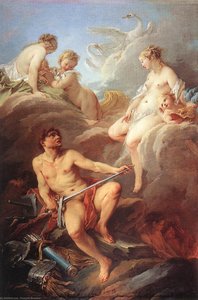
11Juno Asking Aeolus to Release the Winds (1769) avtorja François BoucherJuno Asking Aeolus to Release the Winds1769 · Kimbell Art Museum 12Study for The Bath of Venus (1751) avtorja François BoucherStudy for The Bath of Venus1751 · Ermitaž 13Painter in his Studio avtorja François BoucherPainter in his StudioLouvre 14The Setting of the Sun (1752) avtorja François BoucherThe Setting of the Sun1752 · Wallace Collection 15Young Woman Sleeping (1760) avtorja François BoucherYoung Woman Sleeping1760 · Ermitaž 16The Forest (1740) avtorja François BoucherThe Forest1740 · Louvre 17Vertumnus and Pomona avtorja François BoucherVertumnus and PomonaBavarske državne slikopisne zbirke 18Madame de Pompadour (1754) avtorja François BoucherMadame de Pompadour1754 · Narodna galerija Viktorije 19Mill at Charenton (1758) avtorja François BoucherMill at Charenton1758 · Toledo Museum of Art 20Madame de Pompadour (1758) avtorja François BoucherMadame de Pompadour1758 · Victoria and Albert Museum 21Young Country Girl Dancing (1770) avtorja François BoucherYoung Country Girl Dancing1770 · Art Gallery of Ontario 22Blond Odalisque (L'Odalisque Blonde) (1752) avtorja François BoucherBlond Odalisque (L'Odalisque Blonde)1752 · Alte Pinakothek 23The Mill (1751) avtorja François BoucherThe Mill1751 · Louvre 24The Afternoon Meal (1739) avtorja François BoucherThe Afternoon Meal1739 · Louvre 25Imaginary Landscape with the Palatine Hill from Campo Vaccino (1730) avtorja François BoucherImaginary Landscape with the Palatine Hill from Campo Vaccino1730 · Metropolitanski muzej umetnosti 26Pastorale (1760) avtorja François BoucherPastorale1760 · Staatliche Kunsthalle Karlsruhe 27Vertumnus and Pomona (1757) avtorja François BoucherVertumnus and Pomona1757 · Fine Arts Museums of San Francisco 28Death of Meleager (1727) avtorja François BoucherDeath of Meleager1727 · Los Angeles County Museum of Art 29Venus in the Workshop of Vulcan (1757) avtorja François BoucherVenus in the Workshop of Vulcan1757 · Yale University Art Gallery 30Standing Nude Girl avtorja François BoucherStanding Nude GirlAlbertina 31Arcadian Nymphs Making Music (1770) avtorja François BoucherArcadian Nymphs Making Music1770 · Victoria and Albert Museum 32Triumph of Venus avtorja François BoucherTriumph of VenusErmitaž 33Landscape with a Pond (1746) avtorja François BoucherLandscape with a Pond1746 · Ermitaž 34Washerwomen (1768) avtorja François BoucherWasherwomen1768 · Metropolitanski muzej umetnosti 35The Billet-Doux avtorja François BoucherThe Billet-Doux 36Venus and Mercury Instructing Cupid (1738) avtorja François BoucherVenus and Mercury Instructing Cupid1738 · Los Angeles County Museum of Art 37Monument to Mignard (1735) avtorja François BoucherMonument to Mignard1735 · Los Angeles County Museum of Art 38Venus Demanding Arms from Vulcan for Aeneas (1732) avtorja François BoucherVenus Demanding Arms from Vulcan for Aeneas1732 · Louvre 39Young Girl and Eros (1750) avtorja François BoucherYoung Girl and Eros1750 · Detroit Institute of Arts 40The Rising of the Sun (1750) avtorja François BoucherThe Rising of the Sun1750 · Plantin-Moretus Museum 41Hercules and Omphale (1735) avtorja François BoucherHercules and Omphale1735 · Pushkin State Museum 42Project for a Cartouche: An Allegory of Minerva, Fame, History and Faith Overcoming Ignorance and Time (1727) avtorja François BoucherProject for a Cartouche: An Allegory of Minerva, Fame, History and Faith Overcoming Ignorance and Time1727 · Los Angeles County Museum of Art 43A young lady holding a pug dog (1745) avtorja François BoucherA young lady holding a pug dog1745 · Art Gallery of New South Wales 44Saint John the Baptist (1755) avtorja François BoucherSaint John the Baptist1755 · Minneapolis Institute of Art 45Bathing Nymph (1747) avtorja François BoucherBathing Nymph1747 · Art Institute of Chicago 46River Landscape with an Antique Temple (1762) avtorja François BoucherRiver Landscape with an Antique Temple1762 · Thyssen-Bornemisza Museum 47The Modiste (1746) avtorja François BoucherThe Modiste1746 · Wallace Collection 48Head of a Young Girl (1750) avtorja François BoucherHead of a Young Girl1750 · Ermitaž 49The Beautiful Country Woman (1732) avtorja François BoucherThe Beautiful Country Woman1732 · Norton Simon Museum 50The Distorted Child (1742) avtorja François BoucherThe Distorted Child1742 · Staatliche Kunsthalle Karlsruhe 51Breakfast avtorja François BoucherBreakfast 52Diana and Callisto (1760) avtorja François BoucherDiana and Callisto1760 · Slovenska narodna galerija 53Cupids. Allegory of Painting (1760) avtorja François BoucherCupids. Allegory of Painting1760 · Ermitaž 54Pastoral (1730) avtorja François BoucherPastoral1730 · Walters Art Museum 55A Pastoral Scene ('La Jardiniere Endormie') (1762) avtorja François BoucherA Pastoral Scene ('La Jardiniere Endormie')1762 · Scottish National Gallery 56Virgin and Child with the Young Saint John the Baptist and Angels (1765) avtorja François BoucherVirgin and Child with the Young Saint John the Baptist and Angels1765 · Metropolitanski muzej umetnosti 57The Cherry Gatherers (1768) avtorja François BoucherThe Cherry Gatherers1768 · Kenwood House 58A Pastoral Scene ('L'Offrande a la Villageoise') (1761) avtorja François BoucherA Pastoral Scene ('L'Offrande a la Villageoise')1761 · Scottish National Gallery 59Allegory of Autumn (1753) avtorja François BoucherAllegory of Autumn1753 · Metropolitanski muzej umetnosti 60The Education of Cupid (1742) avtorja François BoucherThe Education of Cupid1742 · Charlottenburg Palace 61The Birth of Venus (1740) avtorja François BoucherThe Birth of Venus1740 · Nationalmuseum 62The Judgement of Susannah (1720) avtorja François BoucherThe Judgement of Susannah1720 · Narodna galerija Kanade 63The Sleep of Loves (1725) avtorja François BoucherThe Sleep of Loves1725 64Rebecca Receiving from the Hands of Eliezer the Gifts of Abraham (1728) avtorja François BoucherRebecca Receiving from the Hands of Eliezer the Gifts of Abraham1728 65The Sacrifice of Gideon (1728) avtorja François BoucherThe Sacrifice of Gideon1728 66Rest at the Fountain (1730) avtorja François BoucherRest at the Fountain1730 · Bavarske državne slikopisne zbirke 67The Hunting Breakfast, Sketch. (1733) avtorja François BoucherThe Hunting Breakfast, Sketch.1733 68"La Fontaine", Rococo Scene at the Fountain (1728) avtorja François Boucher"La Fontaine", Rococo Scene at the Fountain1728 69Rebecca receives Abraham's gifts from Eliezer (1725) avtorja François BoucherRebecca receives Abraham's gifts from Eliezer1725 · Musée des Beaux-Arts de Strasbourg 70Mercury Confiding the Infant Bacchus to the Nymphs (1733) avtorja François BoucherMercury Confiding the Infant Bacchus to the Nymphs1733 · Wallace Collection 71Bacchus and Erigone (1745) avtorja François BoucherBacchus and Erigone1745 · Wallace Collection 72Bird-Catching Cherubs (1732) avtorja François BoucherBird-Catching Cherubs1732 · Rhode Island School of Design Museum of Art 73Head of a Young Woman (1732) avtorja François BoucherHead of a Young Woman1732 · Cleveland Museum of Art 74'La vie champêtre' (1728) avtorja François Boucher'La vie champêtre'1728 · Belton House 75La Femme au Chat: Les caresses dangereuses (1731) avtorja François BoucherLa Femme au Chat: Les caresses dangereuses1731 · Fine Arts Museums of San Francisco 76The Bird Catchers (1748) avtorja François BoucherThe Bird Catchers1748 · J. Paul Getty Museum 77Putti with Birds (1730) avtorja François BoucherPutti with Birds1730 · Honolulu Museum of Art 78sleeping Amor (1728) avtorja François Bouchersleeping Amor1728 79boy playing with a dog (1728) avtorja François Boucherboy playing with a dog1728 · Musée d'Art et d'Histoire de Cholet Native Name 80Allegory of Autumn: Putti Playing with a Goat (1730) avtorja François BoucherAllegory of Autumn: Putti Playing with a Goat1730 81Five Naked Children Playing by a Rocky Pool (1732) avtorja François BoucherFive Naked Children Playing by a Rocky Pool1732 · National Trust 82The Forges of Vulcan (1737) avtorja François BoucherThe Forges of Vulcan1737 83Pastoral Subject. The Sleeping Shepherdess (1743) avtorja François BoucherPastoral Subject. The Sleeping Shepherdess1743 · Palais Bourbon 84The Marriage of Cupid and Psyche (1744) avtorja François BoucherThe Marriage of Cupid and Psyche1744 · Musée des Beaux-Arts de Rouen 85Stable interior with amorous scene (1735) avtorja François BoucherStable interior with amorous scene1735 · Musée Cognacq-Jay 86Air: Three Putti with Birds (1741) avtorja François BoucherAir: Three Putti with Birds1741 · Victoria and Albert Museum 87The Egg Seller (1734) avtorja François BoucherThe Egg Seller1734 · Wadsworth Atheneum 88Cupid and the Three Graces (1738) avtorja François BoucherCupid and the Three Graces1738 · Calouste Gulbenkian Museum 89Cupids in Conspiracy (1740) avtorja François BoucherCupids in Conspiracy1740 · Cleveland Museum of Art 90Music and Dance (1740) avtorja François BoucherMusic and Dance1740 · Cleveland Museum of Art 91Mercury Entrusting the Infant Bacchus to the Nymphs of Nysa (1734) avtorja François BoucherMercury Entrusting the Infant Bacchus to the Nymphs of Nysa1734 · Cincinnati Art Museum 92Rural idyll (1735) avtorja François BoucherRural idyll1735 · Bavarske državne slikopisne zbirke 93The Nest, also known as the Berger Present (1737) avtorja François BoucherThe Nest, also known as the Berger Present1737 94Young Lady with a Muff (1737) avtorja François BoucherYoung Lady with a Muff1737 95Putti as Fisherman (1744) avtorja François BoucherPutti as Fisherman1744 · Museum of Fine Arts 96Cupid Wounding Psyche (1741) avtorja François BoucherCupid Wounding Psyche1741 · Los Angeles County Museum of Art 97Young Woman with Flowers in Her Hair (1734) avtorja François BoucherYoung Woman with Flowers in Her Hair1734 · Muzej fine arts 98The Rest of the Holy Family during the Flight into Egypt (1744) avtorja François BoucherThe Rest of the Holy Family during the Flight into Egypt1744 · Statens Museum For Kunst 99Leopard hunt (1736) avtorja François BoucherLeopard hunt1736 · Musée de Picardie 100Crocodile hunt (1739) avtorja François BoucherCrocodile hunt1739 · Musée de Picardie

Slavna platna umetnika François Boucher, razdeljena po obdobjih

Motivi, ki so očarali François Boucher

Četiri teme, ki se v teh originalih najpogosteje ponavljajo, vsaka z svojim vrhunskim primerom.

Muzeji, ki hranijo originala umetnika François Boucher

8 muzejev, ki vsebujo največ slik na tej strani.

Muzej Mesto Sloga François Boucher Slike iz tega seznama
Ermitaž, Sankt PeterburgErmitaž Sankt Peterburg 11 Study for The Bath of Venus, Young Woman Sleeping, Triumph of Venus
Metropolitanski muzej umetnosti, New YorkMetropolitanski muzej umetnosti New York 13 The Interrupted Sleep, Imaginary Landscape with the Palatine Hill from Campo Vaccino, Washerwomen
Louvre, ParizLouvre Pariz 8 Painter in his Studio, The Forest, The Mill
Los Angeles County Museum of Art, Los AngelesLos Angeles County Museum of Art Los Angeles 6 Death of Meleager, Venus and Mercury Instructing Cupid, Monument to Mignard
Wallace Collection, LondonWallace Collection London 21 The Setting of the Sun, The Modiste, Mercury Confiding the Infant Bacchus to the Nymphs
Scottish National Gallery, EdinburghScottish National Gallery Edinburgh 5 Madame de Pompadour (Jeanne-Antoinette Poisson, 1721 - 1764), A Pastoral Scene ('La Jardiniere Endormie'), A Pastoral Scene ('L'Offrande a la Villageoise')
Cleveland Museum of Art, ClevelandCleveland Museum of Art Cleveland 5 Head of a Young Woman, Cupids in Conspiracy, Music and Dance
Kimbell Art Museum, Fort WorthKimbell Art Museum Fort Worth 4 Venus at Vulcan, Boreas Abducting Oreithyia, Juno Asking Aeolus to Release the Winds

François Boucher desetletje za desetletjem: originali, ki definira vsako od njih

Delo po desetletjih

Izberite desetletje, da si ogledate original, ki ga opredeljuje.

Vprašanja zbirateljev o slikah umetnika François Boucher

Za katero delo je François Boucher najbolj znan/a?Razkriti odgovor

Diana izhaja iz svoje kopalnice (1742). Zatem sledeta Bouguereau Song of the Angels in Madame de Pompadour (Jeanne-Antoinette Poisson, 1721 - 1764) (1758).

Koliko je bil François Boucher let, ko je nastalo delo Diana izhaja iz svoje kopalnice?Razkriti odgovor

39 let: delo Diana izhaja iz svoje kopalnice iz leta 1742, François Boucher pa je bil/a rojen/a leta 1703.

Katera je deset najbolj znanih slik umetnika François Boucher?Razkriti odgovor

Diana izhaja iz svoje kopalnice, Bouguereau Song of the Angels, Madame de Pompadour (Jeanne-Antoinette Poisson, 1721 - 1764), Madame Bergeret, The Interrupted Sleep, The Setting of the Sun, Pastoral Scene, Venus at Vulcan, The Toilette in Boreas Abducting Oreithyia. Zgornja lestica prikazuje leto nastanka in muzej za vsako delo.

Koliko slik je pustil François Boucher?Razkriti odgovor

Naš katalog vsebuje 377 del avtorja François Boucher, datiranih od 1720 do 1770.

V katerih muzejih so razložena remek dela umetnika François Boucher?Razkriti odgovor

Večini v Ermitaž (Sankt Peterburg), Metropolitanski muzej umetnosti (New York) in Louvre (Pariz). Zgoraj navedena tabela muzejev vsebuje njihov celoten seznam.

V katerih letih je François Boucher naslikal svoja najbolj znana dela?Razkriti odgovor

V obdobju 1730s: 28 od 100 del na tej strani je bilo izdelovanih takrat, med njimi pa The Afternoon Meal.

Kakšna sta prva in zadnja znana originala umetnika François Boucher?Razkriti odgovor

Na tej strani je najstarejše delo iz The Judgement of Susannah (1720) in najstarejše iz Young Country Girl Dancing (1770).

Katere teme je François Boucher najpogosteje izbiral?Razkriti odgovor

Woman (33), Clouds (23) in Trees (21), na 100 delih na tej strani.

Katero tehniko je François Boucher najpogosteje uporabljal?Razkriti odgovor

Oil On Canvas, za 74 od 100 del na tej strani.

Kateri umetniški slog pripada François Boucher?Razkriti odgovor

Rokok, glede na originala na tej strani.

Katera dela umetnika François Boucher so razstavljena v muzeju Ermitaž?Razkriti odgovor

Study for The Bath of Venus, Young Woman Sleeping in Triumph of Venus: v muzeju Ermitaž, Sankt Peterburg se nahaja 6 del z te strani.

François Boucher: življenje in delo

Zgodnje življenje, družina in izobraževanje

V hrupavih ulicah Pariza je 29. septembra 1703 začela se zgodba, ki jo je pisal François Boucher. Rodil se je v gospodinjstvu, kjer so bile vizualne umetnosti že del vsakdanjega življenja, saj je bil sin Nicolasa Boucherja, človeka, ki je svoj življenjski delal kot oblikovalec čipk. Ta zgodnja izpostavljenost zapletenosti vzorcev in oblikovanja je verjetno oblikovala mladeničev pogled za podrobnosti že dolgo preden je prvič vzel čopič v roke. Njegov oče mu je podelil prve lekcije in mu vgradil osnovne veščine, potrebne za navigacijo skozi kompetitivne umetniške krogove tistega časa.

Ko je fant rasel, je njegov talent pritegnil pozornost tistih, ki so že bili uveljavljeni v tem poklicu. Pri sedemnajstih letih je bil François Boucher podeljen pod mentorstvo Françoisa Lemoyna, človeka z izjemnim ugledom. Ta obdobje poučevanja je bilo le kratko, saj se je umetnikova pot po lepih treh mesecih nenadoma spremenila. Prešel je iz Lemoynovega vodstva v delo pod gravirja Jean-François Cars, kar je bil prehod, ki mu je omogočil, da je osvojil natančnost črte in mehaniko grafične umetnosti.

Ambicija in talent sta kmalu konvergirala v trenutku velike zmage. Leta 1720 je François Boucher dosegel prepoznavnost, ki bo spremenila pot njegovega življenja: zmagal je na prestižnem Grand Prix de Rome. Ta zmaga ni bila majhno dosežek, saj ga je označila kot vzpostavljajočo moč med vrstniki in mu zagotovila impulz, potreben za odhod iz parških delavnic proti velikim scenam evropske umetnosti.

Umetniški razvoj in italijanski vpliv

Po pridobitvitvi prestižnega Grand Prix de Rome je mlad umetnik usmeril svoje poglede proti Italiji. V Rim je prispel leta 1728, da bi študiral na francoski akademiji, kar je bil obdobje, ki bo temeljito oblikovalo njegovo umetniško senzibilnost. Klasični ideali, ki jih je srečal v italijanski svetlobi in v delih velikih mojstrov, mu niso podali le tehničnega znanja; vplinili so mu nov način opazovanja sveta. Zdel se je, da ga je privlačila ekspresivna poteza čopiča in rustikalni, slikarjiški pristop baroknih mojstrov, kar je bila prednost, ki ga je sčasoma ločila od bolj strogih akademskih tradicij njegovih vrstnikov.

Ob vrnitvi v Francijo je bil njegov vzpon skozi hierarchijo umetnostnega establishmenta hiter. Leta 1731 je bil sprejet v Académie Royale de Peinture et de Sculpture, in že leta 1734 je dosegel status zgodovinskega slikarja v okviru akademije. To uradno priznanje je postavilo temelj za kariero, ki se je kmalu premaknila iz tihe študije klasičnih form v hiter, zapleten in blagoržen život na francoskem dvoru. Njegovi zgodnji uspehi so bili plod tega zakajšenja strogega izobraževanja in živahnih, ekspresivnih lekcij, ki jih je pridobil med leti izmed tujino.

Zaščitniki, atelje in naročila

Uspeh na francoskem dvoru je pogosto zahteval več od samega talenta; zahteval je naklonjenost tistih, ki so držali ključe kralješkega okusa. François Boucher je našel tako močnega zaveznika v Madame de Pompadour, vplivni ljubici kralja Ludvika XV. Njuna povezanost je bila globoka, saj je postala njegova najboljša klientela in naročila številna dela, ki so pomagala določiti vizualni jezik njenega obdobja. S njeno podporo se je njegov ugled razvil iz ugleda večnega slikarja v figuro, ki je postala osrednja za samo identiteto francoskega dvora.

Njegov vpliv je sčasoma prodrl v same institucije, ki so vladale francoski umetnosti. Leta 1755 je bil imenovan za direktorja Kraljske tovarni de Gobelins, položaj, ki je omogočil, da se je njegova vizija razširila tudi v svet dekorativne umetnosti. Svojo roko je podal tudi delavnicam Beauvais, kjer so bili njegovi zasnove preoblikovani v čudovita tkiva. Njegova ustvarjalnost ni bila omejena le na platno; premikal se je skozi svet teatra, kjer je oblikoval tako kostume kot scenografije, ki so dramatične spektakle oživeli. Ta vsestranskost je zagotovila, da je bil njegov estetski izraz prisoten v vsakem kotičku aristokratskega življenja, od stene palač do odrih dramskih predstav.

Vrhunec njegovega uradnega priznanja je nastopil leta 1765, ko je bil imenovan za Premier Peintre du Roi. Ta naslov Prvega kraljevega slikarja je označil njegov vzpon na sam vrh profesije. Postal je človek, katerega ime je bilo sinonim za celotno epoko, ustvarjalec, katerega dela so iskale najvišje moči v državi. Njegova kariera je bila nenehno vzponanje skozi razpored nastave Académie, od profesorja do rektorja, in končno do neposredne službe kraljeve kroni.

Tehnika in rokokojski slog

François Boucher se je premikati skozi svet umetnosti z naklonjenostjo toward svetlobnosti in lepote, pogosto obrnendo nazaj od težkih in dramatičnih senk preteklosti. Njegovo roko je vodil nežni čopršič, ki je podponosil luminosne barve in mehketo, pastelno paleto. V svojih delih je skušal zajeti občutek užitka in grace, pri čemer je pogosto uporabljal asimetrične kompozicije, da bi ustvaril občutek gibanja in lahkotnosti. Ta pristop mu je omogočil, da je celo najbolj resne mitološke pripovedi spremil v scene strasti in intime erotike, kjer so bogovi delovali bolj kot igrivo zaljubljeni parja než kot dalecno in hladna božja bitja.

V načinu, s katerim je gledal na naravni svet, je bila prisotna določena upornost. Slavno je izjavil, da je narava "trop verte et mal éclairée"—preveč zelena in slabo osvetljena—kar je nakazovalo, da si gola, neuklejšena realnost ne zaslužuje refiniranosti, ki jo je on želel vnesti v umetnost. Namesto surove zunanjih realnosti je raje gradil idealiziran, idiličen svet. V njegovih rokah je krajinica postala odra za prosti čas in lepoto, prostor, kjer je svetloba vedno delovala tako, da je popolnoma laskala kožo njegovih motivov.

Njegova izpostavljenost se je razvijala dlje od same platna, globoko v teksturah njegovih motivov. Imel je izjemno natančno pozornost do detajlov, še posebej pri prikazovanju sjaja finih tkanin ali mehkosti človeške kože. Ta tehnična natančnost mu je pomagala določiti vizualni jezik francosko rokoko, s čimer je ustvaril svetes luksusa in prefinjenosti, ki je odražal okus aristokratskega dvora. Njegovo del ni bilo le prikazovanje scene, temveč ustvarjanje vzdušja elegance in sofisticiranega užitka.

Ključna dela in vrhunska mojstrstva

Ko je njegov talent razpolščal v dvoranah Académie Royale, je se François Boucher poseloval za dokazovanje svoje vrednosti skozi veličajne pripovedi antike. Leta 1734 je predstavil Rinaldo in Armida kot svoje morceau de réception, delo, ki je oznadilo njegov prihod med mojstre svojega časa. Ta slika mu je omogočila, da je pokazal popolno vladanje mitološko dramo, s čimer je postavil temelj za kariero, ki jo je definovalo stremiženje k eleganci in prikaz idealizirane lepote.

Njegel čopič je najpogosteje iskal svoje teme v božanstvu in čutnosti. Okoli leta 1740 je dokončal Roditev Venere, platno, ki je zajemočalo boginjo, kako izhaja iz morske pene. Ta fascinacija z ženskim in mitološkim je bila prisotna tudi v 50. letih 20. stoletja. Leta 1751 je ustvaril Ritual Venere* in Venera, ki tošijo Ljubezen, dela, ki so poudarila mehkobo tekstur kože in igrivo, intimno naravo njegovih kompozicij. Te slike so odražale svet, v katerem so celo bogovi živeli v stanju prefinjenega prostega časa.

Poleg mitov je bila roka umetnika François Boucher pogosto povzana po podobi tistih, ki so držali nadzor nad francoskim vplivom. Njegov Portret markize de Pompadour iz leta 1756 ostaja pomembno dokazilo o njegovi najpomembnejši patroni. Skozi takšne portrete je eleganco dvora prenesel v vizualni jezik pastelnih barv in sofisticirane drže.

  • Rinaldo in Armida (1734)
  • Roditev Venere (okoli 1740)
  • Ritual Venere (1751)
  • Venera, ki tošijo Ljubezen (1751)
  • Portret markize de Pompadour (1756)

Kje si danes lahko ogledate njegova dela

Da bi pričakovali dediščino tega mojstra, je treba potovati skozi številna dežela, saj je njegova roka dosegala daleč čez meje Francije. V Parizu Louvre čuva več njegovih platn, ki ohranjajo duh dvorskega življenja, ki ga je tako skrbno zajel. Tisti, ki iščejo njegov dotik v Ameriki, bodo veliko njegovih del našli v Metropolitan Museum of Art v New Yorku, kjer so njegove scene prostega časa in mitologije še vedno razložene javnosti. Njegova prisotnost je čutna v številnih dvoranah, saj so njegovo umetnost skrbno iskali vsi, ki so cenili eleganco njegovega čopiča.

Doseg njegovega talenta sega vse do velikih zbirk Veste in S للغاية. V Sankt Peterburgu Hermitage Museum hrani njegovo umetnost in ohranja njegovo vizijo živo za tiste, ki brezsledno brskajo po njegovih ogromnih galerijah. Medtem v Fort Worthu Kimbell Art Museum čuva njegova dela, kar sodobnim gledalcem omogoča srečanje s nežnimi paletami in mitološkimi temami, ki so definirale njegovo kariero. Njegove slike so razpršene po teh raznolikih svetiščih in čakajo, da jih najde merakivo oko.