Velikost besedila

() ·

Slika, izdelana ročno posebej zanj

A Scene from The Beggar's Opera

Ročno izdelana oljna reprodukcija

Ročno slikano olje na platnu v vaši izbiri velikosti in okvirja, izdelano po naročilu naših umetnikov. ( Preklop na tiskanine Preklop na digitalno sliko)

Opis zbirateljskega predmeta

Biografija umetnika

William Hogarth je angleški mojster znan po inovativnem slogu satire in realizmu ter serijam slik kot *A Harlot’s Progress* in *A Rake's Progress*, ki prikazujejo družbo XVIII stoletja z osuplnimi kritičnimi komentarji. Pogosto uporabljal tehniko črtanja za ustvarjanje globine in teksture, kar je njegovo umetnostni delo naredilo živostno in angažirano.

od ·

Poglavje 1

Katere velikosti naj bi bila?

Drleč po drslenici spremenite velikost; slika na levi strani prikazuje okvir v njegovi dejanski širini. Razmerja originala so ohranjena.

Standardna velikost
po meri
CM
INCH

Izberite eno od naših vnaprej določenih velikosti, ki ustrezajo prvotnim proporcijam umetničkega dela.

širina
višina

Vnesite širino in višino, ki jih potrebujete, da se slika prilega vašemu okviru ali steni. Ker je delo ročno slikano, lahko umetnik pri različnih oblikih slik pri robovih doda malo več barve ali pa jih malo odreže — izberite sami. Pred začetkom slikanja vam pošljemo digitalni predogled za potrditev. Slika, prikazana na tej strani, ni končni rezultat — le predogled prikazuje dejansko podobo.

Poglavje 2

Na kakšen način naj bo dostavljeno?

Izberite robove platna

Izberite svoj okvir

Corner sample of the WhiteWrap canvas edge finish, stretched on masivno drevo bars
Beli rob €1
Corner sample of the BlurSideWrap canvas edge finish, stretched on masivno drevo bars
zamegljen rob €1
Corner sample of the ExtendedWrap canvas edge finish, stretched on masivno drevo bars
Razširjen rob €1
Corner sample of the P118B picture frame: izoblit polistiren, 5 cm wide and 3 cm thick
P118B €10
Corner sample of the P118H picture frame: izoblit polistiren, 5 cm wide and 3 cm thick
P118H €10
Corner sample of the P118W picture frame: izoblit polistiren, 5 cm wide and 3 cm thick
P118W €10
Corner sample of the P438Z picture frame: izoblit polistiren, 5.5 cm wide and 3.5 cm thick
P438Z €10
Corner sample of the P508JH picture frame: izoblit polistiren, 7 cm wide and 3.5 cm thick
P508JH €12
Corner sample of the P508YH picture frame: izoblit polistiren, 7 cm wide and 3.5 cm thick
P508YH €12
Corner sample of the P805H picture frame: izoblit polistiren, 5 cm wide and 3.5 cm thick
P805H €10
Corner sample of the P805Z picture frame: izoblit polistiren, 5 cm wide and 3.5 cm thick
P805Z €10
Corner sample of the P919BZ picture frame: izoblit polistiren, 7 cm wide and 3.5 cm thick
P919BZ €10
Corner sample of the P919G picture frame: izoblit polistiren, 7 cm wide and 3.5 cm thick
P919G €10
Corner sample of the P919XJ picture frame: izoblit polistiren, 7 cm wide and 3.5 cm thick
P919XJ €10
Corner sample of the P959ZH picture frame: izoblit polistiren, 5 cm wide and 3 cm thick
P959ZH €10
Corner sample of the P968JZ picture frame: izoblit polistiren, 6 cm wide and 4 cm thick
P968JZ €12
Corner sample of the W106C picture frame: masivno drevo, 5 cm wide and 3 cm thick
W106C €8
Corner sample of the W218G picture frame: masivno drevo, 5 cm wide and 3 cm thick
W218G €10
Corner sample of the W218JH picture frame: masivno drevo, 5 cm wide and 3 cm thick
W218JH €8
Corner sample of the W218Y picture frame: masivno drevo, 5 cm wide and 3 cm thick
W218Y €10
Corner sample of the W307PJ picture frame: masivno drevo, 6 cm wide and 3 cm thick
W307PJ €10
Corner sample of the W316G picture frame: masivno drevo, 6 cm wide and 3 cm thick
W316G €10
Corner sample of the W316PJ picture frame: masivno drevo, 6 cm wide and 3 cm thick
W316PJ €8
Corner sample of the W316Y picture frame: masivno drevo, 6 cm wide and 3 cm thick
W316Y €10
Corner sample of the W398PJ picture frame: masivno drevo, 5 cm wide and 3 cm thick
W398PJ €8
Corner sample of the W4111J picture frame: masivno drevo, 6.5 cm wide and 3.5 cm thick
W4111J €10
Corner sample of the W500HY picture frame: masivno drevo, 7 cm wide and 5 cm thick
W500HY €15
Corner sample of the W500JH picture frame: masivno drevo, 7 cm wide and 5 cm thick
W500JH €15
Corner sample of the W692G picture frame: masivno drevo, 8 cm wide and 4 cm thick
W692G €12
Corner sample of the W849H picture frame: masivno drevo, 5 cm wide and 3 cm thick
W849H €8
Corner sample of the W940BG picture frame: masivno drevo, 7.5 cm wide and 4.5 cm thick
W940BG €15
Corner sample of the W953PJ picture frame: masivno drevo, 6 cm wide and 3.5 cm thick
W953PJ €8
Corner sample of the H24-GOLD picture frame: gravirano leseno okvopje z gessoem, 10 cm wide and 6 cm thick
H24-GOLD €30
Corner sample of the H24-SILVER picture frame: gravirano leseno okvopje z gessoem, 10 cm wide and 6 cm thick
H24-SILVER €30
Corner sample of the H36-GOLD picture frame: gravirano leseno okvopje z gessoem, 15 cm wide and 6.5 cm thick
H36-GOLD €45
Corner sample of the H36-SILVER picture frame: gravirano leseno okvopje z gessoem, 15 cm wide and 6.5 cm thick
H36-SILVER €45
Predogled okvirja
V okviru

Okvirni rob: . Celotna velikost z okvirjem: .

Poglavje 3

Kdo to slika in ali bi se moralo kaj spremeniti?

Primeri sprememb, ki jih je mogoče izvesti: zamenjava obraza s fotografijo stranke; dodajanje hišnega ljubljenčka (npr. zamenjava mačke s psom); vključitev skritega sporočila v ozadje; sprememba krajine ali elementov v ozadju.
Po oddaji naročila bo ekipa OriginalUniqueArt.com stranki po e-pošti poslala navodila in zagotovila predogled makete

Mednarodna dostava () v 3/4 tednih namesto običajnih 5 tednov. (5 november). Brez kompromisov pri kakovosti.

Poglavje 4

Zadnji dotiki

Zvešča, kot v muzeju?

Podrobnosti o gravirani bronasti plošči

This elegant plaque features the artist's name and the title of the artwork, finely engraved for a timeless presentation.

It is made from bronze with a refined, elegant finish. The text is precisely laser-engraved for a sharp and permanent result. Measuring 9x2 cm, the plaque is compact yet easy to read. It's built to be durable and scratch-resistant, offering a professional, museum-quality look. Mounting is simple thanks to the included adhesive backing.

Podrobnosti o transparentni akrilni plošči

The plaque includes essential engraved details such as the artist's name, the title of the artwork, the date it was created, the type of media used-like oil on canvas or watercolor-a brief description of the piece, and a QR code that links to the complete artwork information.

It is crafted from clear acrylic, offering a sleek, modern appearance. The text is UV-engraved in black to ensure strong visual contrast. With a size of 10x15 cm, it ensures optimal readability. It comes equipped with two metal hooks for secure wall mounting. The plaque is designed to be weather-resistant, making it suitable for various environments, and it includes interactive features that work seamlessly with smartphone scanning.

Podrobnosti o črni akrilni plošči

This elegant plaque includes engraved information such as the artist's name, the title of the artwork, the date it was created, the type of media used (like oil on canvas or watercolor), a short description of the artwork, and a QR code for quick access to more information.

The plaque itself is made from refined black acrylic with a premium finish. The text is laser-engraved in white for high contrast and readability. Its size is 10x15 cm, designed to be easy to read. It comes with two metal hooks for professional mounting. The design is sleek and fits any interior style. It is also weather-resistant and durable, with built-in digital integration for mobile compatibility.

Zaščitni lak?

Kdaj jo potrebujete?

Poglavje 5

Vaša slika, natako kot ste jo naročili

A Scene from The Beggar's Opera

Tehnik reprodukcije

Velikost reprodukcije

-

Izbor vrhunskih umetnikov

Več podrobnosti, dovršenosti in dodatnega časa za izdelavo

-

Okvir za reprodukcijo

-

-

Za umetniška dela ali reprodukcije, ki so po katerikoli strani širše od 105 cm (približno 41 palč), bo okvir poslan v razstavljeni obliki kot komplet. Ta metoda zagotavlja varno dostavo in preprečuje poškodbe med transportom.

Potrebna je profesionalna montaža – to ni izdelek za DIY izdelavo.
Komplet mora sestaviti in platno napeti izkušen profesionalni okvirjest, pri čemer bo uporabil lepil za les (ni vključeno), klešče za napetje platna in spone, da bi ohranil pravokotnost letev med sušenjem lepila. Nepravilna montaža ali neenakomerna napetost platna lahko trajno poškoduje umetniško del in ni pokrita z našo garancijo.

  • Vključene so vse letve iz masivnega lesa, natančno izrezane po meri.

  • Montaža poteka s priloženimi vijaki, vendar je za kotiče potrebna lepil za les, ki ga ni v kompletu in ga mora zagotoviti vaš okvirnik.

  • Za uporabo so potrebna profesionalna orodja, ki niso vključena: klešče za napinjanje platna (napetnik) in sponke za ohranjanje pravokotnosti letev med sušenjem lepila.

Pomembno:
Za stike v kotih potrebujete lepil za les, nosilce je treba z spenjačami držati, dokler se lepil popolnoma ne suši, za zategovanje platna na sestavljenem okvirju pa potrebujete spenjače za platno. Noben od teh pripomočkov ni vključen v komplet. Pred naročilom te velikosti, prosimo, poskrbite za izkušenega profesionalnega okvirja.

Značka z imenom

-

-

Zaščitni lak

Sijajni lak (poudarja barve ter zagotavlja zaščito pred svetlobo in vlago)

-

Prilagodi svoje umetniško delo

Primeri možnih prilagoditev: zamenjava obraza s fotografijo kupca; dodajanje hišnega ljubljenčka (npr. zamenjava mačke s psom); vključitev skritega sporočila v ozadje; sprememba krajšave ali elementov ozadja.

-

Hitra dostava

Mednarodna dostava () v 3/4 tednih namesto običajnih 5 tednov. (5 november). Brez kompromisov pri kakovosti.

-

Hitra dostava

Globalna dostava () v 5 tednih. (12 november).

Vključeno v ceno

Skupna cena

€ 267

Skupna cena € 267

Možnost stekla je na voljo le za velikosti pod 110 cm

Vključeno v vsako naročilo

  • Brezplačna ekspresna dostava po vsem svetu
  • Visokokakovostno laneno platno
  • Popolno zavarovanje pošiljke
  • Garancija povračila carine in uvoznih davkov
  • Garancija popolnega barvnega ujemanja
  • 100-dnevna politika vračil (le v primeru okvar)
  • Garancija 100% povračila denarja
  • Popust pri večjem naročilu

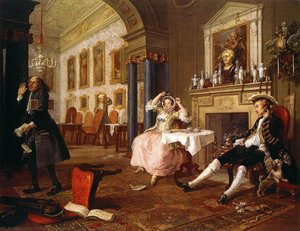
A Window into Georgian Society: Hogarth’s “A Scene from The Beggar’s Opera”

William Hogarth's "A Scene from The Beggar’s Opera," painted in 1729, isn’t merely a depiction of a theatrical performance; it’s a meticulously crafted snapshot of 18th-century London life – a vibrant, often unsettling, reflection of its social strata and moral complexities. Housed within the Holburne Museum in Bath, this oil on canvas offers an unparalleled glimpse into the world of John Gay's wildly popular play, which scandalized and captivated audiences alike. The painting’s immediate impact lies in Hogarth’s masterful use of color and composition to draw the viewer directly into the bustling scene, a carefully orchestrated tableau brimming with characters caught in moments of intrigue, deception, and perhaps even desperation.

The central figure, identified as Polly Peachum, immediately commands attention. Dressed in a striking coral-red coat adorned with gold buttons, she embodies both resilience and a touch of defiance. Her posture – arms crossed, head held high – speaks volumes about her role as the play’s protagonist, a woman navigating a world dominated by men and driven by a fierce determination to protect her family. To her left, the kneeling figure, likely Polly's husband Peachum, leans away from her with a gesture of restrained disapproval, highlighting the inherent tensions within their relationship – a microcosm of the broader societal pressures at play. The careful rendering of fabrics, from the opulent silk of the man’s coat to the voluminous hoop skirt of the woman on the left, speaks volumes about social status and wealth.

The Language of Line and Color: Hogarth's Technique

Hogarth was a pioneer in using printmaking techniques – specifically engraving – as a foundation for his paintings. This influence is readily apparent in “A Scene from The Beggar’s Opera.” He employed a technique known as ‘after-engraving,’ where he would create an initial design in monochrome and then meticulously repaint it in color, building upon the precise lines of the print. This process allowed him to achieve an extraordinary level of detail, capturing not just the appearance but also the very essence of his subjects. Note the sharp delineation of forms, the subtle shifts in light and shadow, and the remarkably realistic portrayal of textures – from the sheen of satin to the roughness of brickwork. The use of a limited yet carefully chosen palette—cobalt blue, crimson red, ivory white, and various shades of brown—contributes significantly to the painting’s dramatic effect.

Furthermore, Hogarth's compositional strategy is brilliantly executed. He utilizes a shallow perspective, drawing the viewer into the scene as if they were standing within the theater itself. The low brick wall acts as a visual anchor, grounding the composition while simultaneously creating a sense of depth and enclosure. The strategically placed figures – each with their own distinct gestures and expressions – contribute to the overall dynamism of the scene, suggesting a narrative unfolding in real-time.

Symbolism and Social Commentary

Beyond its immediate visual appeal, “A Scene from The Beggar’s Opera” is laden with symbolic meaning. The play itself was a scathing critique of London's burgeoning underworld, exposing the hypocrisy and corruption that lay beneath the veneer of respectability. The characters depicted – a street singer, a pawnbroker, a thief – represent the marginalized members of society, struggling to survive in a harsh and unforgiving environment. Even the theatrical setting—a makeshift stage within a public space—underscores the blurring lines between entertainment and social commentary.

The inclusion of the boy peering from the box, with his darker skin tone, is particularly noteworthy. It subtly hints at the racial tensions prevalent in 18th-century England and adds another layer to the painting’s complex social critique. The overall impression is one of a society grappling with its own contradictions – celebrating theatrical spectacle while simultaneously ignoring the plight of its most vulnerable citizens.

A Timeless Masterpiece: Reproduction Possibilities

Reproduced faithfully in high-resolution, “A Scene from The Beggar’s Opera” offers an exceptional addition to any art collection or interior design scheme. Its rich colors and intricate details translate beautifully into a hand-painted reproduction, capturing the essence of Hogarth's genius. Whether adorning a study, a drawing room, or a gallery space, this iconic artwork will undoubtedly spark conversation and provide a captivating window into a pivotal moment in English art history. OriginalUniqueArt offers meticulously crafted reproductions that faithfully recreate Hogarth’s vision, ensuring that this remarkable piece of social commentary remains accessible to a new generation of viewers.

Vprašanja in odgovori

Z kakšno tehniko je izdelano "A Scene from The Beggar's Opera"?

Tehnika za delo "A Scene from The Beggar's Opera" avtorja Vilijam Hogart je Oil On Canvas. Različice imajo za namen natančno prikazati videz te tehnike.

Katera velikost reprodukcije se priporoča za "A Scene from The Beggar's Opera" avtorja Vilijam Hogart?

Priporočena velikost tiska za "A Scene from The Beggar's Opera" avtorja Vilijam Hogart je Medium.

Ali je "A Scene from The Beggar's Opera" avtorja Vilijam Hogart med najbolj iskanimi umetniškimi deli v slogu 18th Century Realism?

"A Scene from The Beggar's Opera" je v katalogu zabeležen kot Iconic med deli iz obdobja 18th Century Realism.

Več o tej sliki

Predogled v realnem okolju Predogled v AR Preklop na tiskanine Preklop na digitalno sliko Pošlji
Podrobnosti o delu Priročnik Dodaj v priljubljene Prenesi sliko Podobni izdelki Rentgenski posnetek Predvajaj diaporama Vprašanja in odgovori Statistika

V številkah

  • 1729leto risevanja
  • 29izbira okvirjev
  • standardne velikosti, v svojih lastnih proporcijah
  • 5teden dni za slikanje in dostavo
Vilijam Hogart

Vilijam Hogart

1697 - 1764, Združeno kraljestvo Velike Britanije in Irsko

Kratek pregled o Vilijam Hogart

  • Artistic Movement Or Style: Satira, Realizem
  • Artists Who Influenced This Artist:
    • Pieter de Hooch
    • Jonathan Swift
  • Date Of Birth: 1697
  • Date Of Death: 1764
  • Full Name: William Hogarth
  • Nationality: Britanska
  • Notable Artworks:
    • A Harlot's Progress
    • A Rake's Progress
    • Marriage A-la-Mode
  • Place Of Birth: London, UK

Biografija umetnika

A London Life in Ink and Paint: The World of William Hogarth

William Hogarth, born into the bustling heart of 18th-century London in 1697, was more than just an artist; he was a visual historian, a keen observer of human nature, and a satirical commentator on the societal currents of his age. His life story is inextricably linked to the very fabric of England during a period of significant transformation – its burgeoning ambitions, underlying anxieties, and pervasive hypocrisies all finding potent expression in his remarkably detailed and often biting works. The son of a struggling Latin schoolmaster, Hogarth’s early experiences instilled within him both a love for learning and a sharp awareness of social inequalities, a foundation that would prove crucial to shaping his artistic vision. Initially apprenticed to an engraver, he quickly demonstrated a talent extending beyond mere technical skill; he possessed an innate ability to observe the nuances of human behavior and translate them into compelling visual narratives. However, he chafed against the constraints of traditional engraving, seeking a more expressive outlet for his burgeoning creativity. This led him to studies at both St Martin’s Lane Academy and under Sir James Thornhill, where he honed his skills in painting and composition, absorbing influences that would later inform his unique style.

The Birth of Modern Moral Subjects

Hogarth's true innovation lay not simply *what* he painted, but *how*. He pioneered what he termed “modern moral subjects” – series of pictures designed to tell a story, often imbued with a strong satirical edge. These weren’t isolated portraits or landscapes; they were visual novels unfolding before the viewer’s eyes, offering pointed commentary on contemporary society. A Harlot's Progress, created in 1742, stands as perhaps his most famous example. This series of six paintings meticulously follows the tragic downfall of Mary, a young woman arriving in London full of hope but quickly succumbing to the temptations and dangers of city life. Each scene is rendered with painstaking detail, filled with symbolic elements that reveal the moral decay surrounding her. The meticulous depiction of every step of Mary’s descent into prostitution served as an unflinching indictment of societal attitudes towards women and morality. Similarly, A Rake's Progress, begun in 1733, charts the reckless decline of Tom Rakewell, a man who squanders his inheritance on gambling, debauchery, and ultimately, madness. These weren’t merely cautionary tales; they were unflinching portraits of a society grappling with issues of class, morality, and social mobility. Hogarth's genius resided in his ability to elevate everyday scenes – the bustling streets of London, the opulent interiors of the wealthy, the squalid lives of the poor – into works of art that resonated deeply with his audience. He didn’t shy away from depicting the harsh realities of life, presenting them with a blend of humor and pathos that forced viewers to confront uncomfortable truths about themselves and their society.

Technique and Influences: A Synthesis of Styles

Hogarth's artistic style was a unique amalgamation of diverse influences. He greatly admired the realism and narrative detail found in the works of Dutch genre painters like Pieter de Hooch, evident in his meticulous depictions of interiors and everyday life. The influence of Rembrandt’s masterful use of chiaroscuro – dramatic contrasts between light and shadow – can also be discerned in Hogarth's paintings. Furthermore, Hogarth was profoundly affected by the satirical prints produced in France during the Enlightenment, particularly those of Jean-Baptiste Simeon Chardin and François Boucher. He absorbed stylistic elements from these artists, adapting them to his own distinctive vision. However, Hogarth wasn’t simply imitating these sources; he was synthesizing them into something entirely new and distinctly his own. His technique was characterized by a masterful use of line and shading, particularly evident in his engravings. He employed a distinctive cross-hatching technique that created depth and texture, bringing his scenes to life with remarkable clarity. This painstaking process ensured that every detail—from the folds of fabric to the expressions on faces—was rendered with precision and conviction. He also possessed an exceptional eye for composition, arranging figures and objects within the frame to create dynamic and engaging narratives. Like many artists of his time, Hogarth studied under Sir James Thornhill, honing his skills in painting and mastering the conventions of theatrical illusionism – a technique that would later contribute to the grandeur of his monumental canvases.

Major Achievements: Shaping English Art History

William Hogarth’s contribution to English art history is undeniable. He established a distinctly British artistic identity, rejecting continental stylistic trends in favor of a style rooted in observation and moral reflection. His series of paintings—including *A Harlot's Progress*, *Marriage A-la-Mode*, and *Gin Lane*—became iconic representations of the social landscape of his era, capturing both its beauty and its ugliness with uncompromising honesty. These works challenged viewers to confront uncomfortable truths about themselves and their society, sparking debate and inspiring artists for generations to come. Moreover, Hogarth’s engravings achieved unprecedented popularity, disseminating his satirical commentary throughout England and beyond. His prints served as a powerful tool for social critique, exposing corruption and hypocrisy while simultaneously celebrating virtue and compassion. He is considered one of the fathers of political cartooning and comic strips, paving the way for visual storytelling in popular culture—a legacy that continues to endure today.

Historical Significance: A Voice for Change

Hogarth’s artistic vision was driven by a deep concern for social justice and moral responsibility. He believed that art should not merely be aesthetically pleasing but should also serve a purpose beyond mere decoration—namely, to provoke thought and inspire action. His unflinching depictions of poverty, prostitution, and gambling served as a catalyst for reform movements, prompting discussions about societal ills and advocating for compassionate solutions. By confronting viewers with uncomfortable realities, Hogarth compelled them to examine their own values and behaviors, urging them to strive for a more humane and equitable world. He remains a pivotal figure in the history of English art, celebrated not only for his artistic brilliance but also for his unwavering commitment to social reform—a testament to the enduring power of art as a force for change.

Ključni podatki

  • Medium: Oil on canvas
  • Influences:
    • Satire
    • Social commentary
  • Artistic style: 18th-century realism
  • Subject or theme: Theater scene, satire
  • Title: A Scene from The Beggar’s Opera

Umetniški kviz

Pri vsakem vprašanju je na voljo le eden pravilen odgovor.

Vprašanje 1:
What is the primary subject depicted in William Hogarth’s ‘A Scene from The Beggar’s Opera’?
Vprašanje 2:
The central figure in the painting, dressed in a red coat, is most likely which character from John Gay’s play?
Vprašanje 3:
In what year was ‘A Scene from The Beggar’s Opera’ painted?
Vprašanje 4:
The painting utilizes a prominent gold frame and cobalt-blue curtain. What is the primary purpose of these elements?
Vprašanje 5:
Which of the following best describes William Hogarth’s artistic style as exemplified in ‘A Scene from The Beggar’s Opera’?