

 Predogled
 Pošlji
 Deli
Deli
 Podrobnosti o delu

 Prenesi
 Podobni izdelki
 Rentgenski posnetek
 Predvajaj diaporama
 Statistika
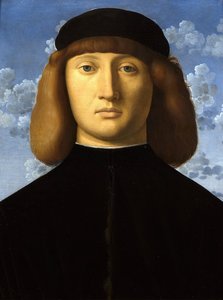
Giangiorgio Trissino
 Acrylic On Canvas
- WallArt
- Venetian Renaissance
 1525
1525 72.0 x 63.0 cm
 Louvre
 Razviljaj več
Giclée tisk / Umetniški tisk
Giclée ali platnati odtis muzejske kakovosti z hitro proizvodnjo in prilagodljivimi možnostmi končne obdelave. ( Kupi ročno naslikano sliko Preklop na digitalno sliko)




P118B $10

P118H $10

P118W $10

P438Z $10

P508JH $12

P508YH $12

P805H $10

P805Z $10

P919BZ $10

P919G $10

P919XJ $10

P959ZH $10

P968JZ $12

W106C $8

W218G $10

W218JH $8

W218Y $10

W307PJ $10

W316G $10

W316PJ $8

W316Y $10

W398PJ $8

W4111J $10

W500HY $15

W500JH $15

W692G $12

W849H $8

W940BG $15

W953PJ $8




Izberite eno od naših vnaprej določenih velikosti, ki ustrezajo prvotnim proporcijam umetničkega dela.

Svoje dimenzije lahko vnesete sami, da bodo ustrezne za določen okvir ali prostor. Če izbrana velikost ne bo skladna z razmerji izvirne slike, bomo umetniško delo orezali ali podaljšali s pomočjo ogledalnega odraza ali barvno polnega roba. Pred začetkom proizvodnje vam bomo poslali digitalni predogled za potrditev.
Upoštevajte, da predogled na zaslonu ne prikazuje dejanskega orezovanja ali podaljševanja. Le digitalni predogled bo natančno prikazal končno kompozicijo.
Čeprav so na voljo prilagojene velikosti, priporočamo izbiro dimenzije s predhodno določenega seznama, da ohranite prvotna razmerja.
Globalna dostava () v 2 tednih namesto standardnih 4/5 tednov. (12 september)

Brezplačna ekspresna dostava po vsem svetu

Visokokakovostno laneno platno

Popolno zavarovanje pošiljke

Garancija povračila carine in uvoznih davkov

Garancija popolnega ujemanja barv

Politika vračilo v 100 dneh (le v primeru okvar)

Garancija 100% povračila denarja

Popust pri večjem naročilu
 Možnost stekla je na voljo le za velikosti pod 110 cm

Giangiorgio Trissino
Giclée tisk / Umetniški tisk
Velikost reprodukcije
-


Skupna končna cena
$ 80
Giangiorgio Trissino’s “Gian Giorgio Trissino”: A Renaissance Portrait of Humanism
Vincenzo Catena's 1525 painting, "Gian Giorgio Trissino," isn't merely a likeness; it’s a carefully constructed embodiment of the burgeoning humanist ideals that defined the Italian Renaissance. The subject himself, Gian Giorgio Trissino (1478-1550), was a polymath – a poet, dramatist, diplomat, and philosopher – whose intellectual pursuits were as celebrated as his literary works. Catena’s portrait transcends simple representation, offering a glimpse into the mind of a man deeply engaged with classical learning and the revival of ancient thought. The painting captures Trissino in a moment of contemplative engagement, holding a book open before him, suggesting an active pursuit of knowledge and a connection to the wisdom of antiquity.
The composition is remarkably balanced, utilizing geometric principles to create a sense of harmony and stability. Trissino’s pose – seated with his hands resting on the book – conveys both authority and intellectual humility. The careful arrangement of objects within the scene—the open book, the writing desk, and the partially visible architectural elements in the background—are not accidental; they are symbolic cues that reinforce Trissino's identity as a scholar and a patron of the arts. The muted color palette, dominated by earthy tones and rich browns, reflects the seriousness of the subject matter and evokes the atmosphere of a scholarly study.
A Masterpiece of Venetian Renaissance Style
Catena’s work exemplifies the refined style characteristic of Venetian painting during the High Renaissance. Influenced by the works of Giovanni Bellini, particularly his use of atmospheric perspective and subtle color gradations, Catena skillfully renders Trissino's features with a delicate realism. The artist employs sfumato – a technique involving the gradual blending of colors to create soft, hazy outlines—to soften the edges of the figure and contribute to the painting’s overall sense of depth and atmosphere. The attention to detail is remarkable, from the texture of Trissino's clothing to the folds in his drapery, demonstrating Catena’s mastery of observation and technique.
Furthermore, the portrait reflects the Venetian tradition of incorporating architectural elements into portraits, a practice that was particularly popular during this period. The background features a partial view of a building, likely a representation of Trissino's own home or studio, which serves to anchor the figure within a specific context and reinforce his identity as a man deeply rooted in his surroundings. The lighting is carefully considered, with soft light illuminating Trissino’s face and hands, drawing attention to his intellectual pursuits.
Symbolism and Humanist Ideals
Beyond its technical merits, “Gian Giorgio Trissino” is rich in symbolism that speaks to the core values of the Renaissance humanist movement. The open book represents Trissino's engagement with classical literature and philosophy – a cornerstone of humanist education. The act of reading suggests a desire for knowledge, wisdom, and self-improvement—qualities highly valued by humanists. The inclusion of writing materials further emphasizes Trissino’s role as a scholar and intellectual leader.
Moreover, the portrait can be interpreted as an allegory of the ideal Renaissance man – a figure who combines intellectual pursuits with civic virtue and artistic talent. Trissino's dignified bearing and thoughtful expression embody these qualities, making him a compelling representation of the humanist ethos. The painting serves as a testament to the belief that human beings are capable of achieving greatness through education, reason, and a deep appreciation for beauty and knowledge.
A Timeless Reflection on Human Potential
“Gian Giorgio Trissino” remains a powerful and evocative work of art, offering a glimpse into the intellectual world of the Italian Renaissance. It’s more than just a portrait; it's a celebration of human potential, a testament to the enduring power of knowledge, and a poignant reminder of the importance of engaging with the wisdom of the past. Reproductions of this masterpiece capture not only its visual beauty but also the spirit of humanist inquiry that continues to resonate today.
Biografija umetnika
Vincenzo Catena: A Venetian Renaissance Painter
Life and Background
- Born in Venice, Italy around 1470, Vincenzo Catena was a painter of the Venetian Renaissance.
- Little is known about his early life or formal training. Records are scarce regarding his upbringing and initial artistic development.
- He was also sometimes referred to as Vincenzo de Biagio.
- Catena passed away in 1531, leaving behind a modest but significant body of work.
Artistic Development and Influences
- Initially, Catena’s style closely resembled that of Giovanni Bellini, a leading Venetian painter known for his serene Madonnas and refined technique.
- The earliest documented mention of Catena is an inscription on the back of La Laura by Giorgione, where he’s described as Giorgione's *colego* (colleague).
- However, it wasn’t until after Giorgione’s death in 1510 that his innovative influence began to manifest itself in Catena’s paintings.
- He also shows some influences from Titian, another prominent figure of the Venetian School, particularly in his use of color and composition.
Major Works and Style
- Approximately a dozen paintings are confidently attributed to Catena based on signatures.
- The Martyrdom of St. Christina (1520), located in the church of Santa Maria Mater Domini in Venice, is his most securely dated work thanks to an inscription on its marble surround.
- Other notable works include The Adoration of the Shepherds, and several depictions of the Madonna and Child with Saints and Donors.
- Catena’s paintings often feature religious scenes and portraits, characterized by a blend of Bellini's precision and Giorgione’s atmospheric qualities.
- His style is marked by detailed realism, warm color palettes, and rich symbolism, typical of Venetian Renaissance art.
Historical Significance and Legacy
- While not as widely celebrated as some of his contemporaries like Titian or Giorgione, Catena played a role in the development of Venetian painting during a crucial period.
- His work demonstrates the transition between the High Renaissance and the emerging Mannerist styles.
- Wills left by Catena reveal he was a man of considerable wealth and had connections within Venetian humanist circles, suggesting his artistic success extended beyond purely aesthetic recognition.
- Today, Vincenzo Catena’s paintings are valued for their historical importance and offer insights into the artistic landscape of 16th-century Venice.
Vincenzo Catena
1470 - 1531 , Italy
Hitri podatki
- Birth Date: 1470
- Birth Place: Venice, Italy
- Death Date: 1531
- Influenced By:
- Giovanni Bellini
- Giorgione
- Movement: Renaissance, Venetian School
- Name: Vincenzo Catena
- Nationality: Italian
- Notable Works:
- Santa Cristina Altarpiece
- The Adoration of the Shepherds
- Madonna and Child with a Holy Female Martyr, Saint Francis of Assisi and the Donor
Sorodni članki

Carlo Carrà: Futurist Visions & Metaphysical Transformations in Early 20th-Century Italian Painting
Explore the artistic journey of Carlo Carrà, a pivotal figure in Italian Futurism & Metaphysical painting. Discover his dynamic compositions, collaborations with de Chirico, and lasting influence on modern art history.
Civic Virtue and Artistic Rivalry: Patronage and Innovation in the Italian Renaissance Republics, 1400–1600
Explore the Italian Renaissance! Discover how competitive patronage & humanist ideals fueled artistic innovation in republics like Florence & Venice. Expert insights for art lovers and collectors.

The Flourishing of Humanism: A Comprehensive Exploration of the Italian Renaissance Art Movement
Explore the Italian Renaissance! Discover humanist ideals, iconic masterpieces by Leonardo, Michelangelo & Raphael, and lasting artistic innovations. A comprehensive guide for art enthusiasts.

Giovanni Fattori: Realism, Identity & the Tuscan Landscape – A Macchiaioli Master
Explore the life & art of Giovanni Fattori, a leading figure of the Macchiaioli movement. Discover his revolutionary realism, captivating Tuscan landscapes, and lasting impact on Italian painting. Learn more at OriginalUniqueArt.
Mario Sironi: A Poetic of Modern Italian Identity Through Symbolism & Social Commentary
Explore the profound works of Mario Sironi, a key figure in Italian Modernism. Discover his evolution from Futurism to Metaphysical painting and his powerful social commentary. Learn about his legacy at OriginalUniqueArt.
