Surrealist Expressionism · 1927
The Forest (Max Ernst, 1927)
Max Ernst (1891–1976) je izdelal The Forest. Zajema leto 1927. Spada v umetniško smer Surrealist Expressionism. Izdelano je iz Acrylic On Canvas. Del se nahaja v muzeju Tel Aviv Museum of Art v mestu Tel Aviv, Izrael. Dimenzije so 25 × 36 cm.
- 1927
- Acrylic On Canvas
- 25 × 36 cm
- Tel Aviv Museum of Art

 Predogled v realnem okolju

 Ročno izdelano oljno slikarstvo
 Pošlji
 Deli
 Informacijski list za tjači


 Prenesi sliko
 Podobni izdelki
 Rentgenski posnetek
 Predvajaj diaporama
 Vprašanja in odgovori

 Statistika
The Forest, na kratek
- Naslov
- The Forest
- Umetnik
- Max Ernst (1891–1976)
- Umetnik, rojen v
- Brühl, Nemčija
- Datum
- 1927
- Tehniko
- Acrylic On Canvas
- Dimenzije
- 25 × 36 cm
- Kje je razstavljeno
- Tel Aviv Museum of Art, Tel Aviv, Izrael
- Gibanje
- Surrealist Expressionism
- Obdobje
- Early Modern
- Tema
- moonlit cityscape, surreal forest, urban night, max ernst, german art, 1927 painting
Kaj prikazuje The Forest?
A Nocturne of Dreams: Max Ernst’s “The Forest”
Max Ernst's "The Forest," painted in 1927, isn’t merely a depiction of a landscape; it’s an immersion into the subconscious, a carefully constructed dreamscape rendered with the unsettling beauty characteristic of the artist’s early Surrealist explorations. This intimate canvas – measuring just 25 x 36 cm – holds within its borders a potent collision of natural and urban elements, inviting viewers to contemplate the anxieties and aspirations simmering beneath the surface of modern life. The painting immediately draws the eye upward to a luminous moon dominating the sky, casting an ethereal glow upon the sprawling cityscape below. Buildings rise from the darkness, not as symbols of progress or order, but as strangely distorted monoliths, hinting at a world both familiar and profoundly alien.
Ernst’s technique is deliberately evocative, employing a layered approach that anticipates techniques he would later refine in his collage work. He utilizes loose, expressive brushstrokes, building up the forms of trees and buildings with a sense of urgency and movement. The color palette leans heavily into cool blues and greens, punctuated by the stark white of the moon and the muted tones of the city lights – colors that contribute to the painting’s nocturnal atmosphere and imbue it with a feeling of quiet mystery. Notice how he doesn't meticulously render detail; instead, he favors suggestion and mood, allowing the viewer’s imagination to fill in the gaps.
The Seeds of Surrealism: Ernst’s Intellectual Landscape
Understanding “The Forest” requires acknowledging Max Ernst’s unique artistic trajectory. Born in Brühl, Germany, in 1891, Ernst wasn't a traditional painter; his path was forged through rigorous academic study – philosophy, art history, literature, psychology, and psychiatry at the University of Bonn. This intellectual grounding profoundly shaped his approach to art, moving him beyond mere representation towards exploring the realm of dreams, memory, and the irrational. His father, a teacher of the deaf, instilled in him a sensitivity to the world and a rebellious spirit – qualities that would become central to Ernst’s artistic vision. He was deeply influenced by thinkers like Freud and Jung, particularly their theories on the unconscious mind, which he sought to translate into visual form.
The year 1927 is crucial within this context. It represents a pivotal moment in Ernst's development as a Surrealist, a period marked by experimentation with automatism – a technique of spontaneous creation designed to bypass conscious control and tap directly into the subconscious. "The Forest," therefore, can be seen as a product of this process, a visual manifestation of his inner world.
Symbolic Echoes: Nature Versus Urbanity
The juxtaposition of the forest and the city is laden with symbolic weight. The forest, traditionally associated with nature, instinct, and the primal, stands in stark contrast to the rigid geometry and artificial light of the urban landscape. This isn’t a harmonious blend; rather, it's a tension – a suggestion that the encroachment of modernity threatens to overwhelm the natural world. The moon itself is a potent symbol, often linked to cycles, intuition, and the hidden realms of the unconscious. Its presence elevates the scene beyond a simple cityscape, transforming it into a dreamlike tableau.
Furthermore, consider the distorted forms of the buildings. They aren’t simply architectural structures; they seem to lean inward, almost collapsing under their own weight, mirroring perhaps a sense of unease or anxiety about the future. The trees, though present, are somewhat obscured by the city's glow, hinting at a diminishing connection with nature.
A Timeless Resonance: Reproduction and Artistic Legacy
"The Forest" continues to resonate with viewers today because it taps into fundamental human experiences – the longing for escape, the anxieties of urban life, and the enduring power of the subconscious. OriginalUniqueArt’s meticulously crafted hand-painted reproductions capture not only the visual details of Ernst's original but also its emotional depth and atmospheric quality. Each reproduction is created with the same attention to texture and color as the original, ensuring a faithful representation of this iconic Surrealist masterpiece. Whether you are an art collector seeking to expand your collection or an interior designer searching for a unique piece to elevate a space, a OriginalUniqueArt reproduction of “The Forest” offers a captivating glimpse into the mind of one of 20th-century’s most visionary artists.
V katerem muzeju se nahaja The Forest?
Tel Aviv Museum of Art
Tel Aviv, Izrael
Svetilnik kreativnosti na mediteranski obali V živčnem srcu Tel Aviva, mesta, ki pulzira z umetniško energijo in zgodovinsko pomembnostjo, stoji Muzej umetnosti v Tel Avivu —pravi spomen cvetovitemu kulturnemu pejzažu Izraela. Več kot le preprosto skladišče vrhunskih del, TAMA, kot ga ljubkovno imenujejo, v umetnost vnaša življenje, spodbuja dialog, navdihuje generacije in služi kot vitalna vez med preteklostjo države in njeno dinamično prisotnostjo. Njegova zgodba se ne začne v veličastnih dvoranah, temveč znotraj skromnih zidov doma prvega župana Tel Aviva, v prostoru, ki je prežet z odmevi naroda, ki oblikuje svojo identeto.


Visokoresolucijske slike dela The Forest

Zaščitovano z avtorskimi pravicami: te datoteke so namenjene osebni referenci, ne paovojilo za ponovno objavo.
Max Ernst, The Forest (1927), Tel Aviv Museum of Art.
Odgovori na vprašanja o The Forest
Kje je danes razstavljeno "The Forest" avtorja Max Ernst?
Originalno delo "The Forest" lahko vidite v muzeju Tel Aviv Museum of Art, Tel Aviv, Izrael.
Kateri je datum nastanka dela "The Forest" avtorja Max Ernst?
Ustvaritev dela "The Forest" avtorja Max Ernst datiramo v 1927.
Z kakšno tehniko je izdelano "The Forest"?
Max Ernst je za delo "The Forest" uporabil/a tehniko Acrylic On Canvas. Ta tehnika opredeljuje materialno naravo izvirnega dela.
Kakšne so dimenzije izvornega dela "The Forest" avtorja Max Ernst?
Zabeležene dimenzije dela "The Forest" avtorja Max Ernst so 25 x 36 cm. Reprodukcije je mogoče naročiti v drugih velikostih, ob čemer se ohranijo iste proporcije.
Kaj predstavlja "The Forest"?
Tematika v delu "The Forest" avtorja Max Ernst vključuje moonlit cityscape, surreal forest, urban night, max ernst, german art, 1927 painting, dreamlike scene, ki skupaj predstavljajo vsebino umetninškega dela.
Ali se lahko slika "The Forest" avtorja Max Ernst prosto reproducira?
V zvezi z avtorskimi pravicami je "The Forest" v še vedno pod avtorsko zaščito.
Kdo je avtor dela "The Forest"?
"The Forest" pripisujemo Max Ernst.
Kateri umetniški slog pripada "The Forest"?
Umetnostni smer, ki jo zastopa "The Forest" avtorja Max Ernst, je Surrealist Expressionism. Ta klasifikacija delo uvršča med sorodne umetnike in umetniška dela.
V katero obdobje Max Ernstove kariere spada delo "The Forest"?
V okviru kariere umetnika Max Ernst delo "The Forest" pripada obdobju Early Surrealism, kar omogoča primerjavo z ostalimi umetnikovimi deli.
O umetniku, Max Ernst

1891–1976, Nemčija
Max Ernst
Življenje in korenine Maxa Ernsta Max Ernst se je na svet prišel 2. aprila 1891 v Brühlu na Nemčiji. Prasil v srednjočastvanski katoliški družini kot tretji od devetih otrok. Njegovo vzpajanje je oblikovala tiha, disciplinirana vzdušja domačega stanja, kjer je bil njegov oče, Philipp, zaposlen kot učitelj za gluhe.
Tudi dela avtorja Max Ernst
 Célèbes ali Elephant Célèbes1921
 Elefant Celebes1921
 Evropa po dežju II1942
 O tem moški ne bodo vedeli nič1923
Eseji o delu The Forest
 Symphony of Sunlight: The Luminous Legacy of Pine Tree Landscapes in Art HistoryExplore the luminous history of pine landscapes through Sorolla and Shishkin. Discover the magic of forest art today.
 Unlocking the Unconscious: The Top 25 Surrealist Masterpieces by Max ErnstStep into the dreamscapes of Max Ernst. Explore 25 iconic Surrealist masterpieces, from pioneering collages to haunting landscapes. Find in…
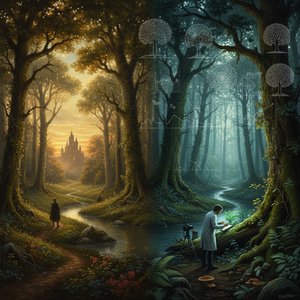 The Enchanted Canopy: Exploring Forests in Art History – From Romantic Idealization to Ecological ConsciousnessExplore the rich history of forests in art! Discover Romantic masterpieces by Friedrich & Monet, Symbolist depths, and contemporary visions…