

 Predogled v realnem okolju
 Pošlji
 Deli
Deli
 Podrobnosti o delu
 Priročnik

 Prenesi sliko
 Podobni izdelki
 Rentgenski posnetek
 Predvajaj diaporama
 Q&A
Q&A Statistika
Vita somnium breve
 Akril na platnu
- Stenska umetnost
- Art Nouveau Modern
 1906
1906 163.0 x 143.0 cm
 Narodni muzej v Krakovu
 Preberi več
Giclée tisk / Umetniški tisk
Giclée ali platnati odtis muzejske kakovosti z hitro proizvodnjo in prilagodljivimi možnostmi končne obdelave. ( Kupite ročno slikano delo Preklop na digitalno sliko)




P118B €10

P118H €10

P118W €10

P438Z €10

P508JH €12

P508YH €12

P805H €10

P805Z €10

P919BZ €10

P919G €10

P919XJ €10

P959ZH €10

P968JZ €12

W106C €8

W218G €10

W218JH €8

W218Y €10

W307PJ €10

W316G €10

W316PJ €8

W316Y €10

W398PJ €8

W4111J €10

W500HY €15

W500JH €15

W692G €12

W849H €8

W940BG €15

W953PJ €8




Izberite eno od naših vnaprej določenih velikosti, ki ustrezajo prvotnim proporcijam umetničkega dela.

Vnesite širino in višino, ki jih potrebujete za svoj okvir ali steno. Tiskanje se lahko le odreže, vendar ga ni mogoče narediti večjega od slike, zato format z drugačno obliko pomeni izgubo dela slike. Pred tiskanjem vam pošljemo digitalni predogled za potrditev. Slika, prikazana na tej strani, ne prikazuje dejanskega izrezka — le predogled to omogoča.
Globalna dostava () v 2 tednih namesto standardnih 4/5 tednov. (31 oktober)

Brezplačna ekspresna dostava po vsem svetu

Visokokakovostno laneno platno

Popolno zavarovanje pošiljke

Garancija povračila carine in uvoznih davkov

Garancija popolnega barvnega ujemanja

100-dnevna politika vračil (le v primeru okvar)

Garancija 100% povračila denarja

Popust pri večjem naročilu
 Možnost stekla je na voljo le za velikosti pod 110 cm

Vita somnium breve
Giclée tisk / Umetniški tisk
Velikost reprodukcije
-


Skupna cena
€ 71
Vita Somnium Breve: A Window Into Polish Symbolism
Józef Mehoffer’s “Vita somnium breve” (Life is a short dream), completed in 1906, stands as a cornerstone of Art Nouveau stained glass artistry and embodies the spirit of Young Poland – a movement dedicated to reviving Polish national identity after centuries of subjugation. Created by Krakowski Zakład Witrażów i Mozaiki S.G. Żeleński, established in 1902, this monumental window is housed within the National Museum in Kraków and represents more than just decorative splendor; it’s a profound meditation on mortality and fleeting beauty. ### Artistic Style and Technique: The Fluid Embrace of Art Nouveau Mehoffer's approach to stained glass aligns perfectly with the tenets of Art Nouveau – a style characterized by organic forms, flowing lines, and intricate floral motifs. Unlike the rigid geometric patterns prevalent in earlier styles, “Vita somnium breve” revels in curvilinear shapes that mimic natural elements like branches and leaves. The artist skillfully employs a technique known as *pointillé*, where tiny dots of color are meticulously applied to create textured surfaces and luminous effects. This method maximizes light diffusion, transforming the window into an ethereal space filled with shimmering hues—primarily shades of emerald green and amber—that evoke the tranquility of a forest grove. ### Symbolism: Echoes of Mortality and Remembrance The imagery within the window is laden with symbolic significance. Dominating the composition are figures representing women and children, positioned amidst stylized trees – a deliberate reference to biblical narratives concerning Adam and Eve and the Garden of Eden. The woman’s serene gaze suggests contemplation on life's brevity, while the child embodies innocence and vulnerability. These figures aren’t merely decorative; they serve as emblems of human experience confronted with the inevitability of death. The overarching theme is one of remembrance – honoring the past while acknowledging the transient nature of existence. The careful placement of these elements underscores the importance of cherishing every moment. ### Historical Context: Young Poland and Artistic Renewal “Vita somnium breve” emerged during a period of fervent artistic revival in Poland following the Russo-Polish War of 1893-1894. Young Poland championed Polish culture, literature, and art as instruments for reclaiming national identity and fostering patriotic fervor. Stained glass production flourished during this era, reflecting the movement’s desire to elevate aesthetic standards and express spiritual values. Mehoffer's work exemplifies this ambition—a testament to Art Nouveau’s ability to convey complex ideas through visual language. It represents a conscious effort to move beyond academic realism toward a more emotive and imaginative form of artistic expression. ### Emotional Impact: Capturing Tranquility and Reflection Looking upon “Vita somnium breve” is akin to stepping into a sanctuary of calm contemplation. The harmonious blend of colors, the graceful lines of the design, and the evocative imagery combine to create an experience that transcends mere visual perception. It invites viewers to pause, reflect on life’s fleeting beauty, and appreciate the enduring power of remembrance—themes central to both Art Nouveau philosophy and Polish cultural heritage. This remarkable stained glass window continues to inspire awe and wonder, cementing Mehoffer's legacy as a visionary artist who captured the essence of his time in a masterpiece of decorative art.Vprašanja in odgovori
Ali je "Vita somnium breve" tipično za dela, ki jih je Józef Mehoffer običajno ustvarjal?
Med zastavljenimi temami umetnika Józef Mehoffer – ki jih zastopajo symbolic forest, polish decorative art, window composition, art nouveau style, mehoffer legacy – prinaša "Vita somnium breve" lastno pozornost na forest, window, people, landscape, symbolism, polish art, stained glass.
Na kakšen način je zasnovana barvna kompozicija dela "Vita somnium breve" avtorja Józef Mehoffer?
V "Vita somnium breve" se Izjava kontrast združuje s Neskladna paleta harmonijo.
Ali je "Vita somnium breve" avtorja Józef Mehoffer slika, risba ali grafika?
V katalogu je delo "Vita somnium breve" avtorja Józef Mehoffer razvrščeno kot Stenska umetnost. Ta kategorija omogoča iskanje podobnih del.
Biografija umetnika
A Life of Color and Glass
Józef Mehoffer arrived in the world in Ropczyce, Poland, in 1869, though his path to the easel was not immediate. Before he embraced the brush, he pursued legal studies, a direction that only shifted after a gift of paints revealed a different vocation. He sought formal training at the Academy of Fine Arts in Kraków under Władysław Łuszczkiewicz, later expanding his horizons through studies in Vienna and Paris at the Académie Colarossi. This period of wandering through Europe’s great art centers allowed him to absorb the diverse currents of his era.
His work became a bridge between the academic traditions of his teachers, such as Jan Matejko, and the emerging avant-garde. He moved with ease between easel painting and the monumental demands of decorative arts. Whether working on portraits, landscapes, or intricate book illustrations, Mehoffer sought a fusion of form and color. His style grew to include elements of Post- Impressionism and the Secession movement, often utilizing bold palettes and fluid lines that mirrored the organic spirit of Art Nouveau.
The Light of Fribourg
While his presence was felt throughout Poland, Mehoffer achieved significant recognition through his work in Switzerland. Between 1895 and 1936, he dedicated decades to a cycle of thirteen stained-glass compositions for the Cathedral of St. Nicholas in Fribourg. This undertaking required immense technical precision, as he treated the lead came not merely as a structural necessity but as an autonomous graphic line. He selected glass of varying thicknesses and textures, using silver stain and vitreous black to manipulate how light moved through the windows.
The success of these windows brought him international attention. At the 1900 Paris World's Fair, his window titled The Martyrs earned a gold medal. This period of his life saw him blending Polish folk motifs with the sophisticated aesthetics of European Art Nouveau. His ability to translate complex religious and symbolic themes into luminous glass remains a central part of his professional identity.
A Decorative Legacy
Mehoffer’s creative output was remarkably broad, refusing to be confined to a single medium. He was as much a designer of furniture, textiles, and posters as he was a painter of canvases. His hand could be found in the mosaics of the Armenian Cathedral in Lviv and the frescoes of Wawel Cathedral. In 1897, he helped found the society Sztuka, an organization that sought to assert the independence of Polish art from the influence of occupying powers.
In his later years, Mehoffer established a home and studio on Krupnicza Street in Kraków. This house, which he purchased in 1932, became a center for musical and literary gatherings, reflecting his role as a figure of the Polish intelligentsia. He lived through the profound shifts of the early twentieth century, continuing to work even during the hardships of the Second World War. When he passed away in Wadowice in 1946, he left behind a body of work that spanned the transition from nineteenth-century tradition to the modern decorative era.

Józef Mehoffer
1869 - 1946
Hitri podatki
- Artistic Movement Or Style:
- Young Poland
- Post-Impressionism
- Secession
- Art Nouveau
- Symbolism
- Artists Who Influenced This Artist:
- Jan Matejko
- Władysław Łuszczkiewicz
- Henri Matisse
- Full Name: Józef Mehoffer
- Nationality: Polish
- Notable Artworks:
- Vita somnium breve
- Three Kings
- The Farewell
- The Muse
- Medusa
- Place Pigalle in Paris
- Place Of Birth: Ropczyce, Poland
- Date Of Birth: 1869
- Date Of Death: 1946
Sorodni članki
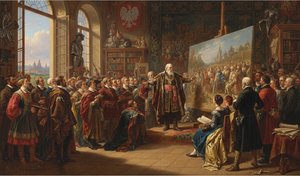
Jan Matejko: Historical Narrative & National Identity in 19th-Century Polish Painting
Explore the powerful historical paintings of Jan Matejko, Poland's national artist. Discover his iconic works & learn how he shaped Polish identity in the 19th century. High-quality reproductions available.
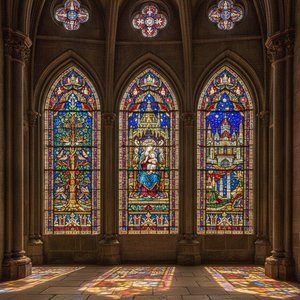
Luminous Masterpieces: The Captivating Beauty and Timeless Elegance of Stained Glass Artworks
Embark on a visual journey through the luminous world of stained glass art. Discover the exquisite craftsmanship, historical significance, and captivating beauty of masterworks from Art Nouveau to the Gothic era, curated for the discerning fine art enthusiast.
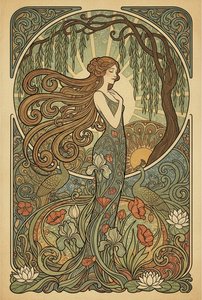
The Flowing Line & Flourishing Form: Exploring Art Nouveau's Aesthetic Legacy
Explore the captivating world of Art Nouveau! Discover its origins, key artists like Horta & Mucha, regional styles, innovative techniques, and lasting influence on architecture & design. A comprehensive guide for art enthusiasts.
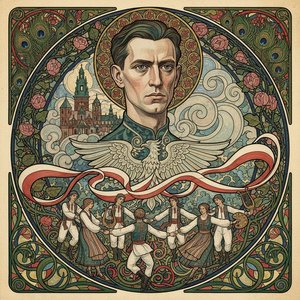
Stanisław Wyspiański: Symbolism, National Identity & the Polish Secession
Explore the life & work of Stanisław Wyspiański, a pivotal figure in Polish Symbolism and the Young Poland movement. Discover his iconic paintings, dramas, and stained glass designs reflecting national identity & artistic innovation.
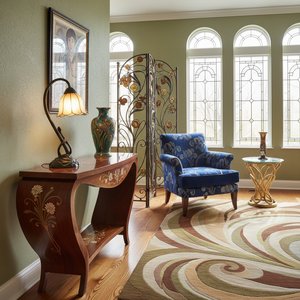
Seznam Domenljivih Del: Najboljših 10 Mojstrovin Art Nouveauja
Odkrijte 10 ikoničnih mojstrovin Art Nouveauja – Klimt, Mucha & Gaudí! Potopite se v zgodbe za temi umetnosti in najdite navdih za svojo notranjost. Visokokakovostne reprodukcije na OriginalUniqueArt.com!
