Preklop na tiskanine
 Preberi več







































 Za umetniška dela ali reprodukcije, ki so po katerikoli strani širše od 105 cm (približno 41 palč), bo okvir poslan v razstavljeni obliki kot komplet. Ta metoda zagotavlja varno dostavo in preprečuje poškodbe med transportom.


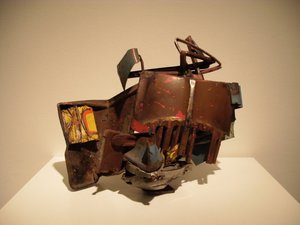
Fancy That: A Monumental Exploration of Assemblage
John Angus Chamberlain’s sculpture “Fancy That,” created around 1963, stands as an arresting testament to the transformative power of repurposing industrial detritus into profound artistic expression. More than just a visually striking assemblage—a deliberate juxtaposition of disparate materials—it embodies the core tenets of Neo-Dada and echoes the legacy of Abstract Expressionism, marking Chamberlain’s indelible contribution to American sculpture.
The artwork itself is dominated by a substantial red chair constructed from wood and metal. Its seat is crafted from solid timber, providing stability and grounding the piece, while a robust steel frame contributes structural integrity and hints at the machine age aesthetic prevalent during its creation. However, it’s the deliberate incorporation of crushed automobile parts—primarily fenders and hoods—that elevates “Fancy That” beyond conventional sculptural forms.
- Technique: Chamberlain's method involved meticulously crushing car bodies into fragments before welding them together with remarkable precision. This process wasn’t merely destructive; it was a calculated act of reimagining, transforming discarded objects into monumental sculptures that challenge notions of beauty and materiality.
- Style: Strongly influenced by Marcel Duchamp’s conceptual approach to art—specifically the readymade—Chamberlain deliberately eschewed traditional artistic skill in favor of embracing chance and improvisation. This stylistic choice aligns perfectly with the spirit of Abstract Expressionism, prioritizing emotional resonance over technical virtuosity.
- Historical Context: Produced during the mid-1960s, “Fancy That” reflects the broader cultural milieu of its time—a period marked by experimentation in art and design, fueled by anxieties about technological advancement and a desire to disrupt established artistic conventions. It’s a direct response to the prevailing trends of the era.
The sculpture's impact transcends mere visual appeal; it compels contemplation on themes of decay, transformation, and the relationship between nature and industry. The juxtaposition of organic wood against cold metal creates a dynamic tension that mirrors the complexities of the human experience. Chamberlain’s masterful manipulation of material invites viewers to consider the beauty inherent in imperfection and the potential for artistic innovation within unexpected sources.
“Fancy That” isn't simply an object; it’s a statement—a bold assertion of artistic freedom and a celebration of the transformative capacity of art. Its enduring presence in contemporary art discourse underscores Chamberlain’s position as a visionary artist who redefined sculpture and cemented his place within the canon of American modernism.
Vprašanja in odgovori
Za kakšno uporabo se priporoča tiskanina dela "Fancy"?
Priporočena uporaba tiska dela "Fancy" je Akcent.
Kakšna je svetlobnost dela "Fancy" avtorja John Angus Chamberlain?
"Fancy" avtorja John Angus Chamberlain ima Svetla ravnovesja luminanco. Luminanca opisuje, koliko svetlobe se zdi, da barve odražajo.
Kaj predstavlja "Fancy"?
Tematika v delu "Fancy" avtorja John Angus Chamberlain vključuje sculpture, assemblage, automobile parts, abstraction, john chamberlain, neo dada, metal sculpture, ki skupaj predstavljajo vsebino umetninškega dela.
 Pošlji
 Deli
Deli
 Podrobnosti o delu
 Priročnik

 Prenesi sliko
 Podobni izdelki
 Predvajaj diaporama
 Vprašanja in odgovori
 Statistika