Text size

() ·

A painting made for you, by hand

Street, Dresden

Ročno izdelana oljna reprodukcija

Ročno slikano olje na platnu v vaši izbiri velikosti in okvirja, izdelano po naročilu naših umetnikov. ( Preklop na tiskanine Preklop na digitalno sliko)

Opis zbirateljskega predmeta

Experience Ernst Ludwig Kirchner's "Street, Dresden" (1908). A vibrant depiction of urban life, capturing the energy and alienation of early 20th-century cityscapes through bold colors & expressive brushstrokes. Hand-painted reproduction available.

Biografija umetnika

Ernst Ludwig Kirchner (1880-1938): Pomembni umetnik ekspresionizma & ustanovitelj Die Brücke. Raziskoval bojna barva in emocije v mestnih krajih ter nude – ključno umetnost zgodnje moderne.

from ·

Chapter 1

How large should it be?

Slide to change the size; the picture on the left shows the frame at its real width. The proportions of the original are kept.

Standardna velikost
po meri
CM
INCH

Izberite eno od naših vnaprej določenih velikosti, ki ustrezajo prvotnim proporcijam umetničkega dela.

širina
višina

Vnesite širino in višino, ki jih potrebujete, da se slika prilega vašemu okviru ali steni. Ker je delo ročno slikano, lahko umetnik pri različnih oblikih slik pri robovih doda malo več barve ali pa jih malo odreže — izberite sami. Pred začetkom slikanja vam pošljemo digitalni predogled za potrditev. Slika, prikazana na tej strani, ni končni rezultat — le predogled prikazuje dejansko podobo.

Chapter 2

How should it arrive?

Choose the edges of the stretched canvas

Choose your frame

Corner sample of the WhiteWrap canvas edge finish, stretched on masivno drevo bars
White €1
Corner sample of the BlurSideWrap canvas edge finish, stretched on masivno drevo bars
Blurside €1
Corner sample of the ExtendedWrap canvas edge finish, stretched on masivno drevo bars
Extended €1
Corner sample of the P118B picture frame: izoblit polistiren, 5 cm wide and 3 cm thick
P118B €10
Corner sample of the P118H picture frame: izoblit polistiren, 5 cm wide and 3 cm thick
P118H €10
Corner sample of the P118W picture frame: izoblit polistiren, 5 cm wide and 3 cm thick
P118W €10
Corner sample of the P438Z picture frame: izoblit polistiren, 5.5 cm wide and 3.5 cm thick
P438Z €10
Corner sample of the P508JH picture frame: izoblit polistiren, 7 cm wide and 3.5 cm thick
P508JH €12
Corner sample of the P508YH picture frame: izoblit polistiren, 7 cm wide and 3.5 cm thick
P508YH €12
Corner sample of the P805H picture frame: izoblit polistiren, 5 cm wide and 3.5 cm thick
P805H €10
Corner sample of the P805Z picture frame: izoblit polistiren, 5 cm wide and 3.5 cm thick
P805Z €10
Corner sample of the P919BZ picture frame: izoblit polistiren, 7 cm wide and 3.5 cm thick
P919BZ €10
Corner sample of the P919G picture frame: izoblit polistiren, 7 cm wide and 3.5 cm thick
P919G €10
Corner sample of the P919XJ picture frame: izoblit polistiren, 7 cm wide and 3.5 cm thick
P919XJ €10
Corner sample of the P959ZH picture frame: izoblit polistiren, 5 cm wide and 3 cm thick
P959ZH €10
Corner sample of the P968JZ picture frame: izoblit polistiren, 6 cm wide and 4 cm thick
P968JZ €12
Corner sample of the W106C picture frame: masivno drevo, 5 cm wide and 3 cm thick
W106C €8
Corner sample of the W218G picture frame: masivno drevo, 5 cm wide and 3 cm thick
W218G €10
Corner sample of the W218JH picture frame: masivno drevo, 5 cm wide and 3 cm thick
W218JH €8
Corner sample of the W218Y picture frame: masivno drevo, 5 cm wide and 3 cm thick
W218Y €10
Corner sample of the W307PJ picture frame: masivno drevo, 6 cm wide and 3 cm thick
W307PJ €10
Corner sample of the W316G picture frame: masivno drevo, 6 cm wide and 3 cm thick
W316G €10
Corner sample of the W316PJ picture frame: masivno drevo, 6 cm wide and 3 cm thick
W316PJ €8
Corner sample of the W316Y picture frame: masivno drevo, 6 cm wide and 3 cm thick
W316Y €10
Corner sample of the W398PJ picture frame: masivno drevo, 5 cm wide and 3 cm thick
W398PJ €8
Corner sample of the W4111J picture frame: masivno drevo, 6.5 cm wide and 3.5 cm thick
W4111J €10
Corner sample of the W500HY picture frame: masivno drevo, 7 cm wide and 5 cm thick
W500HY €15
Corner sample of the W500JH picture frame: masivno drevo, 7 cm wide and 5 cm thick
W500JH €15
Corner sample of the W692G picture frame: masivno drevo, 8 cm wide and 4 cm thick
W692G €12
Corner sample of the W849H picture frame: masivno drevo, 5 cm wide and 3 cm thick
W849H €8
Corner sample of the W940BG picture frame: masivno drevo, 7.5 cm wide and 4.5 cm thick
W940BG €15
Corner sample of the W953PJ picture frame: masivno drevo, 6 cm wide and 3.5 cm thick
W953PJ €8
Corner sample of the H24-GOLD picture frame: gravirano leseno okvopje z gessoem, 10 cm wide and 6 cm thick
H24-GOLD €30
Corner sample of the H24-SILVER picture frame: gravirano leseno okvopje z gessoem, 10 cm wide and 6 cm thick
H24-SILVER €30
Corner sample of the H36-GOLD picture frame: gravirano leseno okvopje z gessoem, 15 cm wide and 6.5 cm thick
H36-GOLD €45
Corner sample of the H36-SILVER picture frame: gravirano leseno okvopje z gessoem, 15 cm wide and 6.5 cm thick
H36-SILVER €45
Predogled okvirja
V okviru

Moulding: . Overall size with the frame: .

Chapter 3

Who paints it, and should anything change?

Examples of what can be changed: Replace face with customer photo; Add pet (e.g., replace cat with dog); Include hidden message in background; Change background landscape or elements.
After order, OriginalUniqueArt.com team will email client for instructions and provide a mockup preview

Mednarodna dostava () v 3/4 tednih namesto običajnih 5 tednov. (1 november). Brez kompromisov pri kakovosti.

Chapter 4

The finishing touches

A nameplate, as in a museum?

Podrobnosti o gravirani bronasti plošči

This elegant plaque features the artist's name and the title of the artwork, finely engraved for a timeless presentation.

It is made from bronze with a refined, elegant finish. The text is precisely laser-engraved for a sharp and permanent result. Measuring 9x2 cm, the plaque is compact yet easy to read. It's built to be durable and scratch-resistant, offering a professional, museum-quality look. Mounting is simple thanks to the included adhesive backing.

Podrobnosti o transparentni akrilni plošči

The plaque includes essential engraved details such as the artist's name, the title of the artwork, the date it was created, the type of media used-like oil on canvas or watercolor-a brief description of the piece, and a QR code that links to the complete artwork information.

It is crafted from clear acrylic, offering a sleek, modern appearance. The text is UV-engraved in black to ensure strong visual contrast. With a size of 10x15 cm, it ensures optimal readability. It comes equipped with two metal hooks for secure wall mounting. The plaque is designed to be weather-resistant, making it suitable for various environments, and it includes interactive features that work seamlessly with smartphone scanning.

Podrobnosti o črni akrilni plošči

This elegant plaque includes engraved information such as the artist's name, the title of the artwork, the date it was created, the type of media used (like oil on canvas or watercolor), a short description of the artwork, and a QR code for quick access to more information.

The plaque itself is made from refined black acrylic with a premium finish. The text is laser-engraved in white for high contrast and readability. Its size is 10x15 cm, designed to be easy to read. It comes with two metal hooks for professional mounting. The design is sleek and fits any interior style. It is also weather-resistant and durable, with built-in digital integration for mobile compatibility.

A protective varnish?

When do you need it?

Chapter 5

Your painting, as you ordered it

Street, Dresden

Tehnik reprodukcije

Velikost reprodukcije

-

Izbor vrhunskih umetnikov

Več podrobnosti, dovršenosti in dodatnega časa za izdelavo

-

Okvir za reprodukcijo

-

-

Za umetniška dela ali reprodukcije, ki so po katerikoli strani širše od 105 cm (približno 41 palč), bo okvir poslan v razstavljeni obliki kot komplet. Ta metoda zagotavlja varno dostavo in preprečuje poškodbe med transportom.

Potrebna je profesionalna montaža – to ni izdelek za DIY izdelavo.
Komplet mora sestaviti in platno napeti izkušen profesionalni okvirjest, pri čemer bo uporabil lepil za les (ni vključeno), klešče za napetje platna in spone, da bi ohranil pravokotnost letev med sušenjem lepila. Nepravilna montaža ali neenakomerna napetost platna lahko trajno poškoduje umetniško del in ni pokrita z našo garancijo.

  • Vključene so vse letve iz masivnega lesa, natančno izrezane po meri.

  • Montaža poteka s priloženimi vijaki, vendar je za kotiče potrebna lepil za les, ki ga ni v kompletu in ga mora zagotoviti vaš okvirnik.

  • Za uporabo so potrebna profesionalna orodja, ki niso vključena: klešče za napinjanje platna (napetnik) in sponke za ohranjanje pravokotnosti letev med sušenjem lepila.

Pomembno:
Za stike v kotih potrebujete lepil za les, nosilce je treba z spenjačami držati, dokler se lepil popolnoma ne suši, za zategovanje platna na sestavljenem okvirju pa potrebujete spenjače za platno. Noben od teh pripomočkov ni vključen v komplet. Pred naročilom te velikosti, prosimo, poskrbite za izkušenega profesionalnega okvirja.

Značka z imenom

-

-

Zaščitni lak

Sijajni lak (poudarja barve ter zagotavlja zaščito pred svetlobo in vlago)

-

Prilagodi svoje umetniško delo

Primeri možnih prilagoditev: zamenjava obraza s fotografijo kupca; dodajanje hišnega ljubljenčka (npr. zamenjava mačke s psom); vključitev skritega sporočila v ozadje; sprememba krajšave ali elementov ozadja.

-

Hitra dostava

Mednarodna dostava () v 3/4 tednih namesto običajnih 5 tednov. (1 november). Brez kompromisov pri kakovosti.

-

Hitra dostava

Globalna dostava () v 5 tednih. (8 november).

Vključeno v ceno

Skupna cena

€ 267

Skupna cena € 267

Možnost stekla je na voljo le za velikosti pod 110 cm

Included with every order

  • Brezplačna ekspresna dostava po vsem svetu
  • Visokokakovostno laneno platno
  • Popolno zavarovanje pošiljke
  • Garancija povračila carine in uvoznih davkov
  • Garancija popolnega barvnega ujemanja
  • 100-dnevna politika vračil (le v primeru okvar)
  • Garancija 100% povračila denarja
  • Popust pri večjem naročilu

A Fragmented Urban Dream: Ernst Ludwig Kirchner’s “Street, Dresden”

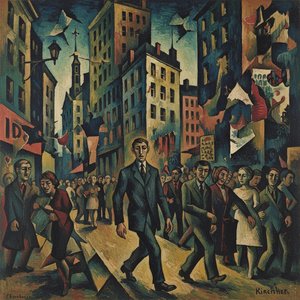
Ernst Ludwig Kirchner's "Street, Dresden," painted in 1908 and later reworked in 1919, isn’t merely a depiction of a city street; it’s a visceral exploration of modern anxiety and the alienation inherent within rapidly changing urban landscapes. This large oil on canvas, measuring 150 x 200 cm, pulsates with an unsettling energy—a feeling that immediately draws the viewer into its chaotic heart. Kirchner, a pivotal figure in the German Expressionist movement, masterfully captures not just the visual reality of Dresden’s Königstrasse but also the psychological state of those who navigated its crowded thoroughfares.

The painting's style is undeniably expressive, moving far beyond traditional academic realism. Kirchner employs bold, flattened forms and jarring color combinations—a deliberate rejection of the naturalistic palette favored by earlier generations. The pinks, oranges, blues, and greens clash dramatically, creating a sense of unease and disorientation. Brushstrokes are loose and agitated, conveying movement and a feeling of urgency. This technique wasn’t simply aesthetic; it was a conscious effort to translate inner turmoil onto the canvas, mirroring the anxieties prevalent in Germany at the turn of the century – a nation grappling with industrialization, social upheaval, and a growing sense of displacement.

The Faces of Modernity

Kirchner’s figures are not individuals; they are fragments, masks representing the anonymous masses swept along by the currents of urban life. Each face is rendered with stark simplicity – often reduced to geometric shapes and simplified features—suggesting a loss of identity within the crowd. The woman in the center, clutching her purse, stares blankly ahead, while others turn away, their backs to the viewer, embodying a profound sense of isolation. Even the little girl, seemingly the most vulnerable figure, is dwarfed by her oversized hat, further emphasizing her detachment and insignificance. The artist deliberately avoids portraying individual personalities, instead focusing on the collective experience of being adrift in a bustling city.

Interestingly, Kirchner’s own letters reveal his personal struggle with loneliness during this period. He described feeling overwhelmed by the faces he encountered, noting that “Completely strange faces pop up as interesting points through the crowd. I am carried along with the current, lacking will.” This internal experience is powerfully translated into the painting's composition and color palette – a visual representation of his own sense of alienation.

A Bridge to Expressionism

“Street, Dresden” exemplifies the core tenets of German Expressionism. The movement sought to express subjective emotions and experiences rather than objective reality. Kirchner’s use of distorted forms, exaggerated colors, and fragmented compositions directly reflects this philosophy. The painting can be seen as a bridge between the anxieties of late 19th-century realism and the emotionally charged landscapes of early 20th-century Expressionism. It's a pivotal work in understanding the movement’s exploration of urban alienation and psychological distress.

Furthermore, Kirchner’s decision to rework the painting in 1919 demonstrates his ongoing engagement with the subject matter. The subtle changes—particularly in the color palette and the arrangement of figures—suggest a deepening of his artistic vision and a continued attempt to capture the complexities of modern urban life. The work's presence in museums like the Kirchner Museum Davos underscores its enduring significance within Expressionist art history.

Bringing “Street, Dresden” into Your Space

A hand-painted reproduction of "Street, Dresden" offers a remarkable opportunity to bring this powerful and evocative artwork into your home or office. OriginalUniqueArt’s meticulous reproductions capture the painting's vibrant colors, dynamic brushstrokes, and emotional intensity with exceptional detail. Whether you are an art collector, an interior designer seeking to create a thought-provoking atmosphere, or simply someone drawn to Kirchner’s unique vision, this reproduction provides a stunning and authentic representation of a seminal work in modern art history.

Vprašanja in odgovori

Ali je "Street, Dresden" avtorja Ernst Ludwig Kirchner svetlo ali temno umetniško delo?

"Street, Dresden" ima v celoti shadow, njegova luminanca pa znaša Soft Shadow.

Ali je Ernst Ludwig Kirchner, ustvarjalec dela "Street, Dresden", znan tudi pod drugimi imeni?

Drugi imeni, ki so zabeležena za ustvarjalca dela "Street, Dresden", imenovanega Ernst Ludwig Kirchner, vključujejo Kirchner, E.L..

Katero tehniko je bila uporabljena za "Street, Dresden" in kdaj je bila ustvarjena?

Tehnika dela "Street, Dresden" avtorja Ernst Ludwig Kirchner je Acrylic On Canvas, del pa je datiran v 1908.

More about this painting

Predogled v realnem okolju Predogled v AR Preklop na tiskanine Preklop na digitalno sliko Pošlji
Podrobnosti o delu Priročnik Dodaj v priljubljene Prenesi sliko Podobni izdelki Rentgenski posnetek Predvajaj diaporama Q&A Statistika

In numbers

  • 1908the year it was painted
  • 29frames to choose from
  • standard sizes, in its own proportions
  • 5weeks to paint and deliver it
Ernst Ludwig Kirchner

Ernst Ludwig Kirchner

1880 - 1938, Nemčija

Quick facts about Ernst Ludwig Kirchner

  • Artistic Movement Or Style: Ekspresionizem
  • Artists Who Influenced This Artist:
    • Albrecht Dürer
    • Vincent van Gogh
    • Edvard Munch
  • Date Of Birth: 6 maj 1880
  • Date Of Death: 15 junij 1938
  • Full Name: Ernst Ludwig Kirchner
  • Nationality: Nemčija
  • Notable Artworks:
    • The Street (1908)
    • Leaping Dancer (1912)
    • Self-Portrait (1910)
  • Place Of Birth: Aschaffenburg, Nemčija

Biografija umetnika

Življenje, oblikovano v izrazu: Svet Ernsta Ludwiga Kirchnerja

Ernst Ludwig Kirchner, ime, ki je postalo sinonim za surov čustveni moč nemškega ekspresionizma, se je rodil v svetu, ki se je valjal na robu dramatičnih sprememb. Njegov prihod v Aschaffenburg v Bavarski ali leta 1880 je označil začetek življenja, globoko prepletenega z umetniško inovacijo in osebno težavo. Spremenljive pokrajine njegove mladosti – diktirane z grobostjo očetovega poklica – so v njem vzpostavile občutek premikanja, ki je kasneje prežela njegovo umetnost. Od Frankfurta do Perlena in končno v Chemnitz, je mladi Kirchner vpijal naraščajoče tesnobe hitro modernizirajoče se Nemčije. Čeprav je bil sprva usmerjen v arhitekturo na Kraljevi tehnični visoki šoli v Dresdenu, je ravno privlačnost slikarstva, poganjena z občudovanjem mojstrov, kot je bil Albrecht Dürer, in naraščajočo nezadovoljinjo z akademskimi konvencijami, dokončno določila njegovo pot. V umetniških upornikih – Fritz Bleyl, Karl Schmidt-retluff in Erich Heckel – je našel sorodnost ter vzpostavil vezi, ki bodo nepopravljivo spremenile pot umetnosti 20. stoletja.

Most med svetovoma: Die Brücke in umetniška revolucija

Leta 1905 je Kirchner postal eden izmed ustanoviteljev skupine Die Brücke („Kljub“), umetniškega kolektiva, posvečenega premoščanju vrzeli med tradicionalno estetiko in bolj vizceralno, čustveno nabojeno obliko izražanja. To ni bila le slogovna izbira; bila je filozofska drža. Skupina je navdih iskala v virih, ki jih je uveljavljeni umetniški svet pogosto preziral – v primitivni umetnosti Afrike in Oceanije, v drznih barvah Vincenta van Gogha ter v pretresljivi psihološki globini Edvarda Muncha. Zavrnili so idealizirane predstavitve lepote, ki jih je podpiralo akademsko slikarstvo, in namesto tega sprejeli deformacijo, neustrezne barvne palete ter ekspresivne potege, da bi izrazili tesnobo in alienation modernega življenja. Kirchnerjeva zgodnja dela, rojena iz tega sodelovalnega duha, so utripala z nemirno energijo, ki je odražala skupno željo skupine po osvoboditvi iz umetniških oklepiv. Atelje je postal krpel za eksperimentiranje, prostor, kjer so bile družbene norme izzivane skupaj z umetnostnimi konvencijami. Raziskovanje človeške oblike, še posebej ženskega akta, v mestnem in naravnem okolju, je postalo ponavljajoč se motiv, ki je Kirchnerju omogočal raziskovanje gibanja, čustev in kompleksnosti moderne eksistence.

Mestne tesnobe in drzne vizije: Definiranje sloga

Kirchnerjev umetniški slog je takoj prepoznaven zaradi svojih značilnih lastnosti. Barvo ni uporabljal kot sredstvo zvestega prikazovanja, temveč kot orodje za vzbujanje čustvenih odzivov – živahne, pogosto nenaturalistične barve, ki so povečale občutek nelagodja ali intenzivnosti v njegovih kompozicijah. Njegovi potegi so bili energični in vidni, kar je prispevalo k splošnemu občutku neposrednosti in surove čustvenosti. Oblike in predmeti so bili pogosto deformirani ali izdoljeni, kar je odražalo subjektivno namesto objektivne realnosti. Morda najmočnejše je Kirchner zajel psihološki vpliv modernega mestnega življenja v zgodnji 20. stoletju v Nemčiji. Slike, kot je Ulica (1908), niso le prikazi mestnih scen; so portreti alienation, ki zajamejo frenetično energijo in čustveno odtujenost hitro spreminjajočega se sveta. Ni se izogibal prikazovanju temnejših vidikov modernosti – osamljenosti, anonimnosti in občutka premaganosti z neizmerno velikostjo mestnega obstoja. Ta neustrašni pogled ga je uveljavil kot kronikarja svojega časa, umetnika, ki se je upal soočiti z tesnobami, ki so ključale pod površino družbenega napredka.

Tragedija in dediščina: Trajen vpliv

Kirchnerjevo življenje je bilo tragično zaznamovano s preobratnimi osebno težavami. Groze Prve svetovne vojne so sprožile hudo psihično krizno stanje, zaradi česar se je prisiljen umaknil v Švijo v iskanju pomirja. Vendar pa je tudi v izlazi še naprej ustvarjal, pri čemer so njegova dela odražala trajno travmo in izolacijo, ki jo je doživljal. Vzpon nacizma je prinesel še več težav; več kot 600 njegovih del je bilo zasegnjenih in označenih kot »degenerirana« umetnost – uničujoč udarec, ki je poudaril sovražnost političnega klimata do moderne umetniške izraznosti. Ob soočanju z preganjanjem in slabšim zdravjem je Kirchner v letu 1938 tragično odmelel življenje v Davosu na Šviji. Kljub temu srcelom razbijajočemu koncu, ostaja dediščina Ernsta Ludwiga Kirchnerja globoko vplivna. Stoji kot osrednja figura nemškega ekspresionizma, ki navdihuje generacije umetnikov s svojim drznim slogom, čustveno resonančnimi prikazi modernega življenja in neomajno zavezanostjo umetniški resnici. Njegova dela se še vedno izlagajo v največjih muzejih po vsem svetu in služijo kot močan opomin na trajno moč umetnosti, da se sooči, izzove in končno osvetljuje človeško stanje.
  • Vplivali mu: Albrecht Dürer, Vincent van Gogh, Edvard Munch, Primitivna umetnost (afriška in okeanska)
  • Vplival na: Kirchnerova dela so globoko vplivala na naslednje generacije ekspresionističnih in modernih umetnikov. Njegovo raziskovanje psiholoških tem in inovativna uporaba barv ter oblik še vedno navdihujeta sodobne umetniške prakse.
Trenutni Meta Opis: Ernst Ludwig Kirchner (1880-1938): Ključni nemški ekspresionist in soustanovitelj skupine Die Brücke. Raziskujte drzne, čustvene slike mestnega življenja, aktov in pejzažev. Trenutni Meta Ključne Besede: Ernst Ludwig Kirchner, Kirchnerove slike, nemški ekspresionizem, Die Brücke, ekspresionistična umetnost, scenes v berlinskih ulicah, lesorezi, moderna nemška umetnost, akti, Kirchnerova umetnost

Ključni podatki

  • Subject or theme: City life
  • Notable elements: Masklike faces
  • Artist: Ernst Ludwig Kirchner
  • Title: Street, Dresden
  • Artistic style: Urban anxiety
  • Dimensions: 150 x 200 cm

Umetniški kviz

Pri vsakem vprašanju je na voljo le eden pravilen odgovor.

Vprašanje 1:
What is the primary subject matter depicted in Ernst Ludwig Kirchner’s ‘Street, Dresden’?
Vprašanje 2:
Kirchner’s use of bold, clashing colors in ‘Street, Dresden’ is most likely intended to convey:
Vprašanje 3:
Which art movement is Ernst Ludwig Kirchner most closely associated with?
Vprašanje 4:
The painting ‘Street, Dresden’ was created in which year?
Vprašanje 5:
What does the crowded and somewhat chaotic arrangement of figures in ‘Street, Dresden’ suggest about Kirchner's perspective on urban life?