Preklop na tiskanine
 Preberi več







































 Za umetniška dela ali reprodukcije, ki so po katerikoli strani širše od 105 cm (približno 41 palč), bo okvir poslan v razstavljeni obliki kot komplet. Ta metoda zagotavlja varno dostavo in preprečuje poškodbe med transportom.


A Window into Antiquity: The Timeless Allure of Roman Ruins
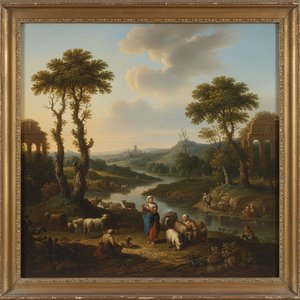
In the delicate, circular embrace of this exquisite tondo, Cornelis van Poelenburgh invites us to step through a portal into a bygone era. Painted around 1620, Roman Ruins is far more than a mere depiction of architectural decay; it is a profound meditation on the passage of time and the enduring relationship between humanity and the remnants of greatness. The composition, framed by its characteristic round format, focuses our gaze upon a landscape where the grandeur of the Roman Empire has softened into a pastoral sanctuary. Within this intimate space, the heavy stone arches and crumbling pillars serve as silent witnesses to history, now providing a backdrop for the quiet, rhythmic pulse of rural life.
The scene unfolds with a masterful use of light and shadow, reminiscent of the Dutch Golden Age's obsession with atmospheric truth. As we gaze upon the foreground, we encounter a world in gentle motion: a shepherd tending his flock, a laborer with his oxen, and figures caught in quiet contemplation. These small-scale inhabitants of the landscape bring a sense of warmth and vitality to the otherwise somber ruins. The artist employs a subtle, earthy palette—rich ochres, muted greens, and soft umbers—to weave a tapestry of textures that feels both tactile and ethereal. The hazy, overcast sky suggests the fleeting light of dawn or dusk, casting a melancholic yet peaceful glow over the entire vista, evoking a sense of nostalgia for a lost civilization.
The Mastery of the Italianate Style
Cornelis van Poelenburgh was a pivotal figure in the first generation of Dutch landscape painters who found profound inspiration in Italy. His travels to Rome allowed him to infuse his Northern training with the classical elegance of the Mediterranean. In Roman Ruins, we see this synthesis perfected. The technique is characterized by an incredible attention to detail; every crack in the ancient masonry and every distant bird in flight is rendered with a precision that draws the viewer deeper into the frame. This meticulousness does not feel clinical, however, but rather serves to enhance the three-dimensional depth of the scene, making the archway feel like a real threshold through which one might walk.
For the discerning collector or interior designer, this piece offers a unique emotional resonance. It possesses a "Caravaggesque" drama tempered by a serene, pastoral tranquility. The symbolism of the ruins—representing the inevitable cycle of rise and fall—is balanced by the resilience of the natural world and the simplicity of the human spirit. Such a work is an ideal centerpiece for a sophisticated interior, providing a conversational focal point that inspires reflection. Whether placed in a sunlit study or a grand gallery, this reproduction captures a moment of eternal stillness, offering any space it inhabits a touch of historical majesty and poetic grace.
Vprašanja in odgovori
Ali so barve v delu "Roman Ruins" avtorja Cornelis Van Poelenburgh nasičene ali utemeljene?
Zasičenost barvne palete dela "Roman Ruins" je Muted.
い哪種媒介是用來創作 "Roman Ruins" avtorja Cornelis Van Poelenburgh 的?
Tehnika za delo "Roman Ruins" avtorja Cornelis Van Poelenburgh je Oil. Različice imajo za namen natančno prikazati videz te tehnike.
Ali je "Roman Ruins" avtorja Cornelis Van Poelenburgh priporočljivo darilo in za koga?
"Roman Ruins" je priporočeno kot darilo za Anniversary, z mislijo na Mood.
 Predogled v realnem okolju
 Pošlji
 Deli
Deli
 Podrobnosti o delu
 Priročnik

 Prenesi sliko
 Podobni izdelki
 Rentgenski posnetek
 Predvajaj diaporama
 Q&A
Q&A Statistika