
 Predogled v realnem okolju
 Pošlji
 Deli
Deli
 Podrobnosti o delu
 Priročnik

 Prenesi sliko
 Podobni izdelki
 Rentgenski posnetek
 Predvajaj diaporama
 Vprašanja in odgovori
 Statistika
Four Figures on a Step

- 109.0 x 143.0 cm


 Preberi več
Giclée tisk / Umetniški tisk
Giclée ali platnati odtis muzejske kakovosti z hitro proizvodnjo in prilagodljivimi možnostmi končne obdelave. ( Kupite ročno slikano delo Preklop na digitalno sliko)




P118B €10

P118H €10

P118W €10

P438Z €10

P508JH €12

P508YH €12

P805H €10

P805Z €10

P919BZ €10

P919G €10

P919XJ €10

P959ZH €10

P968JZ €12

W106C €8

W218G €10

W218JH €8

W218Y €10

W307PJ €10

W316G €10

W316PJ €8

W316Y €10

W398PJ €8

W4111J €10

W500HY €15

W500JH €15

W692G €12

W849H €8

W940BG €15

W953PJ €8




Izberite eno od naših vnaprej določenih velikosti, ki ustrezajo prvotnim proporcijam umetničkega dela.

Vnesite širino in višino, ki jih potrebujete za svoj okvir ali steno. Tiskanje se lahko le odreže, vendar ga ni mogoče narediti večjega od slike, zato format z drugačno obliko pomeni izgubo dela slike. Pred tiskanjem vam pošljemo digitalni predogled za potrditev. Slika, prikazana na tej strani, ne prikazuje dejanskega izrezka — le predogled to omogoča.
Globalna dostava () v 2 tednih namesto standardnih 4/5 tednov. (7 november)

Brezplačna ekspresna dostava po vsem svetu

Visokokakovostno laneno platno

Popolno zavarovanje pošiljke

Garancija povračila carine in uvoznih davkov

Garancija popolnega barvnega ujemanja

100-dnevna politika vračil (le v primeru okvar)

Garancija 100% povračila denarja

Popust pri večjem naročilu
 Možnost stekla je na voljo le za velikosti pod 110 cm

Four Figures on a Step
Giclée tisk / Umetniški tisk
Velikost reprodukcije
-


Skupna cena
€ 72
Bartolomé Esteban Murillo: A Master of Andalusian Light
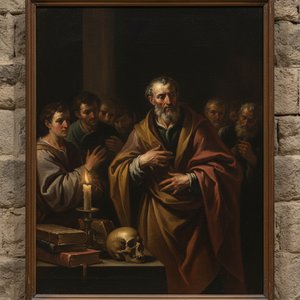
Bartolomé Esteban Murillo (1617–1682) stands as one of the most celebrated figures in Spanish Baroque painting, a testament to Seville’s artistic flourishing during its golden age. His life unfolded amidst personal hardship—the premature loss of his parents instilled within him an early understanding of vulnerability—yet he transformed this sorrow into an extraordinary creative vocation. Guided by Juan del Castillo and later influenced by the stylistic innovations of Francisco de Zurbarán, Murillo established a distinctive visual language that would resonate powerfully through centuries. Unlike Velázquez and El Greco, whose reputations gained prominence in the late nineteenth century, Murillo enjoyed sustained admiration throughout Europe until then, securing his place as an icon of Spanish artistic excellence.- Subject Matter: Murillo’s genius lay in capturing everyday life with remarkable sensitivity—particularly scenes depicting women and children—a departure from the grand narratives favored by many contemporaries. *Four Figures on a Step*, for instance, eschews theatrical grandeur, presenting instead a quiet tableau of four individuals engaged in an intimate interaction within a darkened interior.
- Style & Technique: Murillo’s style is characterized by luminous tonal painting—a technique he honed through meticulous observation and masterful manipulation of light—resulting in canvases imbued with an ethereal quality that distinguishes them from the darker palettes prevalent during his time. His use of chiaroscuro, combined with subtle modeling, creates a palpable sense of depth and realism, mirroring the influence of Dutch masters whom Murillo knew through prints.
- Historical Context: Murillo’s work emerged during a period marked by fervent religious devotion and societal transformation in Spain—the Counter-Reformation actively promoted artistic endeavors aimed at bolstering faith and moral instruction. Consequently, his genre scenes often carry implicit didactic messages, prompting contemplation on themes of piety, compassion, and familial bonds.
- Symbolism: The enigmatic gaze of Murillo’s figures—particularly the woman in *Four Figures on a Step*—suggests a profound engagement with psychological nuance. Scholars debate whether her gesture signifies marital fidelity or merely openness to connection, reflecting broader anxieties surrounding social propriety during the seventeenth century. Furthermore, the depiction of a child undergoing delousing serves as a potent metaphor for spiritual purification, echoing the humanist ideals championed by artists like Rembrandt and Rubens.
- Emotional Impact: Murillo’s paintings evoke a palpable sense of warmth and tenderness—a hallmark of his oeuvre—capturing fleeting moments of human emotion with astonishing accuracy. *Four Figures on a Step*, in particular, invites viewers to consider the complexities of interpersonal relationships and the subtle gestures that convey unspoken feelings. Its enduring appeal testifies to Murillo's ability to transcend mere representation, forging connections between art and human experience.
Provenance & Restoration Efforts
The journey of *Four Figures on a Step* began in 1830 with Charles Berners Plestow, who acquired it before bequeathing it to his son Sir Charles Henry Coote. Subsequent owners included the Coote family and later prominent collectors like Richard Abraham and Arthur L. Nicholson. A significant restoration undertaken in 1984 revealed that earlier interventions had obscured portions of the painting’s original composition—namely, a canvas strip added to the left side and repainting covering a damaged area on the child's trousers. This meticulous process ensured that Murillo’s artistic vision remained faithfully preserved, sparking ongoing scholarly debate about its interpretation.Influence & Legacy
Murillo’s influence extended far beyond his lifetime, shaping the aesthetic sensibilities of subsequent generations of artists and inspiring collectors worldwide. His pioneering exploration of genre painting—particularly scenes depicting women and children—established a precedent for realism in Spanish art that would endure into the twentieth century. Today, reproductions of *Four Figures on a Step* continue to captivate audiences with their luminous beauty and psychological depth—a testament to Murillo’s enduring artistic legacy as one of Spain's greatest masters.Vprašanja in odgovori
Ali je "Four Figures on a Step" avtorja Bartolomej Esteban Murillo portretna, krajinska ali kvadratna kompozicija?
"Four Figures on a Step" avtorja Bartolomej Esteban Murillo je Landscape kompozicija. Pred izbiro velikosti tiska je priporočljivo preveriti njene proporcije.
Katere velikosti tiska "Four Figures on a Step" avtorja Bartolomej Esteban Murillo bi ustajali priporočeni sobi?
Priporočena kombinacija za "Four Figures on a Step" avtorja Bartolomej Esteban Murillo: tiskanec v velikosti Large v prostorih, kot je Living Room.
Katere teme se pojavljajo v delu "Four Figures on a Step" avtorja Bartolomej Esteban Murillo?
Motivi dela "Four Figures on a Step" so genre scene, seville, religion, domesticity, childhood, moralizing, delousing, baroque art.
Biografija umetnika
Življenje v Andaluzijski Svetlobi
Bartolomé Esteban Murillo, ime sinonim za zlato dobo španske baročne umetnosti, se je rodil v živahnem srcu Seville leta 1618. Njegovo življenje, čeprav zaznamovano z osebnimi tragedijami in družbenimi spremembami, je razcvetelo v umetniško kariero, ki je ujela duh njegovega časa – obdobja verskega zanosa, socialnih sprememb in bujne umetniške inovacije. Rodil se je Gasparju Estebanu, brivcu-kirurgu, in Maríi Pérez Murillo, v veliki družini štirinajst otrok. Mladi Bartolomé je že zgodaj doživel izgubo staršev, ki sta umrla kmalu zaporedoma. Ta težava ga je pripeljala pod skrbstvo sestre moža, Juana Agustína Lagaresa, ključne figure, ki bi posredno usmerila njegovo umetniško pot. Njegovo začetno izobraževanje se je začelo pri Juanu del Castillo, lokalnem slikarju in sorodniku po materi, kar je postavilo temelj slogu, ki bo sčasoma postal edinstven. Zgodnja leta so bila prežeta z realističnimi tradicijami, ki so prevladovale v Sevilli, absorbirajoč vplive mojstrov kot so Zurbarán, Ribera in Cano – umetnikov, ki so dajali prednost strogemu realizmu in dramatični intenzivnosti. Vendar je bila Murillova genialnost ne le v posnemanju, temveč v preoblikovanju teh temeljev v nekaj mehkejšega, svetlejšega in globoko človeškega.Od Realizma do Žareče Milosti
Murillovo umetniško potovanje ni bil nenaden skok v slavo, ampak razvoj, zaznamovan z različnimi fazami. Njegova zgodnja dela, močno vplivana s strogim realizmom sodobnikov, so pokazala natančnost do podrobnosti in somerno paleto barv. Mladi mož s košaro sadja (Personifikacija Poletja), ustvarjeno okoli leta 1640-50, je zgled tega obdobja – utemeljen prikaz vsakdanjega življenja, upodobljen z izjemno natančnostjo. Kljub temu so se že v teh zgodnjih delih kazali namigi na nežnost in čustveno globino, ki bi definirala njegov zrel slog. Mladi prosjak, naslikan okoli leta 1645, kaže naraščajočo občutljivost do človeškega trpljenja, odmev vpliva Velázquézove mojstrske upodobitve vsakdanjih ljudi. Ko je Murillo dozorel, se je njegov slog korenito spremenil. Odmaknil se je od strogega realizma svojih predhodnikov in sprejel bolj prefinjeno estetiko, ki je resonirala z okusom rastočega meščanskega in aristokratskega razreda Seville. Ta premik je bil še posebej očiten v njegovih verskih delih, kjer je tradicionalno ikonografijo napolnil s presenetljivim občutkom toplote, milosti in čustvene dostopnosti. Sveti Jeronim, naslikan med letoma 1650-52, je pričevanje tega zrelega sloga – mehko svetleča upodobitev, ki seva serenost in pobožnost.Mojster Verskih Čustev in Žanrskih Prizorov
Murillova umetniška produkcija je bila izjemno raznolika, zajemala pa je verske slike, žanrske prizore, portrete in mitološke teme. Najbolj znan je po svojih upodobitvah Brezmadežne Device – tematike, ki ga je očarala skozi celotno kariero in povzročila številne različice, vsaka prežeta z edinstvenim občutkom eterične lepote. Ta dela, za katera so značilne nežne poteze čopiča, svetle barve in elegantne kompozicije, so postala izjemno priljubljena in je Murilla uveljavila kot predvodnika verskih upodobitev v Španiji. Poleg svojih sakralnih motivov je Murillo odlično zajel vsakdanje življenje navadnih ljudi. Njegovi žanrski prizori – upodobitve cvetličark, uličnih fantov in prosakov – ponujajo ganljiv vpogled v družbene realnosti Seville v 17. stoletju. Te slike niso le opazovalne študije; so prežete z globokim občutkom empatije in sožitja, ki dviguje skromne subjekte na raven dostojanstva in milosti. Imel je izjemno sposobnost zajeti nedolžnost otroštva in upodabljal mlade otroke z izjemnim realizmom in nežnostjo.Zapuščina in Trajni Vpliv
Vpliv Bartoloméa Estebana Murilla na pot španske umetnosti – in dejansko evropskega slikarstva – je nesporna. Uveljavil je značilen slog, ki je združil versko pobožnost s človekoljubnimi čustvi, ustvarjal dela, ki so globoko resonirala z občinstvom iz vseh družbenih slojev. Njegov vpliv se je razširil daleč onkraj njegove rodne Španije in navdihnila je generacije umetnikov po vsej Evropi. Gainsborough in Greuze, med drugim, so priznali svoj dolg Murillovemu žarečemu slogu in občutljivim upodobitvam človeških čustev. Treniral je številne učence v svoji sevillski delavnici in zagotovil nadaljevanje svoje umetniške zapuščine. Njegove slike najdemo v prestižnih muzejih po vsem svetu, vključno z Museo del Prado v Madridu, Hermitažem v Sankt Peterburgu, Wallace Collection v Londonu in Timken Museum of Art v San Diegu – pričevanja o njegovem trajnem apelu in zgodovinski pomembnosti. Murillova umetnost še naprej očara gledalce s svojo lepoto, milostjo in globoko človečnostjo, kar utrdi njegov položaj kot enega najbolj ljubljenih in vplivnih slikarjev španske baročne dobe. Njegova sposobnost, da vsakemu verskemu prizoru vdaje čustveno globino in upodablja vsakdanje življenje z empatijo, zagotavlja, da njegovo delo ostane relevantno in navdihujoče stoletja po njegovi smrti leta 1682.
Bartolomej Esteban Murillo
1618 - 1682 , Španija
Hitri podatki
- Datum Rojstva: 1. januar 1618
- Datum Smrti: 3. april 1682
- Državljanstvo: Španec
- Kraj Rojstva: Sevilla, Španija
- Polno Ime: Bartolomé Esteban Murillo
- Pomembna Dela:
- Immaculate Conception
- Young Beggar
- St. Jerome
- Umetniki Vplivani:
- Gainsborough
- Greuze
- Umetniški Slog: Barokno slikarstvo
- Vplivi Umetnikov:
- Zurbarán
- Jusepe de Ribera
Sorodni članki

The Golden Age Reforged: Dramatic Realism & Religious Zeal in Spanish Baroque Art
Explore the dramatic world of Spanish Baroque art! Discover masters like Zurbarán & the powerful influence of religious zeal on painting techniques – a guide for collectors and enthusiasts.

The Dramatic Flourish: Exploring the Baroque Movement's Enduring Legacy in Art History
Explore the dramatic world of Baroque art! Discover iconic artists like Caravaggio & Rubens, defining techniques, and its lasting impact on art history. Expert insights for collectors & enthusiasts at OriginalUniqueArt.

Bartolomé Esteban Murillo: Divine Light & Social Commentary in Golden Age Seville
Explore the captivating world of Bartolomé Esteban Murillo, a master of Spanish Baroque painting. Discover his luminous religious scenes, tender genre paintings & lasting legacy in Golden Age Seville. Learn more at OriginalUniqueArt.
Spanish Baroque Art: The Dramatic Mastery of Light and Shadow in the Age of Velázquez
Explore the profound drama of Spanish Baroque art. Delve into the mastery of light, shadow, and realism through the legendary works of Diego Velázquez and the Spanish Golden Age.

Baročne mojstrovine: 10 umetnin, ki so definirale obdobje | OriginalUniqueArt
Odkrijte 10 baročnih mojstrovine, ki so zaznamovale umetnost! Karavaggio, Bernini & Rubensovi deli v zgodovinskem kontekstu. Navdih za notranjost in reprodukcije slik na OriginalUniqueArt.com. Raziskujte polno zbirko online!