 Preklop na tiskanine
 Preberi več







































 Za umetniška dela ali reprodukcije, ki so po katerikoli strani širše od 105 cm (približno 41 palč), bo okvir poslan v razstavljeni obliki kot komplet. Ta metoda zagotavlja varno dostavo in preprečuje poškodbe med transportom.


Ambrosius van Swol: The Silent Sculptor of Utrecht – A Baroque Masterpiece Revisited
Ambrosius van Swol (c. 1640 – 1680) remains a figure shrouded in relative obscurity compared to his contemporaries—artists who graced the canvases of Rembrandt and Vermeer—yet his contribution to Dutch Baroque sculpture deserves recognition as a testament to artistic innovation within a period defined by grandeur and dramatic expression. Born in Utrecht, Netherlands, Van Swol’s life details are scarce, leaving much to speculation about his formative years and early artistic inclinations. However, surviving documentation confirms he established himself as a sculptor and frame maker around 1643, marking the beginning of a prolific career that spanned nearly four decades.
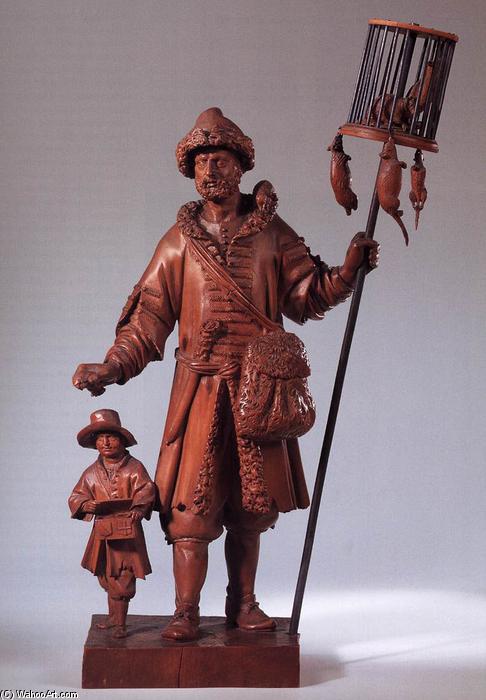
Early Career & Patronage: Van Swol’s initial commissions primarily focused on crafting ornate frames for paintings—a crucial element in the visual culture of Utrecht during his time. These frames weren't merely decorative; they were meticulously designed to enhance the luminosity and color palette of artworks, reflecting a sophisticated understanding of optics and artistic aesthetics. Evidence suggests he worked under the patronage of influential families like the Van Loon clan, whose opulent estates served as hubs for artistic activity. Notable Sculptures: While his frame work undoubtedly provided a steady income, Van Swol’s true artistry shone through in his sculptures—particularly “The Rat-Catcher,” currently housed at Museum Van Loon. This remarkable piece exemplifies the Baroque style's penchant for dramatic realism and emotional intensity. Executed around 1660, it depicts a rat catcher engaged in capturing a rodent with considerable skill and determination.
Style & Technique: Ambrosius van Swol’s artistic approach aligns closely with Albert Vinckenbrinck, a prominent Utrecht sculptor who championed naturalism and expressive dynamism. Like Vinckenbrinck, Van Swol prioritized conveying emotion through form—capturing the physicality of movement and gesture to imbue his sculptures with palpable vitality. His works are characterized by smooth surfaces, polished marble or alabaster, and subtle drapery folds that contribute to an overall sense of elegance and sophistication.
Historical Context & Symbolism: The Baroque era in Utrecht was marked by a fervent belief in divine providence and a desire to inspire awe and reverence. Artists like Van Swol responded to these spiritual currents by portraying biblical narratives with meticulous detail—emphasizing human emotion and psychological complexity. “The Rat-Catcher,” as depicted in prints by Rembrandt, Joris van Vliet and Cornelis Visscher, served as a visual metaphor for confronting evil and asserting moral authority – themes central to Baroque artistic discourse.
Emotional Impact & Legacy: Despite his considerable talent, Van Swol’s artistic legacy endured relative obscurity for centuries—primarily due to the limited surviving documentation of his life and oeuvre. However, recent scholarship has begun to illuminate his significance as a sculptor who skillfully blended technical virtuosity with humanist ideals. Museums like Museum Van Loon continue to champion Van Swol's work, ensuring that this silent sculptor’s contribution to Dutch Baroque art is remembered for generations to come.
Vprašanja in odgovori
Kaj predstavlja "Lovček miši" in kakšno vzdušje prikliče?
"Lovček miši" avtorja Ambrosius Van Swol prikazuje baroque sculpture, dutch art history, renaissance influence, human anatomy, animal representation, decorative arts, sculptural detail, 17th century art v Eleganca vzdušju. Motiv in atmosfera skupaj opisujeta delo.
Katera barva najbolj izstopa v delu "Lovček miši"?
Prevladujoča barva dela "Lovček miši" avtorja Ambrosius Van Swol je Espreso (#3f1e20).
Kako si lahko ogledam predogled reprodukcije dela "Lovček miši" avtorja Ambrosius Van Swol?
Stran Predogled dela za delo "Lovček miši" vam omogoča ogled umetnin pred naročilom.
 Pošlji
 Deli
Deli
 Podrobnosti o delu
 Priročnik

 Prenesi sliko
 Podobni izdelki
 Predvajaj diaporama
 Vprašanja in odgovori
 Statistika






