Cubism
Interior (Стюарт Дэвис)
Interior — работа Стюарт Дэвис (1892–1964). Относится к направлению Cubism.

 Предпросмотр

 Картина маслом ручной работы
 Поделиться
 Поделиться
 Руководство


 Скачать
 Похожие предметы
 Рентгенография
 Слайд-шоу
 Вопросы и ответы

 Статистика просмотров
Interior: основные сведения
- Название
- Interior
- Автор
- Стюарт Дэвис (1892–1964)
- Дата рождения художника
- Филадельфия, США
- Движение
- Cubism
- Сюжет
- abstract, geometric, modernism, composition, lines, forms
Просмотр Interior
A Dynamic Vision of Modernity: Exploring Stuart Davis’s “Interior”
Stuart Davis's “Interior” is a captivating example of American Modernism, pulsating with energy and reflecting the artist’s unique response to the burgeoning urban landscape and the rhythms of jazz. Created sometime during his prolific career (1892-1964), this work embodies Davis’s commitment to developing a distinctly American visual language, moving beyond European influences towards a bold, independent style.
Deconstructing Space: Style & Technique
- The artwork is immediately striking for its geometric abstraction. Davis employs fragmented forms and flattened perspectives – hallmarks of both Cubism and Constructivism – but infuses them with a uniquely American sensibility.
- A vibrant palette dominates, anchored by the stark contrast between the white background, bold reds, blues, and greys, and punctuated by energetic black lines. The orange border further intensifies this visual impact.
- Davis’s technique is evident in the visible brushstrokes and layering of paint, creating a subtle texture that adds depth despite the overall flattened composition. This suggests an active process of building up form and color on the canvas, likely using oil paints as his primary medium.
- The arrangement isn't simply random; it’s carefully orchestrated into distinct zones – a tower-like structure in blue-grey, a dynamic red section with a vertical ‘sail’ or flag element, and a central area of interwoven geometric shapes. This zoning creates a sense of controlled chaos.
Echoes of Jazz & the Machine Age: Context & Symbolism
Davis was deeply influenced by jazz music, which he saw as embodying the spirit of modern America – improvisational, energetic, and uniquely its own. While “Interior” isn’t a direct representation of musical notes, the dynamic interplay of shapes and colors evokes the same sense of rhythm and syncopation found in jazz compositions.
- The architectural elements, particularly the stylized tower, could be interpreted as representing aspiration or the burgeoning skyscrapers of American cities. Davis frequently engaged with urban themes throughout his career.
- The ‘sail’ or flag-like form introduces a sense of movement and direction, perhaps symbolizing progress or the forward momentum of modern life.
- His early exposure to the Armory Show in 1913 was pivotal. While his initial works reflected the Ashcan School style, he quickly absorbed and transformed European avant-garde ideas into something distinctly American.
Emotional Resonance & Lasting Impact
“Interior” is not a tranquil scene; it’s charged with energy and tension. The fragmented forms and bold colors create a sense of dynamism, while the lack of traditional perspective can be slightly unsettling. This emotional complexity reflects the anxieties and excitements of a rapidly changing world.
- The artwork invites viewers to actively engage with its abstract language, prompting individual interpretations and fostering a personal connection.
- As a pioneering figure in American Modernism, Stuart Davis paved the way for subsequent generations of artists. His work continues to inspire those seeking to break free from convention and explore new forms of visual expression.
Interior в высоком разрешении
Авторское право защищено: изображение представлено только для ознакомления.
Другие размеры, фрагменты и цитирование →Стюарт Дэвис, Interior.
Вопросы о Interior
«Interior», Стюарт Дэвис — это светлая или темная работа?
Общая яркость произведения «Interior» составляет brilliant, а его светлота — Bright Balance.
Каков правовой статус произведения «Interior», Стюарт Дэвис с точки зрения авторского права?
«Interior», Стюарт Дэвис находится в находится под защитой авторского права. Срок действия авторского права исчисляется со смерти художника, наступившей в 1964.
Где я могу посмотреть превью для «Interior»?
Чтобы предварительно просмотреть репродукцию «Interior», Стюарт Дэвис, откройте страницу В интерьере произведения.
Есть ли справочная информация об «Interior», Стюарт Дэвис для студентов?
Страница Справочный материал для работы «Interior», Стюарт Дэвис представляет собой печатный информационный лист из двух страниц: само произведение с таблицей идентификации, временную шкалу, позволяющую соотнести его с периодом жизни автора, другие работы художника, измеренную цветовую палитру и готовые к копированию цитаты в четырех стилях.
Под какими еще именами известен Стюарт Дэвис?
Другие имена, зафиксированные для Стюарт Дэвис, автора произведения «Interior», включают Дэвис, Стюарт.
Насколько светлым является произведение «Interior» в целом?
Воспринимаемая яркость произведения «Interior», Стюарт Дэвис составляет brilliant. Она может гармонировать с освещением в предназначенном для него пространстве.
Цвета в работе "Interior" кажутся насыщенными или приглушенными?
В работе «Interior», Стюарт Дэвис представлена Vivid насыщенность цвета.
Какой основной оттенок преобладает в «Interior», Стюарт Дэвис?
Преобладающий оттенок произведения «Interior», Стюарт Дэвис — Amber to Saffron. Этот цвет является основополагающим тоном палитры.
Об авторе, Стюарт Дэвис
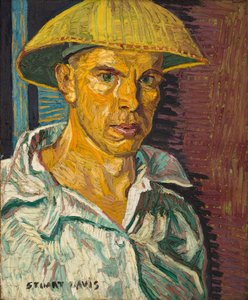
1892–1964, США
Стюарт Дэвис
Стюарт Дэвис: Пионер американского модернизма Ранние годы и становление мастера Родившись 7 декабря 1892 года в Филадельфии, Стюарт Дэвис с самых малых лет был окружен атмосферой высокого искусства. Его семья была неразрывно связана с творчеством: его отец, Эдвард Уайатт Дэвис, занимал пост арт-редактора газеты Philadelphia Press, а мать, Хелен Стюарт Дэвис, была скульптором. Такая семейная среда, безусловно, взрастила в нем глубокую привязанность к визуальному искусству и заложила фундамент его будущего таланта. Свою профессиональную подготовку Дэвис проходил в Школе искусств Роберта Хенри в Нью-Йорке в период с 1909 по 1912 год под чутким руководством Роберта Хенри.
Другие работы Стюарт Дэвис
 Одол
 Lucky Strike1924
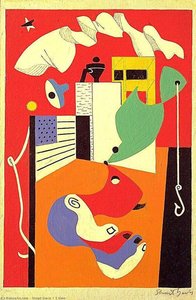 T View1951
 Blue Café1928
Essays around Interior
 Stuart Davis: Modernist Abstraction & the Vibrant Spirit of the Jazz AgeExplore the vibrant world of Stuart Davis, a pioneer of American Modernism. Discover his jazz-inspired paintings, signature style & investm…
 The Geometry of Elegance: Elevating Modern Villa Interiors with Cubist-Inspired ArtDiscover how Cubist-inspired art elevates modern villa interiors. Explore the intersection of geometric precision and luxury design through…
 Steel & Soul: The Rhythmic Geometry and Industrial Resonance of the Machine AgeExplore the rhythmic geometry of Fernand Leger and the Machine Age. Discover the power of industrial art today.