American modernism · 1924
Lucky Strike (Стюарт Дэвис, 1924)
Стюарт Дэвис (1892–1964) создал(а) Lucky Strike. Создано в 1924. Относится к направлению American modernism. Выполнено в технике Oil On Canvas. Размер: 46 × 61 cm
- 1924
- Oil On Canvas
- 46 × 61 cm

 Предпросмотр

 Картина маслом ручной работы
 Поделиться
 Поделиться
 Справка об объекте


 Скачать
 Похожие предметы
 Рентгенография
 Слайд-шоу
 Вопросы и ответы

 Статистика просмотров
Lucky Strike вкратце
- Название
- Lucky Strike
- Автор
- Стюарт Дэвис (1892–1964)
- Дата рождения художника
- Филадельфия, США
- Дата
- 1924
- Техника
- Oil On Canvas
- Размеры
- 46 × 61 cm
- Движение
- American modernism
- Период
- Modern
- Сюжет
- tobacco box, newspaper, rectangular forms, blue, green, yellow
Что изображено на Lucky Strike?
Identification of Lucky Strike by Stuart Davis
We are looking at Lucky Strike, a work from 1924 by the American painter Stuart Davis. This piece emerged during a period when Davis was establishing his presence within the modernist movement, moving away from the urban realism of his early training toward a more structured, fragmented language. It is a quiet encounter with the visual language of the 1920s.
Born in 1892 in Philadelphia, United States, Davis brought a specific sensibility to his compositions, often drawing from the textures of everyday life. In this particular work, he focuses on the geometry of consumer objects, specifically a box of Lucky Strike roll-up tobacco. The subject matter reflects the shifting landscape of an increasingly industrial and commercial society.
The painting captures a moment of stillness through a series of overlapping planes and shapes. It is a direct engagement with the material culture of his era, presented through a lens that prioritizes the arrangement of forms over a traditional, realistic depiction of the objects themselves.
Composition and Visual Elements
The arrangement of "Lucky Strike" is notably asymmetrical, creating a sense of movement that feels both deliberate and spontaneous. Rectangular forms dominate the visual field, echoing the industrial geometry of the objects depicted. These shapes are layered and overlap one another, establishing a subtle sense of depth despite the work's overall flatness. At the heart of this arrangement, the 'Lucky Strike' box is positioned centrally, acting as a visual anchor that commands immediate attention within the fragmented space.
A muted color palette of blues, greens, yellows, and browns defines the surface. Rather than blending these tones, the artist applies them in distinct blocks or planes, which reinforces the structural, geometric nature of the composition. Strong, defined lines delineate each shape, providing sharp edges that emphasize the interplay between the various forms. On the section representing the newspaper, extensive hatching creates a tactile, textured effect that contrasts with the smoother application of color elsewhere.
The perspective here is shallow and somewhat distorted, eschewing traditional spatial representation in favor of immediate visual impact. Depth is achieved not through receding lines, but through the strategic layering of objects and variations in color intensity. This approach creates a flattened, modern sensibility that prioritizes the arrangement of planes over a realistic depiction of three-dimensional space.
Technique and Materials Used
In this work, Davis utilizes oil paints applied to what is likely a primed canvas. The surface is characterized by a deliberate flattening of space, eschewing traditional depth in favor of a more immediate, modern arrangement. He achieves this through the use of bold color blocks and sharp, defined outlines that delineate the various geometric forms. This approach emphasizes the structural qualities of the objects rather than their three-dimensional volume.
Texture is introduced through specific application methods rather than through heavy impasto. You will notice the use of hatching, particularly within the newspaper section, which creates a tactile, rhythmic quality. This technique provides a subtle contrast to the smoother, more uniform planes of color found elsewhere in the composition. The interplay between these hatched areas and the solid blocks of pigment gives the surface a nuanced, layered presence.
Artistic Style and Influences
The aesthetic language of this work is deeply rooted in the principles of Cubism and Synthetic Cubism. You can see this in the way the composition is fragmented into overlapping planes and geometric shapes. Rather than seeking a realistic representation of space, the artist utilizes a shallow, somewhat distorted perspective. This approach allows for a layering of forms that prioritizes visual impact over traditional depth. The sharp, defined lines and the use of hatching on the newspaper section suggest a deliberate move toward abstraction while maintaining a connection to the physical world.
There is a strong sense of American Modernism at work here, particularly in how the piece engages with the realities of the 1920s. The subject matter focuses on the textures of consumer culture and the rhythms of everyday life. By incorporating elements like the tobacco box and newspaper headlines, the work reflects the industrial age and the rise of mass production. It captures a specific moment of urban modernity, where commercialism and daily existence begin to merge into a new, fragmented visual reality.
Related Works by Stuart Davis
To understand the trajectory of Davis's development, one might look toward his earlier explorations. His 1915 painting, Rocks, Gloucester, offers a glimpse into a different period of his evolution. This work belongs to a phase where his focus remained closer to the urban realism and everyday subjects that characterized his early aesthetic sensibilities. It provides a quiet point of comparison to the more fragmented, commercial-focused compositions that would define his later years.
As his style matured, he moved toward the abstraction of still lifes and landscapes. His 1928 work, Odol (Modernism), exemplifies this shift by blending recognizable imagery from popular culture with more abstract forms. This period saw him increasingly engaging with the visual language of the modern age. Later, in 1956, he produced Tropes de Teens, a piece that reflects his continued engagement with contemporary themes through a highly developed lens.
His later output also includes The Mellow Pad, a significant work that draws inspiration from the rhythmic energy of jazz. These various pieces, from his early studies to his later, more complex abstractions, illustrate a career spent navigating the intersection of high art and the everyday objects of American life.
Изображения в высоком разрешении: Lucky Strike

Объект защищен авторским правом: данные файлы предназначены для личного ознакомления и не являются лицензией на переиздание.
Стюарт Дэвис, Lucky Strike (1924).
Стюарт Дэвис (1892–1964), Lucky Strike, 1924, oil on canvas. Изображение: OriginalUniqueArt.com.
Ответы на вопросы о Lucky Strike
В каком году было создано произведение «Lucky Strike», Стюарт Дэвис?
«Lucky Strike» датируется 1924 годом. Эта дата позволяет определить место произведения в творчестве Стюарт Дэвис и в контексте его эпохи.
В какой технике выполнено произведение «Lucky Strike»?
Техника исполнения работы «Lucky Strike», Стюарт Дэвис — Oil On Canvas. Репродукции стремятся максимально точно передать особенности этой техники.
Каковы размеры оригинала «Lucky Strike», Стюарт Дэвис?
Размер оригинала «Lucky Strike», Стюарт Дэвис составляет 46 x 61 cm.
Что изображено на картине «Lucky Strike»?
Темы, представленные в «Lucky Strike», Стюарт Дэвис, включают tobacco box, newspaper, rectangular forms, blue, green, yellow, brown, hatching. Вместе они раскрывают основной сюжет произведения.
Является ли произведение «Lucky Strike», Стюарт Дэвис общественным достоянием?
Что касается авторских прав, произведение «Lucky Strike» находится в находится под защитой авторского права.
Кто является автором работы «Lucky Strike»?
Автор произведения «Lucky Strike» — Стюарт Дэвис. Работа внесена в каталог под именем Стюарт Дэвис.
К какому художественному направлению относится «Lucky Strike», Стюарт Дэвис?
«Lucky Strike» — это произведение в стиле American modernism. Данное направление указывает на художественную традицию, к которой относится эта работа.
К какому периоду творчества Стюарт Дэвис относится работа «Lucky Strike»?
«Lucky Strike» относится к Mature Period в творчестве Стюарт Дэвис. Данная классификация позволяет проследить развитие мастера.
Сколько лет было Стюарт Дэвис, когда была создана работа "Lucky Strike"?
Когда в 1924 году было создано произведение «Lucky Strike», художнику Стюарт Дэвис (родившемуся в 1892) было 32 лет.
Об авторе, Стюарт Дэвис
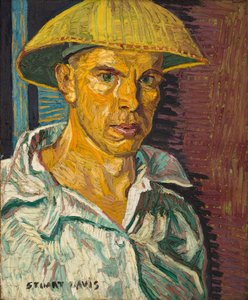
1892–1964, США
Стюарт Дэвис
Стюарт Дэвис: Пионер американского модернизма Ранние годы и становление мастера Родившись 7 декабря 1892 года в Филадельфии, Стюарт Дэвис с самых малых лет был окружен атмосферой высокого искусства. Его семья была неразрывно связана с творчеством: его отец, Эдвард Уайатт Дэвис, занимал пост арт-редактора газеты Philadelphia Press, а мать, Хелен Стюарт Дэвис, была скульптором. Такая семейная среда, безусловно, взрастила в нем глубокую привязанность к визуальному искусству и заложила фундамент его будущего таланта. Свою профессиональную подготовку Дэвис проходил в Школе искусств Роберта Хенри в Нью-Йорке в период с 1909 по 1912 год под чутким руководством Роберта Хенри.
Другие работы Стюарт Дэвис
 Одол
 T View1951
 Sixth Avenue El1931
 Arboretum by Flashbulb
Эссе к произведению Lucky Strike
 Якорь пространства: Психологическое и эстетическое влияние центральной картины на интерьерУзнайте, как центральная картина преображает интерьер! Психология восприятия, эстетика композиции и цветовые решения от экспертов. Создайте…
 Spontaneity and Matter: Distinguishing CoBrA from Art InformelJean Dubuffet mixed sand, tar, and gravel into his 1947 works to create sculptural surfaces. Why did post-war artists reject traditional or…
 Stuart Davis: Modernist Abstraction & the Vibrant Spirit of the Jazz AgeExplore the vibrant world of Stuart Davis, a pioneer of American Modernism. Discover his jazz-inspired paintings, signature style & investm…