

 Примерить в интерьере
 Отправить
 Поделиться
 Подробнее
 Руководство

 Скачать
 Похожие объекты
 Рентгенография
 Слайд-шоу
 Статистика
Gino Schmidt
 Oil On Canvas
- WallArt
- Expressionist Portraiture
 1914
1914 95.0 x 68.0 cm
 Музей Тиссен-Борнмиса
 Развернуть текст
Произведение искусства, представленное на этой странице, защищено законом об авторском праве, что исключает возможность законного создания или продажи его точной репродукции. Данная защита обеспечивается международными соглашениями, такими как Бернская конвенция и национальным законодательством, включая положения, изложенные в Закон США об авторском праве — Раздел 17.
Этот метод полностью соответствует нормам авторского права, так как он не предполагает копирования или дублирования защищенного произведения. Напротив, это творческая реинтерпретация — создание новой картины, которая вдохновлена оригиналом, но не является его точной копией.
Жикле / Арт-принты
Печать (жикле) или холст музейного качества с быстрыми сроками изготовления и широким выбором вариантов отделки. ( Заказать репродукцию ручной работы Перейти к цифровым изображениям)




P118B $10

P118H $10

P118W $10

P438Z $10

P508JH $12

P508YH $12

P805H $10

P805Z $10

P919BZ $10

P919G $10

P919XJ $10

P959ZH $10

P968JZ $12

W106C $8

W218G $10

W218JH $8

W218Y $10

W307PJ $10

W316G $10

W316PJ $8

W316Y $10

W398PJ $8

W4111J $10

W500HY $15

W500JH $15

W692G $12

W849H $8

W940BG $15

W953PJ $8




Выберите один из наших стандартных размеров, соответствующих оригинальным пропорциям произведения искусства.

Введите необходимую ширину и высоту, чтобы репродукция подошла к вашей раме или стене. При печати изображение можно только уменьшить, но нельзя увеличить больше оригинала, поэтому при выборе другого формата часть изображения может быть обрезана. Перед печатью мы отправим вам цифровой макет на утверждение. Изображение на этой странице не отображает реальную обрезку — ее можно увидеть только на макете.
Доставка по всему миру () за 2 недели вместо стандартных 4–5 недель. (23 Октябрь)

Бесплатная экспресс-доставка по всему миру

Высококачественный льняной холст

Полное страхование при транспортировке

Гарантия возврата таможенных пошлин

Гарантия точного цветового соответствия

100-дневный период возврата (только при обнаружении дефектов)

Гарантия возврата 100% средств

Скидка при заказе нескольких работ
 Вариант со стеклом доступен только для размеров менее 110 см

Gino Schmidt
Жикле / Арт-принты
Размер репродукции
-


Итоговая стоимость
$ 80
The Enigmatic Figure: Gino Schmidt by Oskar Kokoschka
Oskar Kokoschka’s Gino Schmidt, painted in 1914 and currently residing within the hallowed halls of the Thyssen-Bornemisza Museum in Madrid, is not merely a portrait; it's an intensely psychological exploration rendered in oil on canvas. Measuring 95 x 68 cm, this work immediately draws the viewer into a world of quiet introspection, inviting us to decipher the unspoken narrative held within the subject’s downward gaze. Kokoschka, a pivotal figure in early Expressionism, was driven by a profound desire to capture not just appearances but the very essence – the anxieties and emotions – that shaped his subjects. This painting exemplifies that ambition with remarkable power.

A Study in Realism and Psychological Depth
The subject, identified as Gino Schmidt, is presented with a startling degree of realism – his meticulously rendered suit, tie, and the prominent lines of his beard all contribute to an immediate sense of familiarity. Yet, this apparent realism serves merely as a foundation for Kokoschka’s deeper exploration. The background, deliberately blurred, directs our attention entirely onto the man before us, isolating him within a space that feels both tangible and dreamlike. This technique isn't simply stylistic; it reinforces the painting’s central theme: the internal landscape of the individual. Kokoschka masterfully uses light to sculpt the figure, creating subtle shifts in tone that emphasize his features and contribute to an overall sense of dimensionality – a testament to his understanding of chiaroscuro.
The Expressionist Soul
Created during a period of immense social and artistic upheaval, Gino Schmidt is deeply rooted in the tenets of Expressionism. Kokoschka’s work was characterized by its raw emotionality and willingness to confront uncomfortable truths about the human condition. He rejected conventional portraiture, opting instead for a style that prioritized psychological insight over photographic accuracy. The man's contemplative posture, his downward gaze – these are not simply details; they speak volumes about an inner world grappling with uncertainty or perhaps even melancholy. It’s a visual embodiment of the anxieties prevalent in early 20th-century Europe.
Historical Context and Kokoschka’s Legacy
To fully appreciate Gino Schmidt, it's crucial to understand Oskar Kokoschka’s broader artistic trajectory. Born in Croatia (then part of Austria-Hungary) in 1886, his early career was shaped by the Jugendstil movement in Vienna before he embraced Expressionism with fervor. His tumultuous personal life – marked by passionate relationships and emotional instability – undoubtedly informed his art, lending a profound sense of vulnerability to his portraits. Kokoschka’s legacy extends far beyond this single painting; he remains one of the most significant figures in 20th-century art, renowned for his psychologically penetrating depictions of human nature. The Thyssen-Bornemisza Museum offers a rich context for viewing this work alongside other masterpieces by Kokoschka and his contemporaries.
Considering its historical significance and artistic merit, a high-quality reproduction of Gino Schmidt is an exceptional addition to any collection. Explore the exquisite detail and emotional depth of this iconic portrait at OriginalUniqueArt for a stunning representation of Kokoschka’s genius.
Вопросы и ответы
Можно ли заказать масляную репродукцию картины «Gino Schmidt»?
Написанные вручную копии работы «Gino Schmidt», Оскар Кокошков можно приобрести на сайте этот сайт: репродукция маслом ручной работы на льняном холсте, оформив заказ на странице Репродукция маслом ручной работы.
Какой цвет наиболее заметен в произведении «Gino Schmidt»?
Преобладающий цвет произведения «Gino Schmidt», Оскар Кокошков — Phthalo Green (#1f1426).
Насколько светлым является произведение «Gino Schmidt» в целом?
С точки зрения воспринимаемой яркости, «Gino Schmidt», Оскар Кокошков — это shadow.
Биография художника
Oskar Kokoschka - A Life Etched in Expression
Oskar Kokoschka, born March 1, 1886, in Pöchlarn, Austria, stands as a pivotal figure in the early Expressionist movement—an artist whose canvases pulsated with the anxieties and passions of a world undergoing rapid transformation. His life unfolded against a backdrop of profound personal drama intertwined with significant historical upheavals, forging an inextricable connection between his artistic vision and the turbulent currents of his time.
Early Life and Artistic Beginnings
The second child of Gustav Josef Kokoschka, a goldsmith, and Maria Romana Kokoschka (née Loidl), Oskar’s upbringing was marked by hardship. His father’s financial instability forced repeated relocations into smaller flats, fostering in young Oskar a deep sense of insecurity—a feeling that would permeate his artistic endeavors throughout his life. Despite these challenges, Kokoschka’s mother nurtured his innate talent for drawing and painting, recognizing his exceptional aptitude for visual arts.
He enrolled at the Realschule in Vienna, prioritizing art over more conventional academic pursuits. Unlike many of his peers who pursued scientific careers, Kokoschka embraced artistic exploration with unwavering conviction—a decision that propelled him toward becoming one of Vienna’s most celebrated portraitists.
Vienna Secession and Artistic Influences
Kokoschka's formative years coincided with the vibrant intellectual atmosphere of fin-de-siècle Vienna—a city brimming with innovation but shadowed by anxieties concerning societal change. This duality—beauty alongside unease, tradition confronting modernity—became a central preoccupation in his oeuvre. He attended the Kunstgewerbeschule (School of Arts and Crafts) where he studied under Carl Otto Czeschka, absorbing the stylistic principles of the Vienna Secession.
The Secession championed artistic freedom from academic conventions, prioritizing emotional expression over meticulous realism. Kokoschka’s teacher instilled in him a belief that art should grapple with profound psychological questions—a conviction that profoundly shaped his artistic approach. Notably, Kokoschka's fascination with Sigmund Freud and psychoanalysis fueled his exploration of the subconscious mind.
The Passionate Affair with Alma Mahler
Kokoschka’s life took an extraordinary turn when he embarked on a passionate affair with Alma Mahler—the widow of composer Gustav Mahler. This tumultuous relationship served as inspiration for some of his most iconic works, including *The Bride of the Wind (The Tempest)*—a monumental canvas that captures the raw emotion and impending doom inherent in their fraught connection.
The painting’s swirling brushstrokes and intense colors convey a palpable sense of psychological turmoil—reflecting Kokoschka's conviction that art could illuminate the hidden depths of human experience. He skillfully translated his personal emotions into visual metaphors, cementing his reputation as one of Expressionism’s foremost innovators.
War Years and Artistic Transformation
The outbreak of World War I profoundly impacted Kokoschka’s life—leaving him physically wounded and emotionally scarred. His experiences on the front lines instilled in him a heightened awareness of human suffering and fueled his artistic exploration of themes related to trauma and alienation.
During this period, Kokoschka shifted toward landscapes as a primary subject matter—creating canvases that conveyed not idyllic beauty but rather the bleakness and despair of wartime reality. His stylistic evolution mirrored the broader anxieties of the era—demonstrating Kokoschka’s ability to translate personal experience into universal artistic statements.
Legacy and Enduring Influence
Oskar Kokoschka's legacy extends far beyond his own artistic output, influencing subsequent generations of artists. His uncompromising commitment to psychological realism and emotional honesty established a precedent for Expressionist painters—inspiring them to confront uncomfortable truths and explore the complexities of human consciousness.
His work continues to resonate with audiences today—serving as a powerful reminder that true artistry resides in capturing the essence of experience and conveying profound insights into the human condition. Kokoschka’s canvases remain testament to his unwavering belief in art's capacity to illuminate the darkest recesses of the soul—solidifying his place among the most significant figures in modern art.

Оскар Кокошков
1886 - 1980 , Австрия
Краткая справка
- Artistic Movement Or Style: Экспрессионизм
- Artists Or Movements Influenced By This Artist: ['Неоэкспрессионисты']
- Date Of Birth: 1 марта 1886
- Date Of Death: 22 февраля 1980
- Full Name: Оскар Кокошков
- Nationality: Австриец, британец
- Notable Artworks:
- «Невеста Ветра»
- Автопортрет как воин
- Place Of Birth: Пöхларн, Австрия
Похожие статьи

The Raw Emotion of Expressionism: A Deep Dive into its History, Characteristics & Enduring Influence
Explore the raw emotion of Expressionism with OriginalUniqueArt. Discover its history, key artists like Kirchner & Munch, and lasting influence on modern art. Expert insights for collectors & enthusiasts.
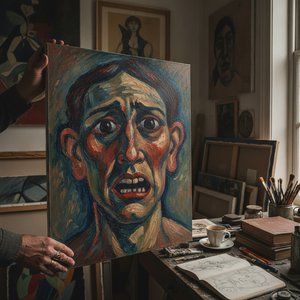
The Soul of Subjectivity: A Collector's Guide to the Raw Emotion and Lasting Power of Expressionist Art
Discover the profound power of Expressionist art. From the raw intensity of Edvard Munch to the visceral textures of Neo-Expressionism, explore how subjective emotion and distorted reality define this movement. An expert guide for discerning collectors seeking depth and soul in fine art.
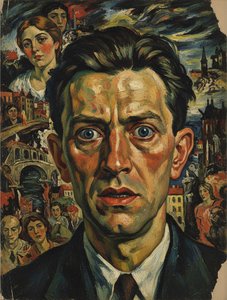
Oskar Kokoschka: A Turbulent Life Painted with Expressionist Intensity
Explore the intense expressionism of Oskar Kokoschka (1886-1980). Discover his psychologically charged portraits, landscapes & 'The Bride of the Wind'. A deep dive into a turbulent life and lasting artistic legacy.

10 Шедевров Немецкого Экспрессионизма: Искусство Эмоций и Вдохновения | OriginalUniqueArt
Погрузитесь в мир немецкого экспрессионизма! Узнайте истории создания шедевров Мунка, Кирхнера, Кандинского и других великих художников. Репродукции картин высокого качества для вашего интерьера на OriginalUniqueArt.com. Откройте всю коллекцию онлайн!

Figurative Expressionism: Emotional Intensity & Subjective Reality in 20th-Century Art
Explore the powerful world of Figurative Expressionism with OriginalUniqueArt. Discover key artists like Kirchner & Beckmann, understand its emotional depth, and learn how to collect this influential 20th-century art movement.


