Expressionism
Marsh bridge (Эмиль Нольде)
Эмиль Нольде (1867–1956) создал(а) Marsh bridge. Относится к направлению Expressionism. Выполнено в технике Oil On Canvas.
- Oil On Canvas

 Предпросмотр

 Картина маслом ручной работы
 Поделиться
 Поделиться
 Информационный лист


 Скачать
 Похожие предметы
 Рентгенография
 Слайд-шоу
 Вопросы и ответы

 Статистика просмотров
Marsh bridge вкратце
- Название
- Marsh bridge
- Автор
- Эмиль Нольде (1867–1956)
- Дата рождения художника
- Нольде, Дания
- Техника
- Oil On Canvas
- Движение
- Expressionism
- Период
- Modern
- Сюжет
- bridge, marsh, water, sky, trees, blue
Что изображено на Marsh bridge?
Identification of the Artwork and Artist
The artwork titled Marsh bridge is a painting by the artist Emil Nolde. This piece depicts a marsh landscape where a wooden bridge serves as the central subject. The composition focuses on the intersection of the man-made structure and the organic forms of the surrounding wetlands.
Emil Nolde, born in Nolde, Denmark, was a figure associated with the Expressionist movement. His approach to this subject matter is characterized by a style strongly influenced by Expressionism, prioritizing subjective experience through the application of paint. The work utilizes an impasto technique, where thick layers of oil paint create a palpable surface relief on the canvas.
Composition and Visual Elements
The composition is organized around a wooden bridge that traverses the canvas diagonally from the lower right toward the upper left. This diagonal movement provides a sense of direction through the landscape. The structure of the bridge is defined by a series of short, choppy lines that form the railings. A body of water occupies much of the background, reflecting the sky and the surrounding vegetation. On the horizon line, distant buildings and trees are visible, though they appear flattened due to a lack of clear atmospheric perspective.
Horizontal elements dominate the arrangement, specifically the water line, the bridge’s railings, and the distant treeline. These lines create a sense of expansive space across the marsh. The bridge is positioned in the foreground, appearing closer to the viewer than the trees in the distance. While the bridge provides a geometric contrast to the organic and irregular shapes of the marsh, its structure remains somewhat distorted by the application of the paint.
Technique and Material Application
The work is executed in oil paint on canvas. The artist employs an impasto technique, characterized by a thick application of paint across the surface. This method results in a palpable sense of surface relief, where the physical weight of the medium is evident. The paint is not applied in thin, translucent glazes but in heavy, substantial layers that create a tactile topography on the canvas.
The brushwork is highly visible throughout the composition. Rather than being blended into smooth transitions, the colors are applied in thick, distinct strokes. These marks are short and choppy, particularly where the railings of the bridge are defined. The application of the pigment is energetic, with the texture of the brushstrokes contributing directly to the visual impact of the landscape. The uneven surface created by these strokes catches the light, emphasizing the physical presence of the material.
Color and Lighting Details
The color palette is dominated by shades of blue, green, and white. These tones establish the primary visual field of the marsh and the sky. Along the path, the application of paint introduces areas of muted yellow and ochre. In the distance, the color scheme shifts to include touches of brown and red, which provide a subtle contrast to the cooler tones of the foreground and midground.
The lighting in the scene is diffused, suggesting the conditions of an overcast day. This lack of direct sunlight results in an even distribution of light across the landscape. There are no strong highlights or deep shadows present in the composition. The light does not create sharp edges or high-contrast points, maintaining a consistent luminosity across the water, the bridge, and the horizon.
Artistic Style and Subject Matter
The subject matter consists of a marsh landscape where a wooden bridge serves as the central focus. This structure traverses the canvas diagonally from the lower right toward the upper left. The bridge's railings are defined by short, choppy lines, while the surrounding water is suggested through wavy, broken strokes. The shapes within the scene are largely organic and irregular, reflecting the natural forms of the marshland. Perspective is not rendered realistically; objects in the distance appear flattened and lack clear depth cues, which emphasizes the expressive nature of the work over a faithful representation of reality.
The style is characterized by Expressionism, prioritizing subjective experience and emotional expression. The application of paint through the impasto technique creates a palpable surface relief, where thick, distinct strokes contribute to an energetic feel. This approach, combined with a muted color palette of blues, greens, and whites, contributes to a mood of solitude and melancholy. The bridge itself functions as a symbol of transition or connection within this quiet, atmospheric setting. The composition relies on horizontal elements—the water line, the railings, and the distant treeline—to create a sense of expansive space despite the flattened perspective.
Related Works by Emil Nolde
The artist's exploration of landscape and atmosphere extends to several other compositions. He painted Marshy Landscape under the Evening Sky, a work that captures a quiet moment where the land meets a heavy sky. His interest in maritime and elemental themes is further seen in Autumn Sea, created about 1908. These works demonstrate a recurring focus on the interaction between terrain and the shifting light of the sky.
Beyond landscape subjects, the artist's output includes more figurative and symbolic imagery. He produced The Mocking of Christ in 1909. Additionally, he created Masks around 1906-1907, which lean into the expressive power of primitive forms. These pieces reflect the breadth of his subject matter, moving from the wide expanse of a marsh to specific religious and formal studies.
Изображения в высоком разрешении: Marsh bridge
Общественное достояние: художник умер в 1956.
Эмиль Нольде, Marsh bridge. Общественное достояние
Ответы на вопросы о Marsh bridge
В какой технике выполнено произведение «Marsh bridge»?
«Marsh bridge» выполнено в технике Oil On Canvas.
Что изображено на картине «Marsh bridge»?
Сюжеты произведения «Marsh bridge» — это bridge, marsh, water, sky, trees, blue, green, brown.
Является ли произведение «Marsh bridge», Эмиль Нольде общественным достоянием?
Что касается авторских прав, произведение «Marsh bridge» находится в общественное достояние — срок действия авторского права истёк.
Кто создал "Marsh bridge"?
«Marsh bridge» был создан Эмиль Нольде. Информация на этой странице описывает оригинальную работу Эмиль Нольде.
К какому стилю относится «Marsh bridge»?
«Marsh bridge», Эмиль Нольде относится к направлению Expressionism. Это направление определяет стилистический контекст произведения.
Каков правовой статус произведения «Marsh bridge», Эмиль Нольде с точки зрения авторского права?
«Marsh bridge», Эмиль Нольде находится в общественное достояние — срок действия авторского права истёк. Срок действия авторского права исчисляется со смерти художника, наступившей в 1956.
Как работа «Marsh bridge» соотносится с темами и стилем Эмиль Нольде?
«Marsh bridge» разделяет с другими работами Эмиль Нольде характерный стиль Expressionism и повторяющиеся темы: post-impressionism, die brücke, expressionism, subjective experience, nature and color.
Является ли «Marsh bridge» типичным для того, что обычно создавал Эмиль Нольде?
Среди зафиксированных тем Эмиль Нольде — post-impressionism, die brücke, expressionism, subjective experience, nature and color — в работе "Marsh bridge" особый акцент сделан на bridge, marsh, water, sky, trees, blue, green, brown.
Об авторе, Эмиль Нольде
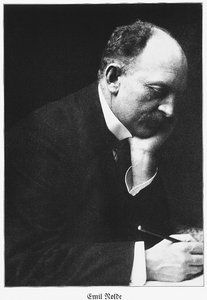
1867–1956, Дания
Эмиль Нольде
Жизнь и самопознание Эмиля Нольде Рожденный 7 августа 1867 года под именем Ганс Эмиль Хансен, человек, которому суждено было стать известным как Эмиль Нольде, вырос в окрестностях деревни Нольде в герцогстве Шлезвиг. Его ранние годы были неразрывно связаны с сельским, аграрным укладом жизни его семьи. Со временем он решил сойти с этого предначертанного пути, выбрав вместо земледелия ремесло резчика по дереву и декоратора мебели. Этот тактильный, физический труд стал своего рода прелюдией к его последующему переходу к живописи и графике.
Другие работы Эмиль Нольде
 Sunset
 Sea with Red Sky
 Couple on the beach1903
 Masks1911
Эссе к произведению Marsh bridge
 The Visceral Turn: Exploring Emotional Intensity in ExpressionismExplore the powerful world of Expressionism with OriginalUniqueArt. Discover key artists like Kirchner & Nolde, understand its emotional im…
 Raw Emotion & Bold Strokes: Top 10 Neo-Expressionism MasterpiecesExplore iconic Neo-Expressionist works by Basquiat and Kiefer. Discover museum-quality art at OriginalUniqueArt.com.
 Emile Nolde: A Journey into Expressionist Nature & the Primal SelfExplore the powerful Expressionism of Emile Nolde – a pioneer of emotive landscapes & spiritual themes. Discover his journey, influences, a…