

 Примерить в интерьере
 Отправить
 Поделиться
 Подробнее
 Руководство

 Скачать
 Похожие объекты
 Рентгенография
 Слайд-шоу
 Статистика
Masks


 Развернуть текст
Масляная репродукция ручной работы
Картина маслом на холсте в выбранном вами размере и раме, написанная на заказ нашими художниками. ( Переключиться на печать Перейти к цифровым изображениям)




P118B $10

P118H $10

P118W $10

P438Z $10

P508JH $12

P508YH $12

P805H $10

P805Z $10

P919BZ $10

P919G $10

P919XJ $10

P959ZH $10

P968JZ $12

W106C $8

W218G $10

W218JH $8

W218Y $10

W307PJ $10

W316G $10

W316PJ $8

W316Y $10

W398PJ $8

W4111J $10

W500HY $15

W500JH $15

W692G $12

W849H $8

W940BG $15

W953PJ $8




Выберите один из наших стандартных размеров, соответствующих оригинальным пропорциям произведения искусства.

Введите необходимую ширину и высоту, чтобы репродукция подошла к вашей раме или стене. Поскольку работа выполняется вручную, при изменении пропорций художник может немного увеличить область вокруг картины или, наоборот, обрезать края — выбор за вами. Перед началом работы мы пришлем вам цифровой макет на утверждение. Изображение на этой странице не является точным результатом — увидеть реальный вид можно только на макете.
После оформления заказа команда OriginalUniqueArt.com свяжется с клиентом по электронной почте для уточнения деталей и предоставит предварительный макет
Доставка по всему миру () за 3–4 недели вместо стандартных 5 недель. (26 Октябрь). Без компромиссов в качестве.

Бесплатная экспресс-доставка по всему миру

Высококачественный льняной холст

Полное страхование при транспортировке

Гарантия возврата таможенных пошлин

Гарантия точного цветового соответствия

100-дневный период возврата (только при обнаружении дефектов)

Гарантия возврата 100% средств

Скидка при заказе нескольких работ
 Вариант со стеклом доступен только для размеров менее 110 см

Masks
Материал репродукции
Размер репродукции
-


Итоговая стоимость
$ 300
The Enigmatic Dance of Masks – A Study in Emil Nolde’s Expressionist Vision
Emil Nolde's "Masks," painted in 1911, isn’t merely a depiction of carnival revelry; it’s a profound exploration of identity, hidden desires, and the unsettling duality inherent within human nature. Created during his time as a key member of Die Brücke – “The Bridge” – a group pushing the boundaries of German Expressionism in Dresden and Berlin, the painting embodies the movement's core tenets: a rejection of academic realism in favor of raw emotion, bold color, and a focus on subjective experience. Nolde himself described his interest in "the grotesque expression of power" and “elemental force,” sentiments powerfully realized within this captivating composition.
The scene unfolds against a deceptively simple blue background, immediately drawing the viewer’s eye to the central figures – five distinct masks suspended in an ambiguous space. Each mask isn't simply a representation of a face; it’s a carefully constructed symbol, radiating a potent emotional charge. The leftmost mask, a dark red and toothy visage, hints at aggression and perhaps even menace. Nearby, an upside-down pink mask suggests vulnerability and a suppressed sadness. Nolde masterfully employs a technique reminiscent of primitive tribal art – particularly the masks of Solomon Islands and Yoruna Indians from Brazil – drawing inspiration from non-Western cultures to amplify the painting’s primal energy. These references weren't merely decorative; they represented a deliberate attempt to tap into fundamental human emotions, divorced from rational thought.
A Symphony of Color and Impasto
Nolde’s masterful use of color is central to the painting’s impact. He abandons subtle gradations in favor of vibrant, almost jarring hues – fiery oranges, deep blues, and stark reds – applied with a thick impasto technique. This layering of paint creates a tactile surface, inviting the viewer to reach out and feel the energy contained within each mask. The brushstrokes are visible, deliberate, and intensely expressive, mirroring the turbulent emotions conveyed by the figures. This physicality of the paint itself contributes significantly to the painting’s unsettling atmosphere; it feels as though the masks are not merely objects on a canvas but living entities, pulsating with hidden power.
The composition is deliberately unbalanced, further enhancing the sense of unease. The placement of the masks – some close to the viewer, others receding into the distance – creates a dynamic tension, suggesting a perpetual state of shifting identities and concealed motivations. Nolde’s decision to depict these masks in isolation amplifies their symbolic weight, forcing the viewer to confront each one individually and contemplate its hidden meaning.
Historical Context and Lasting Resonance
“Masks” was painted during a period of intense social and political upheaval in Germany – a time marked by rapid industrialization, growing anxieties about modernity, and the rise of nationalist ideologies. Die Brücke’s rejection of traditional artistic conventions reflected a broader cultural rebellion against established norms. Following World War I, Nolde's work became increasingly introspective and emotionally charged, often exploring themes of isolation, mortality, and the darker aspects of human experience.
Interestingly, the painting was confiscated by the Nazi regime in 1937 due to its perceived “degenerate” nature – a label applied to works deemed unsuitable for German culture. Despite this suppression, "Masks" endured, eventually finding its way into private collections and, ultimately, onto the walls of The Nelson-Atkins Museum of Art in Kansas City. Its continued presence speaks to the enduring power of Nolde’s vision and its ability to resonate with viewers across generations.
A Timeless Exploration of Identity
“Masks” remains a profoundly evocative work, inviting endless interpretation. It's not simply a depiction of carnival masks; it’s an allegory for the masks we all wear in our daily lives – the facades we present to the world, concealing our true selves beneath layers of social expectation and personal insecurity. Nolde’s bold colors, expressive brushwork, and unsettling imagery combine to create a timeless meditation on identity, illusion, and the hidden depths of the human psyche. Reproductions capture only a fraction of the painting's raw emotional power, but they offer a valuable opportunity to engage with this remarkable work of Expressionist art.
Вопросы и ответы
Где я могу купить принт работы «Masks», Эмиль Нолде?
«Masks» доступна в формате художественная печать на хлопковом холсте или архивной холст-бумаге. Заказ можно оформить на странице Художественная печать в любом удобном для вас размере.
Кто создал "Masks" и в каком стиле выполнено это произведение?
«Masks» был создан Эмиль Нолде в стиле Expressionist Landscape. Автор и направление определяют художественную традицию этого произведения.
В каком году было создано произведение «Masks», Эмиль Нолде?
Произведение «Masks», Эмиль Нолде было создано в 1911 году.
Биография художника
Early Life and Artistic Beginnings
Emil Nolde, a name synonymous with vibrant expressionism, was born Hans Emil Hansen on August 7th, 1867, in the small village of Nolde, nestled within the Schleswig-Holstein region of Germany. His origins were deeply rooted in rural life – his family’s livelihood intertwined with the rhythms of farming and a strong connection to their local community. Despite this grounding, young Hans harbored an intense yearning for something beyond the familiar, a desire that would ultimately lead him down the path of art. Initially, his parents, mindful of traditional expectations, envisioned a more practical future for him – perhaps as a woodcarver or furniture maker. However, from a remarkably early age, Hans demonstrated an undeniable passion for artistic creation, meticulously sketching and crafting small wooden figures in his spare time. This nascent talent, coupled with an unwavering determination, eventually compelled him to pursue formal art training, defying the expectations of his family and embarking on a journey that would transform his life and leave an indelible mark on the world of art.Artistic Development and Influences
Nolde’s artistic development wasn't a straightforward ascent; it was a dynamic process shaped by constant exploration and a willingness to absorb influences from diverse sources. He began his formal training at the Kunstgewerbeschule in Karlsruhe, where he honed his technical skills but quickly found himself yearning for something more—a way to express the raw emotions simmering within him. Paris became a pivotal destination during this period, exposing him to the revolutionary ideas of Vincent van Gogh and Paul Gauguin. Van Gogh’s intense color palettes and emotionally charged brushstrokes ignited a spark in Nolde, while Gauguin's exploration of primitive cultures and symbolic imagery offered a pathway towards a more personal and expressive style. Crucially, Nolde wasn’t merely imitating these masters; he was actively distilling their techniques into his own unique vocabulary, incorporating elements of folk art—particularly the powerful symbolism of masks and carvings—into his work. These early influences laid the foundation for his distinctive approach, characterized by bold colors, distorted forms, and a profound engagement with primal emotions.Die Brücke and Expressionist Breakthrough
In 1905, Nolde’s artistic trajectory took a dramatic turn when he co-founded *Die Brücke* (The Bridge), a groundbreaking group of German Expressionist artists based in Dresden. This collective represented a radical departure from the established academic traditions of the time, seeking to capture the anxieties and passions of modern life through intensely subjective and emotionally charged art. *Die Brücke* was not simply an artistic circle; it was a philosophical movement, driven by a desire to break free from convention and express inner realities. Nolde’s contribution to *Die Brücke* was particularly significant—his masterful use of color and his willingness to distort forms pushed the boundaries of representation, creating works that were both unsettling and profoundly moving. However, despite his integral role within the group, Nolde maintained a degree of independence, often diverging in subject matter and stylistic approach. He wasn’t seeking conformity; he was forging his own path, guided by his unique vision.Key Themes and Artistic Style
Nolde's artistic output is defined by recurring motifs that reflect his deeply held beliefs and emotional landscape. Religious scenes—often imbued with a sense of drama and psychological intensity—feature prominently in his oeuvre, alongside evocative landscapes and seascapes that capture the raw beauty and power of nature. Perhaps most compellingly, Nolde was fascinated by masks – both as physical objects and potent symbols representing primal emotions, hidden identities, and the duality of human experience. His paintings are not merely depictions; they are explorations of the subconscious, rendered in a vibrant palette of colors—bold reds, yellows, and blues—and characterized by thick, impasto brushstrokes that convey texture and movement. This distinctive style, combined with his profound emotional depth, cemented Nolde’s place as one of the most important figures in German Expressionism.Notable Works and Historical Significance
Throughout his prolific career, Nolde created a vast body of work—over 1,500 paintings, watercolors, prints, and drawings. Some of his most celebrated pieces include *Masks* (1906-1907), a series exploring the symbolism of masks and their connection to human identity; *The Mocking of Christ* (1909), a powerfully emotive depiction of religious suffering; *Autumn Sea* (1908), capturing the dramatic beauty of the North German coast; and *Flower Garden (Girl and Washing)* (1907), a vibrant tableau of rural life. Despite facing censorship and persecution during the rise of Nazism—his work was deemed “degenerate” and confiscated—Nolde continued to paint, producing a remarkable body of secret watercolors in the years leading up to World War II. His legacy endures as a testament to the power of art to express profound emotions and challenge conventional norms, solidifying his position as a pivotal figure in 20th-century art history.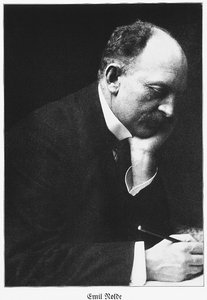
Эмиль Нолде
1867 - 1956 , Германия
Краткая справка
- Artistic Movement Or Style: Экспрессионизм, Брюкке
- Artists Or Movements Influenced By This Artist: ['Новая сецессия']
- Artists Who Influenced This Artist:
- Ван Гог
- Гаргол
- Date Of Birth: 7 августа 1867 г.
- Date Of Death: 15 апреля 1956 г.
- Full Name: Эмиль Нольде
- Nationality: Немецко-датский
- Notable Artworks:
- Насмешка над Христом
- Цветочный сад
- Осеннее море
- Place Of Birth: Н олде, Германия
Похожие статьи
The Raw Emotion of Expressionism: A Deep Dive into its History, Characteristics & Enduring Influence
Explore the raw emotion of Expressionism with OriginalUniqueArt. Discover its history, key artists like Kirchner & Munch, and lasting influence on modern art. Expert insights for collectors & enthusiasts.
Unveiling the Mystery: A Journey Through the World's Most Iconic Mask Artworks
Embark on a profound journey through the world's most iconic mask artworks. Explore the spiritual depth, intricate craftsmanship, and rich cultural heritage of global traditions, from Chhau to Gomira, in this expert-led exploration of ancestral artistry and symbolic beauty.

10 Шедевров Немецкого Экспрессионизма: Искусство Эмоций и Вдохновения | OriginalUniqueArt
Погрузитесь в мир немецкого экспрессионизма! Узнайте истории создания шедевров Мунка, Кирхнера, Кандинского и других великих художников. Репродукции картин высокого качества для вашего интерьера на OriginalUniqueArt.com. Откройте всю коллекцию онлайн!

Unmasking Emotion: A Journey Through the Raw Power and Visceral Beauty of German Expressionism
Explore the raw emotional power of German Expressionism. From Kirchner to Die Brücke, discover how artists used distortion and vibrant color to unmask the human psyche. A deep dive into art history for the discerning collector and enthusiast.
The Visceral Cry of a Nation: Exploring Emotion & Distortion in German Expressionism
Explore the powerful world of German Expressionism with OriginalUniqueArt. Discover Kirchner, Nolde & Die Brücke's emotive masterpieces. Learn about this pivotal art movement and its lasting impact on modern art.

