Меню
БЕСПЛАТНАЯ КОНСУЛЬТАЦИЯ ПО ИСКУССТВУ
ПредпросмотрПредпросмотр Предпросмотр в ARПредпросмотр в AR Купить принт Купить принтКупить изображение Купить изображение ПоделитьсяПоделиться
Детали произведенияДетали произведения Добавить в избранное Добавить в избранное СкачатьСкачать Похожие работыПохожие работы РентгенографияРентгенография Слайд-шоуСлайд-шоу

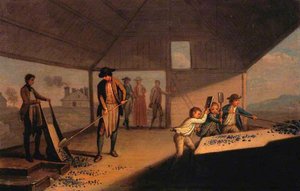
Lead Processing at Leadhills Washing the Ore

Discover 'Lead Processing at Leadhills,' a captivating 1789 oil painting by David Allan. Witness rustic industry & skilled craftsmanship in this realistic genre piece – a unique historical artwork.

Дэвид Аллан (1744–1796) – шотландский художник, известный своими портретами и жанровыми сценами, отражающими жизнь XVIII века. Его стиль сочетает неоклассическую строгость и рококо доверчивость.

Масляная репродукция ручной работы

Картина маслом на холсте в выбранном вами размере и раме, написанная на заказ нашими художниками. (Купить принт Купить принтКупить изображение Купить изображение)

P118B $10
P118H $10
P118W $10
P438Z $10
P508JH $12
P508YH $12
P805H $10
P805Z $10
P919BZ $10
P919G $10
P919XJ $10
P959ZH $10
P968JZ $12
W106C $8
W218G $10
W218JH $8
W218Y $10
W307PJ $10
W316G $10
W316PJ $8
W316Y $10
W398PJ $8
W4111J $10
W500HY $15
W500JH $15
W692G $12
W849H $8
W940BG $15
W953PJ $8

Standard
custom
CM
INCH

Выберите один из наших стандартных размеров, соответствующих оригинальным пропорциям произведения искусства.

ширина
высота

Вы можете указать собственные размеры, чтобы картина идеально вписалась в выбранную раму или пространство. Если выбранный вами размер не соответствует пропорциям оригинала, мы либо обрежем полотно, либо расширим его за счет дополнительных элементов, написанных вручную. Цифровой макет будет отправлен вам на утверждение перед началом производства.
Обратите внимание, что предварительный просмотр на экране не отражает фактическую обрезку или расширение. Только макет точно покажет окончательную композицию.
Хотя доступны индивидуальные размеры, мы рекомендуем выбирать вариант из предопределенного списка, чтобы сохранить исходные пропорции.

Примеры того, что можно изменить: заменить лицо на фото клиента; добавить домашнее животное (например, заменить кошку на собаку); добавить скрытое послание на фон; изменить пейзаж или детали фона.
После оформления заказа команда OriginalUniqueArt.com свяжется с клиентом по электронной почте для уточнения деталей и предоставит предварительный макет

Доставка по всему миру () за 3–4 недели вместо стандартных 5 недель. (22 Август). Без компромиссов в качестве.

why_choose_icon
Бесплатная экспресс-доставка по всему миру
why_choose_icon
Высококачественный льняной холст
why_choose_icon
Полное страхование доставки
why_choose_icon
Гарантия возмещения таможенных пошлин
why_choose_icon
Гарантия точного соответствия цветов
why_choose_icon
Политика возврата в течение 60 дней (только при наличии дефектов)
why_choose_icon
Гарантия возврата 100% средств
why_choose_icon
Предложение оптовых скидок

Общая стоимость

$ 300

reproduction

Lead Processing at Leadhills Washing the Ore

Техника репродукции

Размер репродукции

-

Итоговая стоимость

$ 300

Основные сведения

  • Medium: Oil on canvas
  • Location: National Galleries, Scotland
  • Year: 1789
  • Dimensions: 28×58cm
  • Title: Lead Processing at Leadhills
  • Movement: Neoclassicism
  • Subject or theme: Lead ore processing

Тест по искусству

В каждом вопросе только один правильный ответ.

Вопрос 1:
What is the primary subject depicted in David Allan’s ‘Lead Processing at Leadhills Washing the Ore’?
Вопрос 2:
According to the image description, what material is scattered on the floor in the foreground?
Вопрос 3:
What historical period does ‘Lead Processing at Leadhills Washing the Ore’ primarily represent?
Вопрос 4:
What artistic style is most closely associated with David Allan's work, as indicated in the artist information?
Вопрос 5:
The image description mentions that Allan 'romanticized' the work scenes. What does this suggest about his portrayal of the mining industry?

Описание произведения

A Rustic Symphony of Industry: David Allan’s “Lead Processing at Leadhills Washing the Ore”

David Allan's "Lead Processing at Leadhills Washing the Ore," painted in 1789, isn’t merely a depiction of a 18th-century mining operation; it’s a carefully constructed tableau brimming with historical significance, social commentary, and a surprisingly romanticized vision of labor. This oil on canvas masterpiece, now housed at the National Galleries of Scotland, transports us to the heart of Leadhills, a small town in South Lanarkshire renowned for its lead mines – a vital industry fueling the burgeoning industrial landscape of Great Britain. Allan’s work offers a rare glimpse into the daily lives and arduous tasks undertaken by those who extracted this essential metal, revealing both the grit and the surprisingly dignified routine of early industrial life.

The scene unfolds within a dimly lit barn or workshop, dominated by a colossal white tub overflowing with molten glass – a detail that immediately suggests the broader context of glassmaking, a craft intimately linked to the mining operations. Three figures are engaged in various stages of this process: a man stirring the molten material with a long metal rod, another carefully collecting finished pieces into a wooden tray, and a third overseeing the operation from a slightly removed position. Allan’s composition is deliberately flattened, eschewing dramatic perspective for a focus on capturing the activity itself – a deliberate choice that emphasizes the relentless rhythm of work and the physicality of the labor involved. The muted color palette—browns, grays, and whites—reflects the raw materials and the inherent austerity of the setting, while subtle blues within the glass and clothing provide visual interest and prevent the scene from becoming entirely monochromatic.

Neoclassical Roots and Scottish Identity

Allan’s artistic style is firmly rooted in Neoclassicism, a movement that drew inspiration from the art and architecture of ancient Greece and Rome. This influence is evident in the carefully rendered figures, their poses conveying a sense of order and dignity despite the demanding nature of their work. However, Allan's Scottish heritage subtly infuses this classical framework with a distinctly local sensibility. The rugged landscape—the rolling Lowther Hills visible in the background—and the depiction of a specific regional industry ground the painting firmly within its geographical context. The inclusion of the Earl of Hopetoun’s patronage further underscores this connection, suggesting that Allan was commissioned to celebrate and legitimize a significant local enterprise.

Born in Alloa, Scotland, David Allan's early life was shaped by his father’s position as harbor master, exposing him to the world beyond his native land. His time in Rome profoundly influenced his artistic development, where he meticulously copied masterpieces by Gavin Hamilton, honing his skills in form and technique. This Italian sojourn instilled a deep appreciation for classical ideals, which he then skillfully integrated into his depictions of Scottish life.

Symbolism Beyond the Surface

Beyond its straightforward portrayal of mining operations, “Lead Processing at Leadhills” carries layers of symbolic meaning. Allan’s decision to romanticize the work—to present it with a degree of grace and dignity—is particularly noteworthy. In an era marked by harsh working conditions and social inequalities, he subtly elevates the status of these laborers, suggesting that their efforts contribute to the prosperity of the nation. The inclusion of a classically posed couple in the background further reinforces this message, creating a visual dialogue between the rustic realities of mining and the ideals of Enlightenment society.

The scattered blue objects on the floor—likely glass beads or fragments—serve as a potent reminder of the interconnectedness of industries within the region. Lead processing was intrinsically linked to glassmaking, highlighting the complex web of economic relationships that sustained Leadhills and its surrounding communities. The painting, therefore, becomes not just a record of a specific industry but a broader commentary on the social and economic dynamics of 18th-century Scotland.

A Window into a Bygone Era

“Lead Processing at Leadhills Washing the Ore” is more than simply a historical painting; it’s a powerful evocation of a bygone era. Allan's meticulous attention to detail—the textures of the wooden walls, the sheen of the molten glass, the expressions on the workers’ faces—transport us back in time, allowing us to connect with the lives and experiences of those who labored in these demanding conditions. Reproductions of this captivating artwork offer a unique opportunity to bring this slice of Scottish history into our homes, serving as both a decorative object and a poignant reminder of the enduring legacy of industry and craftsmanship.


Биография художника

A Scottish Voice in the Age of Enlightenment

David Allan, born in Alloa, Scotland, in 1744, emerged as a significant figure during a period of profound artistic and intellectual change. His father’s position as harbor master instilled an early connection to the world beyond Scotland's shores, hinting at influences that would later shape his artistic vision. Though details of his earliest training remain scarce, it is clear that a natural talent blossomed from youth, setting him on a path toward becoming one of Scotland’s most celebrated painters. This path led him, in 1764, to Rome – a pivotal journey for any aspiring artist of the time. For ten years, Allan immersed himself in the study of classical art and architecture, diligently copying masterpieces like the Borghese Gladiator, honing his skills in form and technique under the guidance of Gavin Hamilton. This Italian sojourn wasn’t merely about technical mastery; it was an immersion into a world of ideals that would subtly permeate his later work. He absorbed the principles of balance, proportion, and clarity championed by Neoclassicism, while simultaneously developing a keen appreciation for the expressive qualities of light and shadow – elements he would later skillfully integrate into his own style.

Blending Worlds: Neoclassicism with Scottish Life

Upon returning to Scotland around 1770, Allan established himself in Edinburgh, quickly becoming a leading artist within the city’s vibrant cultural scene. His style is remarkable for its unique synthesis of Neoclassical precision and Rococo elegance. While embracing the classical ideals of order, balance, and clarity – hallmarks of the Neoclassical movement – he retained a decorative sensibility evident in his use of color and composition. This wasn't a rigid adherence to any single school but rather a thoughtful blending of influences. Allan excelled in both portraiture and genre painting, demonstrating a keen observational skill and an ability to capture the essence of his subjects. His portraits weren’t simply likenesses; they possessed psychological depth, revealing character and personality. He had a remarkable eye for capturing subtle expressions and conveying inner emotions, making his portraits feel remarkably alive. However, it was perhaps in his genre scenes that Allan truly distinguished himself, offering intimate glimpses into 18th-century Scottish life – from bustling market days to quiet domestic moments. Works like “Lead Processing at Leadhills Washing the Ore” are not merely depictions of industry but insightful social commentaries rendered with remarkable realism and attention to detail. He also ventured into historical subjects, such as "Hope (triptych, centre panel)", showcasing his ambition and versatility while skillfully integrating classical influences with religious themes.

The ‘Scottish Hogarth’ and a Legacy Forged in Observation

Allan’s dedication to depicting contemporary life earned him the moniker “the Scottish Hogarth,” a comparison that highlights his contributions to genre painting and social commentary through art. While not directly emulating Hogarth’s often satirical style, Allan shared a similar interest in portraying everyday scenes with honesty and insight. He possessed an exceptional ability to capture the nuances of human interaction and the textures of daily life, elevating seemingly ordinary subjects to artistic significance. His association with the Foulis Academy, a prominent center for artistic training in Edinburgh, further solidified his role in shaping Scottish art during this period. Allan wasn’t just creating paintings; he was contributing to the development of a distinct national artistic identity. He influenced subsequent generations of Scottish artists, encouraging them to look inward and find inspiration in their own culture and surroundings. His work served as a bridge between the formal traditions of classical art and the burgeoning spirit of the Scottish Enlightenment.

Key Works and Artistic Techniques

Allan’s oeuvre is characterized by a remarkable technical skill and a deep understanding of composition. He was particularly adept at capturing light and shadow, creating a sense of depth and atmosphere in his paintings. His use of color was often subtle and nuanced, reflecting the muted tones of Scottish landscapes. Some of his most celebrated works include:
  • “Lead Processing at Leadhills Washing the Ore” – A meticulously detailed depiction of a working-class scene, showcasing Allan’s ability to capture the energy and drama of everyday life.
  • “The Family of Procida” – An elegant portrait that exemplifies Allan’s mastery of classical composition and his skill in capturing the likenesses of his subjects.
  • “Hope (triptych, centre panel)” – A grand historical scene demonstrating Allan's ambition and ability to integrate classical elements with religious themes.
  • “James Craig, Architect” - A fine example of a portrait that captures both the subject’s personality and status.
  • “The Children of David Allan” – A charming domestic scene revealing Allan’s talent for capturing the innocence and joy of childhood.
Allan's illustrations for Allan Ramsay’s *The Gentle Shepherd* are particularly noteworthy, demonstrating a playful wit and an ability to capture the spirit of Scottish pastoral life. He was a master of both large-scale historical compositions and intimate domestic scenes, showcasing a remarkable range of skill and sensitivity.

A Lasting Impression

David Allan's impact extends beyond his individual artworks. His paintings continue to be admired for their technical brilliance, insightful portrayals of Scottish society, and enduring artistic merit. He died in 1796, leaving behind a legacy as one of Scotland’s most important artists – a painter who successfully blended classical ideals with distinctly Scottish subject matter, creating works that are both beautiful and profoundly revealing of his time. Allan remains a testament to the power of observation, the importance of artistic training, and the enduring appeal of capturing the human experience.
Дэвид Аллан

Дэвид Аллан

1744 - 1796 , Шотландия

Основные сведения

  • Artistic Movement Or Style: Неоклассицизм и Рококо
  • Artists Or Movements Influenced By This Artist: ['Шотландские художники']
  • Artists Who Influenced This Artist: ['Гавин Хэмилтон']
  • Date Of Birth: 1744
  • Date Of Death: 1796
  • Full Name: David Allan
  • Nationality: Шотландец
  • Notable Artworks:
    • Lead Processing
    • The Family
    • Hope (triptych)
    • James Craig
  • Place Of Birth: Актон, США
Откройте для себя произведения искусства, подобранные по темам, стилям и характеристикам.