 Предпросмотр
 Поделиться
 Поделиться
 Детали произведения
 Руководство

 Скачать
 Похожие предметы
 Рентгенография
 Слайд-шоу
 Вопросы и ответы
 Статистика просмотров
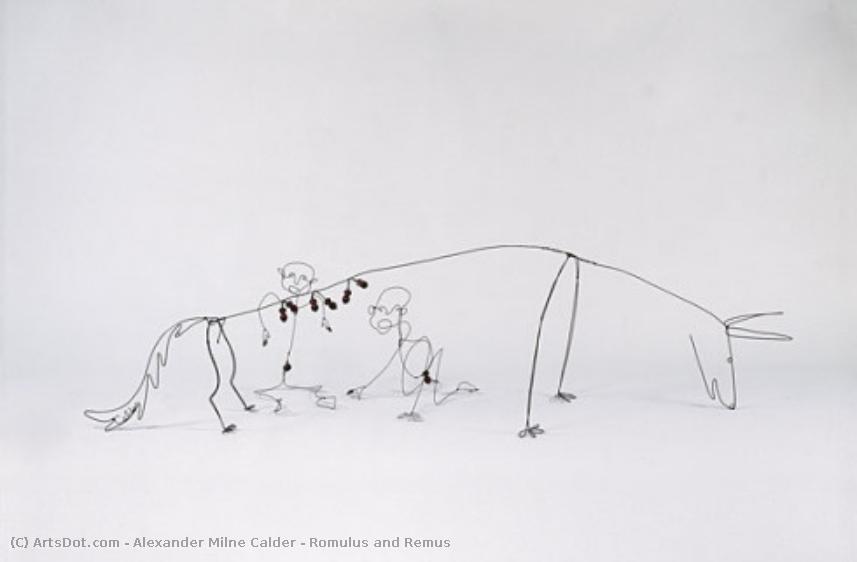
Romulus and Remus


 Читать далее
Получите файл, готовый к печати, качество которого значительно превосходит веб-превью. Каждое цифровое изображение в нашем каталоге создано на основе мастер-файла высокого разрешения — обычно шириной от 5 000 до 15 000 пикселей, — что позволяет вам уверенно печатать работы большого формата, использовать кадрирование или воспроизводить мельчайшие детали.
Ни один файл не покидает нашу студию без обработки. Эксперт по цифровой ретуши сверяет цвета с оригинальной картиной и при необходимости корректирует их, после чего повышает четкость и детализацию с помощью профессиональных инструментов — неизменно сохраняя верность мазкам кисти и стилю автора. В результате получается изображение, которое выглядит как подлинная живопись, а не как отсканированный снимок с наложенными фильтрами.
Вы одобряете результат до завершения заказа: наш эксперт отправит изображение по электронной почте в течение 72 часов для вашего ознакомления. Не удовлетворены результатом? Попросите внести правки или исправления, либо запросите возврат средств, если качество не соответствует ожиданиям.
Именно на это качество полагаются издательства, дизайн-студии, галереи и типографии.
Цифровое изображение
Скачайте файл высокого разрешения для личного использования, печати и творческих проектов. ( Перейти к печатным копиям Купить картину ручной работы)
Преимущества каждого заказа цифровых изображений
Гарантия профессиональной цифровой доставки изображений
Выбирая OriginalUniqueArt.com, вы получаете не просто изображение — вы приобретаете профессионально обработанное цифровое произведение искусства, созданное с безупречной точностью и под защитой гарантии качества. Вот всё, что автоматически входит в ваш заказ:

Мгновенная доставка по e-mail
Ваш цифровой файл в высоком разрешении будет отправлен по электронной почте в течение 72 часов после оформления заказа и сразу станет доступен для использования.

Цифровой файл с улучшением ИИ
Ваше произведение искусства проходит профессиональную оптимизацию с использованием передовых инструментов ИИ и ручной обработки, что гарантирует максимальную детализацию, четкость и точность цветопередачи.

Бесплатная пожизненная повторная отправка
Случайно удалили или потеряли файл? Не беспокойтесь — мы отправим его вам повторно в любое время и совершенно бесплатно.

Никаких импортных пошлин — никогда
Наслаждайтесь вашим произведением искусства мгновенно без таможенных пошлин, сборов или затрат на доставку — цифровые загрузки всегда не облагаются налогом.

Гарантия точности цветопередачи
Мы гарантируем максимально точное соответствие цветов цифрового изображения оригиналу благодаря использованию профессиональных инструментов и систем управления цветом.

Гарантия удовлетворенности 100 дней
Если вы не будете удовлетворены своим цифровым изображением, мы внесем правки или вернем 100% стоимости в течение 100 дней — без лишних вопросов.

100% Гарантия возврата средств
Не удовлетворены покупкой? Мы вернем вам полную стоимость в течение 100 дней после получения цифрового файла — без лишних вопросов.

Скидки на оптовые заказы
При покупке 3 изображений — скидка 10%; при покупке 5 — скидка 15%; от 10 изображений — скидка 20%. Отличное решение для творческих проектов, галерей и агентств.
A Moment Frozen in Steel: Exploring Calder’s “Romulus and Remus”
Alexander Milne Calder's "Romulus and Remus," crafted in 1928, isn’t merely a sculpture; it’s a distilled essence of myth rendered in delicate wire. This piece, a testament to the artist’s pioneering approach to three-dimensional form, transcends its subject matter – the legendary founders of Rome – to become a profound meditation on beginnings, brotherhood, and the very act of creation itself. Calder, deeply influenced by Constructivism and early Modernism, sought to liberate sculpture from the constraints of traditional materials, embracing the inherent qualities of industrial wire as both medium and metaphor.
The sculpture’s stark simplicity is its most arresting feature. Two figures, rendered with astonishing grace despite their skeletal construction, stand beneath a subtly arching structure that evokes a horizon line or perhaps a stylized landscape. The color palette – a resolute black and white punctuated by subtle grays – amplifies the work's austerity, forcing the viewer to focus entirely on form and movement. The lines themselves are paramount; thin, almost impossibly delicate wires define every contour, creating an illusion of both fragility and strength. This deliberate reductionist approach mirrors Calder’s broader philosophy: to strip away the superfluous and reveal the fundamental elements of a subject.
The Poetics of Chance and Kinetic Form
Calder's work in this period – particularly his “Cirque Calder” series – exemplifies his fascination with chance and spontaneity. He didn’t meticulously plan every curve or angle; instead, he allowed the wire to guide him, embracing the unpredictable nature of the material. This process is vividly captured in "Romulus and Remus," where the figures appear to be caught mid-action, poised on the precipice of a narrative yet undefined. The slight wobble inherent in the sculpture’s construction – a subtle consequence of its wire composition – hints at a kinetic energy, suggesting that even stillness can hold a dynamic potential.
The technique itself is deceptively complex. Calder skillfully bent and assembled hundreds of individual wires, creating a surprisingly robust structure despite its delicate appearance. The varying thicknesses of the wire contribute to the sculpture’s textural richness, offering subtle shifts in sheen as light catches the metal. This careful manipulation of material speaks to Calder's mastery of his chosen medium – a testament to his ability to transform industrial components into objects of profound beauty and intellectual resonance.
Myth, Brotherhood, and the Dawn of Rome
The subject matter—the story of Romulus and Remus—is deeply rooted in Roman mythology. The legend of the twins suckled by a she-wolf is an enduring symbol of resilience, survival, and the founding of civilization. Calder’s sculpture doesn't simply depict this narrative; it captures its essence – the primal struggle for existence, the bond between brothers, and the birth of a new order. The wire itself can be interpreted as representing the threads that connect us to our past, shaping our present and influencing our future.
Created in 1928, “Romulus and Remus” stands as a pivotal work in Calder’s oeuvre, marking a significant shift towards abstraction while retaining a powerful connection to his artistic roots. It's a sculpture that invites contemplation, prompting viewers to consider the interplay of form, material, and narrative – a timeless meditation on the foundations of human experience.
Вопросы и ответы
Находится ли «Romulus and Remus», Александр Мине Кадер в родной стране автора?
Нет — произведение находится за пределами страны проживания художника. Александр Мине Кадер родился в Великобритания, а музей, где хранится оригинал произведения «Romulus and Remus», находится в Соединенные Штаты Америки.
Кто является автором и в каком году было создано произведение «Romulus and Remus»?
Автор произведения «Romulus and Remus» — Александр Мине Кадер, дата создания — 1928.
Где я могу найти статистику по поводу «Romulus and Remus», Александр Мине Кадер?
Страница Статистика просмотров для работы «Romulus and Remus», Александр Мине Кадер содержит публичную статистику посещений: ежемесячное количество просмотров данного произведения, сравнение с наиболее популярными работами автора, а также географию посетителей.
Биография художника
Introduction to Alexander Milne Calder
Alexander Milne Calder (MILL-nee) was a Scottish-American sculptor born in Aberdeen, Scotland, on August 23, 1846. He is best known for his architectural sculpture of Philadelphia City Hall and both his son, Alexander Stirling Calder, and grandson, Alexander ‘sandy’ Calder, became significant sculptors in the 20th century. His artistic journey began with a formative influence from his father, John Rhind, a sculptor who instilled in him an early appreciation for stone carving during his childhood years. Calder attended the Royal Academy in Edinburgh where he honed his skills and studied alongside fellow artists, shaping his understanding of classical sculpture traditions. He subsequently moved to London and collaborated on monumental projects like the Albert Memorial, demonstrating his versatility and ambition as a craftsman.- Early Life and Education: Calder’s upbringing in Aberdeen instilled in him a passion for art from a young age, nurtured by his father's expertise in stone carving.
- Royal Academy Training: His studies at the Royal Academy provided him with foundational knowledge of sculpture techniques and artistic principles.
- London Collaborations: Calder’s involvement in projects like the Albert Memorial showcased his ability to execute large-scale architectural sculptures.
Notable Works
Calder's legacy rests upon a remarkable collection of sculptural achievements, most notably Philadelphia City Hall. This ambitious undertaking demanded meticulous planning and execution by over 250 artisans, spanning two decades—a testament to Calder’s dedication and vision. The centerpiece of the hall is William Penn, a colossal bronze statue that embodies grandeur and commemorates Pennsylvania's founding figure. Beyond monumental sculptures, Calder explored kinetic art with his mobiles – suspended sculptures propelled by air currents—introducing an element of chance and movement into artistic expression. His exploration of this medium was greatly influenced by Marcel Duchamp, who coined the term "mobile" to describe these captivating artworks.- Philadelphia City Hall: Calder’s monumental sculpture transformed Philadelphia's skyline, representing a pinnacle of architectural artistry.
- William Penn Statue: This imposing bronze statue honored Pennsylvania’s heritage and showcased Calder’s mastery of sculptural technique.
- Kinetic Art – Mobiles: Calder pioneered kinetic sculpture with his mobiles, incorporating movement and chance into artistic creation—a groundbreaking contribution to the art world.
Legacy and Influence
Alexander Stirling Calder and Alexander ‘sandy’ Calder followed in their father's footsteps as accomplished sculptors, perpetuating a family tradition of artistic innovation. Calder’s influence extended beyond his own creations, inspiring subsequent generations of artists and shaping the trajectory of modern sculpture. His works are displayed prominently in museums worldwide—including the Smithsonian American Art Museum and the Galleria Civica di Arte Moderna e Contemporanea Torino—celebrating his enduring contribution to art history. Calder's unwavering belief that “theories may be all very well for the artist himself, but they shouldn’t be broadcast to other people” underscores his commitment to artistic integrity and spontaneity.- Family Artistic Tradition: Calder’s son and grandson continued his father’s legacy as sculptors, ensuring the continuation of a distinguished artistic lineage.
- Museum Exhibitions: Calder's sculptures are showcased in renowned museums globally, commemorating his lasting impact on art history.
- Philosophical Approach to Art: Calder championed spontaneity and intuition in artistic creation, rejecting rigid theoretical frameworks.
- Father's Influence: Calder’s father imparted invaluable knowledge of stone carving, shaping his artistic sensibilities from a young age.
- Royal Academy Studies: His training at the Royal Academy provided him with foundational understanding of sculptural principles and techniques.
- International Exposure: Calder’s journeys to Paris and London broadened his artistic perspective and fostered engagement with diverse cultural traditions.
- Philadelphia City Hall: The project’s scale and complexity demanded exceptional skill and perseverance from Calder and his team, resulting in a masterpiece of architectural sculpture.
- William Penn Statue: This monumental bronze statue honored Pennsylvania’s heritage and showcased Calder's mastery of sculptural technique—a symbol of civic identity.
- Kinetic Art – Mobiles: Calder revolutionized sculpture with his mobiles, embracing movement and spontaneity as artistic principles—a transformative innovation that captivated audiences worldwide.
- Family Artistic Lineage: Calder’s son and grandson continued his father's legacy as sculptors, upholding a distinguished tradition of artistic excellence.
- Global Museum Exhibitions: Calder’s sculptures are showcased in internationally recognized museums—demonstrating their universal appeal and enduring significance within art history.
- Philosophical Commitment to Art: Calder championed spontaneity and intuition as guiding principles for artistic creation—rejecting rigid theoretical frameworks in favor of authentic expression.

Александр Мине Кадер
1898 - 1976 , Великобритания
Основные сведения
- Artistic Movement Or Style: Architectural sculpture
- Artists Who Influenced This Artist: ['John Rhind']
- Date Of Birth: August 23, 1846
- Date Of Death: June 14, 1923
- Full Name: Alexander Milne Calder
- Nationality: Scottish-American
- Notable Artworks:
- Philadelphia City Hall
- William Penn statue
- Place Of Birth: Aberdeen, Scotland