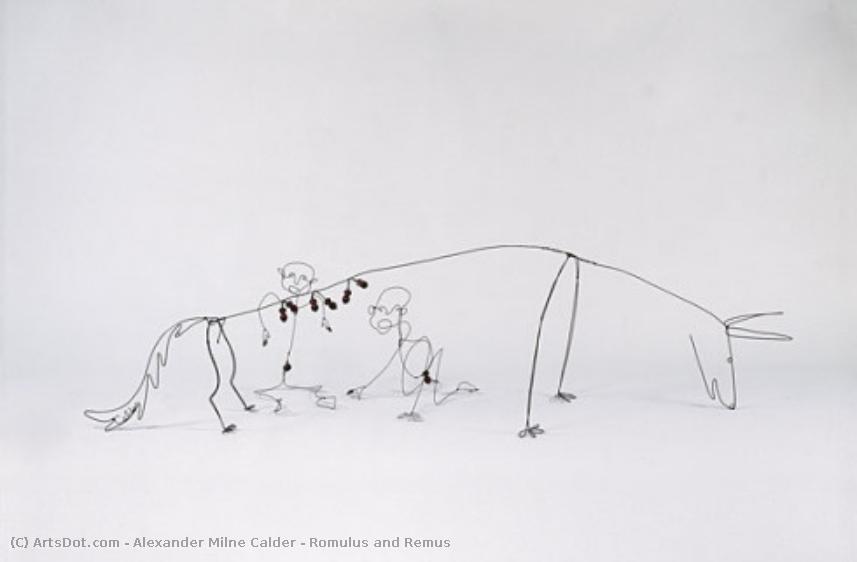
Romulus and Remus
Масляная репродукция ручной работы
Картина маслом на холсте в выбранном вами размере и раме, написанная на заказ нашими художниками.
P118B $10
P118H $10
P118W $10
P438Z $10
P508JH $12
P508YH $12
P805H $10
P805Z $10
P919BZ $10
P919G $10
P919XJ $10
P959ZH $10
P968JZ $12
W106C $8
W218G $10
W218JH $8
W218Y $10
W307PJ $10
W316G $10
W316PJ $8
W316Y $10
W398PJ $8
W4111J $10
W500HY $15
W500JH $15
W692G $12
W849H $8
W940BG $15
W953PJ $8
Выберите один из наших стандартных размеров, соответствующих оригинальным пропорциям произведения искусства.
Вы можете указать собственные размеры, чтобы картина идеально вписалась в выбранную раму или пространство. Если выбранный вами размер не соответствует пропорциям оригинала, мы либо обрежем полотно, либо расширим его за счет дополнительных элементов, написанных вручную. Цифровой макет будет отправлен вам на утверждение перед началом производства.
Обратите внимание, что предварительный просмотр на экране не отражает фактическую обрезку или расширение. Только макет точно покажет окончательную композицию.
Хотя доступны индивидуальные размеры, мы рекомендуем выбирать вариант из предопределенного списка, чтобы сохранить исходные пропорции.
После оформления заказа команда OriginalUniqueArt.com свяжется с клиентом по электронной почте для уточнения деталей и предоставит предварительный макет
Доставка по всему миру () за 3–4 недели вместо стандартных 5 недель. (25 Июль). Без компромиссов в качестве.
Бесплатная экспресс-доставка по всему миру
Высококачественный льняной холст
Полное страхование доставки
Гарантия возмещения таможенных пошлин
Гарантия точного соответствия цветов
Политика возврата в течение 60 дней (только при наличии дефектов)
Гарантия возврата 100% средств
Предложение оптовых скидок
Romulus and Remus
Техника репродукции
Размер репродукции
-
Итоговая стоимость
-
Описание произведения
A Moment Frozen in Steel: Exploring Calder’s “Romulus and Remus”
Alexander Milne Calder's "Romulus and Remus," crafted in 1928, isn’t merely a sculpture; it’s a distilled essence of myth rendered in delicate wire. This piece, a testament to the artist’s pioneering approach to three-dimensional form, transcends its subject matter – the legendary founders of Rome – to become a profound meditation on beginnings, brotherhood, and the very act of creation itself. Calder, deeply influenced by Constructivism and early Modernism, sought to liberate sculpture from the constraints of traditional materials, embracing the inherent qualities of industrial wire as both medium and metaphor.
The sculpture’s stark simplicity is its most arresting feature. Two figures, rendered with astonishing grace despite their skeletal construction, stand beneath a subtly arching structure that evokes a horizon line or perhaps a stylized landscape. The color palette – a resolute black and white punctuated by subtle grays – amplifies the work's austerity, forcing the viewer to focus entirely on form and movement. The lines themselves are paramount; thin, almost impossibly delicate wires define every contour, creating an illusion of both fragility and strength. This deliberate reductionist approach mirrors Calder’s broader philosophy: to strip away the superfluous and reveal the fundamental elements of a subject.
The Poetics of Chance and Kinetic Form
Calder's work in this period – particularly his “Cirque Calder” series – exemplifies his fascination with chance and spontaneity. He didn’t meticulously plan every curve or angle; instead, he allowed the wire to guide him, embracing the unpredictable nature of the material. This process is vividly captured in "Romulus and Remus," where the figures appear to be caught mid-action, poised on the precipice of a narrative yet undefined. The slight wobble inherent in the sculpture’s construction – a subtle consequence of its wire composition – hints at a kinetic energy, suggesting that even stillness can hold a dynamic potential.
The technique itself is deceptively complex. Calder skillfully bent and assembled hundreds of individual wires, creating a surprisingly robust structure despite its delicate appearance. The varying thicknesses of the wire contribute to the sculpture’s textural richness, offering subtle shifts in sheen as light catches the metal. This careful manipulation of material speaks to Calder's mastery of his chosen medium – a testament to his ability to transform industrial components into objects of profound beauty and intellectual resonance.
Myth, Brotherhood, and the Dawn of Rome
The subject matter—the story of Romulus and Remus—is deeply rooted in Roman mythology. The legend of the twins suckled by a she-wolf is an enduring symbol of resilience, survival, and the founding of civilization. Calder’s sculpture doesn't simply depict this narrative; it captures its essence – the primal struggle for existence, the bond between brothers, and the birth of a new order. The wire itself can be interpreted as representing the threads that connect us to our past, shaping our present and influencing our future.
Created in 1928, “Romulus and Remus” stands as a pivotal work in Calder’s oeuvre, marking a significant shift towards abstraction while retaining a powerful connection to his artistic roots. It's a sculpture that invites contemplation, prompting viewers to consider the interplay of form, material, and narrative – a timeless meditation on the foundations of human experience.
Биография художника
Introduction to Alexander Milne Calder
Alexander Milne Calder (MILL-nee) was a Scottish-American sculptor born in Aberdeen, Scotland, on August 23, 1846. He is best known for his architectural sculpture of Philadelphia City Hall and both his son, Alexander Stirling Calder, and grandson, Alexander ‘sandy’ Calder, became significant sculptors in the 20th century. His artistic journey began with a formative influence from his father, John Rhind, a sculptor who instilled in him an early appreciation for stone carving during his childhood years. Calder attended the Royal Academy in Edinburgh where he honed his skills and studied alongside fellow artists, shaping his understanding of classical sculpture traditions. He subsequently moved to London and collaborated on monumental projects like the Albert Memorial, demonstrating his versatility and ambition as a craftsman.- Early Life and Education: Calder’s upbringing in Aberdeen instilled in him a passion for art from a young age, nurtured by his father's expertise in stone carving.
- Royal Academy Training: His studies at the Royal Academy provided him with foundational knowledge of sculpture techniques and artistic principles.
- London Collaborations: Calder’s involvement in projects like the Albert Memorial showcased his ability to execute large-scale architectural sculptures.
Notable Works
Calder's legacy rests upon a remarkable collection of sculptural achievements, most notably Philadelphia City Hall. This ambitious undertaking demanded meticulous planning and execution by over 250 artisans, spanning two decades—a testament to Calder’s dedication and vision. The centerpiece of the hall is William Penn, a colossal bronze statue that embodies grandeur and commemorates Pennsylvania's founding figure. Beyond monumental sculptures, Calder explored kinetic art with his mobiles – suspended sculptures propelled by air currents—introducing an element of chance and movement into artistic expression. His exploration of this medium was greatly influenced by Marcel Duchamp, who coined the term "mobile" to describe these captivating artworks.- Philadelphia City Hall: Calder’s monumental sculpture transformed Philadelphia's skyline, representing a pinnacle of architectural artistry.
- William Penn Statue: This imposing bronze statue honored Pennsylvania’s heritage and showcased Calder’s mastery of sculptural technique.
- Kinetic Art – Mobiles: Calder pioneered kinetic sculpture with his mobiles, incorporating movement and chance into artistic creation—a groundbreaking contribution to the art world.
Legacy and Influence
Alexander Stirling Calder and Alexander ‘sandy’ Calder followed in their father's footsteps as accomplished sculptors, perpetuating a family tradition of artistic innovation. Calder’s influence extended beyond his own creations, inspiring subsequent generations of artists and shaping the trajectory of modern sculpture. His works are displayed prominently in museums worldwide—including the Smithsonian American Art Museum and the Galleria Civica di Arte Moderna e Contemporanea Torino—celebrating his enduring contribution to art history. Calder's unwavering belief that “theories may be all very well for the artist himself, but they shouldn’t be broadcast to other people” underscores his commitment to artistic integrity and spontaneity.- Family Artistic Tradition: Calder’s son and grandson continued his father’s legacy as sculptors, ensuring the continuation of a distinguished artistic lineage.
- Museum Exhibitions: Calder's sculptures are showcased in renowned museums globally, commemorating his lasting impact on art history.
- Philosophical Approach to Art: Calder championed spontaneity and intuition in artistic creation, rejecting rigid theoretical frameworks.
- Father's Influence: Calder’s father imparted invaluable knowledge of stone carving, shaping his artistic sensibilities from a young age.
- Royal Academy Studies: His training at the Royal Academy provided him with foundational understanding of sculptural principles and techniques.
- International Exposure: Calder’s journeys to Paris and London broadened his artistic perspective and fostered engagement with diverse cultural traditions.
- Philadelphia City Hall: The project’s scale and complexity demanded exceptional skill and perseverance from Calder and his team, resulting in a masterpiece of architectural sculpture.
- William Penn Statue: This monumental bronze statue honored Pennsylvania’s heritage and showcased Calder's mastery of sculptural technique—a symbol of civic identity.
- Kinetic Art – Mobiles: Calder revolutionized sculpture with his mobiles, embracing movement and spontaneity as artistic principles—a transformative innovation that captivated audiences worldwide.
- Family Artistic Lineage: Calder’s son and grandson continued his father's legacy as sculptors, upholding a distinguished tradition of artistic excellence.
- Global Museum Exhibitions: Calder’s sculptures are showcased in internationally recognized museums—demonstrating their universal appeal and enduring significance within art history.
- Philosophical Commitment to Art: Calder championed spontaneity and intuition as guiding principles for artistic creation—rejecting rigid theoretical frameworks in favor of authentic expression.
Александр Мине Кадер
1898 - 1976 , Великобритания
Основные сведения
- Artistic Movement Or Style: Architectural sculpture
- Artists Who Influenced This Artist: ['John Rhind']
- Date Of Birth: August 23, 1846
- Date Of Death: June 14, 1923
- Full Name: Alexander Milne Calder
- Nationality: Scottish-American
- Notable Artworks:
- Philadelphia City Hall
- William Penn statue
- Place Of Birth: Aberdeen, Scotland


Вариант со стеклом доступен только для размеров менее 110 см