Arts and Crafts · 1881
Design for (William Morris, 1881)
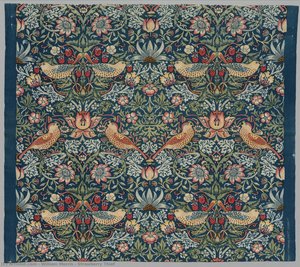
William Morris (1834–1896) a realizat Design for . Data sa este din 1881. Face parte din mișcarea Arts and Crafts. Este realizată în Textile. Este păstrat la William Morris Gallery în Walthamstow, Regatul Unit. Dimensiunile sunt 66 × 69 cm.
- 1881
- Textile
- 66 × 69 cm
- William Morris Gallery, Walthamstow

 Tablou în ulei pictat manual
 Trimite prin felicitare
 Distribuie
 Fișă informativă


 Descarcă imaginea
 Produse similare
 Galerie foto
 Întrebări și răspunsuri

 Statistici
Design for , pe scurt
- Titlu
- Design for
- Artist
- William Morris (1834–1896)
- Artist născut în
- Walthamstow, Regatul Unit al Marii Britanii și Irlandei
- Date
- 1881
- Medium
- Textile
- Dimensiuni
- 66 × 69 cm
- Unde poate fi vizualizată
- William Morris Gallery, Walthamstow, Regatul Unit
- Mișcare
- Arts and Crafts
- Perioadă
- 19th Century
- Subiect
- floral design, william morris, textile art, medieval motifs, nature, pattern
Ce reprezintă Design for ?
The Genesis of a Vision: William Morris and the Dawn of Arts & Crafts
Before he was a revolutionary socialist, a poet of immense talent, or simply one of the most celebrated textile designers in history, William Morris was a young man captivated by the remnants of a lost world. Born in Walthamstow, Essex, in 1834, his childhood was steeped in the romanticism of medieval chivalry and the beauty of the English countryside—a landscape he would relentlessly strive to capture within his designs. This early fascination wasn’t merely nostalgic; it represented a profound belief that nature and its traditions held an inherent moral and aesthetic superiority over the burgeoning industrial age. Morris, alongside figures like Dante Gabriel Rossetti and Edward Burne-Jones, rejected the mass production and soullessness of Victorian society, seeking instead to revive traditional craftsmanship and imbue everyday objects with beauty and meaning. “Design for,” a pencil sketch from 1881, stands as a potent embodiment of this ethos – a quiet declaration of rebellion against the prevailing trends and a fervent yearning for a more harmonious relationship between humanity and nature.
- Historical Context: The late Victorian era was marked by rapid industrialization, social unrest, and a growing critique of mass-produced goods. Morris’s work emerged as a direct response to this environment, advocating for a return to handcraftsmanship and celebrating the beauty of natural materials.
- The Arts & Crafts Movement: “Design for” is inextricably linked to the Arts & Crafts movement, which championed quality, individuality, and the rejection of factory production.
A Symphony of Flora and Form: Deconstructing the Design
This particular pencil design, destined for a carpet (as evidenced by its reference to the William Morris Gallery N17), is remarkably detailed, revealing a meticulous approach to composition. The central focus is undeniably a bird – likely a robin or thrush – rendered with delicate precision and imbued with an air of quiet dignity. Surrounding this focal point are intricate arrangements of other birds, creating a complex tapestry of avian life that suggests both abundance and careful observation. Scattered amongst the feathered subjects are smaller, more stylized elements: blossoms, leaves, and vines intertwine in a swirling pattern, echoing the organic forms of the natural world. The lines are fluid and graceful, avoiding sharp angles or rigid symmetry – a hallmark of Morris’s aesthetic philosophy. The use of shading and hatching creates a sense of depth and texture, bringing the design to life on paper.
Technique Note: Pencil Sketch: The work is executed entirely in pencil, showcasing Morris's exceptional skill in rendering detail and capturing subtle tonal variations. This technique lends a raw, immediate quality to the design, emphasizing its conceptual origins as a preliminary study.Decoding the Symbolism: Nature’s Language
Beyond its purely decorative qualities, “Design for” is rich with symbolic meaning. The prevalence of birds – often associated with freedom, hope, and spirituality – suggests a longing for transcendence and escape from the constraints of industrial society. The abundant flora speaks to Morris's deep connection with nature and his belief in its restorative power. The intertwining vines and blossoms can be interpreted as symbols of interconnectedness and harmony—a visual representation of his ideal world. The careful arrangement of the birds, rather than a chaotic jumble, suggests an underlying order and balance, reflecting Morris’s desire for a more harmonious society.
- The Bird: Represents freedom, hope, and connection to the spiritual realm.
- Floral Motifs: Symbolize nature's beauty, abundance, and restorative qualities.
- Intertwined Forms: Suggest interconnectedness, harmony, and a rejection of rigid social structures.
A Legacy Enduring: The Spirit of “Design for” Today
“Design for” is more than just a pencil sketch; it’s a window into the mind of a visionary artist and activist. It encapsulates Morris's belief that art should not merely be beautiful but also morally uplifting, promoting a return to traditional values and celebrating the inherent dignity of human labor. Reproductions of this design continue to resonate today, offering a glimpse into a world where craftsmanship, nature, and social responsibility are valued above all else. Its intricate detail and evocative symbolism make it a timeless masterpiece—a testament to William Morris’s enduring legacy as one of the most influential figures in the history of art and design.
În ce muzeu se află Design for ?
William Morris Gallery
Walthamstow, Regatul Unit
Un Sanctuar al Meșteșugului și Gândirii: Explorarea William Morris Gallery Situată în inima vibrantului sector Walthamstow din Londra, William Morris Gallery este mult mai mult decât un simplu depozit de obiecte frumoase; este o călătorie imersivă în viața și moștenirea uneia dintre cele mai multifacetate figuri ale Marii Britanii – William Morris. Acest spațiu remarcabil îi invită pe vizitatori să călătorească în timp, nu doar pentru a *vedea* arta, ci pentru a *simți* cu adevărat spiritul unui om care a crezut cu pasiune în demnitatea muncii, în frumusețea vieții de zi cu zi și în puterea transformatoare a designului. De la începuturile sale umile, ca fost o casă de motoare pentru sistemul local de apă, până la actuala sa formă de celebrare a viziunii artistice a lui Morris, Galeria oferă o experiență unic intimă, dezvăluind profunzimea și amploarea influenței sale asupra societății victoriene și dincolo de aceasta.


Imagini la înaltă rezoluție ale lui Design for

Domeniu public: artistul a decedat în 1896.
Alte dimensiuni, cadrări și citări →William Morris, Design for (1881), William Morris Gallery. Domeniu public
Întrebări despre Design for , răspunsuri
În ce muzeu se află originalul "Design for"?
"Design for" de William Morris este expusă la William Morris Gallery, Walthamstow, Regatul Unit. Mențiunea muzeului se referă la lucrarea originală, nu la reproduceri.
În ce an a fost creat "Design for" de William Morris?
Opera "Design for" de William Morris a fost creată în 1881.
În ce tehnică este realizată lucrarea "Design for" de William Morris?
William Morris a utilizat tehnica Textile pentru "Design for". Tehnica definește natura materială a lucrării originale.
Ce dimensiuni are originalul "Design for"?
Dimensiunile înregistrate pentru "Design for" de William Morris sunt 66 x 69 cm. Reproducerile pot fi comandate în alte dimensiuni, păstrând aceleași proporții.
Ce reprezintă "Design for" de William Morris?
Temele prezente în "Design for" de William Morris includ floral design, william morris, textile art, medieval motifs, nature, pattern, craftsmanship, victorian. Împreună, acestea definesc subiectul întregii opere de artă.
Este "Design for" în domeniul public?
Statusul drepturilor de autor pentru "Design for" de William Morris: opera este în domeniul public – drepturile de autor au expirat. Acest lucru determină dacă reproducerile imaginii pot fi realizate liber.
La ce artist este atribuită opera „Design for”?
„Design for” a fost creat de William Morris. Informațiile de pe această pagină descriu opera originală a lui William Morris.
Din ce curent artistic face parte "Design for" de William Morris?
„Design for” este o operă de Arts and Crafts. Acest curent indică tradiția artistică din care face parte lucrarea.
În ce etapă a evoluției lui William Morris se încadrează „Design for”?
"Design for" reprezintă perioada Late Period a lui William Morris.
Despre artistul William Morris

1834–1896, Regatul Unit al Marii Britanii și Irlandei
William Morris
A Life Rooted in Nature and Romance William Morris, born on March 24, 1834, in Walthamstow, Essex, emerged from a comfortably affluent middle-class background—a circumstance that afforded him the freedom to pursue passions rather than professions. His father’s success as a financier provided not only security but also an environment where aesthetic sensibilities could flourish. Morris's childhood was deeply shaped by the English countryside surrounding his home and a fascination with tales of medieval chivalry, laying the groundwork for a lifelong devotion to both natural beauty and romantic narratives. These early influences weren’t merely sentimental; they formed the core of his artistic philosophy.
Despre William Morris Lucrări remarcabile ale lui William Morris
Alte lucrări ale lui William Morris
 Strawberry Thief1936
 The Little Tree (Hammersmith Rug)1895
 Snakeshead1900
 Fruit1862

Eseuri despre Design for
 Wings of Art: Tracing Avian Beauty from Ornithological Precision to Impressionist LightExplore the evolution of avian art from scientific plates to Impressionist light. Trace this feathered history with our expert guide.
 10 Iconic Textile Masterpieces That Redefined the World of ArtJourney through history with 10 legendary textile masterpieces that redefined art. Explore the stories, intricate techniques, and timeless …
 Wings of Meaning: Decoding the Powerful Symbolism of Birds in Art HistoryExplore the profound history of avian symbolism from Renaissance icons to Winslow Homer. Decode the secrets behind every wing today.