

 Previzualizare
 Trimite prin felicitare
 Distribuie
 Detalii despre lucrare
 Ghid
Ghid

 Descarcă imaginea
 Produse similare
 Radiografie
 Galerie foto
 Statistici
Still-Life
 Oil On Canvas
- WallArt
- Baroque
 1653
1653- Early Modern
 105.0 x 88.0 cm
 Muzeul Hermitaj
 Vezi mai mult
Reproducere pictată manual în ulei
Pictură în ulei pe pânză, pictată manual de artiștii noștri la dimensiunea și ramele dorite de dumneavoastră, pe comandă. ( Comută pe versiunea Print Comută pe Imagine Digitală)




P118B lei10

P118H lei10

P118W lei10

P438Z lei10

P508JH lei12

P508YH lei12

P805H lei10

P805Z lei10

P919BZ lei10

P919G lei10

P919XJ lei10

P959ZH lei10

P968JZ lei12

W106C lei8

W218G lei10

W218JH lei8

W218Y lei10

W307PJ lei10

W316G lei10

W316PJ lei8

W316Y lei10

W398PJ lei8

W4111J lei10

W500HY lei15

W500JH lei15

W692G lei12

W849H lei8

W940BG lei15

W953PJ lei8




Alegeți dintre dimensiunile noastre prestabilite, care respectă proporțiile originale ale operei de artă.

Introduceți lățimea și înălțimea necesare pentru a se potrivi ramei sau peretelui dumneavoastră. Această lucrare este pictată manual, așa că, pentru o dimensiune cu o formă diferită, artistul poate picta puțin mai mult în jurul imaginii sau poate tăia puțin din margini — dumneavoastră decideți. Vă vom trimite o simulare digitală pentru aprobare înainte de a începe pictarea. Imaginea afișată pe această pagină nu reprezintă rezultatul real — doar simularea este reprezentativă.
După plasarea comenzii, echipa OriginalUniqueArt.com va contacta clientul prin e-mail pentru instrucțiuni și îi va furniza o previzualizare a machetei
Livrare în întreaga lume () în 3-4 săptămâni, în loc de cele 5 săptămâni standard. (26 Octombrie). Fără compromisuri în ceea ce privește calitatea.

Livrare expres gratuită la nivel mondial

Pânză de in de înaltă calitate

Asigurare completă pentru transport

Garanție de rambursare a taxelor vamale

Garanția fidelității culorilor

Politica de retur în 100 de zile (doar pentru defecte de fabricație)

Garanție de rambursare 100%

Ofertă pentru comenzi multiple
 Opțiunea cu sticlă este disponibilă doar pentru dimensiuni de sub 110 cm

Still-Life
Tehnică de reproducere
Dimensiune reproducere
-


Preț total calculat
lei 1389
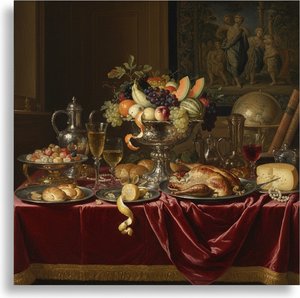
A Symphony of Light and Luxury
In the quiet, shadowed corners of the Dutch Golden Age, few masters could command the stage with as much dramatic flair as Willem Kalf. His 1653 masterpiece, Still Life with Lobster, Drinking Horn and Glasses, is not merely a painting of objects; it is a carefully orchestrated performance of light, texture, and prestige. As one gazes upon this canvas, they are immediately transported into an era of unprecedented maritime prosperity, where the spoils of global trade were celebrated through the meticulous brushstrokes of the pronkstilleven—the grand, opulent still life. The composition serves as a window into a world of sensory indulgence, where every glint of silver and every dewdrop on a peach tells a story of wealth, discovery, and the fleeting nature of earthly delights.
The artwork captures a moment of suspended animation, presenting an arrangement that feels both bountiful and profoundly intimate. A vibrant lobster, its shell a testament to Kalf’s ability to render organic complexity, rests amidst the soft, velvety skins of peaches and pears. These natural elements are juxtaposed against the hard, reflective surfaces of man-made treasures: a gleaming silver goblet, a sturdy drinking horn, and delicate glassware that catches the light with ethereal precision. This interplay between the perishable fruit and the enduring precious metals creates a tension that is central to the Baroque experience, inviting the viewer to linger on the exquisite details of each meticulously rendered form.
The Mastery of Chiaroscuro and Texture
Technically, Kalf’s work represents the pinnacle of seventeenth-century Dutch realism. He employs chiaroscuro—the dramatic use of intense light and deep shadow—to sculpt his subjects out of the darkness. This technique does more than provide depth; it breathes life into the inanimate. The way light spills across a silver vessel or pierces through a glass, casting long, evocative shadows across a richly patterned tablecloth, creates a palpable sense of three-dimensionality. For the discerning collector or interior designer, this mastery of contrast offers a profound visual weight that can anchor a room, providing a focal point that changes character as the ambient light of a space shifts throughout the day.
Beyond the play of light, Kalf’s true genius lies in his tactile virtuosity. He possesses an uncanny ability to translate the language of touch into oil on canvas. One can almost feel the cool, smooth surface of the bronze candlestick, the rougher texture of the drinking horn, and the soft, yielding flesh of the ripening fruit. This commitment to hyper-realistic detail ensures that a high-quality reproduction of this piece retains its soul, offering an immersive experience that celebrates the beauty of material existence. It is this level of craftsmanship that makes Kalf’s work eternally relevant for those seeking to infuse their environments with a sense of historical grandeur and sophisticated elegance.
Symbolism and the Soul of the Baroque
To look closely at Kalf’s arrangement is to read a silent poem about the human condition. In the seventeenth century, nothing was purely decorative; every element carried a weight of meaning. The lobster, often associated with luxury and abundance, serves as a symbol of the era's economic triumphs. Meanwhile, the drinking horn alludes to conviviality and social standing, reminding the viewer of the communal joys of the Dutch mercantile class. Yet, beneath this layer of opulence lies a subtle memento mori—a gentle reminder of mortality. The very ripeness of the fruit suggests an approaching decay, a poignant contrast to the enduring brilliance of the silver and gold.
This duality—the celebration of life’s richness alongside a contemplation of its transience—is what gives the painting its profound emotional resonance. It evokes a sense of quiet melancholy wrapped in a cloak of splendor. For those looking to decorate with art that possesses depth and narrative, Kalf’s work offers an unparalleled opportunity. A reproduction of this still life does not just adorn a wall; it invites conversation, stimulates the intellect, and brings a touch of timeless, scholarly prestige to any curated collection or thoughtfully designed interior.
Întrebări și răspunsuri
Ce emoție transmite "Still-Life" de Willem Kalf?
"Still-Life" de Willem Kalf transmite un ton emoțional Dramatic.
Din ce curent artistic face parte "Still-Life" de Willem Kalf?
"Still-Life" de Willem Kalf face parte din mișcarea Baroque. Acest curent oferă contextul stilistic al operei.
Care sunt tehnica și data creației pentru "Still-Life" de Willem Kalf?
"Still-Life" a fost realizată în 1653, în Oil On Canvas.
Biografie artist
O via cufundată în opulență: Lumea lui Willem Kalf
Willem Kalf, un nume sinonim cu naturalele moarte fastuoase din Epoca de Aur olandeză, s-a născut în Rotterdam în 1619, într-o familie cu resurse confortabile. Tatăl său, Jan Jansz Calff, deținea funcții în cadrul guvernului municipal, oferindu-i tânărului Willem o educație ce a împletit siguranța financiară cu expunerea la lumea mercantilă în plină expansiune, o lume care avea să îi influențeze profund arta ulterior. Deși detaliile referitoare la primii ani de formare ai lui Kalf rămân parțial misterioase, știm că a cunoscut o perioadă de dezvoltare artistică în Paris, în deceniul 1630, integrându-se în comunitatea vibrantă a artiștilor flamenzi care activau în Saint-Germain-des-Prés. Această experiență formativă l-a îndreptat inițial către interioare rustice la scară mică și naturi moarte modeste — începuturi smerite care s-au transformat, în timp, în grandioasele pronkstilleven pentru care este celebrat astăzi. Pierderea ambilor părinți până în 1638 l-a determinat să revină în Țările de Jos, pregătind scena pentru perioada sa de maturitate artistică.De la începuturi modeste la spectacolul măiestriei
Primele lucrări pariziene ale lui Kalf dezvăluie un artist aflat în căutarea propriului drum. Aceste picturi reprezentau adesea compoziții simple — legume, ustensile de bucătărie obișnuite, precum găleți și tigăi — plasate pe fundaluri întunecate, unde figurile erau doar sugerate, mai degrabă decât complet realizate. Acest stil oglindea tradițiile picturale predominante în Flandra la începutul secolului al XVII-lea, în special opera unor artiști precum David Teniers cel Tânăr. Totuși, ambiția lui Kalf a depășit rapid aceste compoziții modeste. La întoarcerea sa în Țările de Jos, el a început o evoluție remarcabilă către ceea ce avea să devină stilul său emblematic: pronkstilleven, sau „natura moartă ostentativă”. Acestea nu erau simple reprezentări ale unor obiecte; erau expoziții atent construite de bogăție și rafinament, prezentând piese de lux precum vase de argint, porțelan delicat, fructe exotice și veselă de sticlă strălucitoare.Arta iluziei și rezonanța simbolică Ceea ce distingea cu adevărat pronkstilleven-ul lui Kalf era măiestria sa fără egal în manipularea luminii și a texturii. El poseda o capacitate extraordinară de a reda calitățile reflective ale argintului, translucența sticlei și suprafețele catifelate ale fructelor cu un realism care taie respirația. Compozițiile sale nu erau aranjamente hazardate; erau orchestrări meticulos planificate, concepute pentru a surprinde jocul de lumini și umbre, creând un sentiment de profunzime și dramă. Deși structura de bază a picturilor sale — dispunerea obiectelor — rămânea relativ constantă, fiecare lucrare era o dovadă a abilității lui Kalf de a varia texturile și de a surprinde nuanțe subtile ale luminii. Dincolo de strălucirea tehnică pură, însă, se ascundea o dimensiune simbolică discretă. Obiectele opulente pe care le picta nu erau doar frumoase; ele făceau referire la teme precum trecerea timpului, bogăția și natura efemeră a plăcerilor pământești — un omagiu adus tradiției vanitas, atât de prezentă în pictura olandeză.
Moștenire și influență
Impactul lui Willem Kalf s-a extins mult dincolo de propria sa producție prolifică. Naturalele sale semi-monocrome au exercitat o influență notabilă asupra artei franceze, în special în cercul fraților Le Nain, care îi admirau utilizarea sofisticată a luminii și umbrei. Deși anumite lucrări individuale pot să nu fie la fel de recunoscute ca cele ale unor contemporeni, contribuția lui Kalf la acest gen este incontestabilă. El a ajutat la definirea pronkstilleven-ului, capturând spiritul societății olandeze din secolul al XVII-lea — o perioadă marcată de o prosperitate economică fără precedent și de o clasă mercantilă în ascensiune, dornică să își afișeze bogăția și rafinamentul. Astăzi, picturile sale adoră colecții de muzee prestigioase din întreaga lume, inclusiv Museum Boijmans Van Beuningen din Rotterdam, National Gallery of Art din Washington D.C. și Muzeul Getty, asigurându-se că moștenirea sa de maestru al naturelor moarte olandeze continuă să inspire uimire și admirație. Atenția sa meticuloasă la detalii și utilizarea magistrală a luminii rămân repere ale excelenței artistice.Explorări suplimentare
- Wikipedia: https://en.wikipedia.org/wiki/Willem_Kalf
- National Gallery of Art: https://www.nga.gov/artists/1430-willem-kalf
- Getty Museum: https://www.getty.edu/art/collection/person/103JR3

Willem Kalf
1619 - 1693 , Țările de Jos
Detalii rapide
- Artistic Movement Or Style: Epoca de Aur Olandeză, Natură Moartă
- Artists Or Movements Influenced By This Artist:
- Arta franceză
- Frații Le Nain
- Artists Who Influenced This Artist:
- Simon Luttichuys
- Pieter Claesz
- Willem Claeszoon Heda
- Date Of Birth: 1619
- Date Of Death: 1693
- Full Name: Willem Kalf
- Nationality: Olandez
- Notable Artworks:
- Natură moartă cu un pahar Nautilus
- Le vieux puits
- Carafă de argint și bol de porțelan
- Place Of Birth: Rotterdam, Țările de Jos
Articole similare

Golden Light & Dutch Skies: The Timeless Magic of Dutch Golden Age Landscapes
Discover the breathtaking beauty of Dutch Golden Age landscapes. Explore the mastery of light, chiaroscuro, and 17th-century realism through an expert art history lens, celebrating the enduring legacy of the Dutch Masters for discerning collectors and art lovers.
Abraham Hendricksz van Beyeren: Pioneering Dutch Still Life & the Banquet Tradition
Explore the captivating world of Dutch Golden Age still life with Abraham van Beyeren. Discover his innovative techniques, symbolic banquet scenes & lasting influence on art history. Learn about collecting these masterpieces.

Illuminating Innovation: Exploring the Dutch Golden Age of Painting
Explore the Dutch Golden Age of painting with OriginalUniqueArt. Discover Rembrandt, Vermeer & other Masters. Learn about key characteristics, iconic artworks, and lasting influence. Expert insights for collectors & enthusiasts.

Epoca de Aur Olandeză: 10 Capodopere Care Au Definit Arta și Decorațiunea Interioară
Descoperiți Epoca de Aur Olandeză prin 10 capodopere Rembrandt, Vermeer și alți pictori olandezi. Aflați poveștile din spatele acestor tablouri baroce iconice și inspirați-vă pentru decorațiuni interioare unice. Explorează colecția completă pe OriginalUniqueArt.com!

Golden Age Reflections: Dutch Baroque Painting & Cultural Innovation
Explore the Dutch Golden Age of painting! Discover key artists like Vermeer & ter Borch, their innovative techniques, and the rich cultural context behind these Baroque masterpieces. Learn about collecting & appreciating this iconic art period.

