
 Previzualizare
 Trimite prin felicitare
 Distribuie
 Detalii despre lucrare
 Ghid
Ghid

 Descarcă imaginea
 Produse similare
 Radiografie
 Galerie foto
 Întrebări și răspunsuri
 Statistici
The Idyll


 Vezi mai mult
Giclée / Imprimare artistică
Printuri giclée sau pe canvas de calitate muzeală, cu proces de producție rapid și opțiuni flexibile de finisare. ( Comandă pictură realizată manual Comută pe Imagine Digitală)




P118B lei10

P118H lei10

P118W lei10

P438Z lei10

P508JH lei12

P508YH lei12

P805H lei10

P805Z lei10

P919BZ lei10

P919G lei10

P919XJ lei10

P959ZH lei10

P968JZ lei12

W106C lei8

W218G lei10

W218JH lei8

W218Y lei10

W307PJ lei10

W316G lei10

W316PJ lei8

W316Y lei10

W398PJ lei8

W4111J lei10

W500HY lei15

W500JH lei15

W692G lei12

W849H lei8

W940BG lei15

W953PJ lei8




Alegeți dintre dimensiunile noastre prestabilite, care respectă proporțiile originale ale operei de artă.

Introduceți lățimea și înălțimea necesare pentru a se potrivi ramei sau peretelui dumneavoastră. O printare poate fi doar tăiată, niciodată extinsă dincolo de dimensiunea imaginii originale, astfel încât o dimensiune cu o formă diferită va pierde o parte din imagine. Vă trimitem o simulare digitală pentru aprobare înainte de a imprima orice. Imaginea afișată pe această pagină nu prezintă tăierea reală — doar simularea arată acest lucru.
Livrare în întreaga lume () în 2 săptămâni, în loc de cele 4/5 săptămâni standard. (6 Noiembrie)

Livrare expres gratuită la nivel mondial

Pânză de in de înaltă calitate

Asigurare completă pentru transport

Garanție de rambursare a taxelor vamale

Garanția fidelității culorilor

Politica de retur în 100 de zile (doar pentru defecte de fabricație)

Garanție de rambursare 100%

Ofertă pentru comenzi multiple
 Opțiunea cu sticlă este disponibilă doar pentru dimensiuni de sub 110 cm

The Idyll
Giclée / Imprimare artistică
Dimensiune reproducere
-


Preț total calculat
lei 387
A Moment Suspended in Time: The Soul of The Idyll
In the quietude of 1931, Walter Richard Sickert captured a scene that transcends mere landscape, offering instead a profound meditation on connection and stillness. The Idyll is not simply a depiction of a lakeside retreat; it is a psychological threshold where the boundaries between the external world and internal emotion blur. The painting presents two figures poised before a tranquil expanse of water, their presence anchored by a shared, silent gravity. A man, distinguished in a scarlet jacket and a formal top hat, stands in subtle dialogue with a woman whose attire suggests the solemnity of a nun’s habit. As they clasp hands over shared books, Sickert invites us into a narrative of intellectual intimacy and unspoken promises, making the piece an irresistible centerpiece for those who value art that speaks to the depth of the human spirit.
The technical mastery on display in this work reflects Sickert’s unique position at the crossroads of Impressionism and Symbolism. While his brushwork possesses the rhythmic, energetic quality of the Impressionists—capturing the fleeting dance of light upon the water's surface and the dappled shadows of surrounding foliage—there is an underlying Symbolist weight to the composition. The palette is a sophisticated study in muted tones; deep blues and verdant greens dominate the landscape, creating a sense of cool, contemplative quietude. This deliberate use of color does more than represent nature; it builds an atmosphere of melancholy and peace, imbuing the canvas with a texture that feels both tactile and ethereal.
Historical Resonance and Aesthetic Elegance
To possess a reproduction of The Idyll is to hold a fragment of British art history. Painted during a period when Sickert was refining his ability to distill complex human experiences into deceptively simple visual forms, the work echoes the influence of masters like Whistler and Degas. The painting’s historical context—rooted in the transition from late 19th-century realism to early 20th-century modernism—provides a rich layer of meaning for the discerning collector. It embodies the "shadowy realism" for which Sickert is renowned, finding extraordinary beauty within ordinary, even somber, moments.
For the interior designer or the passionate art lover, this piece offers unparalleled versatility and emotional resonance. Its composition, characterized by a balanced interplay of light and shadow, allows it to anchor a room with a sense of historical prestige and quiet sophistication. Whether placed in a sunlit gallery or a moody, library-inspired study, The Iden serves as a window into a world of refined sentiment. It is an evocative choice for those seeking to infuse their living spaces with a sense of narrative depth, timelessness, and the enduring beauty of the human connection.
Întrebări și răspunsuri
Care sunt drepturile de reproducere pentru "The Idyll" la Ferens Art Gallery?
"The Idyll" de Walter Richard Sickert, păstrat la Ferens Art Gallery, este în domeniul public – drepturile de autor au expirat. Acest statut determină dacă pot fi realizate reproduceri ale imaginii.
Ce stare și ce emoție transmite "The Idyll" de Walter Richard Sickert?
Starea de spirit surprinsă în "The Idyll" de Walter Richard Sickert este Romantic, iar tonul său emoțional este Melancholic.
A rămas "The Idyll" în țara de origine a artistului său?
Nu – opera de artă este păstrată în străinătate. Walter Richard Sickert s-a născut în Germania, iar originalul „The Idyll” face parte din colecția unui muzeu din United Kingdom.
Biografie artist
A Life Painted in Shadows and Light
Walter Richard Sickert, born in Munich in 1860, was a figure perpetually caught between worlds – German by birth, British by adoption, and an artist forever oscillating between the established traditions of painting and the burgeoning currents of modernism. His early life was marked by movement; the family’s relocation to England in 1868, prompted by political shifts in Europe, instilled within him a sense of displacement that perhaps fueled his lifelong fascination with outsiders and marginalized figures. Though descended from a lineage of artists – his father, Oswald Sickert, was a Danish painter – young Walter initially harbored ambitions for the stage, briefly treading the boards as an actor alongside the renowned Sir Henry Irving. This early exposure to performance, to the art of illusion and character, would profoundly shape his artistic vision, imbuing his paintings with a theatricality and psychological depth that set him apart from his contemporaries. However, the allure of visual expression proved stronger, leading him to enroll at the Slade School in 1881 and subsequently become a devoted pupil of James Abbott McNeill Whistler. This mentorship was formative, instilling in Sickert a preference for tonal studies painted *alla prima*, directly from nature, and a refined aesthetic sensibility that would underpin his early work. The influence of Whistler wasn’t merely technical; it fostered an appreciation for artistic independence and a willingness to challenge conventional norms.London's Underbelly and the Allure of Modern Life
Sickert’s artistic compass quickly gravitated towards the vibrant, often gritty realities of London life. He became captivated by the atmosphere of the city’s music halls – spaces teeming with energy, spectacle, and a diverse cross-section of society. His paintings from this period, such as Katie Lawrence at Gatti's, are remarkable for their unflinching portrayal of these environments and their inhabitants. These weren’t simply depictions; they were explorations of modern urban existence, capturing the fleeting moments and raw emotions experienced within those walls. He sought to paint life as it was lived, not as it was idealized, a radical departure from Victorian artistic conventions. The figures in his paintings—often women performers, street vendors, or casual observers—were rendered with a keen eye for detail and a subtle understanding of their psychological states. Critics of the time often found these scenes unsettling, deeming them “ugly” and “vulgar,” but Sickert persisted in his commitment to portraying the realities of London’s working class and marginalized communities. His willingness to depict ordinary people, particularly female performers, with honesty and without romanticization was a provocative act, foreshadowing the shift towards social realism in 20th-century art. He meticulously observed the lighting, the costumes, and the interactions between individuals, creating paintings that felt both immediate and deeply evocative.The Influence of Whistler and the Pursuit of Tone
James Abbott McNeill Whistler’s impact on Sickert's artistic development was profound. Whistler’s emphasis on *tone*—the subtle interplay of light and shadow—influenced Sickert’s approach to color and composition. Unlike the bright, saturated palettes favored by many Impressionists, Sickert often employed muted tones and atmospheric effects to create a sense of mood and atmosphere. He meticulously built up layers of paint, using thin washes and delicate glazes to achieve a velvety texture and a subtle luminosity. This technique, honed during his time with Whistler, allowed him to capture the fleeting qualities of light and shadow in a way that was both expressive and technically sophisticated. Furthermore, Whistler’s belief in artistic independence—his rejection of academic conventions and his insistence on prioritizing aesthetic experience over literal representation—resonated deeply with Sickert's own artistic sensibilities. He embraced Whistler’s ideas about “art for art’s sake,” rejecting the notion that art should serve a didactic or moral purpose.The Camden Town Group and a New Vision of London
As the 20th century dawned, Sickert became a central figure in the burgeoning British avant-garde movement. He joined the New English Art Club in 1888, aligning himself with artists who embraced French Impressionist principles. However, it was his involvement in the formation of the Camden Town Group in 1911 that truly cemented his place as a pioneer of modern British art. This group—which included Augustus John and Lucien Pissarro—challenged the established artistic conventions of the time and sought to create a new visual language for depicting London life. The name “Camden Town” reflected the area’s bohemian atmosphere, characterized by its working-class pubs, music halls, and vibrant street life. Sickert's paintings from this period often featured unsettling subject matter—such as his Camden Town Murder series—reflecting a growing fascination with crime and psychological tension. He wasn’t simply interested in documenting the surface of things; he wanted to delve into the darker recesses of the human psyche, exploring themes of alienation, anxiety, and moral ambiguity.Legacy and Lingering Mysteries
Walter Richard Sickert’s legacy extends far beyond his prolific output. He was a catalyst for change in British art, paving the way for subsequent generations of artists to embrace modernism and explore new avenues of expression. His influence can be seen in the work of numerous painters who followed, particularly those associated with the London Group and other avant-garde movements. Sickert’s pioneering spirit, his commitment to realism, and his willingness to challenge societal norms continue to resonate with artists today. While controversies surrounding his life—including speculation about his potential involvement in the Jack the Ripper murders—have added layers of intrigue to his story, they do not diminish his artistic achievements. These theories, though largely dismissed by scholars, speak to the unsettling quality of his work and its preoccupation with themes of violence and urban decay. His paintings remain powerful testaments to a changing world, offering glimpses into the lives and experiences of those often overlooked by traditional art history. He was an artist who dared to look beyond the surface, to confront the uncomfortable truths of modern life, and to capture them on canvas with unflinching honesty.Key Details & Influences
- Born: May 31, 1860, Munich, Bavaria
- Died: January 22, 1942, Bathampton, England
- Key Influences: James Abbott McNeill Whistler, Edgar Degas
- Associated Groups: New English Art Club, Camden Town Group

Walter Richard Sickert
1860 - 1942 , Germania
Detalii rapide
- Artistic Movement Or Style: Post-Impressionism
- Artists Or Movements Influenced By This Artist: ['Camden Town Group']
- Artists Who Influenced This Artist:
- Whistler
- Degas
- Date Of Birth: 31 mai 1860
- Date Of Death: 22 ianuarie 1942
- Full Name: Walter Richard Sickert
- Nationality: Britanic
- Notable Artworks:
- Katie Lawrence
- Sinn Féiners
- L'Hotel Royal
- Place Of Birth: Munich, Germania
Articole similare

The Magic of Lithography: Capturing Light and Texture in Every Impressionist Print
Discover the enchanting world of lithography through an Impressionist lens. Explore how this timeless technique captures the luminous light and delicate textures of masters like Monet and Renoir, offering a profound way to bring art history into your home with elegance and soul.
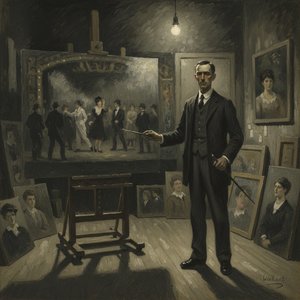
Walter Sickert: A Shadowy Realism & the Modern British Canvas
Explore the life & work of Walter Sickert, a pivotal British painter bridging Impressionism to Modernism. Discover his evocative scenes of London life, controversial legacy, and lasting influence on 20th-century art.

The Enduring Legacy of Fine Art Prints: Technique, History & Aesthetic Impact
Explore the rich history & techniques of fine art prints. Discover investment potential, assess authenticity, and learn how to preserve your collection with expert guidance. Trusted insights for discerning collectors.

Giclée Prints: Archival Quality & Aesthetic Nuances for the Discerning Collector
Explore the world of giclée prints with OriginalUniqueArt. Learn about archival quality, aesthetic nuances & investment potential. Expert guidance for discerning art collectors seeking museum-quality reproductions and lasting value.

Echoes of Time: Exploring the Enduring Appeal & Historical Context of Vintage Art Prints
Explore the captivating world of vintage art prints! Discover their history, collecting tips & enduring appeal. Expert insights on chromolithography and building a legacy collection with OriginalUniqueArt.