
 Previzualizare
 Trimite prin felicitare
 Distribuie
 Detalii despre lucrare
 Ghid
Ghid

 Descarcă imaginea
 Produse similare
 Radiografie
 Galerie foto
 Q&A
Q&A Statistici
Ophelia
 Oil On Canvas
- WallArt
- Pre-Raphaelite
 1851
1851 11.0 x 76.0 cm
 Tate Britain
 Vezi mai mult
Giclée / Imprimare artistică
Printuri giclée sau pe canvas de calitate muzeală, cu proces de producție rapid și opțiuni flexibile de finisare. ( Comandă pictură realizată manual Comută pe Imagine Digitală)




P118B lei10

P118H lei10

P118W lei10

P438Z lei10

P508JH lei12

P508YH lei12

P805H lei10

P805Z lei10

P919BZ lei10

P919G lei10

P919XJ lei10

P959ZH lei10

P968JZ lei12

W106C lei8

W218G lei10

W218JH lei8

W218Y lei10

W307PJ lei10

W316G lei10

W316PJ lei8

W316Y lei10

W398PJ lei8

W4111J lei10

W500HY lei15

W500JH lei15

W692G lei12

W849H lei8

W940BG lei15

W953PJ lei8




Alegeți dintre dimensiunile noastre prestabilite, care respectă proporțiile originale ale operei de artă.

Introduceți lățimea și înălțimea necesare pentru a se potrivi ramei sau peretelui dumneavoastră. O printare poate fi doar tăiată, niciodată extinsă dincolo de dimensiunea imaginii originale, astfel încât o dimensiune cu o formă diferită va pierde o parte din imagine. Vă trimitem o simulare digitală pentru aprobare înainte de a imprima orice. Imaginea afișată pe această pagină nu prezintă tăierea reală — doar simularea arată acest lucru.
Livrare în întreaga lume () în 2 săptămâni, în loc de cele 4/5 săptămâni standard. (30 Octombrie)

Livrare expres gratuită la nivel mondial

Pânză de in de înaltă calitate

Asigurare completă pentru transport

Garanție de rambursare a taxelor vamale

Garanția fidelității culorilor

Politica de retur în 100 de zile (doar pentru defecte de fabricație)

Garanție de rambursare 100%

Ofertă pentru comenzi multiple
 Opțiunea cu sticlă este disponibilă doar pentru dimensiuni de sub 110 cm

Ophelia
Giclée / Imprimare artistică
Dimensiune reproducere
-


Preț total calculat
lei 372
A Frozen Moment of Melancholy: Millais’s “Ophelia”
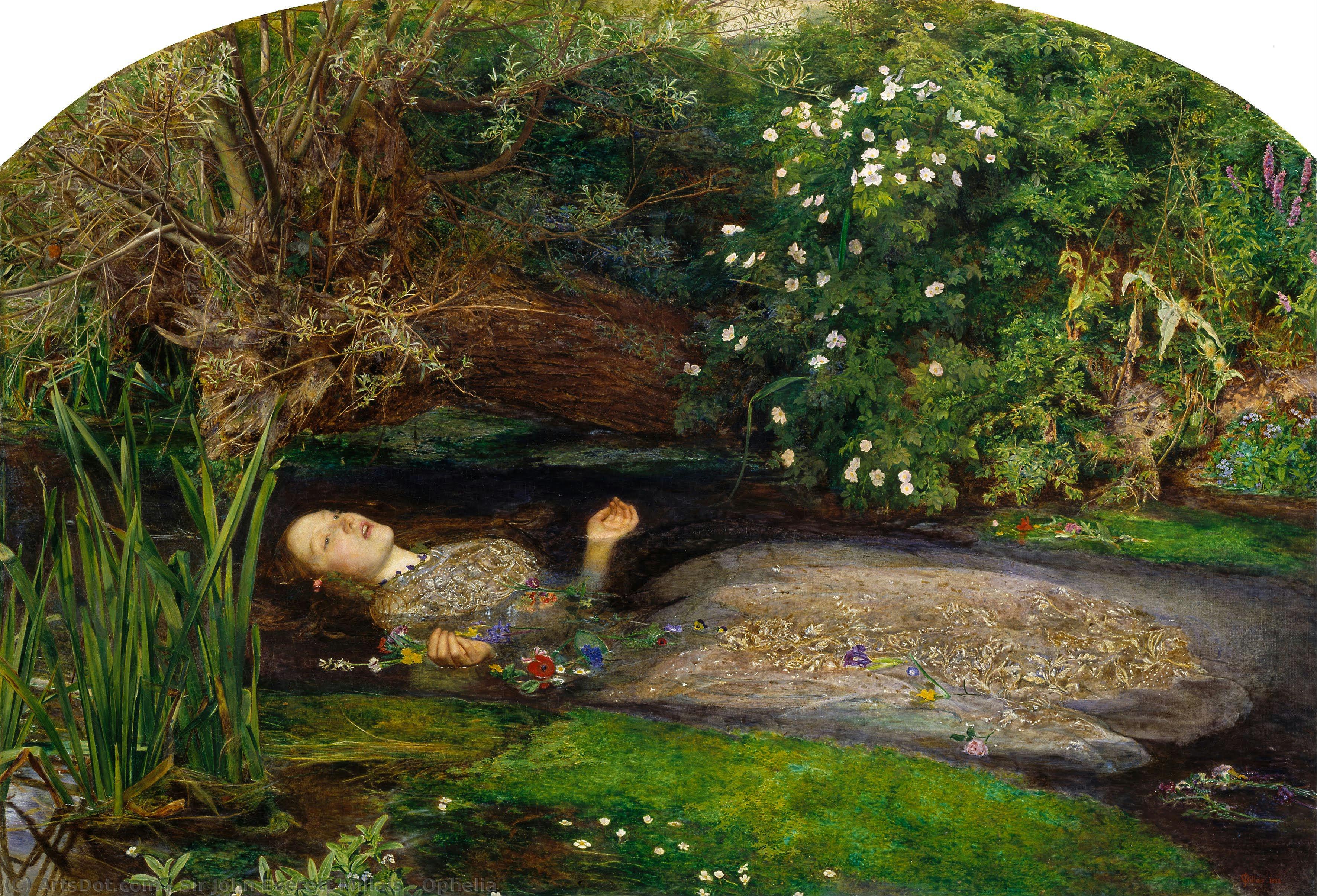
Sir John Everett Millais's "Ophelia," painted in 1851–52, isn’t merely a depiction of a tragic Shakespearean scene; it’s an immersive experience—a meticulously crafted tableau of sorrow and beauty that continues to captivate viewers over a century and a half later. This iconic Pre-Raphaelite masterpiece transcends its literary source, becoming a profound meditation on loss, innocence, and the poignant surrender to nature's embrace. The painting immediately draws the eye with its luminous palette and astonishing level of detail, inviting the viewer into a world both idyllic and profoundly mournful.
Millais’s genius lies not just in his technical skill—though that is undeniably remarkable—but in his ability to evoke an atmosphere of palpable grief. He achieved this through a radical departure from conventional artistic practices for the time, choosing to paint *en plein air* (outdoors) and working directly from nature. This commitment to realism, coupled with the Pre-Raphaelite Brotherhood’s fascination with medieval and Renaissance art, resulted in a work that feels simultaneously ancient and utterly contemporary. The scene unfolds along the Hogsmill River near Ewell, Surrey, where Millais meticulously recreated the landscape, capturing the dappled sunlight filtering through the foliage and the shimmering reflections on the water's surface.
The Figure of Despair
At the heart of “Ophelia” is her figure—a young woman reclining gracefully in the stream, her expression a mixture of serene acceptance and heartbreaking resignation. Elizabeth Siddall, Millais’s model for Ophelia, endured an extraordinary ordeal to achieve this portrayal. For weeks, she posed submerged in a bathtub filled with cold water, draped in heavy velvet robes to simulate the chill of the river. This dedication to realism extended beyond mere appearance; it was a deliberate attempt to capture the physical sensation of drowning—a testament to Millais’s commitment to portraying the subject matter with unflinching honesty.
The details surrounding Siddall's posing are particularly poignant, revealing the demanding nature of Pre-Raphaelite art production. The discomfort she experienced led to a severe illness, requiring medical attention and ultimately shaping the painting’s atmosphere of vulnerability. Millais’s careful observation of her posture, the delicate drape of her gown, and the subtle expression on her face all contribute to the overwhelming sense of tragedy.
Symbolism Woven into the Scene
“Ophelia” is rich in symbolic detail, each element carefully chosen to deepen the narrative’s emotional resonance. The flowers scattered around her—violets, pansies, poppies, willow branches, and daisies—are not merely decorative; they carry specific meanings rooted in Victorian symbolism. Violets represent faithfulness and modesty, while poppies symbolize death and sleep. The willow branch, a traditional symbol of mourning, drapes over the riverbank, mirroring Ophelia’s descent into sorrow. Even the arrangement of the flowers suggests a deliberate composition—a visual representation of her fragmented thoughts and memories.
The inclusion of a silver casket, partially submerged in the water, further reinforces the theme of loss and remembrance. It is a relic from her past, a symbol of her shattered engagement and the world she has lost. The presence of a small mouse nestled amongst the embroidery on the table adds an unexpected layer of detail—a reminder of mortality and the fragility of life.
A Legacy of Beauty and Sorrow
“Ophelia” remains one of the most celebrated paintings in the Pre-Raphaelite canon, admired for its technical brilliance, emotional depth, and enduring power. It’s a work that invites repeated viewing—each encounter revealing new layers of meaning and nuance. Beyond its artistic merit, “Ophelia” has become an iconic image of female vulnerability and tragic beauty, frequently referenced in literature, film, and popular culture. Its depiction of a young woman surrendering to the embrace of nature continues to resonate with viewers today, serving as a poignant reminder of the ephemeral nature of life and the enduring power of art to capture both its splendor and its sorrow.
Reproductions of “Ophelia” offer an accessible way to experience this masterpiece firsthand. Whether displayed in a grand salon or a cozy study, this evocative image will undoubtedly spark conversation and inspire contemplation for years to come.
Întrebări și răspunsuri
Ce stare de spirit transmite "Ophelia" de John Everett Millais în cadrul mișcării Pre-Raphaelite?
"Ophelia" emană o Melancholic notă emoțională, specifică mișcării Pre-Raphaelite.
Ce stare și ce emoție transmite "Ophelia" de John Everett Millais?
Starea de spirit surprinsă în "Ophelia" de John Everett Millais este Romantic, iar tonul său emoțional este Melancholic.
Ce nivel de saturație a culorilor are "Ophelia" de John Everett Millais?
Paleta lucrării "Ophelia" are o saturație de Balanced Soft.
Biografie artist
A Prodigy of the Pre-Raphaelites: The Life and Art of Sir John Everett Millais
Born in Southampton in 1829, John Everett Millais entered the Royal Academy Schools at the astonishing age of eleven—the youngest student ever admitted. This early demonstration of prodigious talent foreshadowed a career that would not only define an artistic movement but also capture the Victorian imagination with its breathtaking realism and emotional depth. From his earliest days, Millais possessed a remarkable gift for observation, a quality that would become the cornerstone of his artistic style. He wasn’t merely painting what he saw; he was meticulously recreating it, imbuing each brushstroke with an almost photographic fidelity. This dedication to truth in representation set him apart and ultimately led him to challenge the established conventions of British art.The Birth of a Brotherhood and Artistic Rebellion
Millais’s artistic trajectory took a pivotal turn in 1848 when, alongside Dante Gabriel Rossetti and William Holman Hunt, he founded the Pre-Raphaelite Brotherhood. This wasn't simply an aesthetic choice; it was a deliberate rebellion against what they perceived as the artificiality of academic art—art that had strayed too far from the natural world and the sincerity of early Renaissance masters, those working *before* Raphael. The Pre-Raphaelites sought to revive the clarity, detail, and vibrant color palettes of artists like Jan van Eyck and Fra Angelico. Their manifesto was one of truth to nature, a rejection of idealized forms, and an embrace of subjects drawn from literature, mythology, and everyday life. Millais’s early works, such as *Isabella*, immediately showcased this new approach—a meticulous attention to detail combined with a narrative intensity that captivated and often provoked audiences. His most controversial work during this period, Christ in the House of His Parents (1849-50), depicted the Holy Family not as ethereal beings but as ordinary working-class people, engaging in everyday tasks like preparing food, sparking outrage among critics who found its realism unsettling and even blasphemous. The painting’s stark depiction of a humble domestic scene directly challenged the traditional, idealized representations of religious subjects prevalent at the time.Evolving Styles and Victorian Sensibilities
The mid-1850s marked a period of significant change for Millais, both personally and artistically. His marriage to Effie Gray, following the annulment of her marriage to John Ruskin, profoundly influenced his work. He moved away from the intensely detailed, symbolic style of his early Pre-Raphaelite paintings towards a broader, more atmospheric realism. This shift wasn’t simply a matter of stylistic preference; it reflected a growing engagement with contemporary life and a desire to capture the fleeting beauty of the natural world. Paintings like *Autumn Leaves* exemplify this new direction—a serene depiction of a group of young women drifting leaves on a river, imbued with a sense of melancholy and nostalgia. The painting’s luminous colors and delicate rendering of light and shadow demonstrate Millais's growing mastery of technique. He also found considerable success as a portraitist, capturing the likenesses of prominent Victorian figures, including John Gladstone and Benjamin Disraeli. This period saw Millais achieve widespread popularity and financial security, but it also drew criticism from some who felt he had compromised his artistic principles.Iconic Masterpieces and Lasting Influence
Millais’s career produced a remarkable body of work that continues to fascinate art lovers today. *Ophelia* (1851-1852), perhaps his most famous painting, is renowned for its haunting beauty and symbolic richness. The image of Ophelia drowning in the river, surrounded by water lilies and wildflowers, captures both her tragic fate and the poignant beauty of nature. A Huguenot (1851-1852) depicts a scene of religious conflict and forbidden love, showcasing Millais’s skill in capturing dramatic emotion and narrative intensity. *Mariana* (1850-1851), inspired by Shakespeare and Tennyson, is a testament to his ability to evoke mood and atmosphere through subtle color harmonies and delicate brushwork. Later works, such as *Autumn Leaves*, demonstrate his evolving style and his increasing interest in capturing the beauty of everyday life. Millais’s work profoundly influenced subsequent generations of artists, shaping the course of British art and contributing significantly to the development of Impressionism and other modern movements. His commitment to realism, his exploration of narrative themes, and his innovative use of color continue to inspire artists today.Legacy and Collections
Sir John Everett Millais’s legacy extends far beyond his individual works. He was a key figure in the Pre-Raphaelite movement, which challenged artistic conventions and championed a return to nature and sincerity. His paintings are held in major museums around the world, including Tate Britain in London, Manchester Art Gallery, and the National Gallery of Art in Washington D.C. His influence can be seen in the works of many later artists, and his images continue to resonate with audiences today.
John Everett Millais
1829 - 1896 , Regatul Unit al Marii Britanii și Irlandei
Detalii rapide
- Artistic Movement Or Style: Pre-Raphaelit
- Artists Or Movements Influenced By This Artist: ['Pre-Raphaelit']
- Artists Who Influenced This Artist: ['Pre-Raphaelit']
- Date Of Birth: 8 iunie 1829
- Date Of Death: 13 august 1896
- Full Name: Sir John Everett Millais
- Nationality: Britanic
- Notable Artworks:
- Ophelia
- Christ...
- A Huguenot
- Place Of Birth: Southampton, UK
Articole similare

Dante Gabriel Rossetti: Cele Mai Frumoase 25 de Capodopere – Artă, Decorațiuni și Inspirație
Descoperă cele mai frumoase 25 de picturi ale lui Dante Gabriel Rossetti! Explorează arta prerafaelită, simbolismul romantic și portretele feminine iconice. Reproduceri artă de calitate muzeală & inspirație decorativă pe OriginalUniqueArt.com.

The Pre-Raphaelite Brotherhood: Rebellion, Romance & Medieval Revival
Explore the captivating world of the Pre-Raphaelite Brotherhood! Discover their rebellious spirit, iconic masterpieces & lasting influence on art history. Learn about Rossetti, Millais & more.

The Pre-Raphaelite Brotherhood: Rediscovering Romanticism, Mythological Depth, and Vivid Detail in Victorian Art
Explore the breathtaking world of the Pre-Raphaelite Brotherhood. Discover how this movement redefined Victorian art through vivid detail, mythological depth, and romanticism. An expert guide for classic art enthusiasts seeking to rediscover these timeless masterpieces.

The Pre-Raphaelite Brotherhood: Rediscovering Beauty, Romance, and Medieval Magic in Victorian Art
Embark on a journey through the Pre-Raphaelite Brotherhood. Discover the romantic symbolism, medieval magic, and radical beauty of Rossetti and Burne-Jones in this expert exploration of Victorian art history.

Sir John Everett Millais: Pre-Raphaelite Rebellion & Victorian Narrative Detail
Explore the revolutionary art of Sir John Everett Millais & the Pre-Raphaelite Brotherhood. Discover their radical realism, symbolic narratives, and lasting impact on Victorian aesthetics. A deep dive into 19th-century masterpieces.


