
 Vezi în context
 Trimite
 Distribuie
 Detalii
 Ghidul

 Descarcă
 Produse similare
 Radiografie
 Diaporama
 Statistici
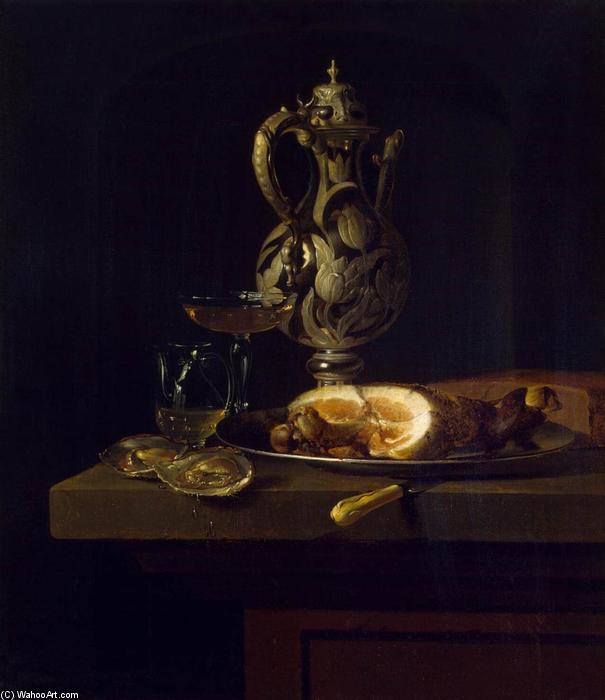
Breakfast with Ham
 Baroque
 1650
1650 74.0 x 65.0 cm
 Muzeul Hermitaj
 Citește mai mult
Reproducere pictată manual în ulei
Pictură în ulei pe pânză, realizată manual de artiștii noștri la dimensiunea și ramele dorite de dumneavoastră, pe comandă. ( Comută pe versiunea Print Treci la imagine digitală)




































Alegeți dintre dimensiunile noastre prestabilite, care respectă proporțiile originale ale operei de artă.

Introduceți lățimea și înălțimea de care aveți nevoie, pentru a se potrivi ramei sau peretelui dumneavoastră. Această lucrare este pictată manual, așa că pentru o dimensiune cu o formă diferită, artistul poate picta puțin mai mult în jurul imaginii sau poate tăia puțin din margini — dumneavoastră decideți. Vă vom trimite o simulare digitală pentru aprobare înainte de a începe pictarea. Imaginea afișată pe această pagină nu reprezintă rezultatul real — doar simularea este reprezentativă.
După plasarea comenzii, echipa OriginalUniqueArt.com va contacta clientul prin e-mail pentru instrucțiuni și îi va furniza o previzualizare a machetei
Livrare în întreaga lume () în 3-4 săptămâni, în loc de cele 5 săptămâni standard. (22 Octombrie). Fără compromisuri în ceea ce privește calitatea.

Livrare expres gratuită la nivel mondial

Pânză de in premium

Asigurare completă pentru transport

Garanție de rambursare a taxelor vamale

Garanția fidelității culorilor

Politica de retur în 100 de zile (doar pentru defecte)

Garanție de rambursare 100%

Reducere pentru comenzi multiple
 Opțiunea cu sticlă este disponibilă doar pentru dimensiuni de sub 110 cm

Breakfast with Ham
Tip de reproducere
Dimensiune reproducere
-


Preț total
lei 1388
Biografie artist
The Master of the Dutch Golden Age: The Life and Legacy of Simon Luttichuijs
In the vibrant, bustling atmosphere of the seventeenth century, few artists captured the quiet intimacy of domestic life with as much profound realism as Simon Luttichimijs. Born in London in 1610, Luttichuijs carried a unique, cross-cultural perspective that would eventually find its most resonant expression within the heart of the Dutch Golden Age. While his origins lie in the English capital, his artistic soul was forged in the prestigious studios of the Low Countries. His journey through the art worlds of Haarlem and Amsterdam allowed him to weave together diverse influences, creating a body of work that transcends mere representation to touch upon the very essence of existence.
The formative years of Luttichuijs were marked by an extraordinary apprenticeship under some of the most formidable masters of his era. Evidence suggests he refined his brushwork under the guidance of Hendrick van Balen and the legendary Frans Hals. This dual lineage provided him with a rare technical toolkit: from Van Balen, he inherited a sense of classical composition and grace; from Hals, he absorbed a mastery of light and a more spontaneous, energetic approach to texture. As he moved through his early career in Haarlem, his work began to reflect the atmospheric precision characteristic of that region, often focusing on tender landscapes and domestic interiors that seemed to breathe with a palpable sense of natural light.
A Symphony of Texture and Symbolism
As Luttichuijs transitioned into his mature period in Amsterdam, his focus shifted toward the exquisitely detailed world of still life. This was not merely an exercise in technical virtuosity, but a deep exploration of the sensory world. His compositions often serve as silent narratives, where every object carries a weight of meaning. In works such as Still-Life with Fruit and Roses, one can witness his ability to render the vibrant, sun-drenched skin of an orange alongside the delicate, ephemeral petals of a rose, creating a tension between the enduring and the fleeting.
His mastery is perhaps most evident in his treatment of light and material. Consider the following hallmarks of his technique:
- The interplay of light on glass: In pieces like Still-Life with a Peeled Lemon in a Roemer, Luttichuijs captures the way light refracts through liquid and crystal, creating a sense of depth that pulls the viewer into the scene.
- Tactile realism: He possessed an uncanny ability to differentiate between the cold, hard surface of a pewter jug and the soft, porous texture of a bread roll, making the inanimate objects feel almost tangible.
- Symbolic depth: Through the use of elements like peeled fruit or half-empty vessels, he subtly invoked the vanitas themes prevalent in Dutch art, reminding the observer of the transient nature of life and beauty.
Historical Significance and Artistic Endurance
The later years of Luttichuijs’s life, leading up to his death in 1661, saw him firmly established within the artistic elite of Amsterdam. By collaborating with prominent art dealers and securing commissions from wealthy patrons, he helped define the aesthetic standards of a period characterized by prosperity and scientific curiosity. His ability to cater to the sophisticated tastes of the Dutch merchant class ensured that his works were not only celebrated in their time but preserved as cornerstones of the Golden Age canon.
Today, the legacy of Simon Luttichuijs remains a testament to the power of observation. He did not merely paint objects; he painted the way we perceive them—the glint of an ale glass, the weight of a salt cellar, and the quiet dignity of a tabletop. His work continues to offer a window into a lost world, inviting modern viewers to slow down and find beauty in the meticulous, the mundane, and the magnificent.

Simon Luttichuijs
1610 - 1661 , United Kingdom
Informații rapide
- Full Name: Simon Luttichuijs
- Nationality: British
- Date Of Birth: 1610
- Date Of Death: 1661
- Place Of Birth: London, United Kingdom
- Notable Artworks:
- Still-Life with a Peeled Lemon in a Roemer
- Breakfast with Ham
- A still life with a pewter jug on its side, a glass of ale, a salt cellar, a bread roll and other objects on a table draped in a dark green cloth
- Artistic Movement Or Style: Realist Art
Articole conexe

Golden Age Reflections: Dutch Baroque Painting & Cultural Innovation
Explore the Dutch Golden Age of painting! Discover key artists like Vermeer & ter Borch, their innovative techniques, and the rich cultural context behind these Baroque masterpieces. Learn about collecting & appreciating this iconic art period.

Mastering Light & Shadow: A Journey Through the Dutch Golden Age's Luminous Legacy
Embark on a cultural journey through the Dutch Golden Age. Explore the masterful interplay of light and shadow in 17th-century masterpieces, from Rembrandt to Vermeer, and discover how this era of profound realism continues to inspire fine art collectors today.

Illuminating Innovation: Exploring the Dutch Golden Age of Painting
Explore the Dutch Golden Age of painting with OriginalUniqueArt. Discover Rembrandt, Vermeer & other Masters. Learn about key characteristics, iconic artworks, and lasting influence. Expert insights for collectors & enthusiasts.

Golden Light & Dutch Skies: The Timeless Magic of Dutch Golden Age Landscapes
Discover the breathtaking beauty of Dutch Golden Age landscapes. Explore the mastery of light, chiaroscuro, and 17th-century realism through an expert art history lens, celebrating the enduring legacy of the Dutch Masters for discerning collectors and art lovers.

Epoca de Aur Olandeză: 10 Capodopere Care Au Definit Arta și Decorațiunea Interioară
Descoperiți Epoca de Aur Olandeză prin 10 capodopere Rembrandt, Vermeer și alți pictori olandezi. Aflați poveștile din spatele acestor tablouri baroce iconice și inspirați-vă pentru decorațiuni interioare unice. Explorează colecția completă pe OriginalUniqueArt.com!