

 Previzualizare
 Trimite prin felicitare
 Distribuie
 Detalii despre lucrare
 Ghid
Ghid

 Descarcă imaginea
 Produse similare
 Radiografie
 Galerie foto
 Statistici
Demonstrații Desenate


 Vezi mai mult
Lucrarea de artă afișată pe această pagină este protejată de legile privind drepturile de autor, ceea ce înseamnă că nu putem crea sau vinde în mod legal o reproducere identică. Această protecție este garantată prin acorduri internaționale, precum Convenția de la Berna și de legile naționale, inclusiv cele prevăzute de Legea dreptului de autor din S.U.A. – Titlul 17. Toate drepturile rezervate. Orice reproducere neautorizată este interzisă.
Această metodă respectă pe deplin reglementările privind drepturile de autor, deoarece nu implică copierea sau duplicarea operei protejate. În schimb, este o reinterpretare creativă – o pictură nouă, influențată de original, dar care nu este identică cu acesta.
Giclée / Imprimare artistică
Printuri giclée sau pe canvas de calitate muzeală, cu proces de producție rapid și opțiuni flexibile de finisare. ( Comandă pictură realizată manual Comută pe Imagine Digitală)




P118B lei10

P118H lei10

P118W lei10

P438Z lei10

P508JH lei12

P508YH lei12

P805H lei10

P805Z lei10

P919BZ lei10

P919G lei10

P919XJ lei10

P959ZH lei10

P968JZ lei12

W106C lei8

W218G lei10

W218JH lei8

W218Y lei10

W307PJ lei10

W316G lei10

W316PJ lei8

W316Y lei10

W398PJ lei8

W4111J lei10

W500HY lei15

W500JH lei15

W692G lei12

W849H lei8

W940BG lei15

W953PJ lei8




Alegeți dintre dimensiunile noastre prestabilite, care respectă proporțiile originale ale operei de artă.

Introduceți lățimea și înălțimea necesare pentru a se potrivi ramei sau peretelui dumneavoastră. O printare poate fi doar tăiată, niciodată extinsă dincolo de dimensiunea imaginii originale, astfel încât o dimensiune cu o formă diferită va pierde o parte din imagine. Vă trimitem o simulare digitală pentru aprobare înainte de a imprima orice. Imaginea afișată pe această pagină nu prezintă tăierea reală — doar simularea arată acest lucru.
Livrare în întreaga lume () în 2 săptămâni, în loc de cele 4/5 săptămâni standard. (27 Octombrie)

Livrare expres gratuită la nivel mondial

Pânză de in de înaltă calitate

Asigurare completă pentru transport

Garanție de rambursare a taxelor vamale

Garanția fidelității culorilor

Politica de retur în 100 de zile (doar pentru defecte de fabricație)

Garanție de rambursare 100%

Ofertă pentru comenzi multiple
 Opțiunea cu sticlă este disponibilă doar pentru dimensiuni de sub 110 cm

Demonstrații Desenate
Giclée / Imprimare artistică
Dimensiune reproducere
-


Preț total calculat
lei 371
Demonstration Drawings - Rirkrit Tiravanija: A Dialogue Between Art and Everyday Life
Rirkrit Tiravanija stands apart from many contemporary artists, prioritizing not just visual aesthetics but the profound connection between art and human experience—a philosophy he succinctly defines as “bringing people together.” This ethos isn’t merely a stylistic choice; it's rooted in his formative years spent traversing Thailand, Ethiopia, and Canada, experiences that instilled within him a worldview profoundly shaped by encounters with diverse cultures. Initially drawn to history at Carleton University, Tiravanija’s intellectual curiosity blossomed into an immersive engagement with visual arts, culminating in studies at Ontario College of Art and Banff Centre School of Fine Arts before embarking on postgraduate explorations at the School of the Art Institute of Chicago and Whitney Independent Studies Program. Moving to Manhattan solidified his artistic trajectory, establishing him as a prominent figure within the global art scene.- The Conceptual Core: Tiravanija’s work isn't about creating objects for contemplation; it’s about initiating dialogues—social conversations that challenge conventional notions of artistic production and reception. He rejects the solitary pursuit of beauty, favoring instead collaborative endeavors where participants actively contribute to shaping the artwork’s essence.
- Relational Aesthetics: Tiravanija’s approach aligns perfectly with Nicolas Bourriaud's concept of “relational aesthetics,” which posits that art should foster social interaction and generate affective bonds between individuals. This perspective emphasizes the importance of shared experiences as catalysts for artistic transformation.
- Material Engagement: Demonstrating Drawings (2006– 2015) exemplifies Tiravanija’s commitment to tangible engagement with materials—specifically, Thai artists' drawings that translate photojournalistic images documenting mass uprisings against power and oppression. The medium itself—drawing—is deliberately chosen for its immediacy and capacity to capture fleeting moments of collective action.
The Brick-Firing Machine: A Ritual of Shared Labor
At the heart of Untitled 2010 (14086), presented initially at a gallery in Beijing, lies Tiravanija’s ingenious installation—a functioning brick-firing machine positioned within the exhibition space. This seemingly simple device serves as a powerful symbol of labor and craftsmanship, transforming it into an artistic endeavor. The selection of bricks themselves carries significant cultural resonance, referencing the modest house envisioned for a family in China—a deliberate gesture toward fostering intimacy and expanding the boundaries of domestic life. Furthermore, the stamped Chinese characters “别干了” (“Never Work”) – a direct invocation of the Situationists’ manifesto – underscore Tiravanija's critique of alienated wage labor and his belief that art can disrupt established hierarchies.Symbolism Beyond Technique: Family Values and Collective Action
The number 14,086—the precise quantity of bricks required for construction—represents more than just a logistical detail; it embodies Tiravanija’s overarching thematic preoccupation with family values and collective action. By distributing these bricks among the public, he actively participates in reimagining the traditional home as a space for communal engagement—a deliberate challenge to individualism and an affirmation of social bonds. This conceptual framework speaks directly to the core tenets of relational aesthetics, highlighting art's capacity to inspire empathy, foster dialogue, and catalyze transformative change within communities.A Legacy of Collaborative Creativity
Rirkrit Tiravanija’s artistic legacy extends beyond individual artworks; it resides in his unwavering dedication to fostering collaborative creativity—a practice that recognizes the inherent value of human interaction as a driving force behind artistic innovation. His work serves as a poignant reminder that art doesn't exist in isolation but thrives on connection, prompting us to reconsider our understanding of beauty and its role in shaping our social landscape.Întrebări și răspunsuri
Ce spațiu se potrivește cu nuanțele din "Demonstrații Desenate" de Rirkrit Tiravanija?
Datorită paletei de culori Culori neutre, recomandăm "Demonstrații Desenate" de Rirkrit Tiravanija pentru o Living Room. Culorile sunt unul dintre motivele acestei sugestii.
Unde pot cumpăra o reproducere pictată manual a operei "Demonstrații Desenate" de Rirkrit Tiravanija?
Reproducțiile pictate manual ale operei "Demonstrații Desenate" de Rirkrit Tiravanija pot fi achiziționate pe acest site web: o reproducere pictată manual în ulei pe pânză de in, prin comandă direct de pe pagina Reproducere pictată în ulei.
"Demonstrații Desenate" de Rirkrit Tiravanija este o operă de artă luminoasă sau întunecată?
"Demonstrații Desenate" are strălucitor în întregime, iar luminozitatea sa este Lumină delicată.
Biografie artist
The Art of Shared Experience: The Life and Vision of Rirkrit Tiravanija
To encounter the work of Rirkrit Tiravanija is to step away from the silent, sterile halls of traditional galleries and into a living, breathing space of human connection. Born in Buenos Aires, Argentina, in 1961, Tiravanija’s identity was forged through a nomadic childhood that spanned the diverse landscapes of Thailand, Ethiopia, and Canada. This global upbringing instilled in him a profound understanding of cultural fluidity and the universal language of shared existence. His artistic journey, while academically rooted in history and fine arts—spanning institutions from Carleton University to the School of the Art Institute of Chicago—eventually transcended the boundaries of the canvas and the sculpture to embrace the very essence of social interaction.
Tiravanija’s practice is famously defined by the concept of Relational Aesthetics, a term coined by curator Nicolas Bourriaud to describe art that takes as its theoretical horizon the realm of human interactions and its social context. Rather than producing static objects for passive observation, Tiravan andija creates environments that function as stages for living. His work rejects the idea of the artwork as an isolated commodity, instead prioritizing the ephemeral magic that occurs when strangers become participants in a shared moment. Through his lens, art is not something to be looked at, but something to be lived, tasted, and felt.
Breaking Bread: The Radicalism of the Everyday
The early 1990s marked a seismic shift in contemporary art with the arrival of Tiravanija’s groundbreaking installations. In his seminal work, “Pad Thai,” presented at the Paula Allen Gallery, he famously abandoned the traditional gallery object entirely. Instead of hanging paintings or placing pedestals, he transformed the exhibition space into a communal kitchen, preparing and serving Pad Thai to visitors. This audacious act of hospitality turned the gallery into a site of nourishment and dialogue, blurring the line between the artist’s labor and the audience's experience. This practice was not merely a performance but an invitation to engage with the conviviality of the everyday.
This theme of culinary connection continued through subsequent projects, such as his 1995 Carnegie International exhibition, where he provided instructions for cooking South-East Asian green curry. By utilizing familiar, domestic tasks like cooking and eating, Tiravanija strips away the pretension often associated with high art, replacing it with a sense of ritual and intimacy. His work serves as a powerful reminder that the most profound artistic experiences can be found in the simplest acts of togetherness, echoing his childhood memories of his grandmother’s garden restaurant where food was always a catalyst for community.
A Legacy of Connection and Social Dialogue
Beyond the sensory delights of shared meals, Tiravanija’s work carries a deep sociopolitical resonance. His more recent endeavors, such as his “Demonstration Drawings,” showcase a different facet of his practice—one that uses visual imagery to reflect on mass uprisings, power, and global capital. By commissioning Thai artists to translate photojournalistic images into drawings, he bridges the gap between historical documentation and contemporary social critique, proving that his commitment to "bringing people together" also extends to fostering critical awareness of the world around us.
The historical significance of Rirkrit Tiravanija lies in his ability to redefine the role of the artist from a creator of objects to a facilitator of experiences. His influence can be seen across generations of artists who seek to dismantle the walls between art and life. As he continues to work between New York, Berlin, and Chiang Mai, his practice remains an enduring testament to the power of relationality—a belief that in an increasingly fragmented world, the most radical act an artist can perform is to create a space where we might truly encounter one another.

Rirkrit Tiravanija
1961 -
Detalii rapide
- Artistic Movement Or Style: Relational Aesthetics
- Artists Or Movements Influenced By This Artist: ['Social Sculpture']
- Artists Who Influenced This Artist:
- Minimalism
- Conceptual Art
- Date Of Birth: 1961
- Full Name: Rirkrit Tiravanija
- Nationality: Thai
- Notable Artworks:
- Pad thai
- Untitled (free/still)
- Tom kha soup
- Place Of Birth: Buenos Aires, Argentina
Articole similare

The Enduring Form: Sculpture Across History, Technique & Emotional Resonance
Explore the rich history of sculpture with OriginalUniqueArt. Discover key techniques, influential artists & investment potential for discerning collectors. Expert insights into valuing and collecting timeless masterpieces.

Top 10 Capodopere din Bronz care au Revoluționat Arta | OriginalUniqueArt.ro
Descoperiți Top 10 capodopere din bronz care au revoluționat arta! Rodin, Michelangelo și alții. Aflați istoria sculpturilor clasice și inspirație pentru decorul casei dvs. Reproduceri de artă de calitate muzeală pe OriginalUniqueArt.com

The Enduring Form: Exploring Themes & Techniques in Sculpture Across Historical Periods
Explore the rich history of sculpture from ancient masterpieces to contemporary innovations. Discover key techniques, influential artists & investment potential for discerning art collectors.

Top 10 Capodopere din Bronz care au Revoluționat Arta – Inspirație pentru Decor
Descoperă Top 10 sculpturi din bronz care au schimbat istoria artei! Explorează operele lui Rodin, Michelangelo și alți maeștri, tehnicile lor unice și inspirația pentru decorul casei tale. Replici de calitate muzeală pe OriginalUniqueArt.com.
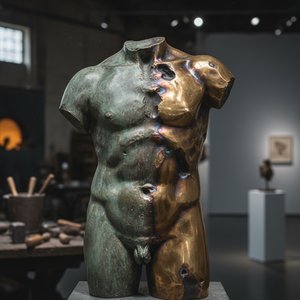
Moștenirea Durabilă a Sculpturii în Bronz: Istorie, Tehnici și Interpretări Contemporane
Descoperiți istoria fascinantă și tehnicile complexe ale sculpturii în bronz. Ghid complet pentru colecționari, investitori și pasionați de artă. Aflați despre artiști renumiți și tendințele contemporane.

