

 Vezi în context
 Trimite
 Distribuie
 Detalii

 Descarcă
 Produse similare
 Radiografie
 Diaporama
 Statistici
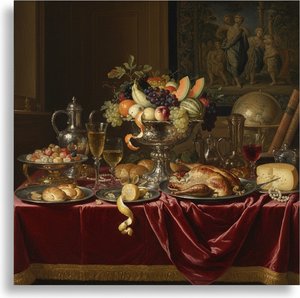
Still Life


 Citește mai mult
Reproducere pictată manual în ulei
Pictură în ulei pe pânză, realizată manual de artiștii noștri la dimensiunea și ramele dorite de dumneavoastră, pe comandă. ( Comută pe versiunea Print Treci la imagine digitală)




































Alegeți dintre dimensiunile noastre prestabilite, care respectă proporțiile originale ale operei de artă.

Puteți introduce propriile dimensiuni pentru a se potrivi unui anumit cadru sau spațiu. Dacă dimensiunea selectată nu corespunde proporțiilor imaginii originale, vom decupa opera de artă sau vom extinde pictura cu elemente suplimentare pictate manual. O simulare digitală vă va fi trimisă pentru aprobare înainte de începerea producției.
Vă rugăm să rețineți că previzualizarea de pe ecran nu reflectă decuparea sau extinderea reală. Doar macheta va arăta cu exactitate compoziția finală.
Deși sunt disponibile dimensiuni personalizate, vă recomandăm să selectați o dimensiune din lista predefinită pentru a păstra proporțiile originale.
După plasarea comenzii, echipa OriginalUniqueArt.com va contacta clientul prin e-mail pentru instrucțiuni și îi va furniza o previzualizare a machetei
Livrare în întreaga lume () în 3-4 săptămâni, în loc de cele 5 săptămâni standard. (20 Septembrie). Fără compromisuri în ceea ce privește calitatea.

Livrare expres gratuită la nivel mondial

Pânză de in premium

Asigurare completă pentru transport

Garanție de rambursare a taxelor vamale

Garanția fidelității culorilor

Politica de retur în 100 de zile (doar pentru defecte)

Garanție de rambursare 100%

Reducere pentru comenzi multiple
 Opțiunea cu sticlă este disponibilă doar pentru dimensiuni de sub 110 cm

Still Life
Tip de reproducere
Dimensiune reproducere
-


Preț total
$ 300
Biografie artist
Pieter Claesz Soutman: A Master of Subtle Realism in the Dutch Golden Age
Pieter Claesz Soutman (1593-1657) stands as a quietly significant figure within the pantheon of Dutch Golden Age painters. Often overshadowed by the flamboyant brushstrokes of Frans Hals or the dramatic compositions of Rembrandt, Soutman’s legacy lies in his remarkable ability to capture nuanced realism and atmospheric depth—particularly in his still lifes and portraits. Born and raised in Haarlem, a city brimming with artistic talent during this period, Soutman's career unfolded amidst the vibrant cultural landscape shaped by contemporaries like Hals, Pot, and Claesz himself, suggesting an absorption of diverse influences that ultimately defined his unique style. His life story is intertwined with the political currents of the era, marked by service to Polish royalty and a fascinating episode involving a mistaken attribution at the Louvre.Early Life and Training
Soutman’s origins were rooted in wealth and Catholic tradition. He was the youngest son of a prosperous brewery owner, the proprietor of De Werelt in Haarlem, a fact that afforded him a comfortable upbringing and access to cultural circles. While details about his formal artistic training remain somewhat elusive, accounts suggest a connection with Peter Paul Rubens in Antwerp—a pivotal experience for any aspiring artist of the time. Houbraken’s biographical notes indicate this apprenticeship, painting Soutman as a successful protégé who garnered recognition through Samuel Ampzing's verse praising his abilities within Haarlem society. The timing of this period – coinciding with Prince Władysław Vasa’s visit to Antwerp in 1624 – further cemented Soutman’s reputation and led to a recommendation by Rubens himself, a testament to the artist’s burgeoning skill. This early exposure to Rubens's studio undoubtedly shaped his approach to composition, lighting, and the rendering of textures—elements that would become hallmarks of Soutman’s distinctive style.Service in Poland and Return to Haarlem
A significant chapter in Soutman’s life unfolded during his tenure as a court painter for King Sigismund III Vasa in Poland (1624-1628). This period marked a departure from his Haarlem roots, thrusting him into the heart of Polish aristocratic society. He served as a servitor to the king and his son, Władysław Sigismund, demonstrating an adaptability and professionalism that allowed him to thrive in a foreign court. Returning to Haarlem in 1628, Soutman established himself as a respected portrait painter within the city’s artistic community. His connections to the Catholic Hofje Codde en Van Beresteijn—a complex arrangement involving two separate hofjes—provided him with patronage and opportunities for commissions, particularly lucrative schutterstukken (civic group portraits) that were central to Haarlem's social and political life.The Scandal at the Louvre and Artistic Legacy
Perhaps the most intriguing aspect of Soutman’s career revolves around a remarkable misattribution that occurred in the 1860s. A portrait of the Beresteijn family, regents of both the Codde and Beresteijn hofjes, was mistakenly identified as a work by Frans Hals and purchased by the Louvre for a considerable sum. This incident sparked outrage within the Dutch press, with Conrad Busken Huet vehemently arguing that such a national treasure should remain in its homeland. The story highlights not only the challenges of attribution during that era but also underscores Soutman’s remarkable skill—his paintings were so convincing that they fooled even seasoned art experts. Today, Soutman's works are housed in various museums across Europe, including the Huis ten Bosch in The Hague, and his pupils – Cornelis Visscher, Jacob Louys, and Pieter van Sompel – continued to build upon his artistic foundations.Style and Technique
Soutman’s distinctive style is characterized by a remarkable restraint and subtlety. Unlike the bold, dramatic brushwork of Hals or the chiaroscuro mastery of Rembrandt, Soutman favored a more muted palette and a meticulous attention to detail. His still lifes—often featuring humble objects like fruit, bread, and wine—are imbued with an almost melancholic beauty, capturing not just their physical appearance but also suggesting a deeper contemplation on themes of mortality and transience – hallmarks of *vanitas* paintings. His portraits, too, are notable for their psychological depth and the way he captured the quiet dignity of his subjects. He skillfully employed light and shadow to create atmospheric effects, lending a sense of realism and immediacy to his compositions. His work represents a significant contribution to the development of Dutch still life painting during the 17th century, demonstrating a mastery of technique and an ability to evoke profound emotion through seemingly simple imagery.
Pieter Claesz Soutman
1580 - 1657
Informații rapide
- Artistic Movement Or Style: Dutch Golden Age
- Artists Or Movements Influenced By This Artist: ['Frans Hals']
- Artists Who Influenced This Artist:
- Rubens
- Hals
- Pieter Claesz
- Date Of Birth: 1593/1601
- Date Of Death: 1657
- Full Name: Pieter Claesz Soutman
- Nationality: Dutch
- Notable Artworks:
- Portrait of Sigismund III Vasa
- Emerantia van Berensteyn
- Place Of Birth: Haarlem, Netherlands
Articole conexe

Golden Age Reflections: Dutch Baroque Painting & Cultural Innovation
Explore the Dutch Golden Age of painting! Discover key artists like Vermeer & ter Borch, their innovative techniques, and the rich cultural context behind these Baroque masterpieces. Learn about collecting & appreciating this iconic art period.

Epoca de Aur Olandeză: 10 Capodopere Care Au Definit Arta și Decorațiunea Interioară
Descoperiți Epoca de Aur Olandeză prin 10 capodopere Rembrandt, Vermeer și alți pictori olandezi. Aflați poveștile din spatele acestor tablouri baroce iconice și inspirați-vă pentru decorațiuni interioare unice. Explorează colecția completă pe OriginalUniqueArt.com!

Illuminating Innovation: Exploring the Dutch Golden Age of Painting
Explore the Dutch Golden Age of painting with OriginalUniqueArt. Discover Rembrandt, Vermeer & other Masters. Learn about key characteristics, iconic artworks, and lasting influence. Expert insights for collectors & enthusiasts.

Golden Light & Dutch Skies: The Timeless Magic of Dutch Golden Age Landscapes
Discover the breathtaking beauty of Dutch Golden Age landscapes. Explore the mastery of light, chiaroscuro, and 17th-century realism through an expert art history lens, celebrating the enduring legacy of the Dutch Masters for discerning collectors and art lovers.
Abraham Hendricksz van Beyeren: Pioneering Dutch Still Life & the Banquet Tradition
Explore the captivating world of Dutch Golden Age still life with Abraham van Beyeren. Discover his innovative techniques, symbolic banquet scenes & lasting influence on art history. Learn about collecting these masterpieces.