

 Previzualizare
 Trimite prin felicitare
 Distribuie
 Detalii despre lucrare
 Ghid
Ghid

 Descarcă imaginea
 Produse similare
 Radiografie
 Galerie foto
 Q&A
Q&A Statistici
Wirbelwerk
 Contemporary Installation
 2013
2013- Contemporary
 811.0 x 813.0 cm
 Lenbachhaus
 Vezi mai mult
Lucrarea de artă afișată pe această pagină este protejată de legile privind drepturile de autor, ceea ce înseamnă că nu putem crea sau vinde în mod legal o reproducere identică. Această protecție este garantată prin acorduri internaționale, precum Convenția de la Berna și de legile naționale, inclusiv cele prevăzute de Legea dreptului de autor din S.U.A. – Titlul 17. Toate drepturile rezervate. Orice reproducere neautorizată este interzisă.
Această metodă respectă pe deplin reglementările privind drepturile de autor, deoarece nu implică copierea sau duplicarea operei protejate. În schimb, este o reinterpretare creativă – o pictură nouă, influențată de original, dar care nu este identică cu acesta.
Giclée / Imprimare artistică
Printuri giclée sau pe canvas de calitate muzeală, cu proces de producție rapid și opțiuni flexibile de finisare. ( Comandă pictură realizată manual Comută pe Imagine Digitală)




P118B lei10

P118H lei10

P118W lei10

P438Z lei10

P508JH lei12

P508YH lei12

P805H lei10

P805Z lei10

P919BZ lei10

P919G lei10

P919XJ lei10

P959ZH lei10

P968JZ lei12

W106C lei8

W218G lei10

W218JH lei8

W218Y lei10

W307PJ lei10

W316G lei10

W316PJ lei8

W316Y lei10

W398PJ lei8

W4111J lei10

W500HY lei15

W500JH lei15

W692G lei12

W849H lei8

W940BG lei15

W953PJ lei8




Alegeți dintre dimensiunile noastre prestabilite, care respectă proporțiile originale ale operei de artă.

Introduceți lățimea și înălțimea necesare pentru a se potrivi ramei sau peretelui dumneavoastră. O printare poate fi doar tăiată, niciodată extinsă dincolo de dimensiunea imaginii originale, astfel încât o dimensiune cu o formă diferită va pierde o parte din imagine. Vă trimitem o simulare digitală pentru aprobare înainte de a imprima orice. Imaginea afișată pe această pagină nu prezintă tăierea reală — doar simularea arată acest lucru.
Livrare în întreaga lume () în 2 săptămâni, în loc de cele 4/5 săptămâni standard. (30 Octombrie)

Livrare expres gratuită la nivel mondial

Pânză de in de înaltă calitate

Asigurare completă pentru transport

Garanție de rambursare a taxelor vamale

Garanția fidelității culorilor

Politica de retur în 100 de zile (doar pentru defecte de fabricație)

Garanție de rambursare 100%

Ofertă pentru comenzi multiple
 Opțiunea cu sticlă este disponibilă doar pentru dimensiuni de sub 110 cm

Wirbelwerk
Giclée / Imprimare artistică
Dimensiune reproducere
-


Preț total calculat
lei 372
Wirbelwerk: A Dance of Light and Geometry by Ólafur Eliasson
Ólafur Eliasson’s “Wirbelwerk,” created in 2012 for the Lenbachhaus museum in Munich, isn't merely a sculpture; it’s an orchestrated experience. This monumental installation immediately captivates with its sheer scale – spanning over eight meters in diameter and descending nearly nine meters below – yet manages to feel remarkably intimate as visitors are drawn into its swirling embrace. The work is a testament to Eliasson’s signature approach: a masterful blend of science, perception, and the evocative power of light and space. It's an invitation to reconsider our relationship with the world around us, prompting a moment of quiet contemplation amidst the bustle of a museum setting.
At its core, “Wirbelwerk” is built upon a complex system of polished metal tubes – hundreds of them – meticulously arranged in opposing spirals. These aren’t simply lines; they are conduits for light, each tube subtly tinted with color, creating an iridescent shimmer as it catches the ambient illumination. Interwoven within this metallic framework are hand-blown coloured glass triangles, strategically positioned to refract and scatter light further, adding layers of complexity and visual richness. The entire structure is bathed in a carefully calibrated internal lighting system, shifting and evolving throughout the day, mirroring the natural rhythms of sunlight and shadow.
The Language of Motion: Vortexes and Perception
Eliasson’s fascination with movement – particularly the dynamic forms of vortexes and spirals – is central to “Wirbelwerk.” He draws inspiration from phenomena observed in nature, such as the swirling patterns of water currents or the graceful rotation of schools of fish. The installation subtly mimics these natural movements, creating an illusion of perpetual motion that engages the viewer’s sense of spatial awareness. The geometry itself—the precise spirals and intersecting lines—references principles of Gestalt psychology, demonstrating how our brains actively interpret visual information to create a cohesive whole. It's not just about seeing; it’s about *feeling* the movement within the space.
A Dialogue with Light and Space
The brilliance of “Wirbelwerk” lies in its interaction with the surrounding environment. The installation is designed to respond dynamically to changes in light, casting shifting patterns of color and shadow onto the museum’s walls and floors. This creates a constantly evolving visual landscape, transforming the space into an immersive experience. Eliasson deliberately blurs the boundaries between art and architecture, turning the entire atrium into a single, unified artwork. The work invites viewers to become active participants in this dynamic interplay of light and form, altering their perception of the room with each movement.
Symbolism and Emotional Resonance
Beyond its technical sophistication, “Wirbelwerk” carries a subtle symbolic weight. The swirling forms evoke notions of transformation, fluidity, and interconnectedness – mirroring the cyclical nature of life itself. The installation’s scale encourages a sense of awe and wonder, prompting viewers to momentarily step outside their everyday concerns and embrace a more expansive perspective. It's a reminder of our inherent connection to the natural world, and a celebration of the beauty and complexity that surrounds us. The piece ultimately leaves one with a feeling of quiet contemplation, a lingering awareness of the intricate dance between light, space, and perception.
Întrebări și răspunsuri
Din ce perioadă istorică face parte "Wirbelwerk" de Ólafur Elíasson?
"Wirbelwerk" datează din perioada Contemporary.
Ce reprezintă "Wirbelwerk" de Ólafur Elíasson și ce atmosferă transmite?
„Wirbelwerk” surprinde glass sculpture, vortex, perception, installation, light, spiral, munich, având o atmosferă Calm.
Cât de intense sunt culorile din "Wirbelwerk"?
Culoarea operei "Wirbelwerk" prezintă o Subtle Color a saturației și o Balanced a intensității.
Biografie artist
Ólafur Elíasson: A Biography
Early Life and Education
- Born in Copenhagen, Denmark in 1967 to Icelandic parents, Elías Hjörleifsson and Ingibjörg Olafsdottir.
- Spent formative years navigating dual cultural identities – Danish and Icelandic.
- Showed early artistic promise with his first solo exhibition at age 15.
- Studied at the Royal Danish Academy of Fine Arts from 1989 to 1995, a period crucial for developing his conceptual approach.
Artistic Development and Influences
- Elíasson’s work evolved from early landscape drawings to large-scale installations exploring perception, light, and natural phenomena.
- Influenced by phenomenology and Gestalt psychology, focusing on how viewers experience space and reality.
- Collaboration with architect Einar Thorsteinn significantly impacted his geometric works and spatial designs.
- Inspired by artists like Robert Irwin and James Turrell who also manipulate perception through light and space.
Key Themes and Artistic Style
- Central themes include the relationship between humans and nature, artificial versus natural environments, and the subjective experience of reality.
- His style is characterized by large-scale installations that often incorporate elemental materials like light, water, air temperature, and mirrors.
- Immersive experiences are a hallmark of his work, inviting viewers to actively participate in and question their surroundings.
- Frequently blends art with scientific inquiry, exploring concepts from physics, optics, and meteorology.
Major Achievements and Notable Works
- Represented Denmark at the 50th Venice Biennale in 2003, gaining international recognition.
- “The Weather Project” (2003) at Tate Modern’s Turbine Hall – a monumental installation creating an artificial sun and sky, becoming one of his most iconic works.
- Designed the Serpentine Gallery Pavilion in 2007, showcasing innovative architectural design.
- Created “New York City Waterfalls” (2008), transforming Manhattan’s waterfront with cascading waterfalls.
- Co-founded Studio Other Spaces with Sebastian Behmann, expanding his practice into architecture and urban interventions.
- Designed the Harpa Concert Hall in Reykjavik, Iceland – a stunning architectural landmark.
Historical Significance and Legacy
- Elíasson is considered one of the most influential contemporary artists working today.
- His work challenges traditional notions of art by blurring boundaries between disciplines—art, science, architecture, and environmentalism.
- He has sparked important conversations about climate change, sustainability, and our relationship with the natural world.
- Continues to push the boundaries of artistic practice through innovative installations, architectural projects, and public interventions.
- Currently a professor at the Berlin University of the Arts, nurturing future generations of artists and thinkers.

Ólafur Elíasson
1967 - , Denmark
Detalii rapide
- Name: Ólafur Elíasson
- Movement:
- Installation Art
- Contemporary Art
- Environmental Art
- Birth Date: 1967-02-05
- Birth Place: Copenhagen, Denmark
- Nationality:
- Danish
- Icelandic
- Date Of Birth: 1967
- Notable Works:
- The Weather Project
- Serpentine Gallery Pavilion 2007
- New York City Waterfalls
- The Presence of Absence Pavilion
- Place Of Birth: Copenhagen, Denmark
Articole similare

Top 10 Capodopere din Bronz care au Revoluționat Arta | OriginalUniqueArt.ro
Descoperiți Top 10 capodopere din bronz care au revoluționat arta! Rodin, Michelangelo și alții. Aflați istoria sculpturilor clasice și inspirație pentru decorul casei dvs. Reproduceri de artă de calitate muzeală pe OriginalUniqueArt.com

The Enduring Form: Exploring Themes & Techniques in Sculpture Across Historical Periods
Explore the rich history of sculpture from ancient masterpieces to contemporary innovations. Discover key techniques, influential artists & investment potential for discerning art collectors.
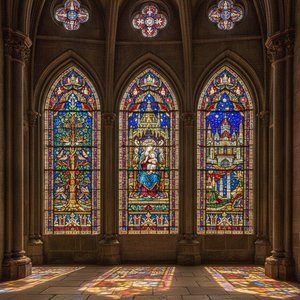
Luminous Masterpieces: The Captivating Beauty and Timeless Elegance of Stained Glass Artworks
Embark on a visual journey through the luminous world of stained glass art. Discover the exquisite craftsmanship, historical significance, and captivating beauty of masterworks from Art Nouveau to the Gothic era, curated for the discerning fine art enthusiast.

Top 10 Capodopere din Bronz care au Revoluționat Arta – Inspirație pentru Decor
Descoperă Top 10 sculpturi din bronz care au schimbat istoria artei! Explorează operele lui Rodin, Michelangelo și alți maeștri, tehnicile lor unice și inspirația pentru decorul casei tale. Replici de calitate muzeală pe OriginalUniqueArt.com.

The Enduring Form: Sculpture Across History, Technique & Emotional Resonance
Explore the rich history of sculpture with OriginalUniqueArt. Discover key techniques, influential artists & investment potential for discerning collectors. Expert insights into valuing and collecting timeless masterpieces.