Comută pe versiunea Print
 Vezi mai mult







































 Pentru opere de artă sau reproduceri care depășesc 105 cm (aproximativ 41 de inch) pe oricare dintre laturi, cadrul va fi livrat demontat, sub formă de kit. Această metodă asigură o livrare sigură și previne deteriorarea în timpul transportului.


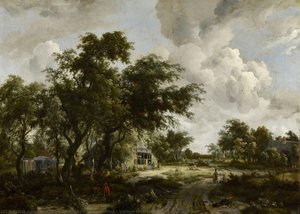
Cottages in a Forest – A Window Into Dutch Idyllic Beauty
“Cottages in a Forest,” painted around 1665 by Meindert Lubbertszoon Hobbema, stands as an emblem of the Dutch Golden Age’s fascination with capturing the serene essence of rural life. More than just a picturesque landscape, it's a carefully constructed meditation on harmony and tranquility—a sentiment deeply rooted in the cultural values of seventeenth-century Holland.
- Subject Matter: The painting depicts a densely populated woodland scene dominated by towering trees and punctuated by meandering paths leading to charming cottages nestled amongst dappled sunlight. A subtle suggestion of human activity adds life to the tranquil setting, emphasizing the importance of connection with nature within Dutch society.
- Style & Technique: Hobbema’s signature style is characterized by meticulous detail and a masterful use of atmospheric perspective—a technique pioneered during this period that brilliantly simulates the effects of light and shadow on distant objects. The artist employs soft brushstrokes and subtle tonal gradations to create an illusion of depth, transporting viewers into the heart of the forest.
- Historical Context: Created during a time of burgeoning artistic innovation and national pride following the Eighty Years’ War, “Cottages in a Forest” reflects the broader cultural preoccupation with idealized landscapes—a genre that served as both visual documentation of the Dutch countryside and symbolic representation of moral virtue. The painting embodies the humanist ideals prevalent at the time, prioritizing beauty and contemplation over grand narratives.
- Symbolism: Beyond its aesthetic appeal, the artwork carries significant symbolic weight. The cottages represent domestic comfort and stability—values cherished by the Dutch populace—while the forest symbolizes purity and spiritual renewal. The sunlight filtering through the trees signifies divine grace illuminating the earthly realm, reinforcing a worldview shaped by Calvinist beliefs.
- Emotional Impact: Viewing “Cottages in a Forest” evokes feelings of peace, serenity, and nostalgia for a bygone era—a timeless reminder of the restorative power of nature. Its harmonious composition invites contemplation and encourages viewers to appreciate the subtle beauty found within seemingly simple scenes.
This masterpiece resides at Mauritshuis in The Hague, where it continues to inspire admiration for its artistic excellence and enduring relevance as a symbol of Dutch cultural heritage. Reproductions offer an opportunity to experience this captivating vision of rural tranquility firsthand.
Întrebări și răspunsuri
Care este nuanța dominantă în "Case în pădure" de Meindert Lubbertszoon Hobbema?
O nuanță de De la ocru la sepia traversează întregul "Case în pădure" de Meindert Lubbertszoon Hobbema.
În ce etapă a carierei lui Meindert Lubbertszoon Hobbema se încadrează „Case în pădure” (1665)?
Data din 1665 plasează „Case în pădure” în Mature Landscape Style dezvoltării lui Meindert Lubbertszoon Hobbema.
Cum se îmbină stilul și epoca în "Case în pădure" de Meindert Lubbertszoon Hobbema?
„Case în pădure” aparține mișcării Dutch Golden Age Landscape, iar creatorul său a activat în epoca Epoca modernă timpurie.
 Previzualizare
 Trimite prin felicitare
 Distribuie
 Detalii despre lucrare
 Ghid
Ghid

 Descarcă imaginea
 Produse similare
 Radiografie
 Galerie foto
 Q&A
Q&A Statistici