
 Previzualizare
 Trimite prin felicitare
 Distribuie
 Detalii despre lucrare
 Ghid
Ghid

 Descarcă imaginea
 Produse similare
 Radiografie
 Galerie foto
 Întrebări și răspunsuri
 Statistici
Self-Portrait


 Vezi mai mult
Obțineți un fișier gata de imprimare care depășește cu mult calitatea previzualizării web. Fiecare imagine digitală pe care o vindem provine dintr-un master de înaltă rezoluție din baza noastră de date — având, de regulă, o lățime între 5.000 și 15.000 de pixeli — astfel încât să puteți printa în format mare, să decupați strâns sau să reproduceți detalii fine cu încredere.
Niciun fișier nu părăsește studioul nostru fără să fie tratat. Un expert digital verifică nuanțele de culoare în raport cu pictura originală și le corectează acolo unde este necesar, apoi îmbunătățește claritatea și detaliile folosind instrumente profesionale de retușare — rămânând întotdeauna fidel gestului pictural și stilului artistului. Rezultatul este o imagine care seamănă cu tabloul propriu-zis, nu cu o scanare filtrată.
Aprobați înainte de finalizare: expertul nostru vă va trimite imaginea prin e-mail în termen de 72 de ore pentru revizuire. Nu sunteți mulțumit? Solicitați îmbunătățiri sau corecturi, ori cereți o restituire a plății dacă calitatea nu este pe măsura așteptărilor.
Aceasta este calitatea pe care se bazează editorii, studiourile de design, galeriile și tipăriturile.
Imagine Digitală
Descărcați un fișier la rezoluție înaltă pentru afișare personală, imprimare și proiecte creative. ( Comută pe versiunea Print Comandă pictură realizată manual)
Inclus în fiecare comandă de imagini digitale
Livrare digitală de expertiză, garantată
Când alegeți OriginalUniqueArt.com, nu primiți doar o simplă imagine – primiți o operă de artă digitală îmbunătățită profesional, creată cu precizie și susținută de o garanție de satisfacție. Iată tot ceea ce primești odată cu comanda ta, în mod automat:

Livrare rapidă prin e-mail
Fișierul imaginii digitale la rezoluție înaltă vă va fi trimis prin e-mail în termen de 72 de ore de la finalizarea comenzii – gata pentru utilizare imediată.

Fișier digital optimizat prin IA
Opera ta de artă este optimizată profesional prin intermediul unor instrumente AI avansate și al editării manuale, asigurând un nivel maxim de detalii, claritate și acuratețe a culorilor.

Retransmitere gratuită pe viață
Ai șters sau ai pierdut din greșeală fișierul? Nu îți face griji – ți-l vom retrimite oricând, gratuit.

Fără taxe de import – Întotdeauna
Bucură-te instant de noua ta operă de artă, fără taxe vamale, taxe de import sau costuri de livrare – descărcările digitale sunt întotdeauna fără taxe.

Garanția acurateții culorilor
Asigurăm o reflectare cât mai fidelă a culorilor originale în imaginea ta digitală, prin utilizarea unor instrumente profesionale și a proceselor de gestionare a culorii.

Garanție de satisfacție de 100 de zile
Dacă nu sunteți mulțumit de imaginea digitală achiziționată, o vom revizui sau vă vom returna 100% în termen de 100 de zile – fără nicio întrebare.

Garanție de returnare 100% a banilor
Nu ești mulțumit? Primești rambursarea integrală în termen de 100 de zile de la primirea fișierului digital – fără nicio întrebare.

Reduceri pentru comenzi în volum
Cumpără 3 imagini, economisește 10% - Cumpără 5, economisește 15% - Cumpără 10+, economisește 20%. Ideal pentru proiecte creative, galerii și agenții.
The Quiet Resonance of Genius: A Portrait of Marietta Robusti
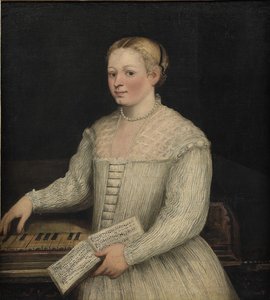
To stand before this depiction of Marietta Robusti is to encounter not merely a likeness, but a moment suspended in the rich, vibrant tapestry of late Renaissance Venice. The air around her seems thick with the scent of aged varnish and the ghost notes of music yet unplayed. She is captured in an intimate, three-quarter pose, seated before the elegant expanse of a harpsichord. Her gaze, though directed slightly away from the viewer, possesses an undeniable intelligence—a quiet dignity that speaks volumes of her intellect and artistic immersion. The composition itself guides the eye with masterful subtlety; the gentle diagonal sweep created by her posture and the instrument anchors the scene, while the dark, undifferentiated background serves to heighten the luminosity emanating solely from her figure.
Technique and Material Mastery
The artist, working in a style deeply rooted in Venetian portraiture, demonstrates an exquisite command of oil paint. One can almost feel the meticulous layering that gives depth to the textures presented. Observe the contrast between the smooth, porcelain quality of her skin—highlighted by soft, diffused light catching her cheekbone—and the crisp articulation of the lace at her collar. The handling of fabric is particularly noteworthy; the woven texture of her gown and the delicate folds suggest a painter who understood how light interacts with different materials. The inclusion of sheet music adds another layer of technical brilliance, requiring fine, precise lines to delineate the paper's edges against the polished wood of the keyboard. This attention to varied surface quality elevates the piece beyond simple representation into a study of material existence.
A Window into Venetian Culture and Ambition
This portrait is more than just a depiction of a musician; it is a cultural artifact from 1580 Venice. Marietta, daughter of the celebrated Tintoretto, lived within an environment where artistic genius was both nurtured and constrained by social expectation. The presence of the instrument and music serves as potent symbolism: it speaks to her cultivated talent, perhaps hinting at patronage or the intellectual life afforded to women of means. Her attire subtly communicates her standing within Venetian society. It is a portrait steeped in the gravity of an era where art was inextricably linked to status, making her quiet composure feel like a declaration of self-worth.
Emotional Echoes for the Modern Collector
For the contemporary collector or designer seeking pieces that breathe history into modern interiors, this reproduction offers profound emotional resonance. The mood is one of contemplative beauty—a sense of focused artistry and enduring grace. It invites quiet reflection, suggesting that true genius often resides not in grand pronouncements, but in moments of deep concentration. Owning a piece like this allows one to curate an atmosphere steeped in the romance of the Renaissance masters, bringing home a tangible echo of Venetian brilliance.
Întrebări și răspunsuri
Ce intensitate de culoare are "Self-Portrait" de Marietta Robusti?
"Self-Portrait" de Marietta Robusti prezintă o intensitate a culorii Monochromatic.
Ce emoție transmite "Self-Portrait" de Marietta Robusti?
Tonul emoțional înregistrat pentru "Self-Portrait" de Marietta Robusti este Reflective. Acesta rezumă sentimentul exprimat de operă.
În ce perioadă a carierei lui Marietta Robusti se încadrează "Self-Portrait"?
În cariera lui Marietta Robusti, „Self-Portrait” aparține perioadei Renaissance. Această etapă facilitează compararea sa cu celelalte opere ale artistului.
Biografie artist
Marietta Robusti: O pensulă a unei fiice venețiene
Lumea Veneției secolului al XVI-lea, un creuzet al inovației artistice și al constrângerilor sociale, a dat naștere unei figuri remarcabile – Marietta Robusti, cunoscută adesea sub numele de „la Tintoretta”. Fiica celebrului maestru Jacopo Robusti, mai bine recunoscut sub numele de Tintoretto, ea a navigat printr-un peisaj plin de provocări pentru femeile artiste, lăsând în urmă o moștenire de strălucire subtilă și o poveste emoționată despre ambiție, familie și o moarte prematură. Viața sa, învăluită într-un anumit mister din cauza surselor primare limitate, oferă o privire fascinantă asupra dinamicii producției artistice venețiene într-o epocă de cotitură.
Născută în jurul anului 1560 – deși anul exact rămâne subiectul unor dezbateri între 1555 și 1560 – primii ani ai Mariettai au fost indisolubil legați de atelierul tatălui său. Studio-ul lui Tintoretto nu era doar un simplu loc de muncă; era un mediu vibrant și colaborativ, unde tehnicile artistice erau perfecționate prin experiență comună. Deși natura precisă a formării sale rămâne somewhat elusive, se crede că ea a contribuit semnificativ la proiectele lui Tintoretto, executând în principal fundalurile și conturarea figurilor – sarcini atribuite de obicei femeilor în ierarhia stabilită a atelierului. Aceasta nu era pur și simplu o muncă de subordine; era un element crucial în procesul de creație, permițându-i să absoarbă tehnicile maestru și să își dezvolte propria sensibilitate artistică.
Ucenicia unei fiice și identitatea artistică
Ipocul Mariettai, „la Tintoretta”, reflectă atât ascendența sa, cât și stilul său distinctiv. Acesta se traduce prin „micuța fată a vopsitorului”, o referință la profesia bunicului său – un tintore, sau vopsitor – și alude subtil culorilor vibrante care caracteriză opera lui Tintoretto. Istoria familiei sale era complexă; tatăl ei se căsătorise cu Faustina Episcopi, care a murit ulterior, iar el s-a recăsătorit ulterior, adăugând trei frați de la o altă mamă în familia sa apropiată. Această structură familială mixtă a influențat fără îndoială creșterea Mariettai.
Interesant este faptul că relatările vremii dezvăluie că Marietta a adoptat o identitate masculină – îmbrăcându-se ca un băiat – în primii săi ani alături de Tintoretto. Această alegere neconvențională nu a fost doar o capriciă copilărească; a fost o strategie deliberată pentru a obține acces în atelier și pentru a participa mai activ la procesul artistic, sfidând așteptările societății de atunci față de femei. Carlo Ridolfi, biograful lui Tintoretto, descrie viu această perioadă, subliniind legătura strânsă dintre Marietta și tatăl ei, precum și afecțiunea evidentă pe care acesta o purta pentru ea.
Opere notabile și stil artistic
În ciuda limitărilor impuse femeilor artiste, Marietta Robusti a reușit să lase o urmă vizibilă în arta venețiană. Deși nu a primit comenzi independente pentru lucrări religioase majore, precum altartul – o cale comună pentru pictorii bărbați – contribuțiile sale sunt totuși semnificative. Cea mai larg acceptată atribuire este portretului său „Femeie venețiană” (circa 1580), păstrat în prezent în Galeria Uffizi din Florența. Acest portret, bogat în culori opulente și detalii elegante, demonstrează capacitatea sa de a surprinde asemănarea și de a transmite un sentiment de demnitate și compoziție.
Mai mult, ea l-a asistat pe tatăl ei în câteva picturi remarcabile, inclusiv în „Portretul lui Ottavio Strada” (1567), demonstrând înțelegerea tehnicii emblematice a lui Tintoretto, chiaroscuro – utilizarea dramatică a luminii și umbrei care îi definește stilul. Munca sa implica adesea crearea unor fundaluri atmosferice și modelarea subtilă a figurilor în cadrul unei compoziții, contribuind la armonia și dinamismul general al picturilor.
Un sfârșit tragic și o moștenire durabilă
Viața Mariettai a fost tăiată tragic în anul 1590, la vârsta de treizeci de ani. Ea a murit în timpul nașterii, un destin comun pentru femeile din acea epocă. Moartea ei l-a afectat profund pe Tintoretto, care, conform relatărilor, a creat un portret postum emoționant al ei pe patul de moarte – o imagine care spune multe despre legătura lor profundă și durabilă.
După dispariția sa, realizările artistice ale Mariettai au fost în mare parte umbrite de cele ale tatălui său. Totuși, în ultimele decenii, cercetătorii au început să recunoască semnificația contribuțiilor sale și să conteste narațiunea tradițională care a relegat-o la rolul unei simple note de subsol în istoria artei venețiene. Povestea ei servește ca un memento puternic al obstacolelor cu care s-au confruntat femeile artiste în timpul Renașterii și ca o dovadă a moștenirii durabile a unei femei talentate care a sfidat convențiile prin îndemânare, determinare și legături familiale.
Explorare suplimentară
- Marietta Robusti (1554 - 1590) - OriginalUniqueArt.com: Explorează biografia și operele ei pe OriginalUniqueArt.com
- Portretul lui Ottavio Strada: Descoperă această capodoperă pe OriginalUniqueArt.com
- Femeie venețiană (atribuit): Vezi „Femeia venețiană” pe OriginalUniqueArt.com
- Wikipedia - Marietta Robusti: Citește mai multe despre viața și opera ei pe Wikipedia
Marietta Robusti
1554 - 1590 , Italia
Detalii rapide
- Artistic Movement Or Style: Renaștere
- Artists Or Movements Influenced By This Artist: ['Tintoretto']
- Artists Who Influenced This Artist: ['Tintoretto']
- Date Of Birth: 1554
- Date Of Death: 1590
- Full Name: Marietta Robusti
- Nationality: Italiană
- Notable Artworks:
- Autoportret
- Portretul lui Ottavio Strada
- Place Of Birth: Venetia, Italia