Russian Modernism · 1922
Samarkand Sultan (Léon Bakst, 1922)
Léon Bakst (1866–1924) a realizat Samarkand Sultan. Data sa este din 1922. Face parte din mișcarea Russian Modernism. Este realizată în Ink On Paper.
- 1922
- Ink On Paper

 Previzualizare

 Tablou în ulei pictat manual
 Trimite prin felicitare
 Distribuie
 Fișă informativă


 Descarcă imaginea
 Produse similare
 Radiografie
 Galerie foto
 Întrebări și răspunsuri

 Statistici
Samarkand Sultan, pe scurt
- Titlu
- Samarkand Sultan
- Artist
- Léon Bakst (1866–1924)
- Artist născut în
- Hrodna, Belarus
- Date
- 1922
- Medium
- Ink On Paper
- Mișcare
- Russian Modernism
- Perioadă
- Modern
- Subiect
- eastern costume, ornate design, theatrical figure, stylized portrait, vibrant colors, russian culture
Ce reprezintă Samarkand Sultan?
A Study in Grandeur
In this 1922 work, we encounter a figure of quiet authority, a Samarkand Sultan rendered with a graphic precision that feels both ancient and modern. The subject is centered, filling the frame with a verticality that commands attention without needing to shout. He is draped in a robe of deep reds and blues, a garment defined by its intricate geometric patterns—triangles, diamonds, and stripes that dance across the fabric. There is a certain stillness in his expression, a tranquil gaze that suggests a man accustomed to the weight of his own status. His dark beard is long and neatly kept, providing a sharp contrast to the luminous colors of his attire.
The composition relies on a sophisticated layering of shapes and colors to create a sense of presence. While the perspective remains somewhat flattened, reminiscent of theatrical sketches or costume studies, the use of shading gives the figure a tangible, sculptural quality. The light appears to fall from above, catching the edges of his elaborate headwear and the subtle folds of his sleeves.
The Language of Ornament
The detail in the Sultan's attire reveals a meticulous approach to pattern and texture. The artist uses line and color to suggest materials that one can almost feel through the visual surface:
- A large turban adorned with blue and white beads and a singular, striking white feather.
- Sleeves and hems lined with a soft, heavy fur that adds a sense of tactile luxury.
- A complex arrangement of geometric motifs that break up the saturated fields of color.
This work belongs to the Art Nouveau movement, a period where the boundaries between fine art and decorative design often blurred. The influence of Orientalism is palpable here, not as a mere imitation of the East, but as a way to explore new visual languages through exotic silhouettes and intense color palettes. The use of ink and watercolor allows for a certain fluidity, where bold outlines meet softer, shaded transitions.
A Vision of the Stage
There is an inherent theatricality to this piece, as if we are catching a glimpse of a character just before the curtain rises. The stylized forms and exaggerated features move away from photographic realism, opting instead for a heightened sense of character. It feels less like a portrait of a specific historical individual and more like an exploration of an idea—the idea of power, of ceremony, and of the exotic. The emotional weight of the piece lies in this tension between the graphic, almost two-dimensional quality of the illustration and the profound sense of dignity held in the subject's eyes.
Imagini la înaltă rezoluție ale lui Samarkand Sultan
Domeniu public: artistul a decedat în 1924.
Léon Bakst, Samarkand Sultan (1922). Domeniu public
Întrebări despre Samarkand Sultan, răspunsuri
În ce an a fost creat "Samarkand Sultan" de Léon Bakst?
„Samarkand Sultan” datează din 1922. Această dată plasează lucrarea în cadrul carierei lui Léon Bakst și în contextul epocii sale.
Ce tehnică a fost utilizată pentru "Samarkand Sultan" de Léon Bakst?
Léon Bakst a utilizat tehnica Ink On Paper pentru "Samarkand Sultan". Tehnica definește natura materială a lucrării originale.
Ce reprezintă "Samarkand Sultan"?
"Samarkand Sultan" de Léon Bakst surprinde: eastern costume, ornate design, theatrical figure, stylized portrait, vibrant colors, russian culture, decorative art.
Este "Samarkand Sultan" în domeniul public?
Statusul drepturilor de autor pentru "Samarkand Sultan" de Léon Bakst: opera este în domeniul public – drepturile de autor au expirat. Acest lucru determină dacă reproducerile imaginii pot fi realizate liber.
Cine este artistul din spatele "Samarkand Sultan"?
Artistul din spatele operei „Samarkand Sultan” este Léon Bakst. Lucrarea este catalogată sub numele lui Léon Bakst.
Din ce curent artistic face parte "Samarkand Sultan" de Léon Bakst?
„Samarkand Sultan” este o operă de Russian Modernism. Acest curent indică tradiția artistică din care face parte lucrarea.
În ce etapă a evoluției lui Léon Bakst se încadrează „Samarkand Sultan”?
"Samarkand Sultan" reprezintă perioada Early Modernism a lui Léon Bakst.
Ce vârstă avea Léon Bakst când a creat "Samarkand Sultan" în 1922?
Când „Samarkand Sultan” a fost creat în 1922, Léon Bakst – născut în 1866 – avea 56 ani.
Este "Samarkand Sultan" de Léon Bakst în domeniul public și care este motivul?
Statutul drepturilor de autor pentru "Samarkand Sultan" - în domeniul public – drepturile de autor au expirat - este determinat de data decesului artistului, în anul 1924.
Despre artistul Léon Bakst
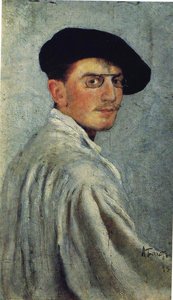
1866–1924, Belarus
Léon Bakst
Early Life and the Seeds of Artistic Rebellion Born Leyb-Khaim Izrailevich Rosenberg in 1866, within the pale of settlement in Grodno—a city then part of the Russian Empire—Léon Bakst’s journey toward artistic renown was a compelling narrative woven with both innate talent and societal constraints. His family, though comfortably middle class, possessed connections to the imperial court through his grandfather, a celebrated tailor who enjoyed patronage from the Tsar. This background instilled in young Leyb a keen awareness of cultural nuances alongside an early passion for drawing, vividly demonstrated when he won a contest at just twelve years old. However, this burgeoning artistic inclination initially met with resistance from his parents, hesitant to embrace such an unconventional path.
Alte lucrări ale lui Léon Bakst
 Design cu flori în grilă
 Operatic costume designs1911
 Costume design for the ballet ''Cleopatra''1909
 Drawing young divinity Narcisse costume, ballet Diaghilev1911
Eseuri despre Samarkand Sultan
 The Soft Soul of Art: Exploring the Tactile Beauty and Timeless Narrative of Textile MasterpiecesEmbark on a sensory journey through the tactile beauty of textile art. Explore how thread, silk, and loom weave human history, from ancient…
 French artworks of the 1860s1860s French masterpieces by Édouard Manet, Claude Monet, and Gustave Courbet. View the full collection online at OriginalUniqueArt.com.
 Masterpieces of Emotion: The Top 25 Artworks by Théodore GéricaultExplore 25 iconic works by Théodore Géricault, from Romanticism to his greatest masterpieces. Discover the full collection on OriginalUniqu…