

 Previzualizare
 Trimite prin felicitare
 Distribuie
 Detalii despre lucrare
 Ghid
Ghid

 Descarcă imaginea
 Produse similare
 Radiografie
 Galerie foto
 Statistici
Design cu flori în grilă


 Vezi mai mult
Reproducere pictată manual în ulei
Pictură în ulei pe pânză, pictată manual de artiștii noștri la dimensiunea și ramele dorite de dumneavoastră, pe comandă. ( Comută pe versiunea Print Comută pe Imagine Digitală)




P118B lei10

P118H lei10

P118W lei10

P438Z lei10

P508JH lei12

P508YH lei12

P805H lei10

P805Z lei10

P919BZ lei10

P919G lei10

P919XJ lei10

P959ZH lei10

P968JZ lei12

W106C lei8

W218G lei10

W218JH lei8

W218Y lei10

W307PJ lei10

W316G lei10

W316PJ lei8

W316Y lei10

W398PJ lei8

W4111J lei10

W500HY lei15

W500JH lei15

W692G lei12

W849H lei8

W940BG lei15

W953PJ lei8




Alegeți dintre dimensiunile noastre prestabilite, care respectă proporțiile originale ale operei de artă.

Introduceți lățimea și înălțimea necesare pentru a se potrivi ramei sau peretelui dumneavoastră. Această lucrare este pictată manual, așa că, pentru o dimensiune cu o formă diferită, artistul poate picta puțin mai mult în jurul imaginii sau poate tăia puțin din margini — dumneavoastră decideți. Vă vom trimite o simulare digitală pentru aprobare înainte de a începe pictarea. Imaginea afișată pe această pagină nu reprezintă rezultatul real — doar simularea este reprezentativă.
După plasarea comenzii, echipa OriginalUniqueArt.com va contacta clientul prin e-mail pentru instrucțiuni și îi va furniza o previzualizare a machetei
Livrare în întreaga lume () în 3-4 săptămâni, în loc de cele 5 săptămâni standard. (27 Octombrie). Fără compromisuri în ceea ce privește calitatea.

Livrare expres gratuită la nivel mondial

Pânză de in de înaltă calitate

Asigurare completă pentru transport

Garanție de rambursare a taxelor vamale

Garanția fidelității culorilor

Politica de retur în 100 de zile (doar pentru defecte de fabricație)

Garanție de rambursare 100%

Ofertă pentru comenzi multiple
 Opțiunea cu sticlă este disponibilă doar pentru dimensiuni de sub 110 cm

Design cu flori în grilă
Tehnică de reproducere
Dimensiune reproducere
-


Preț total calculat
lei 1392
Design with Flowers in Grid – Léon Bakst: A Pioneer of Ballet Russes Aesthetics
Léon Bakst (1866-1924) stands as an undeniable titan amongst Russian artists, forever etched in the annals of theatrical design and profoundly influencing the burgeoning Art Deco movement. Born Leyb-Khaim Izrailevich Rosenberg in Grodno—a city then nestled within the vast expanse of Imperial Russia—Bakst’s artistic trajectory wasn't merely successful; it was revolutionary, propelled by an innate talent nurtured alongside a rebellious spirit that challenged societal expectations for his time. His familial roots provided him with a privileged upbringing, connected to the imperial court through his grandfather, a celebrated tailor who enjoyed considerable patronage from Tsar Alexander III—a connection that instilled in young Leyb a keen awareness of cultural nuances and artistic traditions. Yet, despite parental reservations regarding an unconventional vocation, Bakst persevered, dedicating himself to rigorous study at St. Petersburg Academy of Arts as a non-credit student while supplementing his education through practical experience as a book illustrator – experiences that would prove invaluable in shaping his distinctive visual language.- Early Life and Artistic Awakening: From humble beginnings within the Pale of Settlement, Bakst’s formative years instilled in him an unwavering passion for drawing and a fascination with decorative arts. Winning a prestigious contest at just twelve years old cemented his early aptitude and foreshadowed his future accomplishments.
- The Ballets Russes – A Transformative Collaboration: Bakst's artistic zenith arrived through his partnership with Sergei Diaghilev, the visionary impresario who established the Ballet Russes—a theatrical endeavor that would redefine ballet as an art form. This collaboration marked a pivotal moment in artistic history, fusing Art Nouveau’s flowing lines and organic forms with Orientalist motifs – a daring juxtaposition that captivated audiences worldwide.
- Stylistic Innovation: Bakst's signature style was characterized by bold color palettes, geometric patterns, and stylized representations of flora and fauna—elements meticulously crafted to evoke emotion and enhance the dramatic impact of his productions. He skillfully employed techniques like decoupage (papier collé) and trompe-l’œil to create illusions of depth and texture, elevating theatrical design beyond mere decoration.
- Influence Beyond Ballet: Bakst's influence extended far beyond the stage, permeating various artistic disciplines including graphic design, costume design, and set painting. His aesthetic sensibilities resonated with artists across Europe, shaping the visual vocabulary of Art Deco and contributing to its enduring legacy.
Design with Flowers in Grid – A Fragment of Artistic Genius
The artwork “Design with Flowers in Grid,” a captivating fragment of silk crepe printed with meticulously arranged floral motifs—magenta, bluish-green, yellow, red, red-orange, lavender and gold—represents a quintessential example of Bakst’s artistic vision. Produced between 1884 and 1917, this piece exemplifies his masterful command of color and composition, reflecting the stylistic hallmarks of Art Nouveau and Orientalism simultaneously. The Baltimore Museum of Art holds one of seven identical prints created by Robinson Silk Company for Clingen and Selig—a testament to Bakst’s enduring appeal and the meticulous craftsmanship that defined his oeuvre. Details:- Medium: Silk
- Dimensions: 31-3/8 x 9-1/2 in. (79.7 x 24.1 cm.)
- Artist: Léon Bakst
- Origin: New York, New York, United States
- Date: 1924
Exploring the Symbolism of Floral Grid Patterns
Bakst’s incorporation of floral grid patterns transcends mere decorative embellishment; it embodies a deeper symbolic resonance rooted in Art Nouveau's fascination with nature and its desire to capture fleeting beauty. The repetition of floral forms creates an illusion of movement and rhythm, mirroring the dynamism inherent in ballet performances—a deliberate artistic strategy designed to engage both visual and emotional senses. Furthermore, the geometric structure serves as a counterpoint to organic shapes, reflecting Bakst’s intellectual curiosity and his willingness to experiment with innovative aesthetic approaches.A Legacy Enduring Through Reproduction
Today, “Design with Flowers in Grid” continues to inspire artists and designers alike—a testament to Bakst's enduring artistic legacy. High-quality reproductions offer a tangible connection to this pivotal moment in art history, allowing admirers worldwide to experience the brilliance of his vision firsthand. OriginalUniqueArt.com specializes in crafting exceptional prints that faithfully capture the original artwork’s vibrancy and textural nuances – ensuring that Léon Bakst’s masterpiece remains accessible to generations to come.Întrebări și răspunsuri
"Design cu flori în grilă" de Léon Bakst este păstrat în țara de origine a artistului?
Nu – opera de artă este păstrată în străinătate. „Design cu flori în grilă” face parte din colecția din Statele Unite ale Americii, în timp ce Léon Bakst s-a născut în Belarus.
Ce nuanță dominantă străbate întregul "Design cu flori în grilă" de Léon Bakst?
Culoarea dominantă a operei "Design cu flori în grilă" de Léon Bakst este Tonalități calde de apus. Această nuanță constituie tonul de bază al paletei cromatice.
Ce fel de operă este "Design cu flori în grilă"?
În catalog, "Design cu flori în grilă" de Léon Bakst este clasificat ca Artă de perete. Această categorie facilitează găsirea unor lucrări similare.
Biografie artist
Early Life and the Seeds of Artistic Rebellion
Born Leyb-Khaim Izrailevich Rosenberg in 1866, within the pale of settlement in Grodno—a city then part of the Russian Empire—Léon Bakst’s journey toward artistic renown was a compelling narrative woven with both innate talent and societal constraints. His family, though comfortably middle class, possessed connections to the imperial court through his grandfather, a celebrated tailor who enjoyed patronage from the Tsar. This background instilled in young Leyb a keen awareness of cultural nuances alongside an early passion for drawing, vividly demonstrated when he won a contest at just twelve years old. However, this burgeoning artistic inclination initially met with resistance from his parents, hesitant to embrace such an unconventional path. Despite their reservations, Bakst persevered, eventually studying at the prestigious St. Petersburg Academy of Arts as a non-credit student while supplementing his education by working as a book illustrator—a practical necessity that honed his skills and provided financial independence. It was in 1889 that he adopted the surname "Bakst," a pragmatic decision reportedly motivated by concerns that his birth name might hinder career advancement within a society often prejudiced against Jewish individuals, revealing the challenges faced by artists from marginalized communities during that era. The atmosphere of Grodno, with its complex social dynamics and limited opportunities for Jewish intellectuals, undoubtedly shaped Bakst’s early worldview—a sense of both belonging and exclusion that would later inform his artistic vision.The World of Art and Embracing Modernity
Bakst’s artistic development truly flourished with his involvement in the influential “World of Art” movement. He quickly became a pivotal figure alongside luminaries like Sergei Diaghilev and Alexandre Benois, contributing significantly to the group's eponymous periodical through his striking graphics. This association brought him widespread recognition and established him as a rising star within Russia’s artistic circles. His early works included compelling portraits of prominent figures such as Filipp Malyavin, Vasily Rozanov, Andrei Bely, and Zinaida Gippius, showcasing his ability to capture not only physical likeness but also the intellectual and emotional essence of his subjects. Bakst's style during this period was a fascinating blend of Russian artistic traditions with burgeoning European influences—particularly Orientalism and early Modernism. He embraced vibrant colors, exotic themes, and stylized forms, foreshadowing the revolutionary aesthetic he would later bring to the stage. This willingness to experiment and synthesize diverse influences marked him as an artist attuned to the changing currents of his time. His work began to whisper of a new visual language, one that moved beyond strict representation toward evocative suggestion. The “World of Art” group sought to break away from the rigid academic traditions of the Imperial Academy, advocating for artistic freedom and exploring diverse themes—from folklore and mythology to social commentary and psychological introspection. Bakst’s participation in this movement allowed him to engage with a vibrant intellectual community and develop his unique style, characterized by its dynamism, sensuality, and innovative use of color and form.Revolutionizing Ballet with the Ballets Russes
The pivotal moment in Bakst’s career arrived in 1908 when he began designing sets and costumes for theatrical productions—a shift that would forever alter the landscape of stage design. His collaboration with Sergei Diaghilev's Ballets Russes proved transformative, revolutionizing theatrical aesthetics and catapulting both artists to international fame. Bakst’s designs were groundbreaking; they moved away from realistic depictions, embracing stylized forms, bold colors, and a sense of opulent fantasy. Productions like Cleopatra, Scheherazade (1910)—perhaps his most iconic work—Carnaval (1910), Narcisse (1911), and particularly L'Après-midi d’un Faune (1912) became legendary for their visual splendor. L’Après-midi d’un Faune, in particular, was a seminal work that profoundly influenced the development of ballet and stage design, establishing a new aesthetic language for the art form. He didn't merely create backdrops; he constructed immersive worlds that heightened the emotional impact of the choreography and music. The costumes were equally innovative, often incorporating exotic fabrics, shimmering embellishments, and daring silhouettes that challenged conventional notions of theatrical attire. Diaghilev’s vision was to create a ballet company that transcended mere entertainment—a vehicle for artistic expression and cultural diplomacy. Bakst's designs perfectly embodied this ambition, transforming the stage into a realm of dreamlike beauty and symbolic resonance. The Ballets Russes under Diaghilev became synonymous with innovation and spectacle, and Bakst’s contributions were central to its success.Legacy and Enduring Influence
Léon Bakst’s legacy extends far beyond his contributions to ballet. He is rightfully considered one of the most important figures in the history of theatrical design, significantly impacting both set and costume creation for generations to come. His designs also contributed to the development of the Art Deco style with their emphasis on stylized forms, rich colors, and exotic themes—a testament to his far-reaching influence on visual culture. Despite facing some criticism during his lifetime for perceived extravagance, Bakst’s work was widely celebrated, and his funeral in 1924 was attended by a remarkable gathering of prominent artists, poets, musicians, dancers, and critics—a poignant demonstration of the esteem in which he was held. Today, his artwork can be found in museums worldwide and continues to inspire through reproductions available on platforms like OriginalUniqueArt.com, ensuring that his innovative spirit and artistic vision endure for audiences around the globe. Bakst’s ability to synthesize diverse influences, embrace experimentation, and create visually stunning worlds cemented his place as a true visionary of the 20th century.- A master of color and composition.
- Pioneered new approaches to theatrical design.
- Influenced Art Deco aesthetics.
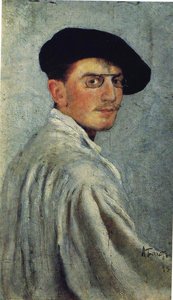
Léon Bakst
1866 - 1924 , Belarus
Detalii rapide
- Artistic Movement Or Style: Art Nouveau, Orientalism
- Artists Or Movements Influenced By This Artist: ['Ballets Russes']
- Date Of Birth: 1866
- Date Of Death: 1924
- Full Name: Léon Bakst
- Nationality: Rusă
- Notable Artworks:
- Scheherazade
- L'Après-midi d'un Faune
- Carnaval
- Place Of Birth: Grodno, Belarus
Articole similare
The Flowing Line & Flourishing Form: Exploring Art Nouveau's Aesthetic Legacy
Explore the captivating world of Art Nouveau! Discover its origins, key artists like Horta & Mucha, regional styles, innovative techniques, and lasting influence on architecture & design. A comprehensive guide for art enthusiasts.
The Elegance of Art Nouveau: Embracing Nature's Fluid Beauty and the Belle Époque Spirit
Discover the enchanting world of Art Nouveau. Explore the organic beauty, flowing lines, and Belle Époque elegance that defined an era of unparalleled craftsmanship and natural inspiration.
Art Nouveau: The Elegant Fusion of Nature and Design – A Journey Through Organic Sophistication
Discover the exquisite world of Art Nouveau. Explore the elegant fusion of nature and design through architectural masterpieces, organic forms, and the legendary masters of the Belle Époque. Immerse yourself in a journey of timeless sophistication and ornamental beauty.
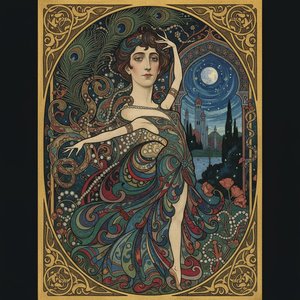
Léon Bakst: A Master of Decadence and the Ballet Russes' Visual Revolution
Explore the captivating world of Léon Bakst, master designer of the Ballets Russes. Discover his opulent costumes, revolutionary stagecraft & lasting influence on art and design. Learn about Diaghilev's vision and Bakst’s iconic works.
Top 10 Capodopere Art Nouveau: Frumusețe, Inspirație și Decor Excepțional
Descoperă Top 10 capodopere Art Nouveau! Alphonse Mucha, Gustav Klimt și alți maeștri îți dezvăluie frumusețea stilului floral și a liniilor sinuoase. Reproduceri de artă excepționale pentru un decor rafinat pe OriginalUniqueArt.com

