

 Trimite
 Distribuie
 Detalii
 Ghidul

 Descarcă
 Produse similare
 Diaporama
 Statistici
Wild Boy and Puppy


 Citește mai mult
Lucrarea de artă afișată pe această pagină este protejată de legile privind drepturile de autor, ceea ce înseamnă că nu putem crea sau vinde în mod legal o reproducere identică. Această protecție este garantată prin acorduri internaționale, precum Convenția de la Berna și de legile naționale, inclusiv cele prevăzute de Legea dreptului de autor din S.U.A. – Titlul 17. Toate drepturile rezervate. Orice reproducere neautorizată este interzisă.
Ca alternativă respectuoasă și legală, oferim tablouri pictate manual, personalizate, inspirate de original. Artistii noștri experimentați și profesioniști studiază cu atenție stilul, starea de spirit și esența artistică a originalului pentru a crea o piesă nouă și unică, care evocă aceeași emoție – rămânând, în același timp, o creație originală în sine.
Această metodă respectă pe deplin reglementările privind drepturile de autor, deoarece nu implică copierea sau duplicarea operei protejate. În schimb, este o reinterpretare creativă – o pictură nouă, influențată de original, dar care nu este identică cu acesta.
Reproducere pictată manual în ulei
Pictură în ulei pe pânză, realizată manual de artiștii noștri la dimensiunea și ramele dorite de dumneavoastră, pe comandă. ( Comută pe versiunea Print Treci la imagine digitală)




































Alegeți dintre dimensiunile noastre prestabilite, care respectă proporțiile originale ale operei de artă.

Introduceți lățimea și înălțimea de care aveți nevoie, pentru a se potrivi ramei sau peretelui dumneavoastră. Această lucrare este pictată manual, așa că pentru o dimensiune cu o formă diferită, artistul poate picta puțin mai mult în jurul imaginii sau poate tăia puțin din margini — dumneavoastră decideți. Vă vom trimite o simulare digitală pentru aprobare înainte de a începe pictarea. Imaginea afișată pe această pagină nu reprezintă rezultatul real — doar simularea este reprezentativă.
După plasarea comenzii, echipa OriginalUniqueArt.com va contacta clientul prin e-mail pentru instrucțiuni și îi va furniza o previzualizare a machetei
Livrare în întreaga lume () în 3-4 săptămâni, în loc de cele 5 săptămâni standard. (23 Octombrie). Fără compromisuri în ceea ce privește calitatea.

Livrare expres gratuită la nivel mondial

Pânză de in premium

Asigurare completă pentru transport

Garanție de rambursare a taxelor vamale

Garanția fidelității culorilor

Politica de retur în 100 de zile (doar pentru defecte)

Garanție de rambursare 100%

Reducere pentru comenzi multiple
 Opțiunea cu sticlă este disponibilă doar pentru dimensiuni de sub 110 cm

Wild Boy and Puppy
Tip de reproducere
Dimensiune reproducere
-


Preț total
lei 1507
Wild Boy and Puppy: A Pop Art Reverie
The sculpture “Wild Boy and Puppy,” created in 1988 by Jeff Koons, isn’t merely an aesthetically pleasing object; it's a deliberate provocation—a shimmering testament to the pervasive influence of popular culture within contemporary art. Produced from porcelain glazed with a high-gloss coating, this piece embodies Koons’ signature Pop Art style, seamlessly blending childlike wonder with ironic commentary on consumerism and artistic convention. Its stark white background serves as an uncompromising stage for the exuberant figures at its center—a stylized depiction of boyish innocence juxtaposed against playful animal companionship.Composition and Color Palette: Bold Simplicity
The sculpture’s central positioning immediately establishes a sense of immediacy, inviting viewers into a carefully orchestrated tableau. Symmetry plays a crucial role in balancing the visual weight, reinforcing the artwork's harmonious aesthetic. The dominant color palette—a riot of yellows, oranges, and reds punctuated by browns and creams—is deliberately artificial, mirroring the glossy finish that characterizes Koons’ work. This vibrancy isn’t accidental; it’s designed to evoke nostalgia for a simplified era of animation and toy design, referencing the visual language of childhood fantasies.Technique and Materiality: Precision Meets Illusion
Koons' meticulous craftsmanship is evident in every detail—from the precise modeling of the boy and dog figures to the painstaking application of glaze. The porcelain material lends itself beautifully to this technique, achieving a remarkable smoothness and reflectivity that contributes to an almost plastic-like appearance. Multiple layers of glaze are polished to create a surface that captures light with dazzling brilliance, furthering the illusion of dimensionality despite the sculpture’s two-dimensional representation. The inclusion of a woven basket adds textural contrast, grounding the fantastical scene in a tangible element.Symbolism and Emotional Resonance: Innocence Revisited
Beyond its visual appeal, “Wild Boy and Puppy” speaks to deeper themes—the enduring fascination with childhood innocence and the importance of companionship. The boy’s spiky red hair and expressive eyes convey youthful exuberance, while the dog's playful demeanor embodies loyalty and affection. However, Koons subtly introduces an element of irony through the sculpture’s glossy finish and its reference to Pop Art conventions. This juxtaposition invites contemplation on how art can simultaneously celebrate and critique societal values, prompting viewers to consider the role of consumer culture in shaping our perceptions of beauty and emotion.Historical Context: Embracing Kitsch and Challenging Tradition
Created during Koons' formative years as a Pop Artist—influenced by Ed Paschke’s embrace of bold color palettes and unconventional techniques—this sculpture exemplifies the movement’s desire to elevate commonplace imagery into artful expression. It stands in contrast to more formal artistic traditions, deliberately embracing “kitsch”—the aesthetic appreciation of sentimentality and decorative ornamentation—to provoke dialogue about artistic value and cultural taste. Like many of Koons' works, "Wild Boy and Puppy" serves as a reminder that art can be both joyful and unsettling, prompting viewers to reconsider their assumptions about what constitutes beauty and significance.Întrebări și răspunsuri
Care este nuanța dominantă în "Wild Boy and Puppy" de Jeff Koons?
Culoarea dominantă a operei "Wild Boy and Puppy" de Jeff Koons este Ochre to Sepia. Această nuanță reprezintă tonul de bază al paletei cromatice.
Ce paletă de culori este folosită în "Wild Boy and Puppy" de Jeff Koons?
Culorile din "Wild Boy and Puppy" formează o paletă Neutrals. Această clasificare descrie familiile de culori dominante.
Cine este autorul operei "Wild Boy and Puppy" și din ce curent face parte?
"Wild Boy and Puppy" a fost creat de Jeff Koons în stilul Pop Art. Artistul și mișcultarea identifică tradiția operei.
Biografie artist
A Reflection of Our Times: The World of Jeff Koons
Born in York, Pennsylvania, in 1955, Jeff Koons emerged as a pivotal figure in the late 20th and early 21st-century art world – an artist whose work simultaneously celebrates and critiques consumer culture, kitsch, and the very notion of artistic value. His childhood, steeped in Catholic upbringing, instilled within him a fascination with imagery that would later become central to his aesthetic – a blend of innocence, spirituality, and the often-garish appeal of popular iconography. Koons’s early education at the School of the Art Institute of Chicago and then the Maryland Institute College of Art laid the groundwork for his artistic explorations, but it was his mentorship under Ed Paschke that truly ignited his passion for Pop Art techniques and philosophies. This influence would become a defining characteristic of his evolving style.From Vacuum Cleaners to Inflatables: Early Explorations
Koons’s initial foray into the art world in the 1980s was marked by a deliberate provocation, challenging conventional artistic boundaries. He began exhibiting works that featured everyday objects – vacuum cleaners, for instance – encased in pristine acrylic boxes, illuminated as if they were sacred relics. These weren't simply displays of household appliances; they were commentaries on consumer desire, the pursuit of cleanliness and perfection, and the elevation of the mundane to the realm of art. This series, titled “The New,” questioned what constituted artistic merit and forced viewers to confront their own relationship with material possessions. He didn’t create the objects themselves, but rather selected them, presenting pre-fabricated items as readymades in a manner reminiscent of Marcel Duchamp, yet infused with a distinctly American sensibility. This approach continued with his “Inflatables” series – large, brightly colored sculptures of flowers and rabbits, often placed alongside mirrors to distort reality and evoke the ephemeral joy of childhood. These works weren’t merely playful; they were explorations of perception, memory, and the fleeting nature of happiness. The smooth surfaces and vibrant hues created a dreamlike quality, inviting viewers into a world where the familiar became strange and wondrous.Stainless Steel and Monumental Scale: Achieving Icon Status
The late 1980s and 1990s witnessed Koons’s ascent to international recognition with his breathtaking stainless steel sculptures. Pieces like “Rabbit” (1986), a highly polished, mirror-like representation of an inflatable bunny, and the iconic “Balloon Dog” (1994-2000) became instant symbols of contemporary art. These weren’t simply sculptures; they were feats of engineering and craftsmanship, requiring extensive teams of assistants to realize his ambitious visions. The reflective surfaces of these works blurred the lines between object and environment, inviting viewers to become part of the artwork itself. The sheer scale and flawless execution of these pieces commanded attention, solidifying Koons’s reputation as a master sculptor. “Elephant” (1994-2003) further exemplified this monumental approach, showcasing his ability to transform familiar forms into awe-inspiring spectacles. The meticulous detail and polished surfaces weren't accidental; they were deliberate choices designed to evoke a sense of wonder and challenge perceptions of value. The process involved creating hundreds of smaller components which were then assembled by a large team, highlighting the collaborative nature of Koons’s practice.Democratizing Art: The Gazing Ball Series and Beyond
Koons’s artistic journey didn’t end with stainless steel. In 2013, he embarked on the “Gazing Ball” series, a project that saw him placing vibrant blue glass spheres atop reproductions of famous sculptures from art history – Michelangelo's David, classical busts, and more. This wasn’t an act of appropriation but rather an attempt to democratize art, making it accessible to a wider audience and prompting viewers to reconsider their relationship with canonical artworks. The gazing ball itself acted as a portal, reflecting both the sculpture and the viewer, creating a dialogue between past and present. The series highlighted the interplay between original masterpieces and mass-produced replicas, questioning notions of authenticity and artistic value. This project demonstrated Koons’s continued willingness to experiment and challenge artistic conventions. Throughout his career, he has consistently employed a large team of assistants, raising questions about authorship and the role of the artist in the creative process – a practice he defends as integral to realizing his complex designs on a grand scale.A Lasting Legacy: Influence and Historical Significance
Jeff Koons is undeniably one of the most commercially successful living artists, with works fetching record-breaking prices at auction. However, his significance extends far beyond monetary value. He has profoundly impacted contemporary culture, influencing artists across various disciplines and sparking debates about art, consumerism, originality, and the very definition of taste.- Pop Art Heritage: Koons’s work builds upon the foundations laid by Pop Art pioneers like Andy Warhol and Roy Lichtenstein, embracing mass media and popular culture as legitimate subjects for artistic exploration.
- Conceptual Underpinnings: His emphasis on ideas and concepts aligns him with Conceptual art, challenging traditional notions of skill and craftsmanship.
- Embracing Kitsch: Koons’s willingness to embrace kitsch – often dismissed as lowbrow or sentimental – has broadened the scope of what is considered acceptable artistic subject matter.

Jeff Koons
1955 - , Statele Unite ale Americii
Informații rapide
- Artistic Movement Or Style: Pop Art, Sculptură Contemporană
- Artists Or Movements Influenced By This Artist: ['Contemporary Art']
- Artists Who Influenced This Artist:
- Andy Warhol
- Ed Paschke
- Date Of Birth: 21 ianuarie 1955
- Full Name: Jeff Koons
- Nationality: American
- Notable Artworks:
- Rabbit
- Balloon Dog
- Elephant
- Place Of Birth: York, Pennsylvania
Articole conexe

The Enduring Form: Exploring Themes & Techniques in Sculpture Across Historical Periods
Explore the rich history of sculpture from ancient masterpieces to contemporary innovations. Discover key techniques, influential artists & investment potential for discerning art collectors.

Top 10 Capodopere din Bronz care au Revoluționat Arta – Inspirație pentru Decor
Descoperă Top 10 sculpturi din bronz care au schimbat istoria artei! Explorează operele lui Rodin, Michelangelo și alți maeștri, tehnicile lor unice și inspirația pentru decorul casei tale. Replici de calitate muzeală pe OriginalUniqueArt.com.
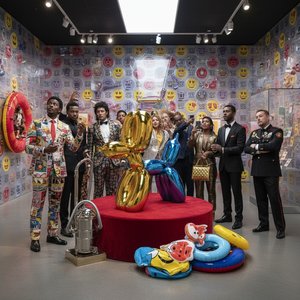
Jeff Koons: Irony, Kitsch & the Commodification of Contemporary Art
Explore the complex world of Jeff Koons with OriginalUniqueArt. Discover the irony, kitsch, and market forces behind his iconic sculptures. Expert insights for discerning collectors.

The Enduring Form: Sculpture Across History, Technique & Emotional Resonance
Explore the rich history of sculpture with OriginalUniqueArt. Discover key techniques, influential artists & investment potential for discerning collectors. Expert insights into valuing and collecting timeless masterpieces.

Top 10 Capodopere din Bronz care au Revoluționat Arta | OriginalUniqueArt.ro
Descoperiți Top 10 capodopere din bronz care au revoluționat arta! Rodin, Michelangelo și alții. Aflați istoria sculpturilor clasice și inspirație pentru decorul casei dvs. Reproduceri de artă de calitate muzeală pe OriginalUniqueArt.com