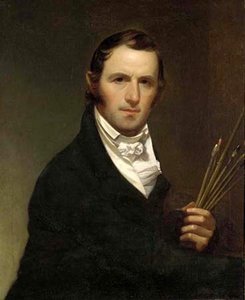
Samuel Humes
Oil On Canvas
WallArt
Romantic Victorian Portrait
1825
19th Century
74.0 x 61.0 cm
Muzeul Metropolitan de Artă
Reproducere manuală în ulei
Pictură în ulei pe pânză, pictată manual, la dimensiunea și ramele dorite de dumneavoastră, realizată la comandă de artiștii noștri.
P118B $10
P118H $10
P118W $10
P438Z $10
P508JH $12
P508YH $12
P805H $10
P805Z $10
P919BZ $10
P919G $10
P919XJ $10
P959ZH $10
P968JZ $12
W106C $8
W218G $10
W218JH $8
W218Y $10
W307PJ $10
W316G $10
W316PJ $8
W316Y $10
W398PJ $8
W4111J $10
W500HY $15
W500JH $15
W692G $12
W849H $8
W940BG $15
W953PJ $8
Alegeți dintre dimensiunile noastre prestabilite, care respectă proporțiile originale ale operei de artă.
Puteți introduce propriile dimensiuni pentru a se potrivi unui anumit cadru sau spațiu. Dacă dimensiunea selectată nu corespunde proporțiilor imaginii originale, vom decupa opera de artă sau vom extinde pictura cu elemente suplimentare pictate manual. O simulare digitală vă va fi trimisă pentru aprobare înainte de începerea producției.
Vă rugăm să rețineți că previzualizarea de pe ecran nu reflectă decuparea sau extinderea reală. Doar macheta va arăta cu exactitate compoziția finală.
Deși sunt disponibile dimensiuni personalizate, vă recomandăm să selectați o dimensiune din lista predefinită pentru a păstra proporțiile originale.
După plasarea comenzii, echipa OriginalUniqueArt.com va trimite clientului instrucțiuni prin e-mail și îi va furniza o previzualizare a machetei
Livrare în întreaga lume () în 3/4 săptămâni, în loc de cele 5 săptămâni standard. (22 Iulie). Fără compromisuri în ceea ce privește calitatea.
Livrare expres gratuită la nivel mondial
Pânză de in de înaltă calitate
Asigurare completă pentru transport
Garanție de rambursare a taxelor vamale
Garanția fidelității culorilor
Politica de retur de 60 de zile (doar pentru defecte)
Garanție 100% de rambursare
Reducere la comenzi multiple
Samuel Humes
Tehnică de reproducere
Dimensiune reproducere
-
Preț total calculat
-
Descriere operă de artă
A Window into Pennsylvania Society: Examining Jacob Eichholtz’s Portrait of Samuel Humes
Jacob Eichholtz's "Samuel Humes" stands as a testament to the burgeoning artistic spirit of early 19th-century America, specifically within the context of Lancaster County. Born in 1776, Eichholtz wasn’t formally trained at an academy; his artistic journey began organically—rooted in the practical realities of his upbringing alongside Leonard Eichholtz, whose Bull’s Head Tavern served as a cornerstone of Lancaster's social and economic life. This formative experience instilled in him not merely an understanding of commerce but also a profound appreciation for human interaction – a sensibility that would permeate his oeuvre. Recognizing his innate talent, Eichholtz’s family skillfully channeled this inclination toward the craft of coppersmithing, securing a stable profession while simultaneously nurturing his artistic aspirations.- Subject Matter: The portrait depicts Samuel Humes, an affluent gentleman from Lancaster County, presenting him in a dignified pose against a subtly textured background.
- Style: Eichholtz’s style aligns with the Romantic Victorian movement, characterized by its emphasis on realism and psychological depth—a departure from earlier Neoclassical conventions.
Technique & Materials – Capturing Light and Texture
Executed in oil paint on canvas measuring 74 x 61 cm, Eichholtz employed a meticulous technique that prioritized capturing the nuances of light and texture. He skillfully blended brushstrokes to achieve a velvety surface finish—a hallmark of Victorian portraiture—allowing for subtle gradations of color and creating an illusion of three-dimensionality. The artist’s careful observation of anatomy and drapery contributes to the painting's remarkable accuracy, reflecting the prevailing scientific interest in studying human form during this period.Historical Context – Pennsylvania’s Artistic Renaissance
“Samuel Humes” emerged during a period of significant artistic growth within Pennsylvania—often referred to as Pennsylvania’s Artistic Renaissance. The burgeoning middle class embraced portraiture as a means of commemorating achievements and establishing social status, fostering a demand for skilled artists like Eichholtz. Lancaster County itself was experiencing rapid industrialization and urbanization, attracting individuals from across the nation eager to build lives and reputations. Eichholtz's work embodies this spirit—a celebration of both individual identity and the broader cultural landscape of his time.Symbolism & Emotional Impact – Apples and Classical Influence
The inclusion of apples within Humes’s attire is laden with symbolic significance, referencing biblical references to Adam and Eve and representing fertility and prosperity—themes prevalent in Victorian art. Furthermore, Eichholtz's stylistic choices draw inspiration from classical ideals of beauty and harmony, mirroring the broader revival of Greco-Roman culture during the Romantic era. The painting evokes a sense of quiet dignity and contemplative reflection, inviting viewers to contemplate Humes’s character and place within his community—a testament to Eichholtz’s ability to convey emotion through visual representation.Provenance & Legacy – A Masterpiece Preserved
Currently housed at the Metropolitan Museum of Art in New York City, “Samuel Humes” remains a captivating example of American Romantic portraiture. Its meticulous execution and evocative composition continue to inspire admiration among art historians and collectors alike—a lasting legacy of Jacob Eichholtz’s artistic vision.Biografie artist
Jacob Eichholtz (1776–1842): A Pennsylvania Pioneer of Romantic Portraiture
Jacob Eichholtz (1776–1842) inhabited several worlds, or so his letter to fellow artist and historian of early American art, William Dunlap would suggest. Trained as an artisan, he successfully entered the world of fine art (Fig. 1). Born and raised in the small town of Lancaster, Pennsylvania, he was most at home in cosmopolitan Philadelphia. His is an American story and his success at navigating a path through his rapidly changing worlds brings America’s past into sharper relief. Eichholtz began his career as a sign painter and a coppersmith. After several years making such things as copper teakettles and entryway signs, he ventured into portraiture in 1801. When noted portraitist Thomas Sully came to Lancaster, Pennsylvania, to paint its leading citizens, Eichholtz gave the artist his “painting room” to use as a studio. Sully took Eichholtz under his wing, giving him painting supplies and offering advice. Eichholtz later wrote that “Chance about this time threw a painter into the town of my residence. This in a moment decided my fate as to the arts.” He painted mainly in Pennsylvania, Delaware, and Maryland, and exhibited at the Pennsylvania Academy of the Fine Arts. (Rindge, “Jacob Eichholtz: 1776-1842,” in Kelly et al., *American Paintings of the Nineteenth Century*, vol. I, 1996) He married Catharine Hatz michael (1770–1817), a young widow with two children; they had four children of their own, caroline, catharine maria, rubens mayer, and margaret amelia. In 1818, he married catharine trissler of lancaster, and they had nine children, edward, anna maria, elizabeth susanna, benjamin west, angelica kauffman, rebecca, henry, robert lindsay, and lavallyn barry. Eichholtz’s parents, Leonard and Catherine, were second-generation Pennsylvania Germans who had achieved a high degree of commercial and social success as tavern keepers in their native town of Lancaster. At age 11, Eichholtz attended the english school at franklin college in lancaster where he learned the three rs — reading, 'riting and 'rithmetic. Though trained as a coppersmith, Eichholtz was determined from an early age to be an artist. In a letter to William Dunlap he wrote: “At the proper time I was put apprentice to a coppersmith, (a wretched contrast with a picture maker), when still my predilection for drawing showed itself in the rude sketches of my fellow apprentices pictured on the walls of the shop with a charcoal.” During the winter of 1811–1812, Eichholtz traveled to boston where he spent several weeks at the studio of gilbert stuart copying his works under stuart’s supervision. Stuart encouraged Eichholtz to continue painting. In 1808, James Peale visited lancaster from philadelphia and captured on canvas a reflective and confident Jacob Eichholtz at age 32 (Fig. 3). This is a portrait of youthful success and leisure, with no specific references to his business in copper and tin. Perhaps this is because Eichholtz saw himself as an entrepreneur, having already expanded beyond his craft. According to his daybook, at this point, he was providing services as a gilder, glazier, wholesaler in raw materials, an occasional retailer of glass and china, and, ever increasingly, a painter—of banners, fire buckets, Masonic aprons, signs, and musical instruments (see top of page 194). He was exhibiting with the society of artists at the pennsylvania academy of the fine arts. Eichholtz relocated back to lancaster in 1830 where he died in 1842. He and his family were originally interred at holy trinity lutheran church on south duke street in lancaster, pennsylvania. In the early 1850s, holy trinity church sought to expand its churchyard, so the church relocated the majority of gravestones and the remains to the new woodward hill cemetery, lot 33 of area b, including the remains of eichholtz and his family. Eichholtz’s gravestone, which was made of marble, had deteriorated due to age and acid rain, rendering the inscription illegible. Local historians have called for the restoration of his headstone, as well as the installation of a brass plaque at the grave site to mark his achievements. For decades the artistic legacy of jacob eichholtz was overlooked. As time passed, a reassessment of the significance of his achievements took place and “his portraits of thaddeus stevens and james buchanan are generally accepted as the best that were done of these statesmen.” More...Jacob Eichholtz
1776 - 1842 , Statele Unite ale Americii
Detalii rapide
- Artistic Movement Or Style: Romantic Victorian
- Artists Who Influenced This Artist:
- James Peale
- Thomas Sully
- Date Of Birth: Lancaster, United States of America (1776)
- Date Of Death: Lancaster, United States of America (1842)
- Full Name: Jacob Eichholtz
- Nationality: American
- Notable Artworks:
- Henry Eichholtz Leman
- Phoebe Cassidy Freeman (Mrs. Clarkson Freeman)
- William Clark Frazer
- Ann Old Coleman (Mrs. Robert Coleman)
- Robert Coleman
- Place Of Birth: Lancaster

Opțiunea cu sticlă este disponibilă doar pentru dimensiuni de sub 110 cm