

 Vezi în context
 Trimite
 Distribuie
 Detalii
 Ghidul

 Descarcă
 Produse similare
 Radiografie
 Diaporama
 Statistici
Pringle Fraser


 Citește mai mult
Reproducere pictată manual în ulei
Pictură în ulei pe pânză, realizată manual de artiștii noștri la dimensiunea și ramele dorite de dumneavoastră, pe comandă. ( Comută pe versiunea Print Treci la imagine digitală)




P118B lei10

P118H lei10

P118W lei10

P438Z lei10

P508JH lei12

P508YH lei12

P805H lei10

P805Z lei10

P919BZ lei10

P919G lei10

P919XJ lei10

P959ZH lei10

P968JZ lei12

W106C lei8

W218G lei10

W218JH lei8

W218Y lei10

W307PJ lei10

W316G lei10

W316PJ lei8

W316Y lei10

W398PJ lei8

W4111J lei10

W500HY lei15

W500JH lei15

W692G lei12

W849H lei8

W940BG lei15

W953PJ lei8




Alegeți dintre dimensiunile noastre prestabilite, care respectă proporțiile originale ale operei de artă.

Introduceți lățimea și înălțimea de care aveți nevoie, pentru a se potrivi ramei sau peretelui dumneavoastră. Această lucrare este pictată manual, așa că pentru o dimensiune cu o formă diferită, artistul poate picta puțin mai mult în jurul imaginii sau poate tăia puțin din margini — dumneavoastră decideți. Vă vom trimite o simulare digitală pentru aprobare înainte de a începe pictarea. Imaginea afișată pe această pagină nu reprezintă rezultatul real — doar simularea este reprezentativă.
După plasarea comenzii, echipa OriginalUniqueArt.com va contacta clientul prin e-mail pentru instrucțiuni și îi va furniza o previzualizare a machetei
Livrare în întreaga lume () în 3-4 săptămâni, în loc de cele 5 săptămâni standard. (24 Octombrie). Fără compromisuri în ceea ce privește calitatea.

Livrare expres gratuită la nivel mondial

Pânză de in premium

Asigurare completă pentru transport

Garanție de rambursare a taxelor vamale

Garanția fidelității culorilor

Politica de retur în 100 de zile (doar pentru defecte)

Garanție de rambursare 100%

Reducere pentru comenzi multiple
 Opțiunea cu sticlă este disponibilă doar pentru dimensiuni de sub 110 cm

Pringle Fraser
Tip de reproducere
Dimensiune reproducere
-


Preț total
lei 1389
The Unveiling Gaze: A Study in Early Nineteenth-Century Portraiture
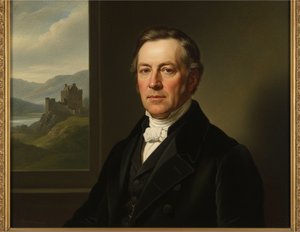
To stand before this portrait of Pringle Fraser is to encounter not merely a likeness, but a carefully constructed moment of contemplation. Painted around 1804, this work captures the essence of early nineteenth-century masculine dignity. The subject commands attention through his direct, almost challenging gaze. He is presented in attire that speaks of respectable standing—the crisp white shirt contrasting sharply with the somber black vest and tie. This deliberate contrast in costume immediately draws the eye, framing a face etched with an air of profound seriousness. It is a portrait that refuses to whisper; it speaks with the quiet authority of established character.
Mastery of Shadow and Light: Technical Brilliance
The technical execution here suggests the hand of a master observer, echoing the traditions perfected by artists like Henry Raeburn, whose influence permeates this style. Notice how the artist has manipulated the background; it is not empty space, but rather a deep, moody atmosphere that seems to absorb all surrounding light. This dramatic chiaroscuro effect serves to push the figure forward, making him leap out from the canvas plane. The focus remains intensely on the planes of his face—the structure around the eyes, the set of the jaw—all rendered with painstaking detail. One can almost feel the texture of the fabric and the subtle sheen in his dark hair.
Historical Echoes: Life at the Turn of the Century
The year 1804 places this portrait squarely within a period of immense social and artistic transition in Britain. The sitter’s formal presentation reflects the rigid codes of gentlemanly conduct prevalent before the sweeping changes that would characterize the Victorian era. These portraits were not just records of appearance; they were statements of lineage, profession, and moral character. Owning or displaying such a piece connects the modern viewer directly to the aspirations and social structures of the Regency period—a time balancing Enlightenment ideals with burgeoning industrial confidence.
Emotional Resonance and Decorative Impact
Emotionally, the portrait is captivating precisely because of its ambiguity. Is the sternness born of deep thought, professional gravity, or perhaps a slight impatience with the viewer? This unresolved tension is what gives the piece its enduring power. For the collector or designer, this painting offers more than mere decoration; it provides an anchor of sophisticated gravitas for any room. A high-quality reproduction allows one to integrate this powerful narrative into contemporary interiors, lending an air of cultivated history and intellectual depth that few modern pieces can match.
Întrebări și răspunsuri
Cum este descrisă atmosfera din "Pringle Fraser" de Henry Raeburn?
"Pringle Fraser" are o atmosferă Elegant.
Unde pot vedea originalul "Pringle Fraser" de Henry Raeburn?
"Pringle Fraser" de Henry Raeburn este expusă la Tate Gallery, Londra, Regatul Unit. Mențiunea muzeului se referă la lucrarea originală, nu la reproduceri.
Este "Pringle Fraser" de Henry Raeburn în domeniul public și care este motivul?
„Pringle Fraser” de Henry Raeburn este în în domeniul public - drepturile de autor au expirat. Termenii de drept de autor se calculează de la data decesului artistului, iar Henry Raeburn a decedat în 1823.
Biografie artist
A Scottish Master of Realism: The Life and Art of Sir Henry Raeburn
Sir Henry Raeburn, a name synonymous with the vibrant spirit of 18th-century Scotland, stands as one of the nation’s most celebrated portrait painters. His journey from humble beginnings to royal patronage is a testament to his unwavering dedication and extraordinary artistic talent. Born in Stockbridge, Edinburgh, in 1756, amidst the burgeoning Enlightenment, Raeburn's life was shaped by both privilege and adversity – an orphaned childhood followed by the support of his brother, leading him to a goldsmith apprenticeship before ultimately embracing the captivating world of painting. This early exposure to detail and craftsmanship would prove invaluable as he honed his skills, initially through miniature portraiture, a demanding medium that demanded precision and observation.From Miniature Precision to Grand Portraiture
Raeburn’s artistic evolution wasn't simply a progression; it was a deliberate transformation fueled by an insatiable desire for mastery. He diligently studied the works of masters like David Martin, a former assistant to Allan Ramsay, absorbing techniques and stylistic nuances. However, his true path lay in self-directed learning, driven by relentless practice and a keen eye for capturing the essence of his subjects. A pivotal moment arrived with his marriage to Ann Edgar in 1778, providing him with financial stability that allowed him to fully dedicate himself to painting without the constraints of commercial obligations. This period witnessed a significant shift – Raeburn abandoned the delicate world of miniatures and embarked on a journey towards larger-scale oil paintings, a medium that demanded both technical skill and artistic vision. His brief sojourn in Italy, though ultimately curtailed, exposed him to the grandeur of the Old Masters, profoundly influencing his approach to composition, lighting, and color. He sought inspiration from the works of Venetian painters like Titian and Veronese, incorporating their dramatic use of light and shadow into his own style.Capturing Character: Raeburn’s Artistic Signature
What truly distinguishes Raeburn's work is not merely the technical proficiency displayed in his portraits but rather his remarkable ability to capture the inner character of his subjects. He possessed an uncanny knack for revealing personality, status, and even mood through subtle gestures, expressions, and carefully chosen details. His technique was a masterful blend of meticulous observation, confident brushwork, and a sophisticated understanding of light and shadow – a combination that created images brimming with life and immediacy. Consider *The Young Polo Player*, a dynamic snapshot of youthful energy and aristocratic leisure; it’s not simply a depiction of a sporting gentleman but an embodiment of vitality and privilege. Similarly, his portrait of Alexander Allan, a prominent figure in Scottish art, reveals a man of intellect and refinement through the careful arrangement of his attire and the thoughtful gaze directed towards the viewer. Raeburn's signature technique – known as *chiaroscuro* – involved employing dramatic contrasts between light and dark to create depth, intensity, and focus, drawing the eye directly to the subject’s face and expression.Recognition and Legacy: A Scottish Icon
Raeburn’s artistic achievements garnered widespread recognition throughout his career. He quickly established himself as a leading member of Edinburgh society, attracting commissions from prominent families and individuals. His appointment as Portrait Painter to King George IV in Scotland in 1822 – shortly before his untimely death in 1823 – served as the ultimate validation of his artistic prowess, cementing his place among the most celebrated artists of his time. His work profoundly impacted Scottish art, establishing a distinctively Scottish identity within the broader context of British painting. He championed realism and psychological insight, moving away from the idealized portrayals prevalent at the time and offering a more honest and nuanced representation of his subjects. His legacy extends far beyond the canvas; he embodies the spirit of self-education, perseverance, and artistic vision – a testament to the transformative power of dedication and talent. Today, Raeburn’s paintings are treasured possessions within prestigious collections worldwide, including the Scottish National Gallery in Edinburgh and The Frick Collection in New York, ensuring that his remarkable contribution to art history continues to be celebrated for generations to come.- His dedication to realism and psychological insight set him apart from many of his contemporaries.
- He helped establish a distinctly Scottish identity within British art.
- His masterful technique continues to be studied and admired by artists and scholars alike.

Henry Raeburn
1756 - 1823 , Regatul Unit al Marii Britanii și Irlandei
Informații rapide
- Artistic Movement Or Style: Portrete, Realism
- Artists Or Movements Influenced By This Artist: ['Arta Scoțiană']
- Artists Who Influenced This Artist:
- David Martin
- Joshua Reynolds
- Date Of Birth: 4 martie 1756
- Date Of Death: 8 iulie 1823
- Full Name: Henry Raeburn
- Nationality: Scoțian
- Notable Artworks:
- The Young Polo Player
- Alexander Allan
- Sir John Hay
- Place Of Birth: Stockbridge, UK
Articole conexe
Henry Raeburn: A Scottish Portraitist's Mastery of Light, Character & National Identity
Explore the life & work of Henry Raeburn, a master Scottish portraitist. Discover his innovative techniques, captivating portraits of the Enlightenment era, and lasting legacy in art history. Learn more at OriginalUniqueArt.
Sir Joshua Reynolds: Cele Mai Remarcabile 25 de Capodopere – Artă Clasică pentru Decorul Tău
Descoperă cele mai frumoase 25 de picturi ale lui Sir Joshua Reynolds! Portrete clasice, stil neoclasic și capodopere romantice. Găsește inspirație pentru decorul tău și achiziționează reproduceri de artă de calitate muzeală pe OriginalUniqueArt.com.
Henri Matisse: Cele Mai Iconice 25 De Opere – Artă, Decorațiuni și Inspirație
Descoperă cele mai emblematice 25 de opere ale lui Henri Matisse! Explorează fauvismul, culorile vibrante și stilul unic al artistului francez. Reproduceri tablouri de calitate muzeală & inspirație pentru decor pe OriginalUniqueArt.com.

Henry Raeburn Dobson: A Scottish Colourist Bridging Tradition & Modernity
Explore the life & work of Henry Raeburn Dobson, a key figure bridging Scottish tradition & modern art. Discover his neoclassical portraits, landscapes, and connection to the Colourists. Learn about collecting his works.

Sir Alfred James Munnings: Cele Mai Iubite 25 de Capodopere – Artă Excepțională pentru Decorul Casei Tale
Descoperă cele mai frumoase 25 de picturi ale lui Alfred James Munnings! Explorează capodoperele impresionismului britanic, scene rurale vibrante și arta ecvestră. Reproduceri de artă de calitate muzeală pentru decorul casei tale pe OriginalUniqueArt.com