

 Previzualizare
 Trimite
 Distribuie
 Detalii despre lucrare

 Descarcă
 Produse similare
 Radiografie
 Diapozitive automate
 Statistici
The Baldacchino


 Vezi mai mult
Reproducere pictată manual în ulei
Pictură în ulei pe pânză, realizată manual de artiștii noștri la dimensiunea și ramele dorite de dumneavoastră, pe comandă. ( Comută pe Print Comută pe Imagine Digitală)




P118B $10

P118H $10

P118W $10

P438Z $10

P508JH $12

P508YH $12

P805H $10

P805Z $10

P919BZ $10

P919G $10

P919XJ $10

P959ZH $10

P968JZ $12

W106C $8

W218G $10

W218JH $8

W218Y $10

W307PJ $10

W316G $10

W316PJ $8

W316Y $10

W398PJ $8

W4111J $10

W500HY $15

W500JH $15

W692G $12

W849H $8

W940BG $15

W953PJ $8




Alegeți dintre dimensiunile noastre prestabilite, care respectă proporțiile originale ale operei de artă.

Puteți introduce propriile dimensiuni pentru a se potrivi unui anumit cadru sau spațiu. Dacă dimensiunea selectată nu corespunde proporțiilor imaginii originale, vom decupa opera de artă sau vom extinde pictura cu elemente suplimentare pictate manual. O simulare digitală vă va fi trimisă pentru aprobare înainte de începerea producției.
Vă rugăm să rețineți că previzualizarea de pe ecran nu reflectă decuparea sau extinderea reală. Doar macheta va arăta cu exactitate compoziția finală.
Deși sunt disponibile dimensiuni personalizate, vă recomandăm să selectați o dimensiune din lista predefinită pentru a păstra proporțiile originale.
După plasarea comenzii, echipa OriginalUniqueArt.com va contacta clientul prin e-mail pentru instrucțiuni și îi va furniza o previzualizare a machetei
Livrare în întreaga lume () în 3-4 săptămâni, în loc de cele 5 săptămâni standard. (13 Septembrie). Fără compromisuri în ceea ce privește calitatea.

Livrare expres gratuită la nivel mondial

Pânză de in de înaltă calitate

Asigurare completă pentru transport

Garanție de rambursare a taxelor vamale

Garanția fidelității culorilor

Politica de retur de 100 de zile (doar pentru defecte)

Garanție de rambursare 100%

Ofertă pentru comenzi multiple
 Opțiunea cu sticlă este disponibilă doar pentru dimensiuni de sub 110 cm

The Baldacchino
Tehnică de reproducere
Dimensiune reproducere
-


Preț total calculat
$ 300
The Majestic Baldacchino: A Symphony of Baroque Grandeur
Within the heart of St. Peter’s Basilica in Vatican City stands a monument to artistic ambition and spiritual aspiration – Gian Lorenzo Bernini's Baldacchino, or “Gilded Canopy.” More than simply an altar decoration, it is a breathtaking sculpture that embodies the very essence of Baroque artistry: drama, movement, light, and an overwhelming sense of divine presence. This colossal bronze canopy, reaching over 60 feet in height, isn’t merely a structure; it's a carefully orchestrated tableau designed to elevate the viewer’s experience of worship and reflect the power and glory of the papacy.
Commissioned by Pope Urban VIII in 1624, the Baldacchino was conceived as a central element within the newly constructed basilica. Bernini envisioned it not just as an adornment for the High Altar, which houses the relics of St. Peter, but as a dynamic architectural statement that would visually balance the imposing scale of the nave and the soaring dome above. The project took nearly nine years to complete, a testament to its complexity and the sheer volume of intricate detail involved – a reflection of Bernini’s unparalleled skill and his dedication to pushing the boundaries of sculptural possibility.
A Masterclass in Baroque Technique
Bernini's genius lies not only in his grand scale but also in his masterful manipulation of materials and techniques. The Baldacchino is primarily constructed from bronze, a choice that lends itself beautifully to capturing light and creating an ethereal glow. However, the sculpture is far more than just solid metal; it’s a complex layering of textures and effects. Notice the meticulously carved angels and cherubs, their drapery swirling with an almost palpable sense of movement. The columns themselves are a marvel – four massive, twisted bronze pillars that spiral upwards, culminating in a central dome-like structure adorned with intricate details. These columns aren't static; they appear to be caught mid-twist, conveying a powerful feeling of dynamism and energy.
The use of contrasting materials—marble for the pedestals and base, alabaster for certain elements—further enhances the sculpture’s visual impact. Bernini expertly employed gilding throughout, particularly on the central dome and the tassels that cascade from the canopy's edges, creating a dazzling display of light and color. The entire piece is a testament to his understanding of how materials interact with light, transforming a static form into a living, breathing spectacle.
Symbolism and Spiritual Significance
The Baldacchino is rich in symbolic meaning, deeply rooted in Christian iconography and papal authority. The central dome represents the Holy Spirit descending upon Christ, while the four columns are reminiscent of the Solomonic columns found in Solomon’s Temple—a deliberate reference to the historical roots of Christianity. The figures adorning the canopy – angels, cherubs, and representations of St. Peter – all contribute to a narrative of faith, power, and divine grace.
Crucially, the Baldacchino is inextricably linked to the tomb of St. Peter, located beneath the High Altar. By enveloping this sacred space in such opulent splendor, Bernini elevates the site to a place of unparalleled reverence and underscores the papacy’s role as protector of the saint's legacy. The sheer scale and magnificence of the piece are intended to inspire awe and devotion, reinforcing the Basilica’s status as one of the most important religious sites on Earth.
Bringing Bernini’s Vision Home
Gian Lorenzo Bernini’s Baldacchino remains a profoundly moving experience for those who witness it in person. Its grandeur, artistry, and symbolic depth are truly unparalleled. OriginalUniqueArt.com offers meticulously crafted, hand-painted oil reproduction reproductions of this iconic masterpiece, allowing you to bring the splendor of St. Peter's Basilica into your own home or office. Each reproduction is created by skilled artists using traditional techniques, faithfully capturing the nuances of Bernini’s original work and ensuring that its beauty and power endure for generations to come. Explore our collection today and experience the magic of Baroque art firsthand – https://OriginalUniqueArt.com
Biografie artist
A Roman Genius: The Life and Legacy of Gian Lorenzo Bernini
Gian Lorenzo Bernini, a name synonymous with the Baroque era, was more than just an artist; he was a transformative force that reshaped the visual landscape of Rome and profoundly influenced generations of European artists. Born in Naples in 1598, his journey to becoming one of history’s most celebrated sculptors and architects began within a family steeped in artistic tradition – his father, Pietro Bernini, was himself a respected sculptor. This familial workshop provided young Gian Lorenzo with an invaluable foundation, not just through rigorous technical training but also by immersing him in the classical heritage that would become so central to his artistic vision. He wasn’t simply taught techniques; he absorbed the very spirit of Roman sculpture, devouring the masterpieces housed within the Vatican collections and meticulously studying their forms and principles – a process that foreshadowed the revolutionary style he was destined to create. Even as a child, Bernini's innate talent surpassed that of his father, hinting at the extraordinary force he would unleash upon the world.Sculpting Emotion: The Birth of Baroque Drama
Bernini is unequivocally considered the preeminent sculptor of the Baroque period, a style characterized by its dynamic energy, intense emotionality, and breathtaking grandeur. He didn’t merely sculpt figures; he breathed life into marble, imbuing them with moments of profound psychological depth and dramatic narrative that resonated deeply with viewers. Unlike the idealized forms and static beauty often associated with Renaissance sculpture, Bernini embraced movement, theatricality, and the raw power of human emotion. His work transcended mere representation, aiming to evoke a visceral response – a feeling, an experience – in those who beheld it. Key elements defined his distinctive style: a masterful ability to convey complex emotions through subtle shifts in facial expression and body language; an astonishing technical proficiency that allowed him to render textures—flowing hair, delicate fabrics, smooth skin—with remarkable realism; and above all, a commitment to dramatic narrative, depicting scenes of intense action or spiritual climax. The *Ecstasy of Saint Teresa*, housed within the Cornaro Chapel, stands as perhaps his most iconic achievement – a swirling composition of marble, bronze, and light that captures a mystical experience with an almost overwhelming emotional force. The figures seem to be caught in a perpetual dance of ecstasy, their bodies intertwined in a breathtaking display of movement and emotion. Other masterpieces like *Apollo and Daphne* and *David* showcase this same dynamic energy, transforming cold stone into fleeting moments of transformation and poised tension – a testament to Bernini’s ability to capture the essence of human drama within his sculptures.Beyond Sculpture: Architecture and Urban Visions
Bernini's genius extended far beyond the realm of sculpture; he was a remarkably versatile artist who made significant contributions to architecture and urban planning, fundamentally reshaping the cityscape of Rome. His architectural designs were never conceived in isolation; they were always intricately interwoven with his sculptural work, creating unified artistic experiences that blurred the boundaries between disciplines. The monumental *Baldacchino* above the high altar of St. Peter’s Basilica is a prime example of this holistic approach – a soaring bronze canopy that dominates the space and draws the eye upwards in awe, symbolizing both earthly power and divine grace. He also played a pivotal role in redesigning several Roman piazzas, transforming them into vibrant public spaces filled with fountains, statues, and architectural embellishments. The *Fountain of Four Rivers* in Piazza Navona is a particularly striking example – a dynamic composition featuring allegorical figures representing the major rivers from different continents, brought to life through Bernini’s masterful use of sculpture and architecture. His work on St. Peter’s Basilica, including the expansive colonnade that embraces visitors as they approach, dramatically altered the basilica's appearance and created a grand ceremonial space befitting the heart of Christendom – a testament to his ambition and vision.A Lasting Influence: Bernini’s Historical Significance
Gian Lorenzo Bernini profoundly impacted the course of Western art. His innovative approach to sculpture established the Baroque style as a dominant force in European art for over a century, influencing generations of artists with his dramatic compositions and technical virtuosity. He wasn't merely an imitator of classical forms; he synthesized them with a new sense of dynamism and emotional intensity, creating something entirely original. His integration of sculpture, architecture, and painting into unified artistic experiences set a new standard for artistic expression, demonstrating the power of art to engage all the senses and evoke profound emotions. As Howard Hibbard eloquently noted, Bernini’s impact was so significant that he stands as “the greatest sculptor of the 17th century.” His works continue to inspire awe and admiration, solidifying his place as one of history's most important artists – a true *uomo universale* whose legacy continues to resonate today.Family & Further Achievements
- Pietro Bernini: Gian Lorenzo’s father, a sculptor who provided early training and guidance.
- Cardinal Scipione Borghese: An early patron whose commissions allowed Bernini to develop his signature style.
- Pope Urban VIII: Bernini's most significant patron, providing extensive opportunities for architectural and sculptural projects in Rome.
- Architectural Projects: Beyond St. Peter’s Basilica, Bernini designed churches like Sant’Andrea al Quirinale and contributed to the design of Palazzo Barberini.
- Theatrical Designs: He was also a playwright and stage designer, creating elaborate sets and machinery for theatrical productions.

Gian Lorenzo Bernini
1598 - 1680 , Italia
Detalii rapide
- Artistic Movement Or Style: Baroc
- Artists Or Movements Influenced By This Artist:
- Baroc sculptură
- Art european
- Artists Who Influenced This Artist:
- Pietro Bernini
- Michelangelo
- Date Of Birth: 7 Decembrie 1598
- Date Of Death: 28 Noiembrie 1680
- Full Name: Gian Lorenzo Bernini
- Nationality: Italian
- Notable Artworks:
- Ecstasy Teresa
- Apollo Daphne
- David
- Baldacchino
- Place Of Birth: Napoli, Italia
Articole similare
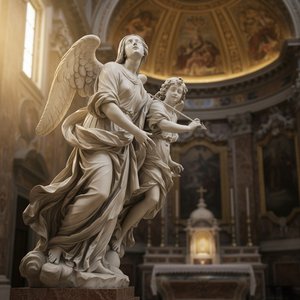
Gian Lorenzo Bernini: Sculpting Baroque Emotion & the Roman Imagination
Explore the life & revolutionary art of Gian Lorenzo Bernini, the master sculptor of the Baroque era. Discover his iconic works like David and Ecstasy of Saint Teresa – a journey into Roman artistic genius.

The Enduring Form: Exploring Themes & Techniques in Sculpture Across Historical Periods
Explore the rich history of sculpture from ancient masterpieces to contemporary innovations. Discover key techniques, influential artists & investment potential for discerning art collectors.

Top 10 Capodopere din Bronz care au Revoluționat Arta – Inspirație pentru Decor
Descoperă Top 10 sculpturi din bronz care au schimbat istoria artei! Explorează operele lui Rodin, Michelangelo și alți maeștri, tehnicile lor unice și inspirația pentru decorul casei tale. Replici de calitate muzeală pe OriginalUniqueArt.com.

Theatricality & Triumph: Baroque Drama in Painting & Sculpture
Explore the dramatic world of Baroque art! Discover its history, defining characteristics, & lasting influence on painting & sculpture. Expert insights into Caravaggio, Zurbarán, and Bernini – plus high-quality reproductions at OriginalUniqueArt.

The Enduring Form: Sculpture Across History, Technique & Emotional Resonance
Explore the rich history of sculpture with OriginalUniqueArt. Discover key techniques, influential artists & investment potential for discerning collectors. Expert insights into valuing and collecting timeless masterpieces.
