Expressionism
Marsh landscape (Emil Nolde)
Emil Nolde (1867–1956) a realizat Marsh landscape. Face parte din mișcarea Expressionism. Este realizată în Watercolor.
- Watercolor

 Previzualizare

 Tablou în ulei pictat manual
 Trimite prin felicitare
 Distribuie
 Fișă informativă


 Descarcă imaginea
 Produse similare
 Radiografie
 Galerie foto
 Întrebări și răspunsuri

 Statistici
Marsh landscape, pe scurt
- Titlu
- Marsh landscape
- Artist
- Emil Nolde (1867–1956)
- Artist născut în
- Nolde, Danemarca
- Medium
- Watercolor
- Mișcare
- Expressionism
- Perioadă
- Modern
- Subiect
- marsh, houses, sky, clouds, waterway, green
Ce reprezintă Marsh landscape?
Identification of the Artwork and Artist
Marsh landscape emerges from the canvas as a direct window into the expressive spirit of Emil Nolde. The scene captures a quiet, atmospheric moment within a marshland, where the land and sky meet in a dance of color and light. This work reflects the artist's deep, personal connection to the natural world, a bond that defined his creative life from his beginnings in the rural, agrarian landscapes of his youth until his death in 1956.
Born in 1867 in Nolde, Denmark, the artist carries the rhythms of the Danish and Frisian countryside into his brushstrokes. His identity is inextricably linked to the very soil and water he depicts, having transitioned from the tactile labor of woodcarving to the fluid, urgent application of paint. In Marsh landscape, we see the result of this transformation, where the physical environment is translated through a lens of intense, subjective feeling.
The painting exists as a piece of Expressionism, moving beyond simple representation to find the pulse of the marsh. It is a work that prioritizes the internal sensation of the landscape over a literal likeness. Through this approach, Emil Nolde transforms a simple view of houses and waterways into a profound encounter with the essence of the natural environment.
The Composition and Visual Elements
The scene unfolds in a wide-angle, panoramic view of the marshland. A horizontal arrangement anchors the landscape, placing clusters of houses in the foreground to act as focal points amidst the expansive terrain. A winding path or waterway cuts through the greenery, leading the eye toward the horizon and creating a sense of depth. This movement draws the viewer deeper into the marshy expanse.
Above the land, a dramatic sky dominates the upper portion of the canvas. The celestial space feels immense, pressing down upon the earth with heavy, swirling clouds. Perspective is achieved through the careful use of size diminution, as the houses appear smaller as they recede into the distance. Overlapping forms further establish the layers of the environment, building a sense of physical space within the composition.
Technique, Materials and Support
The medium breathes with the immediacy of watercolor or gouache, a choice that allows the artist to capture the shifting light of the marshland with urgent, direct movement. Layers of color wash over one another, creating a sense of depth that feels both translucent and heavy. These washes do not merely sit upon the surface; they seem to pool and flow, mimicking the very water and sky they seek to represent. The pigment moves with a certain speed, as if the artist is racing to fix a fleeting moment of atmosphere before it vanishes.
Visible brushstrokes define the very substance of the scene. Rather than smooth, blended transitions, the paint is applied in distinct, gestural strokes that leave a palpable texture across the surface. This layering of pigment creates a physical presence, where the ridges of the brush meet the paper to build a sense of weight. The texture is not a byproduct of the process but a vital part of the work's energy, giving the clouds and the marshland a tactile, lived-in quality. Every mark feels intentional, contributing to the overall sense of movement within the landscape.
The Expressive Style and Color Palette
The scene breathes with an Expressionistic intensity, where the landscape is felt through a subjective lens rather than a literal one. Every brushstroke carries a sense of urgency, pushing the boundaries of how color can be used to convey a specific moment of light. The marshland unfolds in deep, saturated greens, grounding the composition in the damp reality of the wetlands. Amidst this verdant expanse, small houses emerge, punctuated by sharp red accents that draw the eye through the center of the view. These touches of color provide a rhythmic contrast against the organic forms of the earth.
Above the horizon, the sky dominates the canvas with a dramatic, swirling energy. Yellows and oranges wash across the heavens, suggesting the warm, diffused glow of a twilight hour or an overcast afternoon. This warmth meets the cooler, heavier tones of the clouds, which are rendered in deep purples and blues. The interplay between these opposing temperatures creates a palpable sense of movement, as if the atmosphere itself is in a state of constant flux. The colors do not merely sit upon the surface; they seem to possess a weight and substance that defines the very shape of the clouds and the terrain below.
Related Works by Emil Nolde
The artist's fascination with the shifting moods of the coast and the sky reveals itself in other compositions. One finds a similar pull toward the wetlands in Marsh landscape with peasent houses. The landscape breathes with a sense of solitude in many of his pieces. In Autumn Sea, created about 1908, the water and atmosphere command the viewer's attention. The horizon meets the weight of the clouds in a way that feels both restless and immediate.
His exploration of form often moves toward the psychological and the primal. Around 1906-1907, he produced Masks, a work that leans into the expressive power of primitive forms. This search for a deeper, more visceral visual language also appears in his religious subjects. In 1909, he produced The Mocking of Christ, capturing the intensity of the moment through a focus on emotion rather than literal likeness.
Imagini la înaltă rezoluție ale lui Marsh landscape
Domeniu public: artistul a decedat în 1956.
Emil Nolde, Marsh landscape. Domeniu public
Întrebări despre Marsh landscape, răspunsuri
În ce tehnică este realizată lucrarea "Marsh landscape" de Emil Nolde?
"Marsh landscape" este realizat în Watercolor."
Ce reprezintă "Marsh landscape"?
Temele prezente în "Marsh landscape" de Emil Nolde includ marsh, houses, sky, clouds, waterway, green, orange, purple. Împreună, acestea definesc subiectul întregii opere de artă.
Este "Marsh landscape" în domeniul public?
Statusul drepturilor de autor pentru "Marsh landscape" de Emil Nolde: opera este în domeniul public – drepturile de autor au expirat. Acest lucru determină dacă reproducerile imaginii pot fi realizate liber.
Cine a creat "Marsh landscape"?
„Marsh landscape” a fost creat de Emil Nolde. Informațiile de pe această pagină descriu opera originală a lui Emil Nolde.
Din ce stil face parte "Marsh landscape"?
„Marsh landscape” este o operă de Expressionism. Acest curent indică tradiția artistică din care face parte lucrarea.
Este "Marsh landscape" de Emil Nolde în domeniul public și care este motivul?
"Marsh landscape" de Emil Nolde este în domeniul public – drepturile de autor au expirat. Durata protecției drepturilor de autor se calculează de la data decesului artistului, survenit în anul 1956.
Cum se încadrează „Marsh landscape” în temele și stilul lui Emil Nolde?
„Marsh landscape” împarte cu celelalte opere ale lui Emil Nolde stilul Expressionism și temele recurente: post-impressionism, die brücke, expressionism, subjective emotion, nature's pulse.
Cum se încadrează "Marsh landscape" în rândul temelor recurente ale lui Emil Nolde?
"Marsh landscape" înfățișează marsh, houses, sky, clouds, waterway, green, orange, purple, în timp ce temele recurente ale lui Emil Nolde sunt post-impressionism, die brücke, expressionism, subjective emotion, nature's pulse. Compararea celor două relevă modul în care această lucrare se raportează la subiectele obișnuite ale artistului.
Despre artistul Emil Nolde
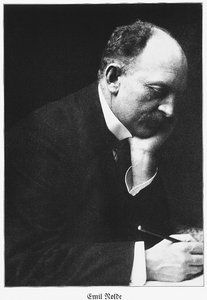
1867–1956, Danemarca
Emil Nolde
Viața și Identitatea lui Emil Nolde Născut sub numele de Hans Emil Hansen, pe 7 august 1867, omul care avea să devină cunoscut sub numele de Emil Nolde, a crescut în apropierea satului Nolde, în Duchia Schleswig. Primii săi ani de viață au fost modelați de viața rurală și agrară a familiei sale, un univers guvernat de ritmurile pământului. Cu toate acestea, el a ales să se îndepărteze de acest destin predeterminat, preferând să lucreze ca sculptor pe lemn și decorator de mobilier. Această muncă tactilă și fizică a fost fundamentul care a precedat transformarea sa către pictură și gravură.
Alte lucrări ale lui Emil Nolde
 Sunset
 Sea with Red Sky
 Couple on the beach1903
 Masks1911
Eseuri despre Marsh landscape
 Top 10 Capodopere Impresioniste: Peisaje care au Definit Arta Modernă | OriginalUniqueArt.roDescoperă top 10 capodopere impresioniste care au revoluționat arta! Monet, Manet, Renoir și alți maeștri ai peisajului. Reproduceri de tab…
 The Art of Stillness: A Study of Serenity in Village LandscapesExplore the profound tranquility of village landscapes through the eyes of masters like Cézanne and Constable. Discover the art of serenity.
 Emile Nolde: A Journey into Expressionist Nature & the Primal SelfExplore the powerful Expressionism of Emile Nolde – a pioneer of emotive landscapes & spiritual themes. Discover his journey, influences, a…