
 Previzualizare
 Trimite prin felicitare
 Distribuie
 Detalii despre lucrare
 Ghid
Ghid

 Descarcă imaginea
 Produse similare
 Radiografie
 Galerie foto
 Q&A
Q&A Statistici
Delos

- 76.0 x 54.0 cm


 Vezi mai mult
Lucrarea de artă afișată pe această pagină este protejată de legile privind drepturile de autor, ceea ce înseamnă că nu putem crea sau vinde în mod legal o reproducere identică. Această protecție este garantată prin acorduri internaționale, precum Convenția de la Berna și de legile naționale, inclusiv cele prevăzute de Legea dreptului de autor din S.U.A. – Titlul 17. Toate drepturile rezervate. Orice reproducere neautorizată este interzisă.
Această metodă respectă pe deplin reglementările privind drepturile de autor, deoarece nu implică copierea sau duplicarea operei protejate. În schimb, este o reinterpretare creativă – o pictură nouă, influențată de original, dar care nu este identică cu acesta.
Giclée / Imprimare artistică
Printuri giclée sau pe canvas de calitate muzeală, cu proces de producție rapid și opțiuni flexibile de finisare. ( Comandă pictură realizată manual Comută pe Imagine Digitală)




P118B lei10

P118H lei10

P118W lei10

P438Z lei10

P508JH lei12

P508YH lei12

P805H lei10

P805Z lei10

P919BZ lei10

P919G lei10

P919XJ lei10

P959ZH lei10

P968JZ lei12

W106C lei8

W218G lei10

W218JH lei8

W218Y lei10

W307PJ lei10

W316G lei10

W316PJ lei8

W316Y lei10

W398PJ lei8

W4111J lei10

W500HY lei15

W500JH lei15

W692G lei12

W849H lei8

W940BG lei15

W953PJ lei8




Alegeți dintre dimensiunile noastre prestabilite, care respectă proporțiile originale ale operei de artă.

Introduceți lățimea și înălțimea necesare pentru a se potrivi ramei sau peretelui dumneavoastră. O printare poate fi doar tăiată, niciodată extinsă dincolo de dimensiunea imaginii originale, astfel încât o dimensiune cu o formă diferită va pierde o parte din imagine. Vă trimitem o simulare digitală pentru aprobare înainte de a imprima orice. Imaginea afișată pe această pagină nu prezintă tăierea reală — doar simularea arată acest lucru.
Livrare în întreaga lume () în 2 săptămâni, în loc de cele 4/5 săptămâni standard. (31 Octombrie)

Livrare expres gratuită la nivel mondial

Pânză de in de înaltă calitate

Asigurare completă pentru transport

Garanție de rambursare a taxelor vamale

Garanția fidelității culorilor

Politica de retur în 100 de zile (doar pentru defecte de fabricație)

Garanție de rambursare 100%

Ofertă pentru comenzi multiple
 Opțiunea cu sticlă este disponibilă doar pentru dimensiuni de sub 110 cm

Delos
Giclée / Imprimare artistică
Dimensiune reproducere
-


Preț total calculat
lei 379
Delos: A Meditation on Form and Void by Barbara Hepworth
Barbara Hepworth’s “Delos,” created in 1971, is more than just a painting; it's an invitation to contemplate the relationship between solidity and emptiness, form and space. The work immediately draws the eye with its striking palette of yellows and blacks – a deliberate contrast that speaks volumes about the artist’s core concerns. The dominant yellow, reminiscent of sun-drenched stone or aged parchment, provides a warm, almost luminous backdrop for the carefully sculpted voids represented by the stark black circles. These aren't merely decorative elements; they are crucial to understanding Hepworth’s intention – to suggest a profound sense of absence and the inherent tension within any form.
Hepworth, a pivotal figure in 20th-century British art, was deeply influenced by both European modernism and her own experiences with sculpture. Her work moved beyond representational imagery, seeking instead to capture essential qualities – weight, texture, and the dynamic interplay of positive and negative space. “Delos” echoes this approach, translating the tactile experience of three-dimensional form into a two-dimensional plane. The painting’s genesis lies partly in Hepworth's fascination with Greek mythology, particularly the island of Delos, sacred to Apollo and Artemis and renowned for its ancient ruins. The title itself acts as a direct reference to this historical and symbolic significance, grounding the abstract composition within a rich cultural context.
Technique and Composition: A Study in Contrasts
The painting’s technique is deceptively simple yet remarkably sophisticated. Hepworth employed a layered approach, building up the yellow ground with thin washes of color to create subtle tonal variations. The black circles are not painted directly onto the surface; rather, they appear as carefully applied areas of concentrated pigment, suggesting a deliberate process of carving or subtraction. This technique reinforces the idea of form emerging from void – a central theme in Hepworth’s oeuvre. The placement of the circles is equally important. The largest circle dominates the center of the composition, acting as a visual anchor and drawing the eye inward. Smaller circles are strategically positioned around it, creating a dynamic balance between stability and movement.
Hepworth's use of color is particularly noteworthy. The yellow isn’t a bright, cheerful hue; it possesses a muted quality, hinting at age and weathering – qualities that resonate with the ancient ruins of Delos itself. The black circles, conversely, are intensely dark, creating a powerful contrast that demands attention. This interplay of light and shadow generates a sense of depth and volume, inviting the viewer to explore the painting’s surface and contemplate its hidden dimensions.
Symbolism and Emotional Resonance
Beyond its formal qualities, “Delos” is imbued with a profound sense of symbolism. The circles can be interpreted as representing the absence of something – perhaps loss, memory, or the unknowable mysteries of the universe. They also evoke the idea of holes or voids within forms, suggesting that even the most solid and substantial objects are ultimately defined by their emptiness. This concept aligns with Hepworth’s broader exploration of the relationship between form and space, a theme she consistently revisited throughout her career.
The painting's emotional impact is subtle yet deeply affecting. It doesn’t offer easy answers or explicit narratives; instead, it invites contemplation and introspection. There’s a sense of quiet melancholy, a recognition of the transient nature of existence, and a profound appreciation for the beauty that can be found in emptiness. “Delos” ultimately serves as a reminder that true understanding often arises not from filling every space with detail, but from embracing the power of suggestion and allowing the mind to complete the picture.
A Legacy of Form and Space
Barbara Hepworth’s “Delos” stands as a testament to her pioneering spirit and her profound insights into the nature of art. It's a work that transcends its simple composition, offering viewers a glimpse into the artist’s inner world and inviting them to engage in a dialogue with timeless themes of form, space, and existence. Reproductions of this piece offer an accessible way to experience Hepworth’s vision, bringing her evocative exploration of emptiness and solidity into any interior space – a reminder that sometimes, the most powerful art is found not in what is shown, but in what is left unsaid.
Întrebări și răspunsuri
Cât de multă lumină par să reflecte culorile din "Delos"?
Culorile din "Delos" prezintă o luminanță Luminous.
Unde pot cumpăra o ediție print a lucrării "Delos" de Barbara Hepworth?
Pentru a achiziționa o ediție print a lucrării "Delos" de Barbara Hepworth, vă este suficient să o comandați pe pagina dedicată Print Fine Art: o printă fine art pe canvas din bumbac sau pe hârtie canvas arhivistică.
Unde poate fi vizualizată astăzi opera "Delos" de Barbara Hepworth?
"Delos" de Barbara Hepworth este expusă la The Hepworth Wakefield, Wakefield, Regatul Unit. Mențiunea muzeului se referă la lucrarea originală, nu la reproduceri.
Biografie artist
primii ani de viață și educație
dame barbara hepwork, o artistă și sculptorță engleză de renume, s-a născut pe 10 ianuarie 1903, în wakefield, yorkshire. studiile sale au început la leeds school of art din 1920, moment în care, ulterior, a câștigat o bursă județeană pentru a studia la royal college of art (rca) din londra, perioadă care s-a întins din 1921 până la primirea diplomei în anul 1924.cariera artistică
- opera lui dame barbara hepworth exemplifică modernismul, în special sculptura modernă, fiind una dintre puținele artiste care au reușit să atingă o notorietate internațională.
- în 1933, ea a cofondat mișcarea artistică unit one împreună cu ben nicholson, paul nash și alții, căutând să unească suprarealismul și abstractizarea în arta britanică.
- primele lucrări ale lui hepworth au fost caracterizate prin abstractizare și prin implicarea sa în mișcarea artistică pariziană, abstraction-création.
lucrări și expoziții remarcabile
- oval form (trezion), o sculptură din bronz, face parte din colecția kimbell art museum din fort worth, statele unite. (vizualizați pe OriginalUniqueArt)
- two forms, o sculptură, este expusă la the hepworth wakefield în wakefield, regatul unit. (vizualizați pe AllPaintings_Store)
- totem, o sculptură din marmură, face parte, de asemenea, din colecția de la the hepworth wakefield. (vizualizați pe OriginalUniqueArt)
moștenire și colecții de muzee
opera lui barbara hepworth este recunoscută pe scară largă, sculpturile și picturile sale făcând parte din diverse colecții de muzee din întreaga lume. the hepworth wakefield, botezat după artistă, găzduiește numeroase capodopere ale unor artiști renumiți, inclusiv propriile lucrări ale lui hepworth. (descoperiți mai multe despre the hepworth wakefield pe OriginalUniqueArt)concluzie
munca pionieră a damei barbara hepworth în sculptura britanică modernă a lăsat o amprentă indelibilă asupra lumii arte. moștenirea sa continuă să îi inspire atât pe artiști, cât și pe iubitorii de artă, lucrările sale rămânând o mărturie a spiritului ei inovator și a geniului său artistic. mai multe despre barbara hepworth pe wikipedia
Barbara Hepworth
1903 - 1975 , Regatul Unit
Detalii rapide
- Artistic Movement Or Style: Modernism
- Artists Or Movements Influenced By This Artist: ['Unit One']
- Artists Who Influenced This Artist: ['Henry Moore']
- Date Of Birth: 10 ianuarie 1903
- Full Name: Jocelyn Barbara Hepworth
- Nationality: Anglieză
- Notable Artworks:
- Oval Form
- Two Forms
- Totem
- Place Of Birth: Wakefield, Anglia
Articole similare

The Enduring Form: Exploring Themes & Techniques in Sculpture Across Historical Periods
Explore the rich history of sculpture from ancient masterpieces to contemporary innovations. Discover key techniques, influential artists & investment potential for discerning art collectors.

Top 10 Capodopere din Bronz care au Revoluționat Arta – Inspirație pentru Decor
Descoperă Top 10 sculpturi din bronz care au schimbat istoria artei! Explorează operele lui Rodin, Michelangelo și alți maeștri, tehnicile lor unice și inspirația pentru decorul casei tale. Replici de calitate muzeală pe OriginalUniqueArt.com.
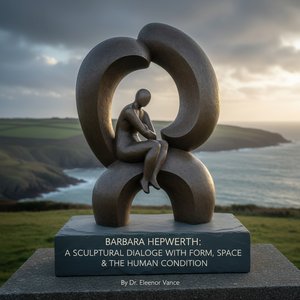
Barbara Hepworth: A Sculptural Dialogue with Form, Space & the Human Condition
Explore the profound world of Barbara Hepworth's sculpture. Discover her artistic evolution, iconic forms, and lasting influence on modern art. A guide for collectors & enthusiasts.

Top 10 Capodopere din Bronz care au Revoluționat Arta | OriginalUniqueArt.ro
Descoperiți Top 10 capodopere din bronz care au revoluționat arta! Rodin, Michelangelo și alții. Aflați istoria sculpturilor clasice și inspirație pentru decorul casei dvs. Reproduceri de artă de calitate muzeală pe OriginalUniqueArt.com

The Enduring Form: Sculpture Across History, Technique & Emotional Resonance
Explore the rich history of sculpture with OriginalUniqueArt. Discover key techniques, influential artists & investment potential for discerning collectors. Expert insights into valuing and collecting timeless masterpieces.


