

 Vezi în context
 Trimite
 Distribuie
 Detalii
 Ghidul

 Descarcă
 Produse similare
 Radiografie
 Diaporama
 Statistici
Shield with Gorgon


 Citește mai mult
Reproducere pictată manual în ulei
Pictură în ulei pe pânză, realizată manual de artiștii noștri la dimensiunea și ramele dorite de dumneavoastră, pe comandă. ( Comută pe versiunea Print Treci la imagine digitală)




P118B lei10

P118H lei10

P118W lei10

P438Z lei10

P508JH lei12

P508YH lei12

P805H lei10

P805Z lei10

P919BZ lei10

P919G lei10

P919XJ lei10

P959ZH lei10

P968JZ lei12

W106C lei8

W218G lei10

W218JH lei8

W218Y lei10

W307PJ lei10

W316G lei10

W316PJ lei8

W316Y lei10

W398PJ lei8

W4111J lei10

W500HY lei15

W500JH lei15

W692G lei12

W849H lei8

W940BG lei15

W953PJ lei8




Alegeți dintre dimensiunile noastre prestabilite, care respectă proporțiile originale ale operei de artă.

Introduceți lățimea și înălțimea de care aveți nevoie, pentru a se potrivi ramei sau peretelui dumneavoastră. Această lucrare este pictată manual, așa că pentru o dimensiune cu o formă diferită, artistul poate picta puțin mai mult în jurul imaginii sau poate tăia puțin din margini — dumneavoastră decideți. Vă vom trimite o simulare digitală pentru aprobare înainte de a începe pictarea. Imaginea afișată pe această pagină nu reprezintă rezultatul real — doar simularea este reprezentativă.
După plasarea comenzii, echipa OriginalUniqueArt.com va contacta clientul prin e-mail pentru instrucțiuni și îi va furniza o previzualizare a machetei
Livrare în întreaga lume () în 3-4 săptămâni, în loc de cele 5 săptămâni standard. (22 Octombrie). Fără compromisuri în ceea ce privește calitatea.

Livrare expres gratuită la nivel mondial

Pânză de in premium

Asigurare completă pentru transport

Garanție de rambursare a taxelor vamale

Garanția fidelității culorilor

Politica de retur în 100 de zile (doar pentru defecte)

Garanție de rambursare 100%

Reducere pentru comenzi multiple
 Opțiunea cu sticlă este disponibilă doar pentru dimensiuni de sub 110 cm

Shield with Gorgon
Tip de reproducere
Dimensiune reproducere
-


Preț total
lei 1379
Shield with Gorgon – A Meditation on Mortality and Ancient Myth
The sculpture “Shield with Gorgon’s Head,” created by Arnold Böcklin in 1897, stands as a haunting testament to the artist's fascination with Greco-Roman mythology and his profound contemplation of death. Exhibited prominently at the Musée d’Orsay in Paris, this piece transcends mere representation; it invites viewers into a realm of psychological exploration where beauty intertwines with unsettling truths. Böcklin, deeply influenced by Nietzschean philosophy – specifically the concept of eternal recurrence – sought to capture not just an image but an experience, mirroring the cyclical nature of existence and confronting us with our inevitable demise.Style and Technique: Symbolist Precision
Böcklin’s style aligns perfectly with the tenets of Symbolism, a movement that rejected realism in favor of conveying emotions and ideas through suggestive imagery rather than literal depiction. Unlike Impressionists who aimed to capture fleeting moments of light and color, Böcklin meticulously crafted his sculpture using a technique rooted in meticulous observation and symbolic distillation. The artist employed a combination of modeling clay and bronze casting – a process demanding considerable skill and patience – to achieve an astonishing level of detail. Notice the subtle gradations of tone within the Gorgon’s head; these aren't merely aesthetic choices but deliberate efforts to convey texture and depth, mirroring the complexities of human emotion. The smooth surface contrasts sharply with the rough contours of the snake’s coils, creating a visual dialogue that underscores the sculpture’s thematic concerns.Historical Context: Nietzschean Echoes and Late Romantic Sentiment
Böcklin's artistic output flourished during the waning years of the Romantic era, a period characterized by an obsession with emotion, imagination, and the sublime—experiences perceived as exceeding human comprehension yet simultaneously elevating the soul. However, Böcklin’s vision extended beyond traditional Romantic tropes; he actively engaged with the burgeoning intellectual currents of his time, particularly Nietzsche's proclamation that “God is dead.” This existential crisis fueled Böcklin’s exploration of themes like nihilism and mortality—concepts central to both Nietzschean thought and Symbolist art. The sculpture reflects a broader cultural preoccupation with confronting death not as an end but as a transformative stage in the cosmic cycle, mirroring Nietzsche's assertion that life itself is an affirmation of eternal recurrence.Symbolism Unleashed: Gorgon’s Head – Terror and Transformation
The Gorgon Medusa represents more than just monstrous horror; she embodies the terrifying power of transformation—a concept inextricably linked to Böcklin’s Symbolist worldview. According to Greek mythology, Medusa possessed snakes for hair that turned anyone who gazed upon them into stone. This image served as a potent symbol of inescapable fate and the destructive force of repressed emotions. The sculptor skillfully captures this duality: the Gorgon's gaze exudes palpable terror, yet simultaneously hints at an underlying process of metamorphosis—a suggestion that confronting death can lead to profound spiritual renewal. Böcklin’s deliberate use of serpentine coils reinforces this symbolism, representing both constriction and liberation – mirroring the artist’s own preoccupation with reconciling beauty and darkness.Emotional Impact: A Confrontation With Eternity
Ultimately, “Shield with Gorgon’s Head” compels viewers to confront their own mortality—to grapple with the inescapable reality that life is finite yet perpetually reborn. The sculpture's unsettling stillness invites contemplation, prompting us to consider our place within the grand scheme of cosmic time. Böcklin doesn’t offer comfort or reassurance; instead, he presents a stark portrait of existence stripped bare – confronting us with the beauty and terror inherent in accepting death as an inevitable component of life’s eternal dance. It is precisely this unflinching gaze—this refusal to shy away from uncomfortable truths—that secures “Shield with Gorgon’s Head”'s enduring power as a masterpiece of Symbolist art and a timeless meditation on the human condition.Întrebări și răspunsuri
Ce amplasare se potrivește formatului lucrării "Shield with Gorgon" de Arnold Böcklin?
Formatul Square al operei "Shield with Gorgon" de Arnold Böcklin este recomandat pentru o Living Room. Formatul și spațiul împreună ghidează amplasarea unei reproduceri.
Cum se raportează subiectul operei „Shield with Gorgon” la temele obișnuite ale lui Arnold Böcklin?
Printre temele renumite ale lui Arnold Böcklin - greek mythology, symbolism, death, mortality themes, romantic idealism vision, classical forms beauty, medieval gothic style - „Shield with Gorgon” aduce o perspectivă proprie asupra mythology, gorgon, snake, sculpture, classical, death, symbolism, medieval.
Din ce este realizată „Shield with Gorgon”?
Arnold Böcklin a utilizat tehnica Acrylic On Canvas pentru "Shield with Gorgon". Tehnica definește natura materială a lucrării originale.
Biografie artist
Early Life and Training
Arnold Böcklin, a name synonymous with haunting beauty and profound melancholy, was born on October 16, 1827, in Basel, Switzerland—a city steeped in history and artistic tradition. His lineage traced back to an old family of Schaffhausen, connected to the silk trade through his father, Christian Frederick Böcklin. Ursula Lippe, Arnold’s mother, hailed from the same city as well. From a young age, he displayed a keen interest in art, enrolling at the Düsseldorf Academy under the tutelage of Johann Wilhelm Schirmer, a renowned landscape painter. This formative period was marked by a close friendship with Anselm Feuerbach, a fellow student whose philosophical leanings would subtly influence Böcklin’s artistic vision. The Düsseldorf School of Painting—known for its emphasis on realism and dramatic lighting—provided him with a solid foundation in technique, but it was also within this environment that he began to explore the darker corners of the human experience, foreshadowing the themes that would dominate his mature work.Artistic Career and Symbolism
Böcklin’s artistic journey took him beyond the confines of Düsseldorf, leading him through vibrant cities like Paris and Rome—each leaving an indelible mark on his style and sensibility. In Paris, he found employment at the Louvre, immersing himself in the masterpieces of the Old Masters, while Rome exposed him to the grandeur of classical antiquity and the evocative beauty of the Italian landscape. This exposure profoundly shaped his artistic approach, leading him to incorporate allegorical and mythological figures into his compositions, often set against the backdrop of classical architecture. His early works, such as *Great Park* (1857), showcased ancient mythology with a dramatic intensity, while pieces like *Nymph and Satyr* (1858) and *Sappho* (1859) demonstrated a burgeoning talent for capturing ethereal beauty and unsettling moods. Notably, his self-portrait, *Portrait of Myself, with Death Playing a Violin* (1872), stands as a poignant example of his unique style—a masterful blend of realism and symbolism that explored themes of mortality and the human condition.The Isle of the Dead and Legacy
Perhaps Böcklin’s most enduring legacy is found in his five versions of *The Isle of the Dead* (1880-1886). Inspired by the English cemetery in Florence, where his daughter was buried, these monumental works evoke a sense of profound sadness and timelessness. The imagery—a desolate island shrouded in mist, populated by spectral figures—became an instant sensation, captivating audiences and influencing generations of artists. This series cemented Böcklin’s place as a key figure in the Symbolist movement, a reaction against the materialism and superficiality of the preceding era. His work resonated with a growing interest in dreams, mysticism, and the subconscious—themes that would become central to artistic expression in the 20th century. The influence of *The Isle of the Dead* extended far beyond the art world, inspiring composers like Sergey Rachmaninoff, who drew upon its evocative imagery for his symphonic poem of the same name.Museums and Recognition
Böcklin’s profound impact on European art is reflected in the preservation of his works within prestigious museums across Switzerland and beyond. His paintings are proudly displayed at:- Öffentliche Kunstsammlung (Basel, Switzerland)
- Kunstmuseum Basel (Switzerland)
- Museum Kunsthaus Zürich (Zürich, Switzerland)
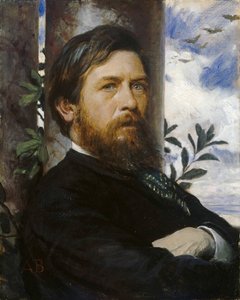
Arnold Böcklin
1827 - 1901 , Elveția
Informații rapide
- Artistic Movement Or Style: Simbolism
- Artists Or Movements Influenced By This Artist:
- Hans Thoma
- Pre-Raphaeliti
- Artists Who Influenced This Artist:
- Schirmer
- Feuerbach
- Date Of Birth: 16 oct. 1827
- Date Of Death: 16 ian. 1901
- Full Name: Arnold Böcklin
- Nationality: Swiss
- Notable Artworks:
- Insula Morții
- Nimpă și Satir
- Sappho
- Place Of Birth: Basel, Elveția
Articole conexe

Theatricality & Triumph: Baroque Drama in Painting & Sculpture
Explore the dramatic world of Baroque art! Discover its history, defining characteristics, & lasting influence on painting & sculpture. Expert insights into Caravaggio, Zurbarán, and Bernini – plus high-quality reproductions at OriginalUniqueArt.

The Enduring Form: Exploring Themes & Techniques in Sculpture Across Historical Periods
Explore the rich history of sculpture from ancient masterpieces to contemporary innovations. Discover key techniques, influential artists & investment potential for discerning art collectors.

Top 10 Capodopere din Bronz care au Revoluționat Arta – Inspirație pentru Decor
Descoperă Top 10 sculpturi din bronz care au schimbat istoria artei! Explorează operele lui Rodin, Michelangelo și alți maeștri, tehnicile lor unice și inspirația pentru decorul casei tale. Replici de calitate muzeală pe OriginalUniqueArt.com.

The Enduring Form: Sculpture Across History, Technique & Emotional Resonance
Explore the rich history of sculpture with OriginalUniqueArt. Discover key techniques, influential artists & investment potential for discerning collectors. Expert insights into valuing and collecting timeless masterpieces.

Top 10 Capodopere din Bronz care au Revoluționat Arta | OriginalUniqueArt.ro
Descoperiți Top 10 capodopere din bronz care au revoluționat arta! Rodin, Michelangelo și alții. Aflați istoria sculpturilor clasice și inspirație pentru decorul casei dvs. Reproduceri de artă de calitate muzeală pe OriginalUniqueArt.com
