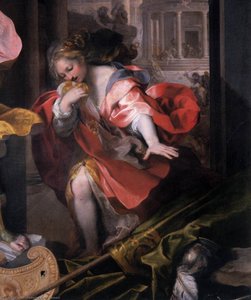
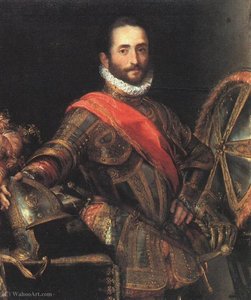
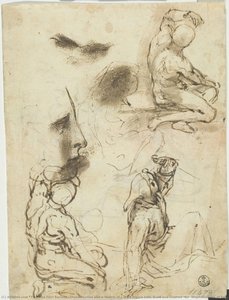
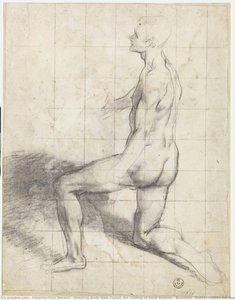
Retrato de Federico Barocci

As 94 Pinturas Mais Famosas de Federico Barocci, Cada Uma Única

Atualizado em Novembro 2026 · classificado pela nossa pontuação de popularidade (pesquisas, visitas e pedidos de cada obra) · 116 obras de Federico Barocci em nosso catálogo

Em resumo

Virgem e o Menino com os Santos Simão e Judas (Madonna di San Simone) (1567) é a pintura de Federico Barocci que mais atrai olhares; a obra original pertence ao Galleria Nazionale delle Marche, Urbino. Depois disso, o olhar recai sobre River Divinity (Città del Vaticano, Casino of Pius IV) (1563) e Three Studies with One Figure Supporting Another; Figure Sketch and Landscape Sketch (for “Deposition”, Perugia, Cathedral of San Lorenzo) (1569). Entre as 116 obras de Federico Barocci em nosso catálogo, estas 94 são as mais famosas, cada uma uma original única apresentada com o seu ano, o seu museu e a razão pela qual perdura.

1535 – 1612, Urbino Maneirismo Mais obras: Galleria degli Uffizi

As 10 principais pinturas de Federico Barocci, sob o olhar da galeria

1
Virgem e o Menino com os Santos Simão e Judas (Madonna di San Simone) (1567) de Federico Barocci

Virgem e o Menino com os Santos Simão e Judas (Madonna di San Simone)

1567 · Acrílico sobre tela · Galleria Nazionale delle Marche, Urbino

A obra “Virgem e o Menino com os Santos Simão e Judas (Madonna di San Simone)”, de Federico Fiori Barocci, pintada em 1567, ergue-se como um pilar fundamental da Renascença Italiana — um momento crucial que marca a transição para o dinamismo exuberante do estilo Barroco. Executada para a basílica Santuario Madonna dei Miracoli, em Saronno, Lombardia, este retábulo personifica a mistura característica de Barocci entre a observação meticulosa e…

2
River Divinity (Città del Vaticano, Casino of Pius IV) (1563) de Federico Barocci

River Divinity (Città del Vaticano, Casino of Pius IV)

1563 · Graphite · Galleria degli Uffizi, Florença

To gaze upon Federico Fiori Barocci's "River Divinity" is to step into a moment suspended between classical repose and profound vulnerability. This exquisite drawing, executed with the delicate precision of graphite on paper, immediately draws the viewer into its monochromatic embrace. It is not merely an image; it is a meditation rendered in shades of gray, black, and white—a visual whisper from the heart of the Renaissance spirit, yet imbued…

3
Three Studies with One Figure Supporting Another; Figure Sketch and Landscape Sketch (for “Deposition”, Perugia, Cathedral of San Lorenzo) (1569) de Federico Barocci

Three Studies with One Figure Supporting Another; Figure Sketch and Landscape Sketch (for “Deposition”, Perugia, Cathedral of San Lorenzo)

1569 · Charcoal · Galleria degli Uffizi, Florença

To gaze upon this preparatory drawing by Federico Fiori Barocci is to witness art not as a finished statement, but as pure, unbridled thought taking physical form. This piece, titled "Three Studies with One Figure Supporting Another; Figure Sketch and Landscape Sketch (for “Deposition”, Perugia, Cathedral of San Lorenzo)," offers us an intimate glimpse into the mind of a master at work. It is less a depiction to be admired…

4
Holy Family with Saint Giovannino and Saint Elizabeth (Città del Vaticano, Casino of Pius IV) (1563) de Federico Barocci

Holy Family with Saint Giovannino and Saint Elizabeth (Città del Vaticano, Casino of Pius IV)

1563 · Oil On Canvas · Galleria degli Uffizi, Florença

In this 1563 fresco, Federico Barocci arranges the figures of the Holy Family within a pyramidal structure. At the center, the Virgin Mary and the infant Jesus are positioned beneath a concentrated halo of light. To their side, Saint Elizabeth is depicted with an outstretched hand, a gesture directed toward the central group. The young Saint Giovannino, representing John the Baptist, is also present within the scene. Surrounding these primary…

5
Five Studies of Male Figure and two of His Right Hand and Arm (for “Madonna del Popolo”, Firenze, Galleria degli Uffizi) (1579) de Federico Barocci

Five Studies of Male Figure and two of His Right Hand and Arm (for “Madonna del Popolo”, Firenze, Galleria degli Uffizi)

1579 · Acrylic On Canvas · Galleria degli Uffizi, Florença

Federico Barocci’s “Five Studies of Male Figure and two of His Right Hand and Arm,” created in 1579, isn’t merely a preparatory drawing; it’s a profound meditation on the act of creation itself. This intimate charcoal study, measuring just 20 x 32 cm, offers an unparalleled glimpse into the artist's meticulous process – a testament to Barocci’s dedication and his revolutionary approach to capturing human form. Far from a static…

6
Francesco II della Rovere (1572) de Federico Barocci

Francesco II della Rovere

1572 · Acrylic On Canvas · Galleria degli Uffizi, Florença

Federico Fiori Barocci’s “Francesco II della Rovere” – A Portrait of Power and Renaissance Grace Federico Fiori Barocci, later known simply as Baroccio, stands as a pivotal figure bridging the Mannerist elegance of the late 16th century with the burgeoning dynamism of the Baroque. His portrait of Francesco Maria II della Rovere, painted in 1572, is not merely a likeness; it’s a carefully constructed tableau of power, lineage, and the…

7
Young Man’s Head with His Right Hand on His Face (for “Assumption of the Virgin”, Milano, Collezione Castelbarco Albani) (1612) de Federico Barocci

Young Man’s Head with His Right Hand on His Face (for “Assumption of the Virgin”, Milano, Collezione Castelbarco Albani)

1612 · Acrylic On Canvas · Galleria degli Uffizi, Florença

Federico Fiori Barocci’s “Young Man’s Head with His Right Hand on His Face” – often referred to as “Assumption of the Virgin, Milano, Collezione Castelbarco Albani” – is not merely a portrait; it's a distilled essence of human vulnerability and a poignant meditation on mortality. Painted in 1612 during a period of profound artistic transition from Mannerism to Baroque, this intimate work offers a glimpse into the soul of its…

8
Composition Study (for “Circumcision”, Paris, musée du Louvre) (1590) de Federico Barocci

Composition Study (for “Circumcision”, Paris, musée du Louvre)

1590 · Acrylic On Canvas · Galleria degli Uffizi, Florença

Federico Fiori Barocci's "Composition Study (for ‘Circumcision’, Paris, musée du Louvre)” isn’t merely a preparatory sketch; it’s a profound distillation of the artist’s vision for a monumental work depicting a pivotal scene from biblical history. Completed around 1590, this drawing offers an intimate glimpse into Barocci's meticulous process and reveals a remarkable sensitivity to light, gesture, and the emotional weight of the subject matter – the Circumcision of Isaac. It’s…

9
Ritratto di monsignor Giuliano della Rovere (1595) de Federico Barocci

Ritratto di monsignor Giuliano della Rovere

1595 · Oil On Canvas · Kunsthistorisches Museum, Viena

The portrait presents Monsignore Giuliano della Rovere in a moment of quiet study. Seated at a three-quarter length, the subject faces the viewer with a direct, focused gaze. He is positioned within an austere room characterized by grey walls, which provides a somber backdrop for his dark clerical attire. A diagonal line guides the eye from the upper left across the composition, leading toward a collection of books stacked in…

10
Pintura da Circuncisão (1500) de Federico Barocci

Pintura da Circuncisão

1500 · Óleo sobre tela · Museo Archeologico Nazionale di Taranto, Tarento

A Circuncisão de Cristo: Uma Sinfonia Barroca em Pesaro O Gemälde "Circuncisão de Cristo" de Federico Barocci é uma obra que transcende o tempo, capturando não apenas um evento religioso fundamental da fé cristã, mas também a essência do estilo barroco italiano. Pintado em 1590 para a igreja da Confraternita del Nome di Gesù em Pesaro, Itália, hoje alojado no Museu Louvre de Paris, este quadro permanece como um testemunho…

Pinturas famosas de Federico Barocci, números 11 a 94

11Portrait of a Man (1579) de Federico BarocciPortrait of a Man1579 · Museu Hermitage 12Madonna di san Giovanni (1564) de Federico BarocciMadonna di san Giovanni1564 · Galleria Nazionale delle Marche 13Il Perdono di Assisi (1580) de Federico BarocciIl Perdono di Assisi1580 · Galleria Nazionale delle Marche 14Quintilia Fischieri (1600) de Federico BarocciQuintilia Fischieri1600 · National Gallery of Art 15Immacolata Concezione (1575) de Federico BarocciImmacolata Concezione1575 · Galleria Nazionale delle Marche 16Head of an Old Bearded Man, 1584-1586 (1586) de Federico BarocciHead of an Old Bearded Man, 1584-15861586 · Albertina 17Portrait of Ippolito della Rovere (1602) de Federico BarocciPortrait of Ippolito della Rovere1602 · Embaixada da Itália em Londres 18Head of Saint Mary Magdalene (1550) de Federico BarocciHead of Saint Mary Magdalene1550 · Musée Bonnat-Helleu 19Burial of Christ (1550) de Federico BarocciBurial of Christ1550 20Communion of Saint Magdalene (1573) de Federico BarocciCommunion of Saint Magdalene1573 · Bavarian State Painting Collections 21Crocifissione con i dolenti (1566) de Federico BarocciCrocifissione con i dolenti1566 · Galleria Nazionale delle Marche 22The Virgin and Child in Glory with Saint Anthony Abbot and Saint Lucy (1587) de Federico BarocciThe Virgin and Child in Glory with Saint Anthony Abbot and Saint Lucy1587 23Cristo e la Maddalena (1590) de Federico BarocciCristo e la Maddalena1590 · Bavarian State Painting Collections 24Assumption (1606) de Federico BarocciAssumption1606 · Galleria Nazionale delle Marche 25Portrait of men (1602) de Federico BarocciPortrait of men1602 26Saint Francis (1604) de Federico BarocciSaint Francis1604 · Metropolitan Museum of Art 27Martyrdom of Saint Catherine of Alexandria (1610) de Federico BarocciMartyrdom of Saint Catherine of Alexandria1610 28Annunciation (1610) de Federico BarocciAnnunciation1610 29Portrait of Antonio Galli (1600) de Federico BarocciPortrait of Antonio Galli1600 · Statens Museum For Kunst 30Three Studies of Male Bust and Two of a Knee (for “Martyrdom of Saint Vitalis”, Milano, Pinacoteca di Brera) (1583) de Federico BarocciThree Studies of Male Bust and Two of a Knee (for “Martyrdom of Saint Vitalis”, Milano, Pinacoteca di Brera)1583 · Galleria degli Uffizi 31Aeneas' Flight from Troy (detail) (1598) de Federico BarocciAeneas' Flight from Troy (detail)1598 · Galleria Borghese 32Three Studies of Bending Figure and One of His Head (for “Assumption of the Virgin”, Milano, Collezione Castelbarco Albani) (1612) de Federico BarocciThree Studies of Bending Figure and One of His Head (for “Assumption of the Virgin”, Milano, Collezione Castelbarco Albani)1612 · Galleria degli Uffizi 33The Nativity (1597) de Federico BarocciThe Nativity1597 · Museu do Prado 34Three Studies of Sitting Figure, Drapery Sketches (for “Martyrdom of Saint Vitalis”, Milano, Pinacoteca di Brera) (1583) de Federico BarocciThree Studies of Sitting Figure, Drapery Sketches (for “Martyrdom of Saint Vitalis”, Milano, Pinacoteca di Brera)1583 · Galleria degli Uffizi 35Three Studies of a Male Figure both Nude and Clothed (for “Stigmatization of Saint Francis”, Urbino, Galleria Nazionale delle Marche) (1595) de Federico BarocciThree Studies of a Male Figure both Nude and Clothed (for “Stigmatization of Saint Francis”, Urbino, Galleria Nazionale delle Marche)1595 · Galleria degli Uffizi 36Head of a Woman, 1568-1569 (1569) de Federico BarocciHead of a Woman, 1568-15691569 · Albertina 37Annunciation (1582) de Federico BarocciAnnunciation1582 · Pinacoteca Vaticana 38Donkey (for “Rest on the Flight to Egypt”, Città del Vaticano, Pinacoteca dei Musei Vaticani) (1573) de Federico BarocciDonkey (for “Rest on the Flight to Egypt”, Città del Vaticano, Pinacoteca dei Musei Vaticani)1573 · Galleria degli Uffizi 39Nude Male Figure Playing Hurdy-gurdy, Studies of His Bust, Head and Hands (for “Madonna del Popolo”, Firenze, Galleria degli Uffizi) (1579) de Federico BarocciNude Male Figure Playing Hurdy-gurdy, Studies of His Bust, Head and Hands (for “Madonna del Popolo”, Firenze, Galleria degli Uffizi)1579 · Galleria degli Uffizi 40Presentation of Virgin Mary at the Temple (1600) de Federico BarocciPresentation of Virgin Mary at the Temple1600 · Santa Maria in Vallicella 41Portrait of a Man (1572) de Federico BarocciPortrait of a Man1572 42Portrait of a Lady (1595) de Federico BarocciPortrait of a Lady1595 · Museu Hermitage 43The Farewell of Christ to His Mother (1612) de Federico BarocciThe Farewell of Christ to His Mother1612 · Musée Condé 44Reclining Monk with Left Arm Leaning on a Rock (for “Stigmatization of Saint Francis”, Urbino, Galleria Nazionale delle Marche) (1595) de Federico BarocciReclining Monk with Left Arm Leaning on a Rock (for “Stigmatization of Saint Francis”, Urbino, Galleria Nazionale delle Marche)1595 · Galleria degli Uffizi 45Figure genuflesse e studi di mani (per la de Federico BarocciFigure genuflesse e studi di mani (per laGalleria degli Uffizi 46Portrait of a Young Lady (1600) de Federico BarocciPortrait of a Young Lady1600 · Galeria Nacional da Dinamarca 47Portrait of a Young Woman (1570) de Federico BarocciPortrait of a Young Woman1570 · Galleria degli Uffizi 48The Adoration of the Magi (1561) de Federico BarocciThe Adoration of the Magi1561 · Rijksmuseum 49Christ on the Cross (1604) de Federico BarocciChrist on the Cross1604 · Museu do Prado 50Male Figure Stooping to Lift a Cauldron (1590) de Federico BarocciMale Figure Stooping to Lift a Cauldron1590 · Museu do Louvre 51Female Portrait de Federico BarocciFemale PortraitMuseu Hermitage 52St Jerome (1598) de Federico BarocciSt Jerome1598 · Galleria Borghese 53Eternal Father and Angels de Federico BarocciEternal Father and AngelsGalleria Nazionale delle Marche 54The Head of a Priest, study for The Circumcision de Federico BarocciThe Head of a Priest, study for The CircumcisionNationalmuseum 55Head of Christ de Federico BarocciHead of ChristBonnefanten Museum 56Con una figura che sorregge l de Federico BarocciCon una figura che sorregge lGalleria degli Uffizi 57Francesco II della Rovere de Federico BarocciFrancesco II della Rovere 58Rest on the Flight into Egypt de Federico BarocciRest on the Flight into EgyptStädel Museum 59Cloaked Male Figure and Studies of His Left Leg; Drapery Studies (for “Calling of Saint Andrew”, Bruxelles, Musées royaux des Beaux-Arts de Belgique) (1583) de Federico BarocciCloaked Male Figure and Studies of His Left Leg; Drapery Studies (for “Calling of Saint Andrew”, Bruxelles, Musées royaux des Beaux-Arts de Belgique)1583 · Galleria degli Uffizi 60Stone-thrower for the Martyrdom of St Vitalis (1582) de Federico BarocciStone-thrower for the Martyrdom of St Vitalis1582 · Art Gallery of South Australia 61Head of a Shepherd, study for The Circumcision de Federico BarocciHead of a Shepherd, study for The CircumcisionNationalmuseum 62Saint Lawrence de Federico BarocciSaint LawrenceGalleria Nazionale delle Marche 63Half-Bust Nude Male Figure (for “Presentation of the Virgin in the Temple”, Roma, Church of Santa Maria in Vallicella) (1603) de Federico BarocciHalf-Bust Nude Male Figure (for “Presentation of the Virgin in the Temple”, Roma, Church of Santa Maria in Vallicella)1603 · Galleria degli Uffizi 64Two Figure Studies, One Nude and the Other Clothed with a Putto in His Arms (for “Madonna del Popolo”, Firenze, Galleria degli Uffizi); Drapery Studies (1579) de Federico BarocciTwo Figure Studies, One Nude and the Other Clothed with a Putto in His Arms (for “Madonna del Popolo”, Firenze, Galleria degli Uffizi); Drapery Studies1579 · Galleria degli Uffizi 65Man’s Head (for “Calling of Saint Andrew”, Bruxelles, Musées royaux des Beaux-Arts de Belgique) (1583) de Federico BarocciMan’s Head (for “Calling of Saint Andrew”, Bruxelles, Musées royaux des Beaux-Arts de Belgique)1583 · Galleria degli Uffizi 66Partial Study of Two Nude Male Figures, One with Raised Arm, the Other on the Ground and Leg and Arm Studies of the First One (for “Martyrdom of Saint Vitalis”, Milano, Pinacoteca di Brera) (1583) de Federico BarocciPartial Study of Two Nude Male Figures, One with Raised Arm, the Other on the Ground and Leg and Arm Studies of the First One (for “Martyrdom of Saint Vitalis”, Milano, Pinacoteca di Brera)1583 · Galleria degli Uffizi 67Three Studies and a Sketch of a Male Figure both Nude and Clothed (for “Stigmatization of Saint Francis”, Urbino, Galleria Nazionale delle Marche); Profile (1595) de Federico BarocciThree Studies and a Sketch of a Male Figure both Nude and Clothed (for “Stigmatization of Saint Francis”, Urbino, Galleria Nazionale delle Marche); Profile1595 · Galleria degli Uffizi 68Self-Portrait (1600) de Federico BarocciSelf-Portrait1600 · Residenzgalerie 69Studies of Hand, Fingers and Leg, Foot Sketch (for “Rest on the Flight to Egypt”, Città del Vaticano, Pinacoteca Vaticana) (1573) de Federico BarocciStudies of Hand, Fingers and Leg, Foot Sketch (for “Rest on the Flight to Egypt”, Città del Vaticano, Pinacoteca Vaticana)1573 · Galleria degli Uffizi 70Kneeling Nude Male Figure (for “Calling of Saint Andrew”, Bruxelles, Musées royaux des Beaux-Arts de Belgique) (1583) de Federico BarocciKneeling Nude Male Figure (for “Calling of Saint Andrew”, Bruxelles, Musées royaux des Beaux-Arts de Belgique)1583 · Galleria degli Uffizi 71Bending Male Bust; Two Hand Studies (for “Presentation of the Virgin in the Temple”, Roma, Church of Santa Maria in Vallicella) (1603) de Federico BarocciBending Male Bust; Two Hand Studies (for “Presentation of the Virgin in the Temple”, Roma, Church of Santa Maria in Vallicella)1603 · Galleria degli Uffizi 72Study of a Bent Right Arm (1590) de Federico BarocciStudy of a Bent Right Arm1590 · Museu do Louvre 73Three Studies of One Figure Supporting Another and Figure Sketch (for “Lamentation”, Bologna, Palazzo D’Accursio) de Federico BarocciThree Studies of One Figure Supporting Another and Figure Sketch (for “Lamentation”, Bologna, Palazzo D’Accursio)Galleria degli Uffizi 74Drapery Study (for “Immaculate Conception”, Urbino, Galleria Nazionale delle Marche) de Federico BarocciDrapery Study (for “Immaculate Conception”, Urbino, Galleria Nazionale delle Marche)Galleria degli Uffizi 75Self portrait de Federico BarocciSelf portrait 76One Study of a Standing Nude Male Figure and Two Studies of a Kneeling Nude Male Figure (for “Calling of Saint Andrew”, Bruxelles, Musées royaux des Beaux-Arts de Belgique) (1583) de Federico BarocciOne Study of a Standing Nude Male Figure and Two Studies of a Kneeling Nude Male Figure (for “Calling of Saint Andrew”, Bruxelles, Musées royaux des Beaux-Arts de Belgique)1583 · Galleria degli Uffizi 77Putto de Federico BarocciPuttoGalleria degli Uffizi 78Face of a Woman with Downcast Eyes de Federico BarocciFace of a Woman with Downcast EyesMuseu do Louvre 79Kneeling Male Figure and Studies of His Right Foot, Arms, Head and Drapery (for “Last Supper”, Urbino, Cathedral of Santa Maria Vergine Assunta) de Federico BarocciKneeling Male Figure and Studies of His Right Foot, Arms, Head and Drapery (for “Last Supper”, Urbino, Cathedral of Santa Maria Vergine Assunta)Galleria degli Uffizi 80Schizzo compositivo (per l de Federico BarocciSchizzo compositivo (per lGalleria degli Uffizi 81Angels in Flight and Drapery Studies de Federico BarocciAngels in Flight and Drapery StudiesGalleria degli Uffizi 82Tre schizzi di figure de Federico BarocciTre schizzi di figureGalleria degli Uffizi 83The Institution of the Eucharist (1608) de Federico BarocciThe Institution of the Eucharist1608 · Basilica di Santa Maria sopra Minerva 84The nativity de Federico BarocciThe nativityMuseu do Prado 85Studies for the figure of Christ in the painting Noli me tangere de Federico BarocciStudies for the figure of Christ in the painting Noli me tangereKupferstichkabinett 86Madonna del Popolo (1575) de Federico BarocciMadonna del Popolo1575 · Galleria degli Uffizi 87The Madonna of the Cat (La Madonna del Gatto) de Federico BarocciThe Madonna of the Cat (La Madonna del Gatto)National Gallery 88Descent from the Cross (1568) de Federico BarocciDescent from the Cross1568 89Aeneas' Flight from Troy de Federico BarocciAeneas' Flight from TroyGalleria Borghese 90Rest on the Flight to Egypt de Federico BarocciRest on the Flight to Egypt 91Portrait of a Young Man (1580) de Federico BarocciPortrait of a Young Man1580 · Musée des Beaux-Arts de Strasbourg 92Annunciation de Federico BarocciAnnunciationMuseu de Belas Artes de Nancy 93The Circumcision (1590) de Federico BarocciThe Circumcision1590 · Museu do Louvre 94Self-Portrait (1570) de Federico BarocciSelf-Portrait1570 · Galleria degli Uffizi

Pinturas famosas de Federico Barocci, período por período

Os temas que cativaram o olhar de Federico Barocci

Os quatro temas que mais se repetem nestas obras originais, cada um com o seu melhor exemplo.

Os museus que guardam os originais de Federico Barocci

Os 8 museus que detêm a maioria das pinturas desta página.

Museus Cidade Obras de Federico Barocci Pinturas desta lista
Galleria degli Uffizi, FlorençaGalleria degli Uffizi Florença 36 River Divinity (Città del Vaticano, Casino of Pius IV), Three Studies with One Figure Supporting Another; Figure Sketch and Landscape Sketch (for “Deposition”, Perugia, Cathedral of San Lorenzo), Holy Family with Saint Giovannino and Saint Elizabeth (Città del Vaticano, Casino of Pius IV)
Galleria Nazionale delle Marche, UrbinoGalleria Nazionale delle Marche Urbino 8 Virgem e o Menino com os Santos Simão e Judas (Madonna di San Simone), Madonna di san Giovanni, Il Perdono di Assisi
Museu do Louvre, ParisMuseu do Louvre Paris 4 Male Figure Stooping to Lift a Cauldron, Study of a Bent Right Arm, Face of a Woman with Downcast Eyes
Museu Hermitage, São PetersburgoMuseu Hermitage São Petersburgo 3 Portrait of a Man, Portrait of a Lady, Female Portrait
Galleria Borghese, RomaGalleria Borghese Roma 3 Aeneas' Flight from Troy (detail), St Jerome, Aeneas' Flight from Troy
Museu do Prado, MadridMuseu do Prado Madrid 3 The Nativity, Christ on the Cross, The nativity
Albertina, VienaAlbertina Viena 2 Head of an Old Bearded Man, 1584-1586, Head of a Woman, 1568-1569
Bavarian State Painting Collections, MuniqueBavarian State Painting Collections Munique 2 Communion of Saint Magdalene, Cristo e la Maddalena

Federico Barocci ao longo das décadas: uma obra original única para cada uma

Obras por década

Escolha uma década para ver a obra original que a define.

Pinturas de Federico Barocci: perguntas para a galeria

Qual é a obra mais famosa de Federico Barocci?Revelar a resposta

Virgem e o Menino com os Santos Simão e Judas (Madonna di San Simone) (1567), Galleria Nazionale delle Marche, Urbino. River Divinity (Città del Vaticano, Casino of Pius IV) (1563) e Three Studies with One Figure Supporting Another; Figure Sketch and Landscape Sketch (for “Deposition”, Perugia, Cathedral of San Lorenzo) (1569) vêm a seguir.

Com que idade Federico Barocci criou Virgem e o Menino com os Santos Simão e Judas (Madonna di San Simone)?Revelar a resposta

32 anos: Virgem e o Menino com os Santos Simão e Judas (Madonna di San Simone) data de 1567, e Federico Barocci nasceu em 1535.

Quais são as dez pinturas mais famosas de Federico Barocci?Revelar a resposta

Virgem e o Menino com os Santos Simão e Judas (Madonna di San Simone), River Divinity (Città del Vaticano, Casino of Pius IV), Three Studies with One Figure Supporting Another; Figure Sketch and Landscape Sketch (for “Deposition”, Perugia, Cathedral of San Lorenzo), Holy Family with Saint Giovannino and Saint Elizabeth (Città del Vaticano, Casino of Pius IV), Five Studies of Male Figure and two of His Right Hand and Arm (for “Madonna del Popolo”, Firenze, Galleria degli Uffizi), Francesco II della Rovere, Young Man’s Head with His Right Hand on His Face (for “Assumption of the Virgin”, Milano, Collezione Castelbarco Albani), Composition Study (for “Circumcision”, Paris, musée du Louvre), Ritratto di monsignor Giuliano della Rovere e Pintura da Circuncisão. O ranking acima apresenta o ano e o museu de cada uma.

Quantas obras de Federico Barocci são conhecidas?Revelar a resposta

Nosso catálogo contém 116 obras de Federico Barocci, datadas de 1550 a 1612.

Onde se pode ver os originais mais famosos de Federico Barocci?Revelar a resposta

Principalmente em Galleria degli Uffizi (Florença), Galleria Nazionale delle Marche (Urbino) e Museu do Louvre (Paris). A tabela de museus acima lista todos eles.

Em que período Federico Barocci criou as suas pinturas mais conhecidas?Revelar a resposta

Em 1570s: 13 das 94 obras nesta página foram feitas então, sendo Five Studies of Male Figure and two of His Right Hand and Arm (for “Madonna del Popolo”, Firenze, Galleria degli Uffizi) delas.

Qual pintura famosa de Federico Barocci é a mais antiga e qual é a mais recente?Revelar a resposta

Nesta página, a mais antiga é Head of Saint Mary Magdalene (1550) e a mais recente é Young Man’s Head with His Right Hand on His Face (for “Assumption of the Virgin”, Milano, Collezione Castelbarco Albani) (1612).

Quais temas Federico Barocci preferia?Revelar a resposta

Renaissance (30), Man (19) e Woman (19), entre as 94 obras nesta página.

Com quais materiais Federico Barocci mais pintou?Revelar a resposta

Oil On Canvas, para 33 das 94 obras nesta página.

A qual movimento pertence a obra de Federico Barocci?Revelar a resposta

Maneirismo, a julgar pelos originais nesta página.

Quais originais de Federico Barocci posso ver no Galleria degli Uffizi?Revelar a resposta

River Divinity (Città del Vaticano, Casino of Pius IV), Three Studies with One Figure Supporting Another; Figure Sketch and Landscape Sketch (for “Deposition”, Perugia, Cathedral of San Lorenzo) e Holy Family with Saint Giovannino and Saint Elizabeth (Città del Vaticano, Casino of Pius IV): o Galleria degli Uffizi, Florença detém 36 das obras desta página.

Federico Barocci: um retrato do artista

Os Primeiros Anos e a Formação de um Mestre

Federico Fiori Barocci, nascido em Urbino, Itália, em 1535, foi um dos artistas mais significativos do final da Renascença e precursor do Barroco. Originalmente chamado Federico Fiori, logo recebeu o apelido de “il Baroccio”, uma referência a uma carroça puxada por bois comum na região noroeste italiana – um nome peculiar que ecoava sua origem humilde e seu trabalho incansável. Sua jornada artística começou sob a tutela do pai, Ambrogio Barocci, um escultor respeitado localmente, que lhe transmitiu os primeiros conhecimentos sobre as artes visuais. No entanto, foi o aprendizado com Battista Franco em Urbino que realmente lançou as bases para sua futura grandeza. Franco, um pintor de talento, guiou Barocci nos fundamentos da técnica pictórica e na compreensão das formas clássicas, preparando-o para os desafios artísticos que viriam.

A Ascensão em Roma e a Fusão de Estilos

O talento promissor de Barocci logo chamou a atenção além de Urbino. Ele se mudou para Roma, onde ingressou no prestigiado estúdio de Taddeo e Federico Zuccari, dois dos mais importantes artistas da época. Essa experiência foi crucial para sua evolução, expondo-o a uma variedade de influências artísticas e permitindo-lhe absorver as últimas tendências do cenário romano. Sua primeira obra notável, “Santa Margarida”, executada para a confraria do Santíssimo Sacramento, já demonstrava um estilo pessoal em desenvolvimento, marcado por uma delicadeza incomum e uma expressividade crescente. A convite do Papa Pio IV, Barocci participou da decoração do Palácio Belvedere no Vaticano, onde pintou cenas da Virgem Maria com o Menino Jesus e vários santos, além de um impressionante afresco representando a Anunciação. Foi nesse período que seu estilo começou a se definir, combinando elementos do Maneirismo – caracterizado pela elegância e sofisticação das formas – com as novas tendências Barrocas, que enfatizavam o drama, a emoção e o movimento.

O Legado de Barocci: Obras-Primas e Inovações

A obra de Federico Barocci é notável por sua beleza serena, suas composições equilibradas e sua capacidade de transmitir emoções profundas através da pintura. Seus estudos preparatórios, como os “Cinco Estudos de Figura Masculina e dois de Sua Mão Direita e Braço”, revelam seu domínio da anatomia humana e sua busca pela perfeição formal. A “Composição para a Circuncisão”, conservada no Museu do Louvre em Paris, demonstra sua habilidade em equilibrar composição e emoção, criando uma cena dinâmica e envolvente. Outras obras importantes incluem “Cabeça de Homem” (para “A Chamada de São André”), que evidencia sua atenção aos detalhes e à expressão facial, e a icônica “Natividade” (1597), um óleo sobre tela que se destaca pela atmosfera íntima e pela representação terna da Sagrada Família. A “Madonna del Popolo”, também presente na Galeria Uffizi em Florença, é outro exemplo de sua maestria na pintura religiosa, com uma Virgem Maria retratada com beleza e graça. E não podemos esquecer a famosa "A Madonna do Gato (La Madonna del Gatto)", que encanta pela delicadeza da cena familiar.

Influência Duradoura e o Caminho para o Barroco

Federico Barocci exerceu uma influência profunda sobre diversos artistas, incluindo Peter Paul Rubens, que se inspirou em seu trabalho dramático e emotivo. Sua abordagem inovadora à pintura religiosa, com ênfase na expressividade dos personagens e na atmosfera envolvente das cenas, prenunciou as características do Barroco. Barocci não apenas dominava a técnica pictórica, mas também era um mestre da cor e da luz, criando obras que cativam o olhar e tocam o coração. Seu legado continua vivo através de suas inúmeras pinturas, expostas em museus renomados como a Galeria Uffizi (Florença) e o Museu do Louvre (Paris), inspirando gerações de artistas e amantes da arte. Ele é lembrado não apenas como um pintor talentoso, mas como um pioneiro que abriu caminho para uma nova era na história da arte italiana.