Retrato de Alphonse Legros

Pinturas de Alphonse Legros: As 66 mais famosas, sob o olhar de uma galeria

Atualizado em Novembro 2026 · classificado pela nossa pontuação de popularidade (pesquisas, visitas e pedidos de cada obra) · 73 obras de Alphonse Legros em nosso catálogo

Em resumo

Aos olhos da galeria, a pintura mais famosa de Alphonse Legros é Women in Prayer (1888), cuja obra original está exposta no Tate Gallery, em Londres. Portrait of Edouard Manet (1863) e L'Angelus (1859) completam o trio que todos reconhecem. Dos 73 trabalhos de Alphonse Legros em nosso catálogo, a galeria apresenta abaixo as 66 obras mais famosas, cada uma original, com seu ano, seu museu e o que a torna única.

1837 – 1911, Dijon Contemporary realism Mais obras: National Gallery of Art

As 10 principais pinturas de Alphonse Legros na galeria

1
Women in Prayer (1888) de Alphonse Legros

Women in Prayer

1888 · Oil On Canvas · Tate Gallery, Londres

Alphonse Legros's “Women in Prayer” isn’t merely a depiction of a religious scene; it’s an invitation to contemplate the quiet power of devotion. Painted in 1888, this oil on canvas transports us to a dimly lit interior space – likely a church or chapel – where nine women are immersed in prayer. The work immediately establishes a mood of solemnity and introspection, achieved through Legros's masterful manipulation of light, tone,…

2
Portrait of Edouard Manet (1863) de Alphonse Legros

Portrait of Edouard Manet

1863 · Oil On Canvas · Petit Palais, Paris

In this 1863 portrait, we find ourselves in a quiet, intimate space with Edouard Manet. He sits in a wooden armchair, his body relaxed yet his posture suggesting a deep, internal contemplation. There is a certain gravity to his presence, a weight that comes from the way he rests his head against his hand, lost in thought. The composition is deliberate, placing him slightly off-center to create a sense of…

3
L'Angelus (1859) de Alphonse Legros

L'Angelus

1859 · Oil

In 1859, Alphonse Legros painted L'Angelus, a work that captures a quiet pause in the rhythm of labor. The scene focuses on a group of peasants caught in a moment of prayer. They exist within the heavy, still air of their daily lives, their bodies bowed in a shared act of devotion. This depiction of the working class avoids the grand or the theatrical, choosing instead to find weight in…

4
The Lectern (1865) de Alphonse Legros

The Lectern

1865 · Oil · Petit Palais, Paris

The Lectern is an oil painting by Alphonse Legros, created about 1865. The work depicts four male figures dressed in religious attire during a moment of liturgical solemnity. The scene captures a religious ceremony, likely a Mass or a formal reading, within a quiet and focused setting. The composition centers on the interaction between the clerics as they participate in the ritual.

5
The Baptism (1869) de Alphonse Legros

The Baptism

1869 · Oil On Canvas

The Baptism is an oil painting on canvas by Alphonse Legros. Created about 1869, the work depicts a scene within a dimly lit, gothic-style church. Three women are positioned around an infant, with the central figure holding the baby. To the left, a statue of a saint is visible against the architectural backdrop. The setting is defined by arches and columns that frame the figures.

6
Le Repas des Pauvres (1877) de Alphonse Legros

Le Repas des Pauvres

1877 · Oil

In the quiet, shadowed corners of a dimly lit interior, three men gather for a meal. This is Le Repas des Pauvres, a work by Alphonse Legros. The scene unfolds around a rectangular table, where the simple presence of bowls and single glasses speaks to a life of profound modesty. There is a heavy, somber weight to the air as the figures occupy their shallow space, their worn clothing and…

7
The Geography Lesson (1874) de Alphonse Legros

The Geography Lesson

1874 · Oil On Canvas · Wallraf-Richartz-Museum, Colônia

In The Geography Lesson, Alphonse Legros captures a quiet moment of instruction. The scene is set within a classroom where a female teacher gestures toward a large terrestrial globe. Around her, six young girls gather in a tight semi-circle. They lean inward, their gazes fixed upon the sphere. This shared focus creates a sense of stillness. The air in the room feels heavy with the weight of learning.

8
Portrait of a Woman (1880) de Alphonse Legros

Portrait of a Woman

1880 · Oil On Canvas · Petit Palais, Paris

The Portrait of a Woman by Alphonse Legros captures a single female figure in a moment of quietude. This profile portrait, rendered in oil, presents the subject looking toward the left edge of the frame. The artist, Alphonse Legros, focuses on the contours of the face and the texture of the hair, creating a sense of stillness. It is a study of a person caught in a private, contemplative gaze.

9
The Reverend Robert Burn (1880) de Alphonse Legros

The Reverend Robert Burn

1880 · Oil On Canvas · Museu Fitzwilliam, Cambridge

Alphonse Legros' "The Reverend Robert Burn," painted in 1880, is more than just a portrait; it’s a carefully constructed tableau of Victorian sensibilities and the quiet contemplation of a man steeped in faith. This oil-on-canvas work, currently residing within The Fitzwilliam Museum’s collection, offers a glimpse into a bygone era – an era defined by meticulous detail, restrained emotion, and a profound respect for tradition. Legros, a French-British artist who…

10
Cupid and Psyche (1867) de Alphonse Legros

Cupid and Psyche

1867 · Oil On Canvas · Tate Gallery, Londres

Cupid and Psyche, an 1867 oil on canvas, is a history painting by Alphonse Legros. The work draws its narrative from the classical traditions of Greek mythology and Ancient Roman literature. It captures a specific moment of intimacy between the two mythological figures, set within a serene outdoor environment.

Pinturas de Alphonse Legros, classificadas de 11 a 66

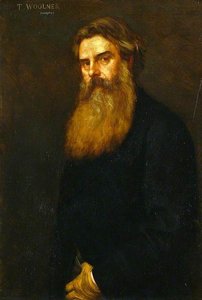
11Interior with an Organist and a Procession (1865) de Alphonse LegrosInterior with an Organist and a Procession1865 · The Ashmolean Museum of Art and Archaeology 12William Cosens Way (1833–1905) (1862) de Alphonse LegrosWilliam Cosens Way (1833–1905)1862 13Rehearsing the Service (1870) de Alphonse LegrosRehearsing the Service1870 · Tate Gallery 14The Pilgrimage (1871) de Alphonse LegrosThe Pilgrimage1871 15Sir Edward Burne Jones (1833–1898), ARA (1869) de Alphonse LegrosSir Edward Burne Jones (1833–1898), ARA1869 16The Communion (1865) de Alphonse LegrosThe Communion1865 17The Sermon (1871) de Alphonse LegrosThe Sermon1871 · Scottish National Gallery 18Centaur Woman (1911) de Alphonse LegrosCentaur Woman1911 19Death and the Woodcutter (1877) de Alphonse LegrosDeath and the Woodcutter1877 · Galeria Nacional do Canadá 20Portrait of a Woman (1875) de Alphonse LegrosPortrait of a Woman1875 · National Gallery of Art 21The Tinker (1874) de Alphonse LegrosThe Tinker1874 22Tired Wanderer (1878) de Alphonse LegrosTired Wanderer1878 23Blessing the Sea (1872) de Alphonse LegrosBlessing the Sea1872 24Portrait of Léon Gambetta (1875) de Alphonse LegrosPortrait of Léon Gambetta1875 25Head of a Man Looking Upwards and Sideways (1877) de Alphonse LegrosHead of a Man Looking Upwards and Sideways1877 26Thomas Carlyle (1795–1881), Historian and Essayist (1877) de Alphonse LegrosThomas Carlyle (1795–1881), Historian and Essayist1877 · Galeria Nacional de Retratos de Escócia 27Study of a Head (1878) de Alphonse LegrosStudy of a Head1878 · Walker Art Gallery 28Saint Jerome (1881) de Alphonse LegrosSaint Jerome1881 · Manchester Art Gallery 29John Gray (1883) de Alphonse LegrosJohn Gray1883 30Alexander Walker, LLD (1880) de Alphonse LegrosAlexander Walker, LLD1880 31Head of an Old Man (1881) de Alphonse LegrosHead of an Old Man1881 · Manchester Art Gallery 32J. Dove Wilson (1833–1908), LLD (1882) de Alphonse LegrosJ. Dove Wilson (1833–1908), LLD1882 33Sir Edward Coley Burne Jones (1833–1898) (1879) de Alphonse LegrosSir Edward Coley Burne Jones (1833–1898)1879 34Portrait of a Lady (1879) de Alphonse LegrosPortrait of a Lady1879 · Sunderland Museum - Winter Gardens 35Robert Browning (1812–1889) (1879) de Alphonse LegrosRobert Browning (1812–1889)1879 36Thomas Dixon (1831–1880) (1879) de Alphonse LegrosThomas Dixon (1831–1880)1879 · Sunderland Museum - Winter Gardens 37Professor John Marshall (1818–1891), FRS, Surgeon (1879) de Alphonse LegrosProfessor John Marshall (1818–1891), FRS, Surgeon1879 38Thomas Huxley (1825–1895), FRS (1880) de Alphonse LegrosThomas Huxley (1825–1895), FRS1880 39George Wallis (1811–1891), FSA, Keeper of the Art Collections in the South Kensington Museum (1863–1891) (1891) de Alphonse LegrosGeorge Wallis (1811–1891), FSA, Keeper of the Art Collections in the South Kensington Museum (1863–1891)1891 40An Approaching Storm (1897) de Alphonse LegrosAn Approaching Storm1897 41Head of a Man with Upturned Eyes de Alphonse LegrosHead of a Man with Upturned EyesNational Gallery of Art 42The Confession de Alphonse LegrosThe Confession 43Thomas Woolner de Alphonse LegrosThomas Woolner 44Le Calvaire de Alphonse LegrosLe CalvaireMusée d'Orsay 45Le Christ mort de Alphonse LegrosLe Christ mort 46Study of a Head de Alphonse LegrosStudy of a Head 47Léon Gambetta de Alphonse LegrosLéon GambettaMusée d'Orsay 48UNE AMENDE HONORABLE de Alphonse LegrosUNE AMENDE HONORABLEMusée d'Orsay 49Charles G. Milnes Gaskell, Chairman of the County Council of the West Riding of Yorkshire (1893–1910) de Alphonse LegrosCharles G. Milnes Gaskell, Chairman of the County Council of the West Riding of Yorkshire (1893–1910)Wakefield County Hall 50Landscape with a Stream and Hills (1882) de Alphonse LegrosLandscape with a Stream and Hills1882 · Victoria and Albert Museum 51Landscape with a Road over a Hill (1885) de Alphonse LegrosLandscape with a Road over a Hill1885 · Victoria and Albert Museum 52Interior of a Church with kneeling Figures (1865) de Alphonse LegrosInterior of a Church with kneeling Figures1865 · Ashmolean Museum 53Interior with an Organist and a Procession (1865) de Alphonse LegrosInterior with an Organist and a Procession1865 · Ashmolean Museum 54A May Service for Young Women (1868) de Alphonse LegrosA May Service for Young Women1868 · Victoria and Albert Museum 55Hilly Landscape (1876) de Alphonse LegrosHilly Landscape1876 · Victoria and Albert Museum 56Portrait of an Old Man de Alphonse LegrosPortrait of an Old ManNational Gallery of Art 57Memory Copy of Holbein's Erasmus de Alphonse LegrosMemory Copy of Holbein's ErasmusNational Gallery of Art 58Landscape de Alphonse LegrosLandscape 59John Bolton, Kendal Town Clerk de Alphonse LegrosJohn Bolton, Kendal Town Clerk 60Thomas Woolner de Alphonse LegrosThomas Woolner 61Portrait of a Gentleman de Alphonse LegrosPortrait of a Gentleman 62John Polson, Esq de Alphonse LegrosJohn Polson, EsqPaisley Art Institute Collection 63Portrait of a Gentleman de Alphonse LegrosPortrait of a Gentleman 64John Bolton, Kendal Town Clerk (1832–1874) de Alphonse LegrosJohn Bolton, Kendal Town Clerk (1832–1874)Kendal Town Hall 65Interior with an Organist and three Figures de Alphonse LegrosInterior with an Organist and three FiguresThe Ashmolean Museum of Art and Archaeology 66The Tinker de Alphonse LegrosThe Tinker

Pinturas famosas de Alphonse Legros, período por período

Os temas que cativaram o olhar de Alphonse Legros

Os quatro temas que mais se repetem nestas obras originais, cada um com o seu melhor exemplo.

Os museus que guardam os originais de Alphonse Legros

Os 8 museus que detêm a maioria das pinturas desta página.

Museus Cidade Obras de Alphonse Legros Pinturas desta lista
National Gallery of Art, WashingtonNational Gallery of Art Washington 4 Portrait of a Woman, Head of a Man with Upturned Eyes, Portrait of an Old Man
Victoria and Albert Museum, LondresVictoria and Albert Museum Londres 4 Landscape with a Stream and Hills, Landscape with a Road over a Hill, A May Service for Young Women
Tate Gallery, LondresTate Gallery Londres 3 Women in Prayer, Cupid and Psyche, Rehearsing the Service
Petit Palais, ParisPetit Palais Paris 3 Portrait of Edouard Manet, The Lectern, Portrait of a Woman
Musée d'Orsay, ParisMusée d'Orsay Paris 3 Le Calvaire, Léon Gambetta, UNE AMENDE HONORABLE
The Ashmolean Museum of Art and Archaeology, OxfordThe Ashmolean Museum of Art and Archaeology Oxford 2 Interior with an Organist and a Procession, Interior with an Organist and three Figures
Manchester Art Gallery, ManchesterManchester Art Gallery Manchester 2 Saint Jerome, Head of an Old Man
Sunderland Museum - Winter Gardens, SunderlandSunderland Museum - Winter Gardens Sunderland 2 Portrait of a Lady, Thomas Dixon (1831–1880)

Alphonse Legros, uma pintura emblemática por década

Obras por década

Escolha uma década para ver a obra original que a define.

Pinturas de Alphonse Legros: a galeria responde

Qual pintura de Alphonse Legros é a mais famosa de todas?Revelar a resposta

Women in Prayer (1888), Tate Gallery, Londres. Portrait of Edouard Manet (1863) e L'Angelus (1859) vêm a seguir.

Qual era a idade de Alphonse Legros ao concluir Women in Prayer?Revelar a resposta

51 anos: Women in Prayer data de 1888, e Alphonse Legros nasceu em 1837.

Quais são as 10 principais pinturas de Alphonse Legros?Revelar a resposta

Women in Prayer, Portrait of Edouard Manet, L'Angelus, The Lectern, The Baptism, Le Repas des Pauvres, The Geography Lesson, Portrait of a Woman, The Reverend Robert Burn e Cupid and Psyche. O ranking acima apresenta o ano e o museu de cada uma.

Quantas obras Alphonse Legros criou?Revelar a resposta

Nosso catálogo contém 73 obras de Alphonse Legros, datadas de 1859 a 1911.

Onde estão expostos os originais mais famosos de Alphonse Legros?Revelar a resposta

Principalmente em National Gallery of Art (Washington), Victoria and Albert Museum (Londres) e Tate Gallery (Londres). A tabela de museus acima lista todos eles.

Quando é que Alphonse Legros criou as suas pinturas mais famosas?Revelar a resposta

Em 1870s: 20 das 66 obras nesta página foram feitas então, sendo Le Repas des Pauvres delas.

Quais são as obras mais famosas de Alphonse Legros no início e no fim de sua carreira?Revelar a resposta

Nesta página, a mais antiga é L'Angelus (1859) e a mais recente é Centaur Woman (1911).

Quais temas Alphonse Legros mais explorou?Revelar a resposta

Landscape (5), Portrait (4) e Church interior (4), entre as 66 obras nesta página.

Em qual técnica Alphonse Legros mais trabalhou?Revelar a resposta

Oil On Canvas, para 12 das 66 obras nesta página.

Com qual movimento Alphonse Legros está associado(a)?Revelar a resposta

Contemporary realism, a julgar pelos originais nesta página.

Quais obras originais de Alphonse Legros o National Gallery of Art possui?Revelar a resposta

Portrait of a Woman, Head of a Man with Upturned Eyes e Portrait of an Old Man: o National Gallery of Art, Washington detém 4 das obras desta página.

Alphonse Legros: o artista

Alphonse Legros (1837–1911): Bridging Realism and British Artistic Spirit

  • Early Life and Training:
  • Realism's Embrace and Parisian Influences:
  • The Etching Revival and London Calling:
  • A Multifaceted Artist: Painting, Sculpture, and Medals:
  • Legacy and Enduring Significance:

Early Life and Training

Alphonse Legros’s journey began in Dijon, France, a city steeped in artistic tradition. Born in 1837 to a modest family—his father an accountant—Legros’s formative years were marked by exposure to the rural landscapes surrounding Véronnes, experiences that would profoundly shape his artistic vision. From a young age, he demonstrated an innate fascination with observation and detail, qualities nurtured by his apprenticeship under Maître Nicolardo, a house painter who instilled in him a practical understanding of materials and form. This grounding contrasted sharply with the burgeoning intellectual currents of his time, yet it provided the bedrock for his subsequent artistic explorations.

Realism's Embrace and Parisian Influences

Legros’s arrival in Paris in 1851 coincided with a pivotal moment in French art history—the ascendance of Realism led by Gustave Courbet. Recognizing the movement’s commitment to depicting everyday life with unflinching honesty, Legros enrolled at Horace Lecoq de Boisbaudran's drawing school alongside fellow artists like Auguste Rodin and Jules Dalou. These formative years exposed him to a diverse range of artistic ideas and techniques, fostering his stylistic evolution. Notably, he studied under Jean-Charles Cazin, whose influence would contribute to the artist’s distinctive approach to portraying human figures.

The Etching Revival and London Calling

Inspired by James McNeill Whistler's encouragement, Legros relocated to England in 1863, embarking on a transformative chapter that cemented his place as a champion of British etching. Recognizing the potential for capturing subtle tonal nuances—a skill honed through self-taught experimentation—he established himself as a respected teacher at South Kensington School of Art and later became Slade Professor at University College London. His dedication to draughtsmanship and meticulous observation resonated deeply with students, shaping generations of artists in the art of etching.

A Multifaceted Artist: Painting, Sculpture, and Medals

Beyond his renown as an etcher, Legros possessed remarkable versatility across various mediums. His paintings frequently depicted scenes from religious devotion—interior church views capturing the quiet intensity of faith—characterized by restrained palettes and meticulous detail. Similarly, his sculptural work demonstrated a commitment to realism and emotional depth. Furthermore, he excelled in medal-making, producing pieces celebrated for their craftsmanship and artistic merit.

Legacy and Enduring Significance

Alphonse Legros passed away in Watford in 1911, leaving behind an indelible mark on the history of British art. His influence extended beyond his teaching role at Slade School; he championed traditional artistic values—the importance of draftsmanship, careful observation, and technical skill—while simultaneously embracing new ideas and techniques. Today, Legros’s paintings and etchings reside in prominent museums across Europe and America, ensuring that his artistic vision continues to inspire audiences worldwide. He stands as a testament to the enduring power of Realist aesthetics—a quiet contemplation of human experience conveyed with unwavering precision and emotional resonance.