

 Visualizar em escala
 Enviar
 Compartilhar
 Ver detalhes
 Guia de Obras do Aluno

 Baixar imagem
 Semelhantes
 Raio X
 Apresentação de slides
 Estatísticas
Mrs Barrett


 Ver mais
Reprodução em Óleo Feita à Mão
Óleo sobre tela pintado à mão no tamanho e moldura de sua escolha, feito sob encomenda pelos nossos artistas. ( Alternar para Impressão Ver Imagem Digital)




P118B €10

P118H €10

P118W €10

P438Z €10

P508JH €12

P508YH €12

P805H €10

P805Z €10

P919BZ €10

P919G €10

P919XJ €10

P959ZH €10

P968JZ €12

W106C €8

W218G €10

W218JH €8

W218Y €10

W307PJ €10

W316G €10

W316PJ €8

W316Y €10

W398PJ €8

W4111J €10

W500HY €15

W500JH €15

W692G €12

W849H €8

W940BG €15

W953PJ €8




Escolha entre os nossos tamanhos pré-definidos que respeitam as proporções originais da obra de arte.

Digite a largura e a altura de que necessita, para se ajustar à sua moldura ou à sua parede. Esta obra é pintada à mão, por isso, para um tamanho com uma proporção diferente, o artista pode pintar um pouco mais ao redor da imagem ou cortar um pouco — você escolhe. Enviamos-lhe uma maquete digital para aprovação antes de a pintura começar. A imagem exibida nesta página não mostra o resultado real — apenas a maquete mostra.
Após o pedido, a equipa OriginalUniqueArt.com enviará um e-mail ao cliente para solicitar instruções e fornecer uma prévia do esboço.
Entrega mundial () em 3 a 4 semanas, em vez das 5 semanas padrão. (23 Outubro). Sem comprometer a qualidade.

Envio expresso gratuito para todo o mundo

Tela de Linho Premium

Seguro de transporte total

Garantia de Reembolso de Impostos Alfandegários

Garantia de Fidelidade de Cor

Política de Devolução em 100 Dias (Apenas para Defeitos)

Garantia de reembolso de 100%

Desconto para múltiplas unidades
 A opção de vidro está disponível apenas para tamanhos inferiores a 110 cm

Mrs Barrett
Técnica de Reprodução
Dimensões da Reprodução
-


Preço Total
€ 264
Walter Richard Sickert’s ‘Mrs Barrett’: A Study in Shadows and Subtlety
Walter Richard Sickert's “Mrs Barrett,” painted around 1905, isn’t merely a portrait; it’s a carefully constructed tableau of urban life, social observation, and veiled mystery. This pastel on board, measuring a modest 540 x 711 mm, resides within the Tate Gallery collection, offering a glimpse into the Camden Town Group's fascination with London’s undercurrents – its working-class inhabitants, their lives, and the often-uncomfortable truths they concealed. The painting immediately draws the eye to the sitter, a woman identified simply as “Mrs Barrett,” whose face is partially obscured by a fur stole and a strategically placed mirror reflecting a striped sofa. This deliberate ambiguity—her identity shrouded in shadow, her gaze averted—is central to the work’s enduring appeal.A Camden Town Portrait: Context and Character
Sickert's decision to focus on this particular woman speaks volumes about his artistic interests during this period. He was deeply embedded within the Camden Town Group, a collective of artists who rejected the academic traditions of the Royal Academy in favor of capturing the gritty reality of London’s East End. Unlike many of his contemporaries who sought to idealize their subjects, Sickert frequently depicted ordinary people – costers, music hall performers, and domestic servants – often with an unsettling frankness. “Mrs Barrett” embodies this approach; she isn't presented as a glamorous socialite but rather as a woman of the streets, her attire suggesting a degree of respectability while hinting at a life lived outside conventional societal norms. The inclusion of the mirror, reflecting the striped sofa, adds another layer of complexity, creating a sense of voyeurism and inviting the viewer to contemplate the scene from an unsettling perspective.Technique and Atmosphere: Pastel’s Delicate Dance
Sickert's masterful use of pastel is particularly noteworthy. He eschewed bold brushstrokes in favor of delicate layering and subtle tonal shifts, creating a remarkably atmospheric effect. The muted palette—dominated by shades of grey, brown, and olive green—evokes the gloom of a London evening, while the loose application of pigment lends a sense of immediacy and spontaneity to the composition. The artist’s technique is almost impressionistic in its focus on capturing fleeting moments of light and shadow, yet it retains a distinctly personal and expressive quality. The way he renders the texture of the fur stole, the sheen of the mirror, and the folds of the woman's clothing demonstrates an exceptional level of detail and observation.Symbolism and Intrigue: Unraveling the Narrative
The identity of “Mrs Barrett” remains a subject of speculation among art historians. While some believe she was Sickert’s charlady, others suggest she may have been a prostitute or a member of his circle of bohemian acquaintances. The painting itself offers few definitive clues, relying instead on carefully placed symbols and suggestive details to provoke interpretation. The mirror, as mentioned earlier, creates a sense of unease and invites the viewer to question the nature of reality presented in the image. The woman’s averted gaze suggests a guardedness or perhaps even a hint of sadness—a reflection of the hardships and uncertainties of her life. It's this ambiguity that elevates “Mrs Barrett” beyond a simple portrait, transforming it into a poignant meditation on social class, identity, and the hidden lives of London’s marginalized figures.A Timeless Masterpiece: Reproduction and Appreciation
“Mrs Barrett” stands as a testament to Sickert's unique artistic vision and his ability to capture the essence of a particular moment in time. Reproductions of this captivating work offer an opportunity to appreciate its intricate details, atmospheric quality, and profound emotional resonance. Whether displayed in a private collection or a public gallery, “Mrs Barrett” continues to fascinate viewers with its enigmatic subject matter and its enduring exploration of the complexities of human experience. It’s a piece that rewards repeated viewing, revealing new layers of meaning with each encounter.Perguntas e Respostas
Onde posso encontrar um guia para "Mrs Barrett"?
A página Guia de "Mrs Barrett" de Walter Richard Sickert oferece uma ficha informativa imprimível em duas folhas: a obra de arte com sua tabela de identificação, uma linha do tempo situando-a no período de vida do artista, outras obras do artista, a paleta de cores medida e citações prontas para copiar em quatro estilos.
Qual é a data de criação de "Mrs Barrett" de Walter Richard Sickert?
"Mrs Barrett" de Walter Richard Sickert foi criado em 1905.
Quão intensas são as cores de "Mrs Barrett"?
A cor de "Mrs Barrett" possui Muted de saturação e Monochromatic de intensidade.
Biografia do Artista
A Life Painted in Shadows and Light
Walter Richard Sickert, born in Munich in 1860, was a figure perpetually caught between worlds – German by birth, British by adoption, and an artist forever oscillating between the established traditions of painting and the burgeoning currents of modernism. His early life was marked by movement; the family’s relocation to England in 1868, prompted by political shifts in Europe, instilled within him a sense of displacement that perhaps fueled his lifelong fascination with outsiders and marginalized figures. Though descended from a lineage of artists – his father, Oswald Sickert, was a Danish painter – young Walter initially harbored ambitions for the stage, briefly treading the boards as an actor alongside the renowned Sir Henry Irving. This early exposure to performance, to the art of illusion and character, would profoundly shape his artistic vision, imbuing his paintings with a theatricality and psychological depth that set him apart from his contemporaries. However, the allure of visual expression proved stronger, leading him to enroll at the Slade School in 1881 and subsequently become a devoted pupil of James Abbott McNeill Whistler. This mentorship was formative, instilling in Sickert a preference for tonal studies painted *alla prima*, directly from nature, and a refined aesthetic sensibility that would underpin his early work. The influence of Whistler wasn’t merely technical; it fostered an appreciation for artistic independence and a willingness to challenge conventional norms.London's Underbelly and the Allure of Modern Life
Sickert’s artistic compass quickly gravitated towards the vibrant, often gritty realities of London life. He became captivated by the atmosphere of the city’s music halls – spaces teeming with energy, spectacle, and a diverse cross-section of society. His paintings from this period, such as Katie Lawrence at Gatti's, are remarkable for their unflinching portrayal of these environments and their inhabitants. These weren’t simply depictions; they were explorations of modern urban existence, capturing the fleeting moments and raw emotions experienced within those walls. He sought to paint life as it was lived, not as it was idealized, a radical departure from Victorian artistic conventions. The figures in his paintings—often women performers, street vendors, or casual observers—were rendered with a keen eye for detail and an understanding of their social context. Critics of the time often dismissed these scenes as vulgar and unsettling, but Sickert’s work offered a starkly honest portrayal of London's underbelly – a world largely ignored by mainstream art. His fascination with this milieu continued throughout his career, informing many of his most iconic works.The Influence of Whistler and the Pursuit of Tone
James Abbott McNeill Whistler profoundly shaped Sickert’s artistic approach. The American painter championed *tonality*—the use of color and light to create mood and atmosphere—over detailed representation. This philosophy resonated deeply with Sickert, who developed a distinctive style characterized by subtle gradations of tone and a deliberate avoidance of sharp outlines. He favored *alla prima* painting—working directly onto the canvas without preliminary sketches—to capture the fleeting effects of light and shadow. Whistler’s emphasis on “art for art's sake” encouraged Sickert to prioritize aesthetic expression over narrative or moralistic themes, a principle that would become central to his artistic practice. This commitment to tonal harmony and atmospheric effect is evident in many of his early works, particularly those depicting landscapes and interiors.The Camden Town Group and the Embrace of Modernism
As the 20th century dawned, Sickert became a central figure in the burgeoning British avant-garde movement. He joined the New English Art Club in 1888, aligning himself with artists who embraced French Impressionist principles. Later, he played a pivotal role in establishing the Camden Town Group in 1911 – a collective of artists dedicated to portraying modern life with unflinching honesty and stylistic innovation. Sickert’s influence on this group was profound, encouraging them to break away from traditional academic constraints and explore new forms of expression. He championed an unromanticized vision of the urban landscape, focusing on everyday scenes and ordinary people. His paintings during this period often featured unsettling subject matter, such as his Camden Town Murder series, reflecting a growing fascination with crime and psychological tension. This willingness to confront difficult themes cemented his reputation as a provocative and challenging artist.Legacy and Lingering Mysteries
Walter Richard Sickert’s legacy extends far beyond his prolific output. He was a catalyst for change in British art, paving the way for subsequent generations of artists to embrace modernism and explore new avenues of expression. His influence can be seen in the work of numerous painters who followed, particularly those associated with the London Group and other avant-garde movements. Sickert’s pioneering spirit, his commitment to realism, and his willingness to challenge societal norms continue to resonate with artists today. While controversies surrounding his life – including speculation about his potential involvement in the Jack the Ripper murders – have added layers of intrigue to his story, they do not diminish his artistic achievements. These theories, though largely dismissed by scholars, speak to the unsettling quality of his work and its preoccupation with themes of violence and urban decay. His paintings remain powerful testaments to a changing world, offering glimpses into the lives and experiences of those often overlooked by traditional art history. He was an artist who dared to look beyond the surface, to confront the uncomfortable truths of modern life, and to capture them on canvas with unflinching honesty.Key Details & Influences
- Born: May 31, 1860, Munich, Bavaria
- Died: January 22, 1942, Bathampton, England
- Key Influences: James Abbott McNeill Whistler, Edgar Degas
- Associated Groups: New English Art Club, Camden Town Group

Walter Richard Sickert
1860 - 1942 , Alemanha
Informações Rápidas
- Artistic Movement Or Style: Pós-Impressionismo
- Artists Or Movements Influenced By This Artist: ['Camden Town Group']
- Artists Who Influenced This Artist:
- Whistler
- Degas
- Date Of Birth: 31 de maio de 1860
- Date Of Death: 22 de janeiro de 1942
- Full Name: Walter Richard Sickert
- Nationality: Britânico
- Notable Artworks:
- Katie Lawrence
- Sinn Féiners
- L'Hotel Royal
- Place Of Birth: Munique, Alemanha
Artigos Relacionados

The Soft Power of Pastel: A Connoisseur's Guide to History, Technique, and the Art of Texture
Explore the ethereal beauty of pastel art. From Renaissance origins to Impressionist mastery, discover the history, technique, and velvety textures that define this luminous medium in our expert guide for art connoisseurs.

The Subtleties of Pastel: A Comprehensive Exploration of Technique, History & Emotional Resonance
Explore the captivating world of pastel art! Discover its rich history, Impressionistic masters like Degas, emotional power & unique techniques. Find museum-quality reproductions at OriginalUniqueArt.
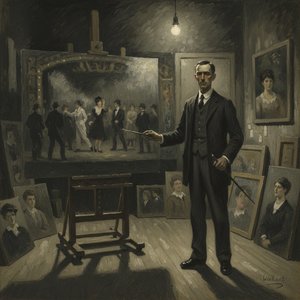
Walter Sickert: A Shadowy Realism & the Modern British Canvas
Explore the life & work of Walter Sickert, a pivotal British painter bridging Impressionism to Modernism. Discover his evocative scenes of London life, controversial legacy, and lasting influence on 20th-century art.

The Subdued Radiance of Pastel: Exploring Nuance & Emotion in Art
Explore the nuanced world of pastel art! Discover its history, techniques & emotional power with expert insights from OriginalUniqueArt.com. Find museum-quality reproductions and learn about collecting this delicate medium.

The Magic of Pastel Art: A Guide to Soft Colors and Velvately Textures in Impressionist Masterpieces
Explore the ethereal beauty of pastel art. Discover how Impressionist masters used soft hues and velvety textures to capture light. A professional guide for art enthusiasts seeking to understand, collect, and appreciate the delicate magic of this timeless medium.