American Realism · 1892
Home Ranch (Thomas Eakins, 1892)
Thomas Eakins (1844–1916) criou Home Ranch. Data de 1892. Pertence ao movimento American Realism. É feito em Oil On Canvas. Está conservada no Philadelphia Museum of Art, em Filadélfia, Estados Unidos da América.
- 1892
- Oil On Canvas
- Philadelphia Museum of Art, Filadélfia

 Visualizar na parede

 Pintura a Óleo Feita à Mão
 Compartilhar
 Compartilhar
 Ficha técnica


 Baixar imagem
 Semelhantes
 Raio X
 Ver diaporama
 Perguntas e Respostas

 Estatísticas
Home Ranch, em resumo
- Título
- Home Ranch
- Artista
- Thomas Eakins (1844–1916)
- Artista nascido em
- Filadélfia, Estados Unidos
- Data
- 1892
- Técnica
- Oil On Canvas
- Onde ver
- Philadelphia Museum of Art, Filadélfia, Estados Unidos da América
- Movimento
- American Realism
- Tema
- guitar, music, conversation, ranch, gathering, leisure
O que Home Ranch retrata?
The Quiet Drama of Everyday Life
Thomas Eakins’s “Home Ranch,” painted in 1892 and now residing within the Philadelphia Museum of Art, isn't a grand historical tableau or a dramatic portrait; instead, it offers a remarkably intimate glimpse into the domestic sphere of late 19th-century America. It’s a scene seemingly devoid of overt narrative – a man playing the guitar, two figures observing him, a table laden with books – yet within this simplicity lies a profound exploration of human connection, observation, and the subtle nuances of social interaction. Eakins, a master of realism, eschewed romanticism or idealized representations in favor of an unflinching honesty that captured the essence of his subjects’ lives as he witnessed them.
The painting immediately draws the eye to the central figure, a man absorbed in his music. His posture is relaxed yet focused, his expression hinting at both contentment and perhaps a touch of melancholy. He's not performing for an audience; rather, he seems lost within his own world, creating a private moment of enjoyment. The other figures – a woman and a younger man – are rendered with equal care, their gazes directed towards the musician with varying degrees of interest and contemplation. Eakins’s skill lies in conveying these unspoken exchanges—the shared experience of music, the quiet observation, the subtle dynamics of relationships—without resorting to explicit gestures or dialogue.
A Masterclass in Composition and Light
Eakins's compositional choices are meticulously considered. The room itself is rendered with a remarkable sense of depth and spatial awareness. The placement of the furniture – the dining table, chairs, and books – establishes a comfortable, lived-in atmosphere. Notice how the light, soft and warm, filters through the windows, casting gentle shadows that define the forms and create a sense of intimacy. This use of light isn’t merely decorative; it's integral to the painting’s mood, contributing significantly to the relaxed and casual ambiance.
The artist’s attention to detail is astonishing. The texture of the clothing, the sheen of the guitar strings, the worn surfaces of the furniture – all are rendered with painstaking accuracy. Eakins was a student of anatomy and observation, and this dedication to realism extends beyond mere representation; it reflects a deep understanding of how light interacts with form and how materials possess unique qualities. The subtle variations in tone and color create a sense of visual richness that invites close examination.
The Context of American Realism
"Home Ranch" is firmly rooted within the context of American realism, a movement that emerged in the late 19th century as a reaction against romanticism and idealization. Artists like Eakins sought to depict everyday life with honesty and objectivity, often focusing on working-class subjects and urban environments. Philadelphia, where Eakins spent much of his career, provided a rich source of inspiration—a city of factories, row houses, and diverse communities.
Eakins’s work challenged conventional notions of portraiture by eschewing traditional formal poses and idealized representations. Instead, he captured his subjects in candid moments, revealing their personalities and experiences. “Home Ranch” exemplifies this approach, offering a glimpse into the private lives of ordinary people—a testament to Eakins's belief that beauty and significance could be found in the most unassuming scenes.
Owning a Piece of History
Hand-painted reproductions of "Home Ranch" by Thomas Eakins offer art enthusiasts a unique opportunity to bring this iconic work into their homes. These meticulously crafted reproductions capture the painting’s rich detail, vibrant colors, and evocative atmosphere with remarkable fidelity. Whether displayed in a formal living room or a more casual space, “Home Ranch” will undoubtedly serve as a captivating conversation piece—a window into the world of American realism and a celebration of Eakins's artistic genius.
Em qual museu se encontra Home Ranch?
Philadelphia Museum of Art
Filadélfia, Estados Unidos da América
A História do Philadelphia Museum of Art O Philadelphia Museum of Art ergue-se como um dos museus de arte mais antigos e prestigiados dos Estados Unidos, cujas raízes remontam à visão grandiosa da Exposição do Centenário de 1876. Em seus primórdios, a instituição funcionava como um palco dedicado às artes aplicadas e às ciências, uma base sólida que permitiu ao museu transcender sua origem como uma celebração da indústria e da inovação para se tornar uma instituição abrangente, consagrada à preservação da arte de todos os cantos do globo. A coleção que abriga é um testemunho que atravessa 4.000 anos de criatividade humana.

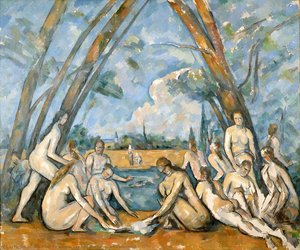

Imagens em alta resolução de Home Ranch

Thomas Eakins, Home Ranch (1892), Philadelphia Museum of Art. Domínio público.
Perguntas sobre Home Ranch respondidas
Em qual museu se encontra a obra original de "Home Ranch"?
"Home Ranch", de Thomas Eakins está em exibição no Philadelphia Museum of Art, Filadélfia, Estados Unidos da América. A referência ao museu diz respeito à obra original, não a reproduções.
Em que ano foi criado "Home Ranch"?
"Home Ranch", de Thomas Eakins foi criado em 1892.
Qual é a técnica utilizada em "Home Ranch", de Thomas Eakins?
"Home Ranch" é executada em Oil On Canvas.
O que representa "Home Ranch"?
"Home Ranch", de Thomas Eakins retrata: guitar, music, conversation, ranch, gathering, leisure, eakins.
"Home Ranch", de Thomas Eakins está em domínio público?
Quanto aos direitos autorais, "Home Ranch" está em em domínio público — seus direitos autorais expiraram.
Quem criou "Home Ranch"?
O artista por trás de "Home Ranch" é Thomas Eakins. A obra está catalogada sob o nome de Thomas Eakins.
A qual movimento artístico pertence "Home Ranch", de Thomas Eakins?
O movimento associado a "Home Ranch", de Thomas Eakins é American Realism. Esta classificação situa a obra entre artistas e obras de arte relacionados.
A que período da carreira de Thomas Eakins pertence "Home Ranch"?
"Home Ranch" pertence ao Mature Period da carreira de Thomas Eakins. Esta classificação relaciona a obra ao desenvolvimento do artista.
Qual era a idade de Thomas Eakins ao criar "Home Ranch" em 1892?
Quando "Home Ranch" foi criada em 1892, Thomas Eakins — nascido(a) em 1844 — tinha 48 anos.
Sobre o artista, Thomas Eakins

1844–1916, Estados Unidos
Thomas Eakins
A Vida de Thomas Eakins Nascido em Filadélfia, Pensilvânia, em 25 de julho de 1844, Thomas Eakins viveu uma existência profundamente enraizada na cidade de seu nascimento. Ele foi um homem de múltiplas disciplinas, atuando como pintor, fotógrafo, escultor e educador de belas artes. Embora seus interesses frequentemente o levassem ao exterior em busca de estudos, a geografia de sua existência permaneceu, em grande parte, centrada na Filadélfia. Ele transitou pelos círculos intelectuais e sociais da cidade, observando as pessoas e as realidades físicas que definiam a paisagem local.
Também de Thomas Eakins
 A Clínica da Grossa1875
 Natação1885
 Max Schmitt na Canoa Simples1871
 Portrait of Samuel Murray1889
Ensaios sobre Home Ranch
 Thomas Eakins: Realism, Anatomy & the American Spirit – A Comprehensive Exploration of Life and LegacyExplore the life & legacy of Thomas Eakins, a pivotal American Realist painter. Discover his groundbreaking techniques, anatomical precisio…
 25 Masterpieces by William H. Johnson: The Soul of the Harlem RenaissanceImmerse yourself in the vibrant soul of the Harlem Renaissance. Explore 25 iconic masterpieces by William H. Johnson, from bold expressioni…
 Curating Calm: The Connoisseur’s Guide to Selecting Masterpiece Artworks for a Harmonious HomeDiscover the art of serene living with our expert guide to curating masterpieces for a harmonious home. Learn to select fine oil reproducti…