Early Renaissance · 1425
Trinity (Masaccio, 1425)
Masaccio (1401–1428) criou Trinity. Data de 1425. Pertence ao movimento Early Renaissance. É feito em Fresco. Está conservada no Santa Maria Novella, em Florença, Itália. Mede 640 × 317 cm.
- 1425
- Fresco
- 640 × 317 cm
- Santa Maria Novella, Florença

 Pintura a Óleo Feita à Mão
 Compartilhar
 Compartilhar
 Ficha técnica


 Baixar imagem
 Semelhantes
 Ver diaporama
 Perguntas e Respostas

 Estatísticas
Trinity, em resumo
- Título
- Trinity
- Artista
- Masaccio (1401–1428)
- Artista nascido em
- San Giovanni Valdarno, Itália
- Data
- 1425
- Técnica
- Fresco
- Dimensões
- 640 × 317 cm
- Onde ver
- Santa Maria Novella, Florença, Itália
- Movimento
- Early Renaissance
- Período
- Renaissance
- Tema
- perspective, religion, humanism, classicalelements, florence, biblicalscene
O que Trinity retrata?
A Portal to the Divine: The Dawn of Renaissance Realism
To step before Masaccio’s Holy Trinity is to witness the exact moment when the flattened, symbolic world of the Middle Ages dissolved into the profound, breathing reality of the Renaissance. Painted between 1425 and 1427 within the hallowed walls of Santa Maria Novella in Florence, this fresco does not merely depict a religious scene; it carves a hole in the very wall of the chapel, inviting the viewer to step into a sacred, three-dimensional space. At its heart lies a revolutionary commitment to humanism—the belief that the divine can be understood through the lens of human experience and physical truth. Through his masterful command of light and form, Masaccio transformed a static icon into a living drama of salvation.
The composition is anchored by the central figure of Jesus Christ, depicted with a startling naturalism that was unprecedented for his era. He stands as the axis of the universe, flanked by the Virgin Mary and Saint John the Evangelist. Unlike the ethereal, weightless figures of the preceding Gothic period, Masaccio’s subjects possess a palpable sense of mass and gravity. Their robes fall with heavy, realistic folds, and their faces carry an emotional depth that speaks to the viewer across centuries. This is not art meant for distant adoration alone; it is art designed to resonate with the human soul, making the theological mysteries of the Trinity feel intimately present within our own physical realm.
The Architecture of Illusion: Mastery of Perspective
Perhaps the most enduring legacy of this masterpiece is Masaccio’s pioneering use of linear perspective. By employing a single vanishing point, he created an architectural illusion so convincing that contemporary viewers felt they were looking into a real, deep chapel rather than at a painted surface. The coffered barrel vault above the figures recedes with mathematical precision, guiding the eye upward and inward. This technical triumph was not merely a display of skill; it served a profound symbolic purpose. By placing the holy figures within a believable, structured environment, Masaccio bridged the gap between the earthly and the divine, suggesting that the sacred exists within the very geometry of our world.
This sense of depth is further enhanced by his sophisticated use of chiaroscuro. The subtle interplay of light and shadow—the way light seems to strike the figures from a consistent source—gives them a sculptural quality. This technique breathes life into the flesh, defining the musculature of Christ and the gentle contours of Mary’s face. For the modern collector or interior designer, this mastery of volume offers a sense of structural elegance and intellectual depth, making it a piece that commands attention through its quiet, commanding presence.
A Timeless Legacy for the Discerning Collector
Beyond the technical brilliance, the Holy Trinity remains an emotional powerhouse. It captures the tension between human mortality and eternal hope. At the base of the composition, the inclusion of the donors—the mortal figures who commissioned the work—serves as a poignant reminder of our own place in the grand tapestry of history. They stand at the threshold, looking up toward the divine, mirroring the journey of every viewer who encounters this fresco.
For those seeking to adorn a space with art that inspires contemplation and awe, a high-quality reproduction of this Masaccio masterpiece offers more than mere decoration. It brings into a home or gallery a piece of the very foundation of Western art. Whether placed in a study filled with books or as a focal point in a grand living space, the Holy Trinity provides an atmosphere of profound stability, historical richness, and enduring beauty. It is an invitation to pause, to look deeper, and to rediscover the breathtaking realism that first ignited the Renaissance.
Em qual museu se encontra Trinity?
Santa Maria Novella
Florença, Itália
A Edificação e a sua Arquitetura A basílica é considerada a mais importante igreja Romano-Gótica da Toscana. A sua estrutura reflete um longo período de desenvolvimento, com a secção inferior da fachada Romano-Gótica tendo sido iniciada em 1350 e finalmente concluída em 1920. A própria fachada apresenta uma aparência distinta através de padrões geométricos de mármore branco e verde.


Imagens em alta resolução de Trinity

Masaccio, Trinity (1425), Santa Maria Novella. Domínio público.
Perguntas sobre Trinity respondidas
Em qual museu se encontra a obra original de "Trinity"?
A obra original "Trinity" pode ser vista no Santa Maria Novella, Florença, Itália.
Qual técnica foi utilizada em "Trinity", de Masaccio?
Quais são as dimensões da obra original "Trinity"?
"Trinity" mede 640 x 317 cm em sua forma original. As dimensões originais são uma referência útil ao escolher o tamanho de uma reprodução.
O que representa "Trinity"?
A imagem de "Trinity", de Masaccio pode ser reproduzida livremente?
A qual movimento artístico pertence "Trinity", de Masaccio?
Sobre o artista, Masaccio

1401–1428, Itália
Masaccio
Masaccio (1401-1428): O Amanhecer da Arte Renascentista Tommaso di Ser Giovanni di Simone Guidi Cassai, mais conhecido como Masaccio (significando "Tommaso desajeitado"), foi uma figura fundamental na Arte Renascentista Inicial italiana. Nasceu em 21 de dezembro de 1401, em Castel San Giovanni di Valdarno, Itália, e faleceu tragicamente jovem em 1428, revolucionando a pintura com realismo inovador, perspectiva e chiaroscuro (o uso de fortes contrastes entre luz e sombra). Apesar da vida curta, o impacto de Masaccio nas gerações posteriores de artistas foi profundo, estabelecendo um novo padrão para o naturalismo e influenciando o curso da arte ocidental. Vida Inicial e Formação Os origens de Masaccio remontam à família Cassai, composta por Giovanni di Simone Cassai, um notário, e Jacopa di Martinozzo.
Também de Masaccio
 A Trindade1428
 O Tributo1425
 A Expulsão do Paraíso1426
 Rendering da Moeda Tributária (Detalhe)
Ensaios sobre Trinity
 Understanding Gothic and Renaissance Art: Key Differences and FeaturesMaster the differences between Gothic and Renaissance art through expert analysis of technique and style. Discover the evolution of art tod…
 25 Masterpieces by Duccio di Buoninsegna: The Dawn of Sienese ArtJourney through the Sienese School with our curated guide to Duccio di Buoninsegna’s top 25 masterpieces. From the Maesta to iconic Madonna…
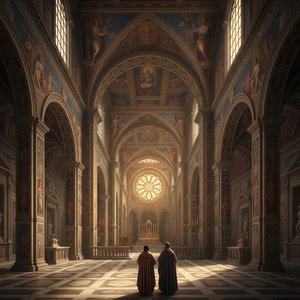 Mastering Depth: The Architectural Power of Linear Perspective in Renaissance MasterpiecesExplore the profound impact of linear perspective on Renaissance art. Discover how masters like Brunelleschi and Uccello used mathematical …