
 Visualizar na parede
 Compartilhar
 Compartilhar
 Detalhes
 Guia
Guia

 Baixar imagem
 Semelhantes
 Raio X
 Ver diaporama
 Perguntas e Respostas
 Estatísticas
Prickly Currant (Ribes lacustre)

- 25.0 x 18.0 cm


 Ler mais
Giclée / Impressão de Arte
Impressão giclée ou em tela de qualidade de museu, com produção rápida e opções flexíveis de acabamento. ( Comprar pintura feita à mão Alternar para Imagem Digital)




































Escolha entre os nossos tamanhos pré-definidos que respeitam as proporções originais da obra de arte.

Insira a largura e a altura desejadas para se ajustarem à sua moldura ou parede. Uma impressão pode ser apenas cortada, nunca ampliada além da imagem original; portanto, um tamanho com proporções diferentes resultará na perda de parte da imagem. Enviamos uma maquete digital para sua aprovação antes de realizarmos a impressão. A imagem exibida nesta página não mostra o corte real — apenas a maquete o faz.
Entrega mundial () em 2 semanas, em vez das 4/5 semanas padrão. (8 Novembro)

Envio expresso gratuito para todo o mundo

Tela de Linho de Alta Qualidade

Seguro de transporte completo

Garantia de Reembolso de Impostos Alfandegários

Garantia de Fidelidade Cromática

Política de Devolução em 100 Dias (Apenas para Defeitos)

Garantia de reembolso de 100%

Oferta de desconto por quantidade
 A opção de vidro está disponível apenas para tamanhos inferiores a 110 cm

Prickly Currant (Ribes lacustre)
Giclée / Impressão de Arte
Tamanho da Reprodução
-


Preço Total
€ 72
Prickly Currant (Ribes lacustre): A Botanical Masterpiece
Mary Vaux Walcott's "Prickly Currant (Ribes lacustre)," painted in 1919, is a captivating watercolor study that exemplifies the artist’s meticulous observation of the natural world. Housed within the Smithsonian American Art Museum, this piece measures 25 x 18 cm and offers a close-up view of the plant's intricate details, showcasing the vibrant colors and delicate textures characteristic of wild flora.
The Artist's Style and Technique
Walcott’s artistic style is defined by her remarkable attention to detail and her ability to capture the essence of botanical subjects. She was renowned as "the Audubon of Botany," a testament to her skill in documenting North American wildflowers with scientific accuracy and aesthetic beauty. Her preferred medium, watercolor, allowed for a delicate and subtle rendering of forms, perfectly suited for depicting the intricate details of plants and flowers. The “Prickly Currant” demonstrates this mastery; the painting’s soft edges and blended colors are achieved through layering washes of color and precise brushstrokes, creating a sense of depth and volume.
Botanical Accuracy and Historical Context
This artwork is more than just a beautiful image; it's a valuable contribution to botanical science. During the late 19th and early 20th centuries, detailed botanical illustrations were crucial for scientific documentation and identification. Walcott’s work aligns with this tradition, providing an accurate representation of *Ribes lacustre*, also known as prickly currant or bristly black currant. Her dedication to accuracy stemmed from her extensive fieldwork in the Canadian Rockies, where she meticulously observed and documented plant life alongside her husband, paleontologist Charles Doolittle Walcott. The Smithsonian’s publication of her illustrations across five volumes, "North American Wild Flowers," further cemented her legacy as a significant contributor to botanical knowledge.
Symbolism and Emotional Impact
While primarily a scientific study, “Prickly Currant” evokes a sense of quiet beauty and appreciation for the natural world. The vibrant red berries against the lush green leaves create a visually striking contrast, symbolizing resilience and vitality. Walcott’s skill in capturing the plant's delicate structure invites viewers to pause and appreciate the intricate details often overlooked in everyday life. The painting resonates with a feeling of tranquility and reverence for nature, reflecting the artist’s deep connection to the wilderness.
Other Notable Works by Mary Vaux Walcott
Explore more of Mary Vaux Walcott's botanical artistry through these additional works:
- Northern Bedstraw (Galium boreale)
- Jacob's Ladder (Polemonium viscosum)
- Siberian Onion (Allium sibericum)
These pieces, along with "Prickly Currant," can be found on OriginalUniqueArt.com, offering handmade oil painting reproductions of these remarkable artworks.
Perguntas e Respostas
Quais são as dimensões da obra original "Prickly Currant (Ribes lacustre)"?
"Prickly Currant (Ribes lacustre)" mede 25 x 18 cm em sua forma original. As dimensões originais são uma referência útil ao escolher o tamanho de uma reprodução.
Qual tamanho de impressão é sugerido para "Prickly Currant (Ribes lacustre)" em um(a) Living Room?
Para um(a) Living Room, sugere-se que "Prickly Currant (Ribes lacustre)" seja impresso no tamanho Medium.
Que sensação as cores de "Prickly Currant (Ribes lacustre)", de Mary Vaux Walcott transmitem?
A paleta Pastels de "Prickly Currant (Ribes lacustre)", de Mary Vaux Walcott harmoniza-se com seu tom emocional Tranquil. A cor é uma das formas pelas quais uma obra transmite sentimento.
Biografia do Artista
A Life Blossoming in Watercolor: The World of Mary Vaux Walcott
Mary Vaux Walcott, a name synonymous with the delicate beauty and scientific rigor of botanical illustration, emerged from Philadelphia’s Quaker society in 1860 as an unexpected force within the art world. From her earliest years, a profound connection to the natural world—particularly wildflowers—fueled a creative spirit that defied the conventional expectations placed upon women of her time. Her journey wasn't merely one of artistic talent; it was a testament to resilience, intellectual curiosity, and a pioneering spirit that carved a unique path for herself amidst societal constraints. The untimely death of her mother in 1880 thrust young Mary into the role of caregiver for her father and two younger brothers, demanding unwavering devotion while simultaneously nurturing her burgeoning artistic inclinations. This responsibility didn’t stifle her creative flame; rather, it deepened her appreciation for the landscapes they explored together during their annual summer expeditions to the majestic Canadian Rockies – a region that would become the very heart and soul of her art.The Allure of the Rockies: Nature as Muse and Subject
These annual journeys to the Canadian Rockies were transformative experiences, fundamentally shaping Mary’s artistic vision and scientific understanding. Far from being passive observers, she and her brothers immersed themselves in the rugged grandeur of these mountains, meticulously documenting their surroundings with a combination of artistry and scientific inquiry. They weren't simply admiring the scenery; they were actively studying mineralogy, charting glacial movements through detailed drawings and photographs, and painstakingly recording the intricate details of alpine flora – from the vibrant hues of wildflowers to the delicate structures of mosses and lichens. This wasn’t mere observation; it was a deeply engaged process of scientific investigation, driven by an insatiable curiosity about the natural world. During these expeditions, Mary honed her skills as a botanical illustrator, initially fulfilling requests from botanists eager for accurate depictions of rare and elusive plant species. Her approach was revolutionary for its time – she rendered plants to scale, capturing not just their outward appearance but also their intricate internal structures with remarkable precision. She sought to convey the essence of each flower, revealing its unique beauty and scientific significance through a combination of meticulous detail and artistic sensitivity. Her work stood in stark contrast to many floral paintings of the era, which often prioritized romanticized or stylized representations over scientific accuracy.A Pioneer’s Path: Breaking Barriers and Defining Style
Mary Vaux Walcott's journey was marked by several significant achievements that challenged societal norms and established her as a pioneering figure in both art and science. Notably, she became the first woman recorded to successfully summit Mount Stephen in 1900 – an extraordinary feat of physical endurance and determination that defied expectations for women at the time. This accomplishment underscored her adventurous spirit and unwavering commitment to exploring the boundaries of human potential. Furthermore, her meticulous documentation of glacial recession alongside her brothers provided invaluable data for understanding climate change decades before it became a widely recognized concern. Her artistic style evolved over time, reflecting her growing scientific knowledge and deepening appreciation for the natural world. Early works often featured looser brushstrokes and a more impressionistic approach, while later paintings demonstrated an increasingly refined technique characterized by precise detail, subtle color gradations, and a remarkable ability to capture the delicate textures of plant surfaces.A Legacy in Bloom: Collaboration and Recognition
Mary’s life took another pivotal turn in 1914 when she married Charles Doolittle Walcott, then Secretary of the Smithsonian Institution – a union that combined her artistic passion with his scientific expertise. This partnership fostered a unique synergy where art and science intertwined seamlessly. Together, they continued their annual expeditions to the Canadian Rockies, with Charles pursuing his geological research while Mary dedicated herself to her botanical paintings. The Smithsonian Institution became a crucial platform for showcasing her work, culminating in the publication of *North American Wild Flowers* in 1925 – a monumental five-volume collection featuring over 400 of her meticulously crafted illustrations accompanied by detailed descriptions and scientific observations. This publication cemented her reputation as a leading botanical artist and earned her the enduring moniker “The Audubon of Botany,” acknowledging the parallel between her detailed floral studies and John James Audubon’s iconic depictions of birds. Beyond her artistic achievements, Mary Vaux Walcott demonstrated a commitment to public service, serving on the federal Board of Indian Commissioners from 1927 to 1932 and actively advocating for improved conditions on Native American reservations. Her legacy extends far beyond the beauty of her paintings; it represents a testament to the power of curiosity, perseverance, and a deep connection with the natural world.Key Achievements & Recognition
- Pioneering Botanical Illustration: Renowned for her scientifically accurate and artistically exquisite watercolor paintings of wildflowers.
- “The Audubon of Botany”: Affectionately known by this title, recognizing the significance of her work in botanical art.
- *North American Wild Flowers* (1925): Publication of a five-volume collection showcasing over 400 of her illustrations, solidifying her reputation.
- First Woman to Summit Mount Stephen: A testament to her adventurous spirit and physical endurance.
- Contributions to Glacial Geology: Documented glacial recession in the Canadian Rockies alongside her brothers, providing valuable data for climate change studies.
- Philanthropic Legacy: Bequeathed a significant sum to the Smithsonian Institution to support scientific research.

Mary Vaux Walcott
1860 - 1940 , Estados Unidos da América
Dados Rápidos
- Artistic Movement Or Style: Ilustração botânica
- Artists Or Movements Influenced By This Artist: ['Maria Sibylla Merian']
- Artists Who Influenced This Artist: ['John James Audubon']
- Date Of Birth: 31 de Julho de 1860
- Date Of Death: 22 de Agosto de 1940
- Full Name: Mary Vaux Walcott
- Nationality: Americana
- Notable Artworks:
- Flores silvestres
- Arnica aristata
- Rosa bourgeauiana
- Place Of Birth: Philadelphia, EUA
Artigos Relacionados

Ephemeral Visions: Exploring the Artistic Legacy & Nuances of Watercolor Painting
Explore the captivating world of watercolor painting! Discover its rich history, essential techniques, influential artists & collecting tips from art experts. A comprehensive guide for enthusiasts.
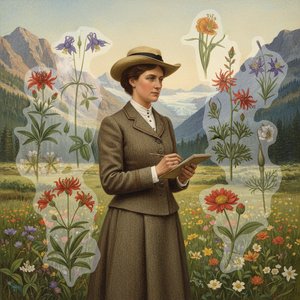
Mary Vaux Walcott: Botanical Precision & Artistic Vision in American Conservation
Discover the exquisite botanical watercolors of Mary Vaux Walcott, celebrated as the 'Audubon of Botany.' Explore her life, art, and lasting impact on American conservation through detailed illustrations & Smithsonian contributions.

Ephemeral Visions: Exploring the Artistic Legacy & Contemporary Practice of Watercolor Painting
Explore the captivating world of watercolor painting! Discover its rich history, essential techniques, influential artists & collecting tips. A comprehensive guide for art enthusiasts from OriginalUniqueArt.

Aquarelas Imortais: 10 Obras-Primas que Revolucionaram a Arte | OriginalUniqueArt
Descubra as 10 obras-primas em aquarela que revolucionaram a arte! Explore a história de Turner, Cézanne e outros mestres. Encontre reproduções de alta qualidade para decorar sua casa com elegância. OriginalUniqueArt: arte atemporal ao seu alcance.

Ephemeral Visions: Exploring the History & Emotional Resonance of Watercolor Painting
Explore the captivating history of watercolor painting, from ancient techniques to modern masters like Kandinsky & Blake. Discover essential artists, collecting tips & the emotional power of this luminous medium. Expert insights for art enthusiasts.


